

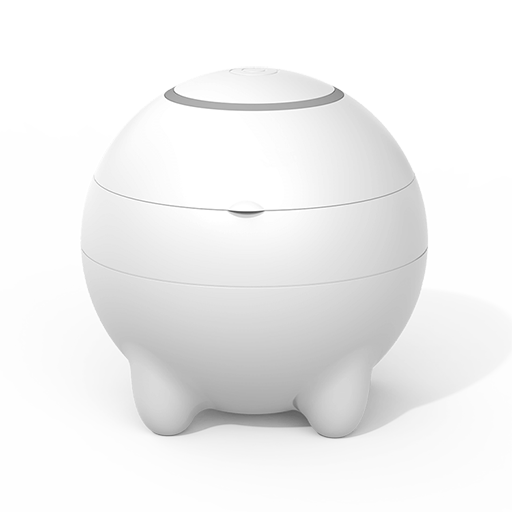

Denture tablets can be used in ultrasonic cleaners, though this combination requires specific techniques to achieve optimal results. The primary consideration involves managing foam generation, which can significantly interfere with ultrasonic wave transmission and reduce cleaning effectiveness. When used with proper protocols, denture tablets provide convenient and effective cleaning for removable dental appliances processed in ultrasonic tanks.
The compatibility depends on tablet formulation, water temperature, concentration ratios, and timing of the ultrasonic cycle. Ultrasonic cleaners function most effectively with low-foaming solutions that allow unimpeded sound wave propagation through the cleaning medium. Denture tablets contain surfactants and effervescent agents that produce varying foam levels depending on their specific formulation and how they’re used.
Many dental professionals and appliance users successfully combine these technologies by understanding the interaction between chemical cleaning agents and physical cavitation action. This knowledge allows users to maximize cleaning effectiveness while protecting both the dental appliances and the ultrasonic equipment from potential issues.
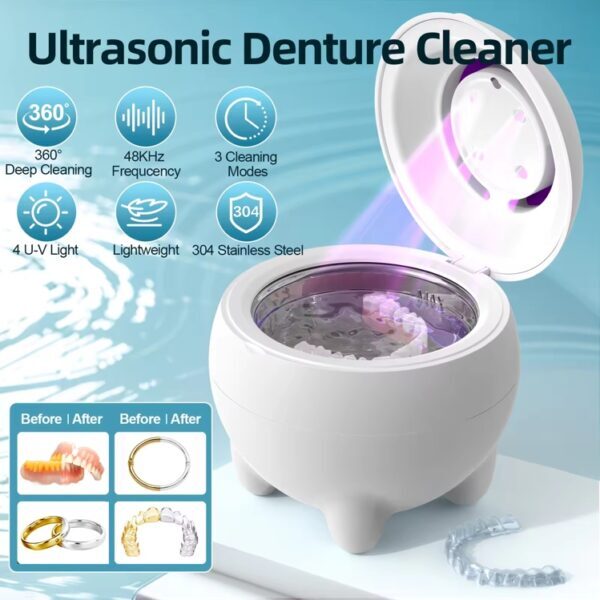
How Denture Tablets Function in Cleaning Solutions
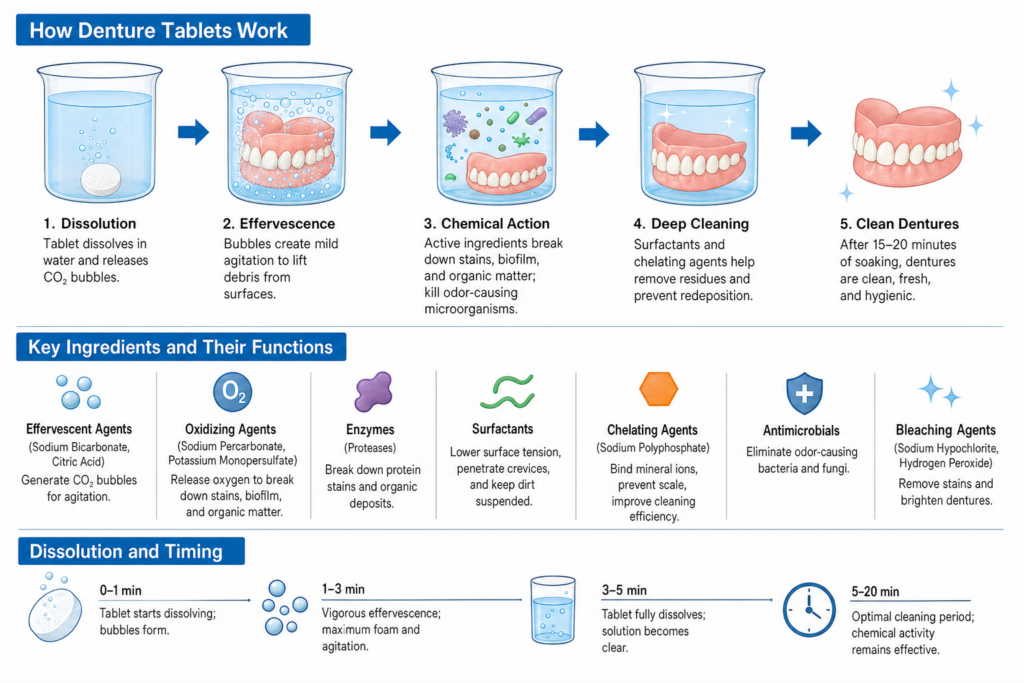
Denture cleaning tablets rely on a multi-component chemical system designed to break down organic deposits, remove stains, and eliminate bacteria on removable dental appliances. The tablets typically contain sodium bicarbonate and citric acid as effervescent agents, which create carbon dioxide bubbles upon contact with water. These bubbles provide mild mechanical agitation during traditional soaking that helps lift debris from surfaces.
The working principle of denture cleaning tablets in the cleaning solution
Active Ingredients and Their Purpose
The primary cleaning power comes from oxidizing agents such as sodium percarbonate or potassium monopersulfate. When dissolved, these compounds release oxygen that breaks down protein-based biofilms and organic matter accumulated on dentures, retainers, and aligners. Proteolytic enzymes in some formulations specifically target protein structures, accelerating the breakdown of saliva deposits and food residues.
Surfactants reduce surface tension, allowing the cleaning solution to penetrate microscopic crevices and maintain loosened particles in suspension rather than allowing them to redeposit on cleaned surfaces. Chelating agents like sodium polyphosphate bind to mineral ions in hard water, preventing interference with the cleaning process and reducing calcium deposit formation.
Some tablets include mild bleaching agents such as sodium hypochlorite or hydrogen peroxide for stain removal. Antimicrobial compounds help eliminate odor-causing bacteria and fungi that colonize dental appliance surfaces. The combination of these ingredients provides comprehensive cleaning during the traditional 15 to 20-minute soaking period recommended by most manufacturers.
Dissolution Process and Timing
Standard denture tablets require three to five minutes for complete dissolution in room temperature water, though warmer water accelerates this process. The effervescent action occurs most vigorously during the first two minutes, generating the majority of foam production during this initial phase. Once fully dissolved, the solution maintains its chemical cleaning properties for approximately 15 to 20 minutes before oxidizing agent concentration begins declining significantly.
The timing of this dissolution process creates an important consideration for ultrasonic cleaner operation. Starting the ultrasonic cycle before the tablet completely dissolves and the initial foaming subsides can result in excessive foam that severely dampens cavitation effectiveness. This timing issue represents the key technical challenge when combining denture tablets with ultrasonic technology.
How Ultrasonic Cleaners Generate Cleaning Action
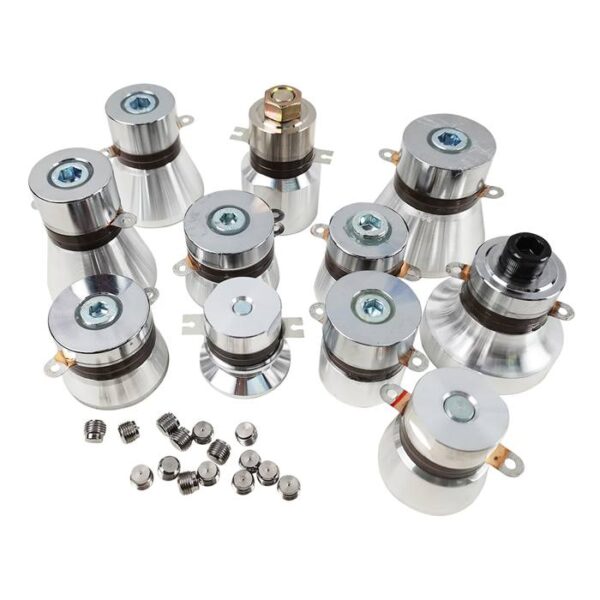
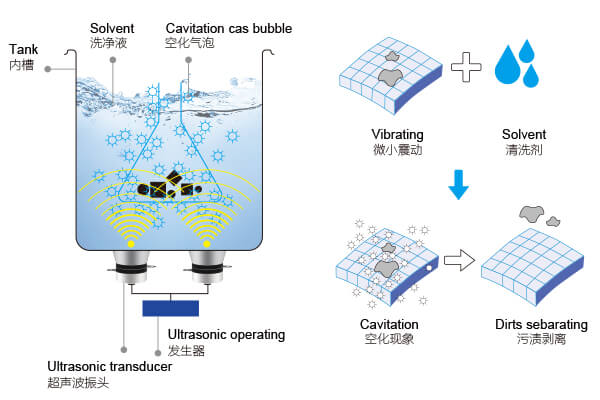
Ultrasonic cleaning technology converts electrical energy into high-frequency mechanical vibrations through piezoelectric transducers bonded to the tank bottom or sides. These transducers vibrate at frequencies typically ranging from 40 kHz to 68 kHz, creating alternating high-pressure and low-pressure waves that propagate through the liquid medium.
The Principle Behind Ultrasonic Cleaning
During low-pressure cycles, microscopic cavitation bubbles form throughout the liquid. These bubbles grow rapidly until the pressure wave reverses, causing them to implode violently. The implosion creates localized temperatures exceeding 5,000 degrees Celsius and pressures above 10,000 psi for microseconds, though the bulk liquid temperature remains unchanged. This phenomenon, called cavitation, generates intense microscopic cleaning action.
The imploding bubbles produce tiny jets of liquid that penetrate surface irregularities, crevices, and hard-to-reach areas impossible to clean through manual scrubbing or simple soaking. For dentures with textured tissue-facing surfaces, retainers with wire clasps, and clear aligners with attachment points, this penetrating action removes accumulated biofilm and deposits far more effectively than traditional cleaning methods.
Optimal cavitation requires an unobstructed liquid medium with minimal dissolved gases and foam. Air bubbles and foam pockets absorb ultrasonic energy without contributing to cleaning action, creating dead zones where cavitation cannot occur. This fundamental requirement explains why foam-producing additives must be carefully managed in ultrasonic cleaning applications.
Foam Generation and Its Impact on Performance
The interaction between denture tablets and ultrasonic energy centers primarily on foam production and its effect on cleaning performance. Understanding this relationship allows users to implement strategies that preserve cleaning effectiveness while still benefiting from the chemical action denture tablets provide.
Why Foam Reduces Cleaning Effectiveness
Excessive foam creates multiple problems that diminish ultrasonic cleaning performance. A thick foam layer on the liquid surface acts as a barrier that reflects ultrasonic waves back into the tank rather than allowing them to propagate freely through the cleaning solution. This reflection reduces cavitation intensity throughout the tank volume, particularly in upper regions where dental appliances typically rest in the cleaning basket.
Foam introduces countless air pockets into the liquid medium. Each air bubble acts as a cushion that absorbs ultrasonic energy without producing useful cavitation. The energy absorbed by foam bubbles converts to heat rather than creating the implosive collapse that generates cleaning action. In severe cases, heavy foaming can reduce effective cleaning power by 40 to 60 percent compared to a clear solution.
The foam also creates an irregular interface between air and liquid that disrupts the uniform wave patterns necessary for consistent cavitation throughout the tank. This disruption results in uneven cleaning, where some areas of the dental appliance receive adequate treatment while other sections remain inadequately cleaned despite identical exposure time.
Managing Foam Production
Different denture tablet formulations produce vastly different foam levels. Tablets designed for overnight soaking typically contain higher concentrations of surfactants and generate more persistent foam than quick-dissolving varieties intended for shorter cleaning periods. Some modern formulations specifically marketed for use in ultrasonic cleaners include foam-suppressing additives or reduced effervescent content.
Temperature affects foam stability significantly. Warmer water between 35 and 40 degrees Celsius causes denture tablet foam to break down more quickly than cold water. The reduced surface tension at higher temperatures allows foam bubbles to collapse faster, minimizing the duration of foam interference with ultrasonic operation.
Allowing tablets to dissolve completely before activating the ultrasonic function represents the single most effective foam management strategy. The vigorous effervescence occurs primarily during the first two to three minutes of dissolution. Waiting five minutes after adding tablets ensures the initial foaming subsides before introducing ultrasonic energy that would otherwise agitate the solution and regenerate foam.
Tank geometry also influences foam accumulation. Tanks with greater depth relative to surface area experience less foam interference because the foam layer represents a smaller proportion of total liquid volume. Shallow, wide tanks allow foam to occupy a larger percentage of the liquid medium, increasing its disruptive effect on ultrasonic transmission.
Proper Usage Guidelines for Combined Cleaning
Achieving optimal results when combining denture tablets with ultrasonic cleaning requires following specific protocols that account for both chemical and physical cleaning mechanisms. These guidelines apply to all removable dental appliances including complete dentures, partial dentures, orthodontic retainers, clear aligners, and night guards.
Tablet Selection Criteria
Choose denture tablets formulated specifically for soaking applications rather than products designed for brushing or scrubbing. Soaking formulations typically produce less persistent foam and contain appropriate concentrations of active ingredients for immersion cleaning. Avoid tablets marketed primarily for stain removal through abrasive action, as these mechanical components provide no benefit in ultrasonic applications and may even scratch appliance surfaces.
Some manufacturers now offer tablets specifically labeled as ultrasonic-compatible or low-foaming. These formulations reduce or eliminate the effervescent components that generate excessive foam while maintaining effective concentrations of oxidizing agents and enzymes. When available, these specialized products offer the most reliable performance in ultrasonic cleaners.
Examining ingredient labels helps identify suitable formulations. Products listing sodium percarbonate or similar oxygen-releasing compounds as the primary active ingredient typically work well with ultrasonic action. Those emphasizing vigorous fizzing action or rapid foam generation as selling points often prove problematic in ultrasonic applications.
Concentration and Dilution
Standard denture tablets are formulated for specific water volumes, typically 150 to 250 milliliters representing the amount needed to submerge a single denture in a drinking glass. Ultrasonic cleaner tanks hold varying volumes ranging from 400 milliliters in compact personal units to 2,000 milliliters or more in larger models. Adjusting tablet quantity to match tank volume maintains effective cleaning concentration without waste or excessive foaming.
Using one tablet per 200 to 250 milliliters of tank capacity provides appropriate chemical concentration for most cleaning applications. This ratio delivers sufficient oxidizing agent and enzyme activity to enhance the physical cavitation without overwhelming the solution with foam-generating compounds. Calculating the correct number of tablets based on the specific ultrasonic tank volume ensures consistent results.
For lightly soiled appliances requiring daily maintenance cleaning, reducing concentration to one tablet per 400 milliliters still provides effective results while minimizing foam production. The combination of reduced chemical concentration and vigorous ultrasonic action adequately cleans appliances that haven’t accumulated heavy deposits. Heavily soiled items or those requiring deep cleaning benefit from standard or slightly increased concentration ratios.
Overly concentrated solutions provide no additional cleaning benefit in ultrasonic applications. The physical cavitation already removes loosened material so efficiently that increasing chemical concentration beyond optimal levels simply wastes tablets and increases foam without improving outcomes. Finding the minimum effective concentration for specific needs maximizes efficiency.
Temperature and Timing
Water temperature significantly affects both denture tablet dissolution rate and ultrasonic cavitation intensity. Most denture tablets dissolve optimally in water between 30 and 40 degrees Celsius. This temperature range also falls within the ideal window for ultrasonic cleaning effectiveness, as warmer water supports more energetic cavitation bubble collapse.
Cold water below 20 degrees Celsius slows tablet dissolution and reduces the energy released during cavitation bubble implosion. Excessively hot water above 50 degrees Celsius can soften or distort thermoplastic appliance materials like those used in clear aligners and some retainers. The heat may also degrade certain denture base materials or compromise the fit of professionally adjusted appliances.
Using lukewarm water between 35 and 40 degrees Celsius provides optimal balance. This temperature ensures complete tablet dissolution within five minutes while supporting vigorous cavitation activity. Many ultrasonic cleaners include heating elements that maintain this temperature range throughout the cleaning cycle, though preheating water before filling the tank accelerates the process.
Recommended step-by-step procedure:
- Fill the ultrasonic tank with lukewarm water at 35 to 40 degrees Celsius to the recommended level
- Add the appropriate number of denture tablets based on tank volume calculation
- Allow tablets to dissolve completely without activating the ultrasonic function
- Wait approximately five minutes for dissolution and initial foaming to subside
- Rinse the dental appliance briefly under running water to remove loose debris
- Place the appliance in the cleaning basket, ensuring it doesn’t contact tank walls or bottom
- Position the basket so the appliance is fully submerged in the solution
- Activate the ultrasonic cycle and run for three to five minutes for daily maintenance cleaning
- Extend cycle duration to eight to ten minutes for heavily soiled items or weekly deep cleaning
- Remove the appliance promptly after the cycle completes
- Rinse thoroughly under running water to remove all chemical residue
- Inspect for any remaining deposits and repeat the process if necessary
This delayed start approach, where tablets dissolve before ultrasonic activation, prevents the ultrasonic energy from intensifying foam generation during the vigorous effervescent phase. The result is significantly improved cleaning effectiveness through better ultrasonic wave transmission and stronger cavitation throughout the solution.
Material Safety for Dental Appliances
Removable dental appliances are constructed from various materials, each with specific tolerance levels for chemical exposure and mechanical stress. Understanding these material properties ensures safe use of denture tablets in ultrasonic cleaners without risking appliance damage.
Acrylic resins, the most common material for denture bases, demonstrate excellent compatibility with both denture tablet solutions and ultrasonic energy. These polymers resist chemical attack from the mild oxidizers and alkaline conditions in denture tablet solutions. The mechanical stress from cavitation does not damage properly fabricated acrylic components, as the material’s toughness easily withstands the microscopic forces involved.
Metal components including stainless steel clasps and cobalt-chromium frameworks used in partial dentures tolerate the combination extremely well. The brief exposure duration and mild chemical environment pose no corrosion risk to these corrosion-resistant alloys. Precious metal clasps made from gold alloys similarly resist any chemical interaction or mechanical damage from the combined treatment.
Thermoplastic materials used in clear orthodontic aligners and certain retainer designs require slightly more consideration. Materials like polyethylene terephthalate glycol (PETG), polypropylene, and polyurethane show good resistance to standard denture cleaning solutions. The primary concern involves potential stress-cracking in areas where the material already contains micro-fractures from repeated insertion and removal or from being accidentally dropped.
Avoiding excessively long ultrasonic exposure times protects thermoplastic appliances from cumulative mechanical stress. The three to five-minute cycles recommended for routine cleaning provide thorough results without subjecting materials to unnecessary prolonged cavitation. Extending cycles beyond ten minutes rarely improves cleaning outcomes and may incrementally increase wear on plastic components over time.
Some older denture designs incorporated softer reline materials or cushioning layers on the tissue-facing surface. These materials vary in their chemical resistance depending on composition. Most modern soft liners tolerate brief exposure to denture tablet solutions in ultrasonic cleaners, though extended or repeated exposure may gradually degrade some formulations. Consulting with the dental professional who fabricated or adjusted the appliance provides specific guidance for items with special materials.
Porcelain or composite teeth attached to denture bases withstand the combined treatment without damage. The bonding between these components and the acrylic base proves strong enough to resist the mechanical forces from cavitation. No reports exist of teeth debonding or porcelain chipping as a result of proper ultrasonic cleaning with denture tablets.