


Ultrasonic cleaners have become essential tools across industries, from jewelry shops to dental offices, and many users wonder whether common household dish soap can serve as an effective cleaning solution. While ultrasonic technology provides powerful cleaning action through cavitation bubbles, the choice of cleaning solution significantly impacts both results and equipment longevity.
Understanding Ultrasonic Cleaning Solutions
How Ultrasonic Cleaners Work
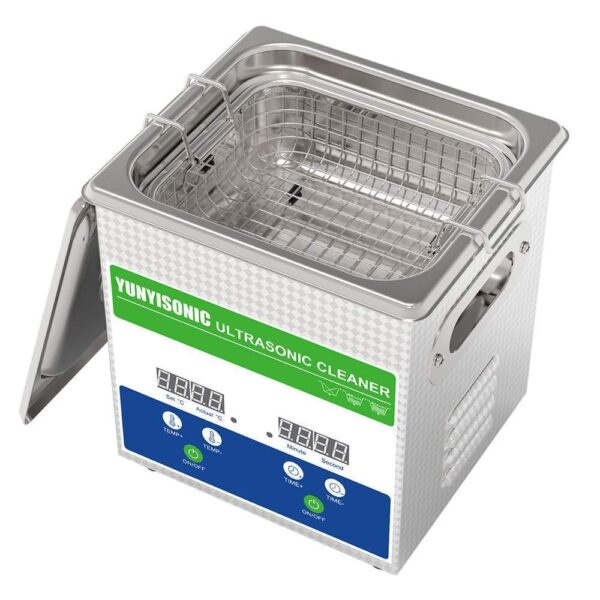
Ultrasonic cleaning devices operate through high-frequency sound waves, typically between 40 kHz and 80 kHz for delicate items like jewelry and eyeglasses. These sound waves create microscopic bubbles in the cleaning solution through a process called cavitation. When these bubbles collapse, they generate intense localized energy that dislodges dirt, oils, and contaminants from surfaces, even reaching into tiny crevices that manual cleaning cannot access.
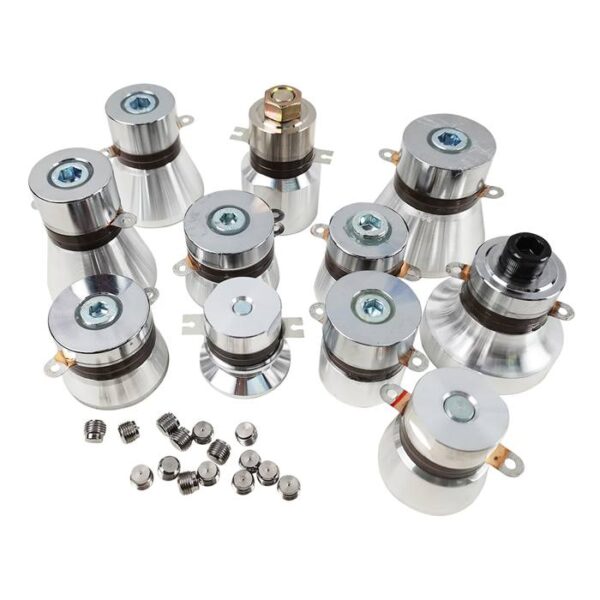
The transducer, bonded to the tank bottom, converts electrical energy into mechanical vibrations. These vibrations pass through the liquid medium, creating alternating high-pressure and low-pressure cycles. During low-pressure phases, bubbles form, and during high-pressure phases, they implode violently against the item’s surface. This process occurs millions of times per second, creating a thorough and gentle cleaning action.
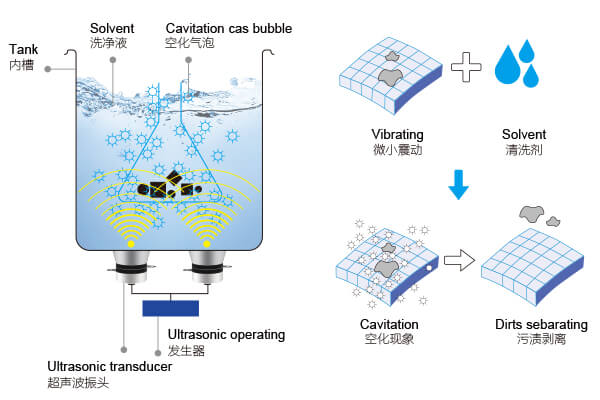
The Principle Behind Ultrasonic Cleaning
The Role of Cleaning Solutions
The liquid medium serves multiple critical functions beyond simply being a carrier for detergent. Water alone provides cavitation, but adding appropriate cleaning agents enhances several aspects of the process. The solution helps lower surface tension, allowing bubbles to form more easily and collapse more effectively. It also dissolves and suspends removed contaminants, preventing them from redepositing on cleaned items.
Different cleaning solutions offer varying properties. Some reduce foaming, which can dampen ultrasonic energy transmission. Others provide specific chemical actions like degreasing, oxidation removal, or disinfection. Temperature also plays a role, as warmed solutions typically clean more effectively, though excessive heat can damage sensitive items.
Can Dish Soap Be Used in Ultrasonic Cleaners?
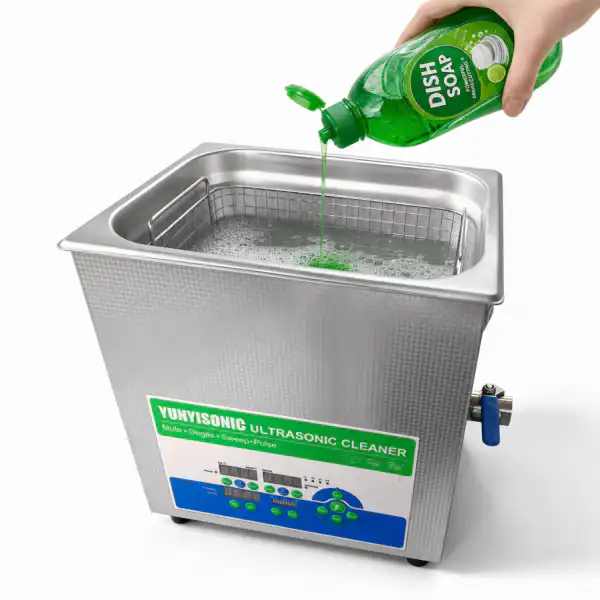
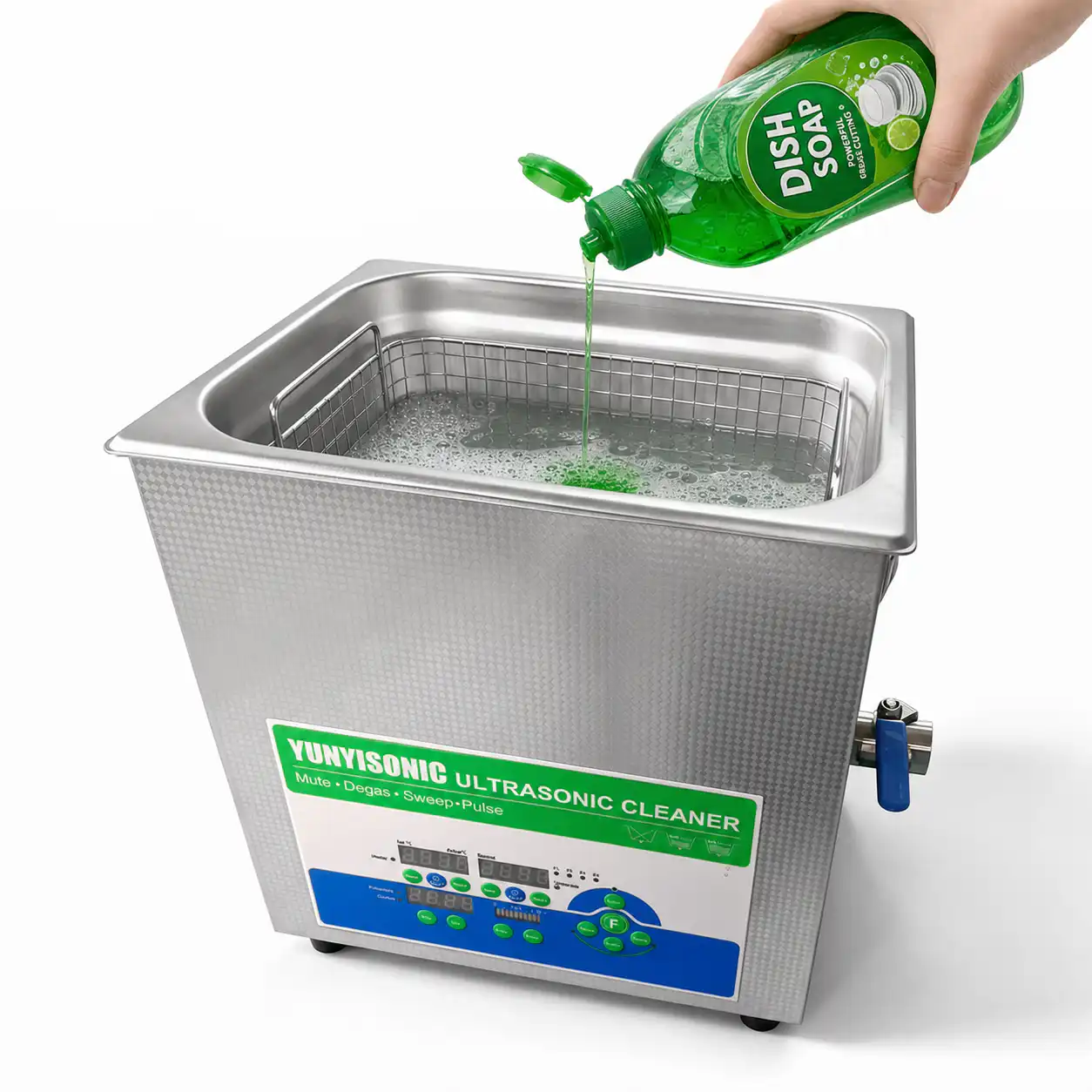
A small amount of dishwashing liquid is being added to the ultrasonic cleaning tank
Short Answer: Yes, But With Caution
Dish soap can technically function in an ultrasonic cleaner, but it presents several challenges that make it less than ideal for most applications. Standard dish detergents were formulated for manual dishwashing and mechanical dishwashers, not for ultrasonic cavitation environments. The surfactants and foaming agents that make dish soap effective for hand washing can interfere with ultrasonic cleaning performance.
Many professional technicians and equipment manufacturers advise against regular dish soap use, particularly for precision cleaning or valuable items. However, in certain limited situations with proper preparation and dilution, dish soap may serve as a temporary solution when purpose-made cleaners are unavailable.
Why Dish Soap Can Work
Dish soap contains surfactants that reduce water’s surface tension and help lift oils and greases. These properties align with some requirements for ultrasonic cleaning solutions. The degreasing action can complement the mechanical cleaning action of cavitation, particularly for items contaminated with cooking oils, fingerprints, or similar organic residues.
For non-critical cleaning tasks, such as removing light dirt from durable items like stainless steel tools or glass containers, diluted dish soap may provide acceptable results. The key lies in understanding that dish soap serves as a supplementary cleaning agent, not as a replacement for properly formulated ultrasonic solutions.
Potential Problems With Dish Soap
Excessive Foaming Issues
The most significant problem with dish soap in ultrasonic cleaners is foam generation. Dish soaps are specifically designed to produce suds, which consumers associate with cleaning power. However, in an ultrasonic tank, excessive foam creates a barrier that absorbs and scatters ultrasonic energy. This phenomenon, known as acoustic damping, dramatically reduces cleaning effectiveness.
Foam bubbles are fundamentally different from cavitation bubbles. While cavitation bubbles are microscopic and collapse with cleaning force, soap foam bubbles are larger, more stable, and persist on the solution surface. These foam layers prevent proper energy transmission from the transducer to the cleaning solution, essentially blocking the ultrasonic waves from reaching the items being cleaned.
When foam fills the tank, users might observe reduced or eliminated cavitation activity. The characteristic fine bubbling pattern on item surfaces may disappear, and cleaning performance drops significantly. Some units may even activate safety mechanisms if foam interferes with sensors or overflows from the tank.
Residue and Film Formation
Many dish soaps contain additives like moisturizers, fragrance compounds, and thickening agents that serve cosmetic or skin-protection purposes. These additives can leave residues on cleaned items, particularly problematic for precision components, optical items, or jewelry. A filmy coating may appear on surfaces after drying, requiring additional rinsing or even re-cleaning.
This residue issue becomes more pronounced with intricate items. Cavitation effectively carries soap into microscopic crevices, but rinsing may not remove it as thoroughly. Dried soap deposits can attract dust, diminish shine on polished surfaces, or interfere with the function of precision mechanisms like watch movements or electronic components.
Impact on Cleaning Efficiency
Standard dish soaps lack the chemical formulation optimized for ultrasonic environments. Purpose-made ultrasonic solutions are engineered with specific pH levels, surfactant types, and additive packages that maximize cavitation effectiveness while minimizing foam. Dish soap’s formulation priorities lie elsewhere, resulting in suboptimal performance.
The cleaning chemistry matters significantly. Professional ultrasonic solutions often include chelating agents that bind to metal ions, corrosion inhibitors that protect sensitive materials, and pH buffers that maintain consistent cleaning action. Dish soap typically lacks these specialized components, limiting its effectiveness for many common ultrasonic cleaning applications.
When Dish Soap Might Be Acceptable
Light Cleaning Applications
For basic household cleaning tasks that don’t require precision results, highly diluted dish soap may suffice. Items like everyday jewelry without precious stones, eyeglass frames (not lenses with special coatings), metal utensils, or small tools can tolerate dish soap cleaning. These applications don’t demand the exacting standards of professional or technical cleaning.
The operative word is “basic.” If the goal is simply to freshen items or remove light surface dirt rather than achieving laboratory-grade cleanliness, the compromises introduced by dish soap become more acceptable. Users should still expect some foam and potentially reduced efficiency compared to proper solutions.
Proper Dilution Ratios
If choosing to use dish soap, extreme dilution is essential. A general guideline suggests no more than 2 to 3 drops of dish soap per liter of water. Some technicians recommend even less, starting with a single drop and adding more only if absolutely necessary. This minimal concentration helps limit foam while still providing some surfactant benefit.
The dilution should appear barely soapy, almost like plain water. If the solution looks visibly cloudy or generates foam when stirred, it contains too much soap. Remember that ultrasonic agitation will amplify any foaming tendency, so what seems like minimal suds in still water can become problematic foam once the cleaner activates.
Testing the dilution before adding valuable items proves wise. Run the cleaner with just the solution for 30 seconds and observe foam development. If excessive foam appears, drain the tank, refill with fresh water, and use even less soap. This trial process prevents potential damage or poor results on actual items.
Suitable Items for Dish Soap Cleaning
Durable, non-porous items with simple geometries present the lowest risk for dish soap cleaning. Stainless steel items, solid glass objects without coatings, and robust metal parts can generally tolerate dish soap solutions. These materials won’t absorb residues and can be thoroughly rinsed.
Items to avoid include anything with porous surfaces, special coatings, electronic components, pearls, opals, emeralds, or other delicate gemstones. Medical instruments, precision mechanisms, and anything requiring sterile cleaning should never be cleaned with dish soap. The residue risk and reduced cleaning efficacy make dish soap inappropriate for these applications.
Better Alternatives to Dish Soap
Purpose-Made Ultrasonic Cleaning Solutions
Commercial ultrasonic cleaning concentrates are formulated specifically for cavitation environments. These solutions feature low-foaming surfactants, optimal pH levels for different materials, and additives that enhance cleaning without leaving residues. Different formulations target specific applications such as jewelry cleaning, firearms maintenance, carburetor restoration, or laboratory glassware preparation.
These concentrates typically cost more per volume than dish soap, but their dilution ratios mean a small bottle lasts for many cleaning sessions. The investment pays off through superior cleaning results, faster processing times, and reduced risk of damaging valuable items. Professional-grade solutions also help maintain equipment condition by preventing residue buildup in tanks and on transducers.
Simple Water-Based Alternatives
For many cleaning tasks, plain distilled or deionized water provides excellent results without any additives. The cavitation action alone removes surprising amounts of contamination. Slightly warming the water to approximately 40 to 50 degrees Celsius enhances cleaning power without requiring chemical additives.
Adding a small amount of white vinegar creates a mild acidic solution effective for removing mineral deposits, tarnish, and oxidation from metals. A ratio of approximately 10 parts water to 1 part vinegar works well for general applications. This combination avoids foaming issues while providing enhanced cleaning chemistry for common household and workshop items.
For degreasing without foam, a small amount of isopropyl alcohol mixed with water serves well. Ratios of 10 to 20 percent alcohol provide good oil-cutting ability without the foaming problems of soap. This mixture also evaporates cleanly, leaving minimal residue. However, flammability considerations require caution, proper ventilation, and avoidance of heated cleaning cycles.
Industry-Specific Formulations
Professional users should invest in solutions matched to their specific needs. Jewelers benefit from ammoniated formulas that brighten precious metals. Gunsmiths use solutions designed to remove powder residues and carbon buildup. Dental and medical facilities require enzymatic or bactericidal formulations that meet health regulations.
These specialized products deliver results that generic cleaners, including dish soap, simply cannot match. They’re engineered around the specific chemistry of target contaminants and substrate materials, ensuring both effectiveness and safety. The performance difference between appropriate specialized solutions and improvised alternatives often justifies the cost difference.
How to Use Dish Soap Safely (If You Choose To)
Dilution Guidelines
Start with clean, preferably distilled or filtered water to avoid introducing mineral deposits. Fill the ultrasonic tank to the recommended level, typically about two-thirds to three-quarters full. Add only 1 to 3 drops of plain dish soap per liter, erring on the conservative side. Avoid dish soaps with added lotions, antibacterial agents, or heavy fragrances, as these increase residue problems.
Gently stir the solution and observe for foam. If significant suds appear from stirring alone, the concentration is too high. Drain and start over with less soap. The solution should look almost clear, with just a slight reduction in surface tension visible when drops fall into the tank.
Foam Control Methods
If foam develops during operation, several techniques can help. Adding a few drops of isopropyl alcohol can break down existing foam, though this addresses symptoms rather than causes. Reducing the soap concentration for future batches prevents the problem more effectively.
Some users place a small amount of defoaming agent designed for ultrasonic cleaners in the tank. These products don’t eliminate the underlying issues with dish soap but can make it more manageable. However, adding defoamer to an already compromised solution adds complexity and potential residue sources.
Operating the cleaner at lower power settings, if available, may reduce foam generation. However, this also reduces cleaning effectiveness, potentially defeating the purpose of ultrasonic cleaning. The better solution involves using appropriate cleaning solutions from the start.
Post-Cleaning Procedures
Items cleaned with dish soap solutions require thorough rinsing. A quick dip in clean water is insufficient to remove soap residues, particularly from intricate items. Running a second ultrasonic cycle with plain water helps flush soap from crevices and complex geometries.
For best results, perform at least two rinse cycles. Fill the tank with clean water, run the ultrasonic cleaner for 2 to 3 minutes with the items inside, then drain and repeat with fresh water. This process helps eliminate soap residues that would otherwise dry as visible films.
After rinsing, dry items completely using clean, lint-free cloths or allow air drying on clean paper towels. Inspect items for any remaining film or residue. If cloudiness or streaking appears, additional rinsing is necessary. Proper drying prevents water spots and reveals whether cleaning achieved the desired results.
What Professional Manufacturers Recommend

Solution Chemistry Considerations
Equipment manufacturers consistently advise using solutions specifically formulated for ultrasonic cleaning. These recommendations stem from extensive testing of how different chemical compositions interact with ultrasonic energy. The foam issue represents just one concern among several.
Solution pH affects both cleaning performance and material compatibility. Highly alkaline solutions clean effectively but can damage aluminum, brass, and certain other metals. Acidic solutions remove oxides and tarnish but may etch sensitive materials. Purpose-made ultrasonic solutions balance pH for specific applications, whereas dish soap’s pH may or may not suit particular cleaning tasks.
Surfactant selection also matters significantly. Ultrasonic solutions use surfactants chosen for low foaming characteristics and optimal wetting ability under cavitation conditions. The surfactant package in dish soap was selected for entirely different performance criteria related to hand washing and grease emulsification in sink water.
Equipment Longevity Factors
Using inappropriate solutions can shorten ultrasonic cleaner lifespan. Soap residues can accumulate on transducers, gradually reducing their efficiency. Over time, this buildup can cause uneven energy distribution, hot spots, and premature transducer failure. Professional-grade solutions are formulated to minimize such deposits.
Tank corrosion represents another concern. Stainless steel tanks resist most common cleaning solutions, but certain chemical combinations can promote corrosion over extended exposure. Manufacturers test their equipment with recommended solution types, but cannot guarantee performance with arbitrary household products.
Seal and gasket compatibility also factors into solution selection. Some dish soap formulations contain ingredients that may gradually degrade rubber or plastic seals. While occasional use likely causes no immediate harm, regular dish soap use could eventually lead to leaks or seal failures. Purpose-made ultrasonic solutions avoid ingredients known to attack common seal materials.
Optimal Cleaning Performance
From a pure performance standpoint, purpose-formulated ultrasonic solutions deliver consistently superior results. Independent testing shows that appropriate commercial solutions typically clean 30 to 50 percent more effectively than improvised alternatives like dish soap, even when those alternatives are properly diluted.
This performance gap stems from synergy between solution chemistry and ultrasonic action. Every component in a quality ultrasonic solution serves a purpose related to cavitation cleaning. Dish soap contains components optimized for entirely different cleaning mechanisms, creating a mismatch between cleaning method and cleaning chemistry.
Professional users recognize that time is valuable. A solution that cleans thoroughly in a 3-minute cycle delivers better value than one requiring 10 minutes and additional rinsing to achieve similar results. When factoring in labor time, water usage, and equipment wear, the cost difference between dish soap and proper solutions often disappears or even reverses.
Frequently Asked Questions
Can any type of dish soap be used in an ultrasonic cleaner?
Plain, fragrance-free, dye-free dish soap with minimal additives poses fewer risks than heavily formulated varieties. Avoid dish soaps containing lotions, antibacterial agents, or heavy fragrances. However, even plain dish soap remains a compromise solution best reserved for non-critical cleaning applications. No dish soap matches the performance of purpose-made ultrasonic cleaning solutions.
How much dish soap should be added to an ultrasonic cleaner?
Extreme dilution is critical when using dish soap in ultrasonic cleaners. Add no more than 1 to 3 drops per liter of water. The solution should appear almost clear, with barely any visible cloudiness. If foam appears when the solution is gently stirred, the concentration is too high. Remember that ultrasonic agitation will amplify foaming, so start with minimal soap and add more only if absolutely necessary after testing.
Will dish soap damage my ultrasonic cleaner?
Occasional use of highly diluted dish soap is unlikely to cause immediate damage to quality ultrasonic cleaning equipment. However, regular use can lead to residue buildup on transducers, potentially reducing efficiency and shortening equipment lifespan. Soap residues may also accumulate in tank corners, around heaters, and on other components. Thorough rinsing after dish soap use helps minimize these risks, but switching to appropriate ultrasonic cleaning solutions provides better long-term equipment protection.
What happens if too much dish soap creates excessive foam?
Excessive foam dramatically reduces or eliminates cleaning effectiveness by blocking ultrasonic energy transmission. If foam fills the tank during operation, stop the cleaner immediately, drain the solution, and refill with fresh water containing far less soap or no soap at all. Running the unit with heavy foam provides no cleaning benefit and wastes time and energy. Some ultrasonic cleaners include degas cycles that can help reduce foam, but the fundamental solution involves proper dilution from the start.
Are there any items that should never be cleaned with dish soap in an ultrasonic cleaner?
Several item categories should never be cleaned with dish soap solutions in ultrasonic cleaners. These include precision optical components with special coatings, electronic circuit boards, medical instruments requiring sterile cleaning, porous gemstones like pearls, opals, turquoise, and emeralds, items with delicate platings or finishes, and anything where residue could interfere with function. For these applications, appropriate purpose-made solutions are essential for both cleaning effectiveness and item safety.