


Rust removal challenges plague restoration enthusiasts, mechanics, and industrial maintenance professionals dealing with corroded metal parts. While Evapo-Rust has established itself as a safe and effective chemical rust remover, and ultrasonic cleaners excel at precision cleaning tasks, the question of whether these two technologies can work together remains common. Understanding the compatibility, benefits, and proper techniques for combining Evapo-Rust with ultrasonic cleaning equipment helps users maximize rust removal efficiency while protecting their tools and workpieces.
Understanding Evapo-Rust and Ultrasonic Cleaning Technology
What Is Evapo-Rust
Evapo-Rust is a water-based, non-toxic rust remover that uses selective chelation chemistry to dissolve iron oxide without affecting base metal or other materials. Unlike acid-based rust removers that chemically attack all metals indiscriminately, Evapo-Rust targets only the rust itself through a pH-neutral formula. The active chelating agents bond specifically with ferric iron in rust, converting it into a water-soluble complex that rinses away cleanly.
The product contains no acids, bases, or solvents that would classify it as hazardous material. This biodegradable formulation makes it safe for prolonged skin contact and disposal through standard wastewater systems in most jurisdictions. The chemistry works at room temperature, though warming the solution accelerates the rust removal process. Evapo-Rust can be reused multiple times until the chelating agents become saturated with dissolved iron.
How Ultrasonic Cleaners Function
Ultrasonic cleaners generate high-frequency sound waves, typically between 20 kHz and 40 kHz for standard models, while some high-end units feature multi-frequency capabilities that allow switching between fixed frequencies ranging from 20 kHz to 200 kHz. These waves create cavitation bubbles in liquid that form and collapse rapidly, producing intense localized pressure and temperature spikes. The cavitation action dislodges contaminants from surfaces, reaching into blind holes, threads, and complex geometries that manual cleaning cannot access effectively.
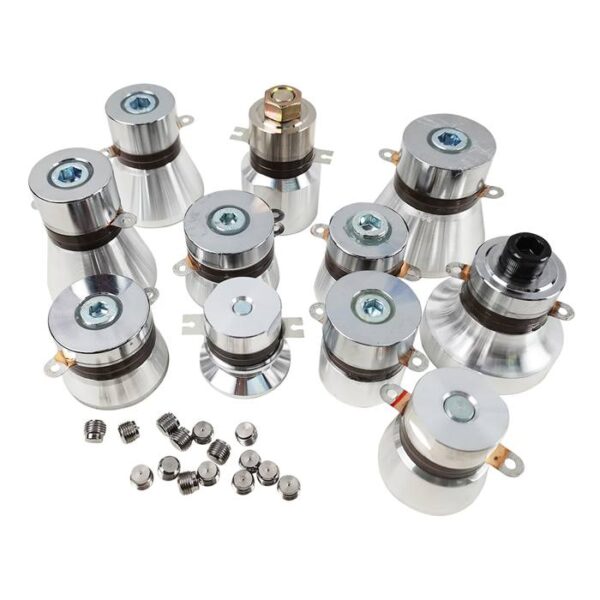
The cleaning tank contains a transducer that converts electrical energy into ultrasonic vibrations. These vibrations propagate through the cleaning solution, creating alternating high and low-pressure zones. During low-pressure phases, tiny bubbles form in the liquid. When pressure increases, these bubbles implode violently against surfaces, creating scrubbing action at the microscopic level.
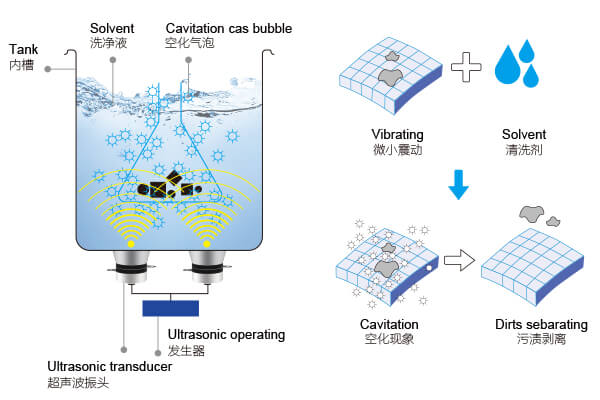
The Principle Behind Ultrasonic Cleaning
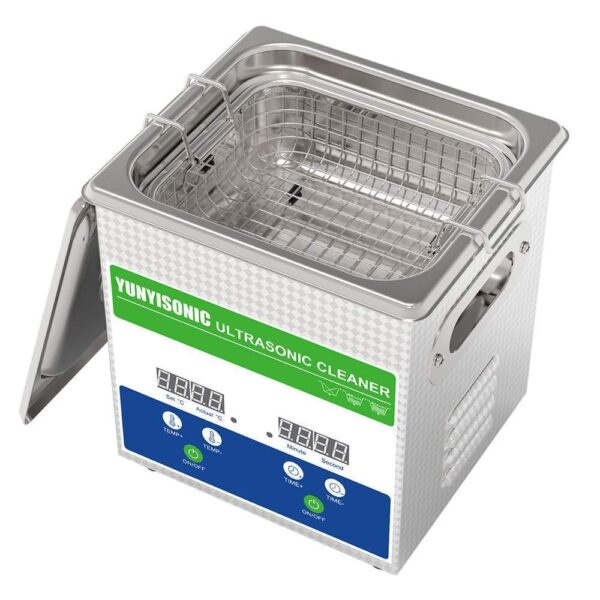
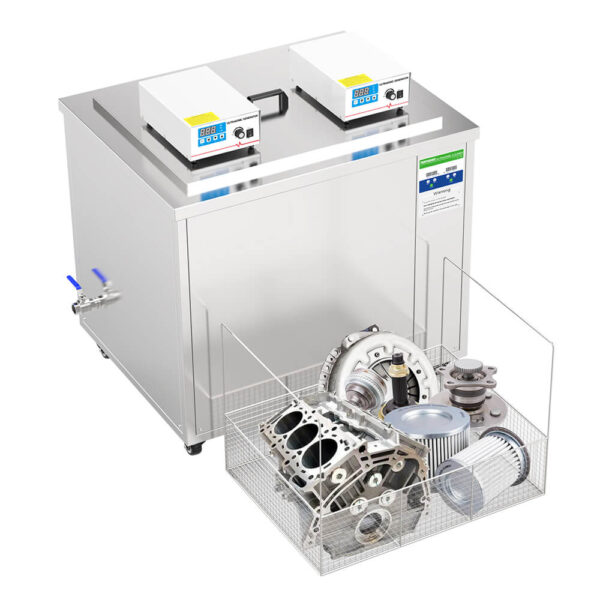
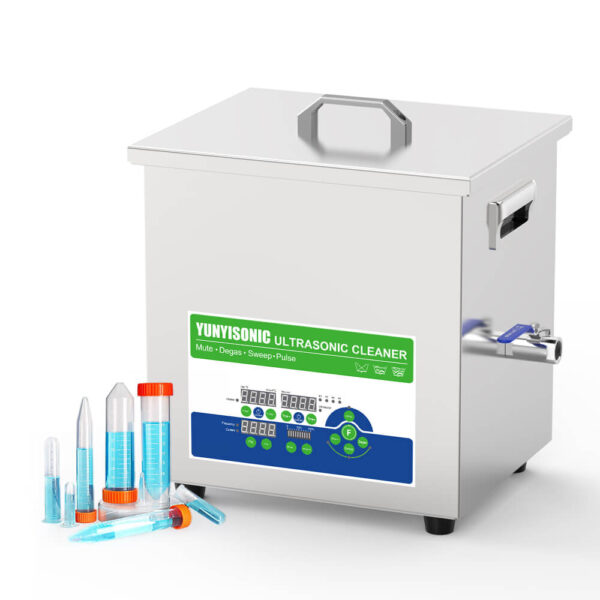
Industrial and commercial ultrasonic cleaners often include heating elements to warm cleaning solutions, enhancing chemical activity. Temperature control, adjustable power settings, and timer functions allow operators to optimize cleaning cycles for different applications. Tank sizes range from small benchtop units holding a few liters to large industrial systems with capacities exceeding 100 gallons.
Chemical and Mechanical Cleaning Synergy
Combining chemical rust removers with ultrasonic mechanical action creates synergistic effects that outperform either method alone. Chemical solutions dissolve rust through molecular interactions, but physical barriers like loose scale, grease, or paint can prevent solution contact with corroded surfaces. Ultrasonic cavitation breaks through these barriers, exposing fresh rust to the chemical action.
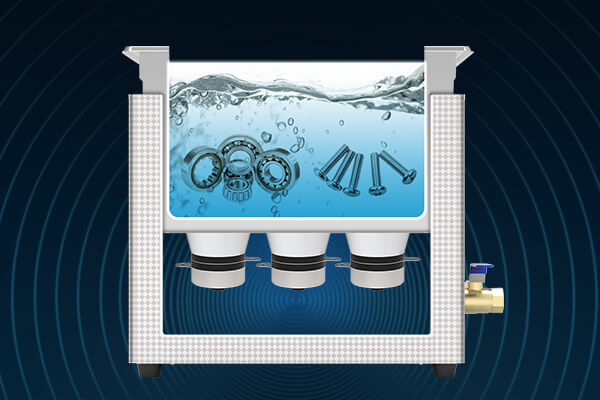
Diagram showing cavitation bubbles removing rust from metal surface in ultrasonic cleaner
The rapid bubble collapse also creates microstreaming currents in the liquid. These currents continuously circulate fresh chemical solution against the workpiece surface while carrying away dissolved rust particles. This convection prevents the formation of rust-saturated boundary layers that slow chemical reaction rates in static soaking applications.
Temperature increases from cavitation energy further enhance chemical reaction rates. While ultrasonic heating is generally modest compared to external heaters, the localized temperature spikes during bubble collapse can reach hundreds of degrees Celsius for microseconds. These brief thermal pulses accelerate chemical reactions at the metal surface without requiring bulk solution heating.
Can Evapo-Rust Be Used in Ultrasonic Cleaners?
The Direct Answer
Yes, Evapo-Rust can be safely and effectively used in ultrasonic cleaners. The product’s water-based, pH-neutral formulation poses no corrosion risk to stainless steel tanks or ultrasonic transducers. The absence of acids, alkalis, or aggressive solvents makes Evapo-Rust compatible with standard ultrasonic cleaning equipment. Many professional restorers and industrial users routinely combine these technologies to achieve faster, more thorough rust removal than either method provides independently.
The compatibility extends beyond mere safety to include performance benefits. Ultrasonic agitation dramatically accelerates Evapo-Rust’s chelation process by ensuring constant solution contact with rusted surfaces. Parts that might require 24 hours of static soaking in Evapo-Rust can achieve complete rust removal in one to three hours when ultrasonic cleaning is added. This time savings translates directly to increased productivity in professional settings.
Manufacturer Position on Ultrasonic Use
EVAPORUST is manufacturer-approved for use in ultrasonic cleaners, and it has been shown to be effective by many users. The Evapo-Rust label says it’s safe for use in ultrasonic cleaners. Additionally, the manufacturer has produced educational content demonstrating that Evapo-Rust is a super safe rust remover, suitable for home and shop use because it is safe on skin, non-toxic, non-corrosive, and non-flammable. The Evapo-Rust official website indicates that it should not be used above about 125°F, which aligns with standard ultrasonic cleaner operating parameters.
The company does not specifically prohibit ultrasonic use, though official literature focuses primarily on simple immersion soaking. This neutral stance reflects the product’s original design for consumer convenience rather than industrial optimization. The mechanical agitation does not break down the chelating agents or produce harmful byproducts. However, users bear responsibility for ensuring their specific ultrasonic equipment can safely handle aqueous solutions and for following equipment manufacturer guidelines regarding solution compatibility.
Industrial users have confirmed that ultrasonic action and heat speed up the rust removal process, with the manufacturer CRC/Evaporust themselves producing educational content affirming this application method. The manufacturer’s willingness to support these discussions indicates acceptance of ultrasonic use within proper operational parameters.
Safety Considerations
While Evapo-Rust itself presents minimal safety concerns, combining it with ultrasonic equipment requires attention to standard ultrasonic safety practices. The primary consideration involves avoiding skin contact with operating ultrasonic baths. The cavitation energy that cleans parts can also damage skin tissue, causing discomfort or injury. Always turn off the ultrasonic function before placing hands in the solution.
Aerosol generation represents another consideration. Ultrasonic cavitation can create fine mist above the solution surface, particularly at higher power settings. While Evapo-Rust mist poses no significant inhalation hazard due to its non-toxic formulation, excessive mist can create slippery floors and deposit residue on surrounding surfaces. Using a tank cover during operation or reducing power levels minimizes mist generation.
Temperature monitoring becomes more important when combining chemical and ultrasonic action. If the ultrasonic cleaner includes a heater, the combined thermal input from heating elements and cavitation energy can elevate solution temperature beyond intended ranges. Evapo-Rust works safely up to approximately 160°F (70°C), but excessive heat accelerates solution degradation and increases evaporation. Monitoring temperature and adjusting heater settings prevents overheating.
Benefits of Combining Evapo-Rust with Ultrasonic Cleaning
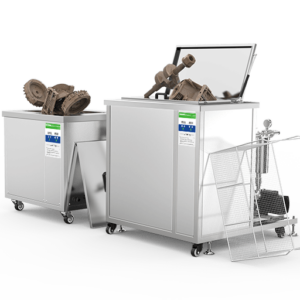
Single Tank Ultrasonic Cleaning Machine
Enhanced Rust Removal Speed
The most significant benefit of ultrasonic-assisted Evapo-Rust treatment is dramatically reduced processing time. Laboratory comparisons show that ultrasonic agitation can reduce rust removal time by 60 to 80 percent compared to static soaking. Light surface rust that requires six to eight hours of simple immersion may clear completely in 90 minutes with ultrasonic assistance.
This acceleration results from multiple factors working simultaneously. Cavitation physically disrupts rust scale, creating microfractures that allow chemical penetration. The constant solution circulation prevents saturation layers from forming at the metal surface. Localized heating from bubble collapse increases chemical reaction kinetics. Together, these effects compound to produce reaction rates far exceeding simple immersion.
Heavy rust deposits that might require multiple days of static soaking can often be removed in a single eight-hour work shift with ultrasonic enhancement. This time compression is particularly valuable in commercial restoration or maintenance operations where equipment downtime directly impacts profitability. Faster processing also means more parts can be cleaned with the same volume of Evapo-Rust, improving chemical utilization efficiency.
Improved Penetration into Complex Geometries
Ultrasonic cavitation excels at reaching intricate features like threads, blind holes, recesses, and internal passages that trap rust. Static soaking relies on diffusion to carry fresh solution into these areas and remove dissolved rust, a slow process hampered by restricted flow paths. Ultrasonic energy actively drives solution into tight spaces while simultaneously extracting rust-laden liquid.
This capability proves especially valuable for mechanical components like carburetors, brake calipers, engine blocks, and antique tools with complex internal geometry. Rust in threaded holes or valve passages might resist static treatment but responds well to ultrasonic-enhanced chelation. The mechanical agitation breaks up rust deposits that bridge across openings, allowing solution access to previously blocked areas.
Automotive restoration frequently involves parts with assembled or stacked components where rust forms between mating surfaces. Ultrasonic vibration can penetrate these interfaces more effectively than chemical diffusion alone. While complete disassembly remains ideal when possible, ultrasonic Evapo-Rust treatment offers a practical alternative for parts where disassembly risks damage or proves excessively time-consuming.
Reduced Manual Labor Requirements
Traditional rust removal often involves tedious manual scrubbing or wire brushing to break up heavy scale before chemical treatment. Ultrasonic cavitation performs much of this mechanical breakdown automatically, reducing or eliminating manual prep work. Parts can often go directly from initial rinsing into ultrasonic Evapo-Rust treatment without intermediate mechanical cleaning.
This labor reduction becomes particularly significant when processing large quantities of small parts like fasteners, brackets, or hardware. Hand-cleaning dozens or hundreds of individual rusty bolts would consume hours of labor. Basket-loading them into an ultrasonic Evapo-Rust bath accomplishes the same task with minimal operator involvement, freeing workers for higher-value activities.
Post-treatment finishing also decreases. The gentle chelation action of Evapo-Rust combined with precise ultrasonic cleaning produces smoother surface finishes than aggressive mechanical or acid treatments. Parts often emerge ready for immediate coating or use after simple rinsing and drying, without additional polishing or surface preparation.
Proper Usage Guidelines for Evapo-Rust in Ultrasonic Cleaners
Tank Material Compatibility
Most ultrasonic cleaners feature stainless steel tanks, which are completely compatible with Evapo-Rust’s pH-neutral, water-based formula. The absence of acids or strong alkalis eliminates corrosion concerns for stainless steel, ensuring long tank life even with repeated Evapo-Rust use. Type 304 and 316 stainless steel, the most common tank materials, resist any degradation from the chelating solution.
Some economy ultrasonic cleaners use plastic tanks or plastic liners. These materials also tolerate Evapo-Rust safely. The non-corrosive nature of the solution prevents chemical attack on common plastics like polypropylene or polyethylene. However, plastic tanks may limit heating options since many plastics cannot withstand temperatures above 140°F (60°C). Verify tank material specifications before using elevated temperatures.
Avoid using Evapo-Rust in ultrasonic cleaners with aluminum tanks or aluminum internal components. While Evapo-Rust is marketed as aluminum-safe for workpieces during normal treatment times, prolonged contact in ultrasonic environments might cause issues. The cavitation can accelerate any chemical interaction, potentially causing discoloration or surface effects on aluminum tank walls over repeated use cycles.
Solution Concentration and Dilution
Evapo-Rust is typically used at full strength (100 percent concentration) for maximum effectiveness. The manufacturer’s standard recommendation calls for undiluted application to ensure adequate chelator concentration for efficient rust removal. In ultrasonic applications, full-strength Evapo-Rust remains the preferred choice for heavy rust or when processing time minimization is critical.
However, the enhanced efficiency of ultrasonic cleaning allows consideration of dilution for light rust or cost optimization. Some users report success diluting Evapo-Rust 1:1 with distilled water for treating light surface rust ultrasonically. The mechanical cavitation action compensates partially for reduced chemical concentration. This approach extends the volume of available solution when tank capacity exceeds the volume of concentrated Evapo-Rust on hand.
Dilution carries trade-offs. While it stretches expensive rust remover further, it also reduces chelator concentration, slowing rust removal even with ultrasonic assistance. For professional applications where time is valuable, full-strength operation typically proves more economical despite higher chemical cost. Hobbyists with less time pressure might find 1:1 dilution acceptable for light restoration work.
Optimal Cleaning Cycle Duration
Cleaning cycle length depends on rust severity, part geometry, solution temperature, and ultrasonic power. Light surface rust on simple parts may clear in 30 to 60 minutes at room temperature. Moderate rust typically requires one to three hours. Heavy, pitted rust or thick scale might need four to eight hours of ultrasonic Evapo-Rust treatment for complete removal.
Starting with shorter cycles and inspecting progress prevents over-processing. Many ultrasonic cleaners include timers that can be set for 30 or 60-minute intervals. Running a cycle, inspecting parts, and continuing treatment if necessary provides better control than attempting to guess total required time upfront. This incremental approach also allows adjusting temperature or power settings based on observed progress.
Avoid continuous operation for many hours without monitoring. While Evapo-Rust will not damage base metal, the continuous ultrasonic exposure can potentially affect surface finish on some materials or cause issues with parts containing soft components like seals or bearings. Periodic inspection ensures the process stops once rust removal is complete, preventing unnecessary exposure.
Temperature Settings and Control
For most applications, maintaining solution temperature between 100°F and 130°F (38°C to 54°C) provides an optimal balance of accelerated chelation without excessive solution degradation. This temperature range is easily achievable with ultrasonic cleaner heating elements and significantly speeds rust removal compared to room temperature operation.
If the ultrasonic unit lacks heating capability, ambient solution temperature of 70-75°F (21-24°C) still produces good results with somewhat longer processing times. Pre-warming Evapo-Rust using external heating before adding to the ultrasonic tank offers a middle ground. Microwave heating of small quantities or hot water bath warming of containers brings solution to working temperature before use.
Monitor temperature during operation, especially during long cycles. The combination of ultrasonic cavitation energy and electric heating can gradually raise temperature beyond target ranges. Some advanced ultrasonic cleaners include temperature feedback and automatic heating control. On basic units without this feature, periodic temperature checks with a thermometer help maintain desired conditions.
Materials Safe for Evapo-Rust Ultrasonic Cleaning
Ferrous Metals and Iron Alloys
All ferrous metals and iron alloys are safe for ultrasonic Evapo-Rust treatment. This includes carbon steel, tool steel, cast iron, wrought iron, and most stainless steel alloys. The selective chelation specifically targets iron oxide while leaving metallic iron unaffected. Even prolonged exposure beyond the time needed for rust removal will not damage the base metal.
Tool steel parts with hardened surfaces clean safely without affecting heat treatment or dimensional accuracy. The chelation process works at the molecular level without mechanical abrasion that might alter surface properties. Precision machined parts, measuring tools, and gauge blocks can be derusted ultrasonically with Evapo-Rust without impacting their critical dimensions or surface finishes.
Cast iron components, common in automotive and antique machinery restoration, respond particularly well to ultrasonic Evapo-Rust treatment. The porous nature of cast iron can harbor deep rust that resists surface cleaning. Ultrasonic cavitation drives solution into the porous structure while extracting dissolved rust, achieving thorough cleaning impossible with static soaking or manual methods.
Chrome and Plated Surfaces
Chrome-plated parts are generally safe for Evapo-Rust ultrasonic cleaning provided the plating remains intact. The chelation chemistry does not attack chromium, so sound chrome plating is unaffected. This makes the process valuable for restoring chrome components like automotive trim, plumbing fixtures, or vintage tools where rust has formed but plating remains largely intact.
However, damaged plating with cracks or chips that expose underlying base metal requires caution. If rust has formed on exposed steel beneath damaged chrome, Evapo-Rust will remove it, potentially undermining the plating edges. Ultrasonic cavitation may loosen already-compromised plating. Inspect plated parts carefully and accept that restoration of already-damaged plating may show mixed results.
Nickel plating, zinc plating, and other common metal coatings show variable compatibility. Nickel typically resists Evapo-Rust well, similar to chrome. Zinc and cadmium plating may slowly dissolve in extended exposure, particularly with ultrasonic enhancement. For valuable zinc-plated parts, testing with short cycles and careful inspection determines whether the process can be used safely.
Materials to Avoid
While Evapo-Rust is remarkably safe compared to acid rust removers, certain materials still require caution or should be avoided entirely. Soft metals like lead and tin may be affected by the chelating agents, especially with ultrasonic enhancement. Parts containing these materials, such as pewter items or lead-bearing bronze alloys, should not be processed with Evapo-Rust.
Certain copper alloys can develop discoloration during Evapo-Rust treatment, though they are not chemically damaged. Brass and bronze may emerge darker or with altered patina. If preserving original appearance matters, avoid using Evapo-Rust or expect to refinish copper alloy surfaces afterward. The ultrasonic action may accelerate any color changes compared to static treatment.
Non-metallic materials like wood, leather, rubber, and most plastics are unaffected by Evapo-Rust chemistry. However, these materials may not tolerate ultrasonic cavitation well. Rubber seals can degrade under prolonged ultrasonic exposure. Wood may absorb solution and soften. Before processing assemblies containing mixed materials, consider whether disassembly is practical to protect non-metal components.
Equipment Considerations and Maintenance
Ultrasonic Cleaner Tank Protection
While Evapo-Rust itself is tank-safe, adopting protective practices extends equipment life and simplifies solution changes. Using a glass or plastic beaker as a solution reservoir within the ultrasonic tank allows using minimum Evapo-Rust volume for small parts while filling the main tank with water for ultrasonic transmission. This approach saves expensive rust remover while protecting the tank from any rust residue.
Alternatively, tank liners specifically designed for ultrasonic cleaners provide another protection layer. These disposable or reusable liners catch rust debris and simplify cleanup. When treatment is complete, the liner and contaminated solution are removed, leaving the main tank clean. Liner use is particularly practical when switching between different cleaning solutions.
After processing heavily rusted parts, rust sediment may settle in the tank bottom. This debris does not harm stainless steel tanks but should be removed periodically. Simple water rinsing and wiping removes loose sediment. Avoid abrasive scrubbing that might scratch tank surfaces, creating sites for future buildup. Maintaining tank cleanliness preserves ultrasonic efficiency and prevents cross-contamination between different cleaning applications.
Basket and Fixture Selection
Proper part positioning maximizes ultrasonic cleaning effectiveness. Parts should be arranged to allow complete solution contact and ultrasonic energy penetration. Baskets with coarse mesh or perforated walls permit good solution circulation and cavitation energy transmission. Wire baskets designed for ultrasonic use are ideal.
Avoid overcrowding, which blocks solution flow and prevents ultrasonic energy from reaching all surfaces. Parts should not nest together or overlap excessively. For heavy rust removal, processing smaller batches ensures each part receives adequate exposure. The temptation to maximize capacity per cycle often backfires by extending required processing time or leaving shadowed areas with remaining rust.
For delicate or precision parts, soft plastic or rubber fixtures prevent damage from vibration-induced contact with basket walls or other parts. Small parts can be placed in mesh bags that contain them while allowing solution flow. Larger parts may benefit from custom fixtures that suspend them in optimal orientation. Taking time to properly set up each batch improves results and protects valuable components.
Solution Lifespan and Reusability
Evapo-Rust’s reusability is one of its most economical features. The solution continues working until chelating agents become saturated with dissolved iron. In static applications, manufacturers suggest the solution remains effective until it turns black and thick or stops removing rust effectively. Ultrasonic use may extend usable life by keeping dissolved iron in suspension rather than settling out.
Visual inspection provides a rough guide to solution condition. Fresh Evapo-Rust appears clear to light amber. As it dissolves rust, the color darkens to brown and eventually black. Thick, syrupy consistency indicates high iron saturation approaching end of life. Before reaching this point, the solution still functions but with progressively slower rust removal rates.
Professional users processing large quantities of rusty parts may find it economical to test solution strength using simple methods. Cleaning identical test coupons with known rust amounts and comparing removal times to fresh solution provides quantitative data. When processing time increases 50 percent or more compared to new solution, replacement becomes cost-effective despite remaining some chelating capacity.
Frequently Asked Questions
Can Evapo-Rust damage ultrasonic cleaner tanks?
No, Evapo-Rust will not damage ultrasonic cleaner tanks made from stainless steel or plastic, the two most common materials. The pH-neutral, water-based formula contains no acids or corrosive chemicals that attack these materials. Millions of ultrasonic cleaning cycles using Evapo-Rust have been completed without tank corrosion issues. The only caution applies to aluminum tanks, which may slowly react with the solution, though this is uncommon since most quality ultrasonic cleaners use stainless steel construction.
How long should parts soak in ultrasonic Evapo-Rust?
Treatment time depends on rust severity, ranging from 30 minutes for light surface rust to eight hours or more for heavy corrosion. Most applications fall in the one to three-hour range. Start with 30 to 60-minute cycles, inspect progress, and continue as needed. The ultrasonic enhancement typically reduces soaking time by 60 to 80 percent compared to static treatment. Heavy rust may require multiple cycles with intermediate mechanical removal of loosened scale for best results.
Will ultrasonic cleaning make Evapo-Rust work faster?
Yes, ultrasonic cavitation significantly accelerates Evapo-Rust’s chelation process. The mechanical action breaks up rust scale, improves solution contact with rusted surfaces, and prevents formation of rust-saturated boundary layers. Processing times typically reduce to 25 to 40 percent of what static soaking requires. The exact speedup depends on part geometry, rust type, solution temperature, and ultrasonic power settings. Complex parts with intricate features see the greatest improvement because cavitation reaches areas that diffusion alone penetrates slowly.
Can diluted Evapo-Rust be used in ultrasonic cleaners?
Evapo-Rust can be diluted with water for ultrasonic use, though full strength remains optimal for heavy rust. A 1:1 dilution with distilled water works for light surface rust, with the ultrasonic action partially compensating for reduced chelator concentration. Dilution extends solution volume when tank capacity exceeds available concentrated product. However, dilution slows rust removal even with ultrasonic assistance. For professional applications where time is money, full-strength operation proves most economical despite higher chemical cost.
What temperature should Evapo-Rust be heated to in ultrasonic cleaners?
Optimal temperature for ultrasonic Evapo-Rust treatment ranges from 100°F to 130°F (38°C to 54°C). This range significantly accelerates chelation without degrading the solution or risking safety. Temperatures above 140°F (60°C) begin compromising solution life, while excessive heat above 160°F (70°C) can damage chelating agents. Room temperature (70°F/21°C) works if heating is unavailable, though processing time increases. Monitor temperature during operation since ultrasonic energy generates additional heat beyond external heater input.
Does ultrasonic cleaning wear out Evapo-Rust faster?
Ultrasonic agitation does not chemically degrade Evapo-Rust’s chelating agents. The mechanical cavitation does not break down the active chemistry. However, because ultrasonic treatment removes rust faster, the solution saturates with dissolved iron more quickly simply due to processing more parts in less time. Solution life is determined by total iron dissolved, not exposure time. Whether processing two parts per day statically or eight parts per day ultrasonically, the solution expires when iron saturation is reached regardless of method used.
Can I use Evapo-Rust in heated ultrasonic cleaners?
Yes, heated ultrasonic cleaners are excellent for Evapo-Rust applications. The combination of heat and cavitation maximizes rust removal speed. Set temperature between 100°F and 130°F (38°C to 54°C) for optimal results. Monitor temperature during operation since cavitation energy adds heat beyond the electric heater. Some units may require heater adjustment to prevent exceeding safe operating temperature. The benefits of heating outweigh the modest added complexity for users processing significant quantities of rusty parts.