


When searching for simple cleaning liquids around the home or workshop, many people ask: can you use vinegar in ultrasonic cleaner tanks to remove tough grime? The short, clear answer is yes, but only under specific conditions. Vinegar works well on certain mineral deposits and hard water scale, but it must be diluted properly and should almost never be poured directly into the machine’s stainless steel basin. Instead, using an indirect cleaning container such as a glass jar protects the equipment while delivering the cleaning action needed.
Standard household white vinegar is an aqueous solution containing roughly 4% to 8% acetic acid. This mild acid dissolves mineral deposits, limescale, and light oxidation. However, the energetic scrubbing action of an ultrasonic unit turns even mild acids into aggressive solutions.
How Ultrasonic Energy Works with Vinegar
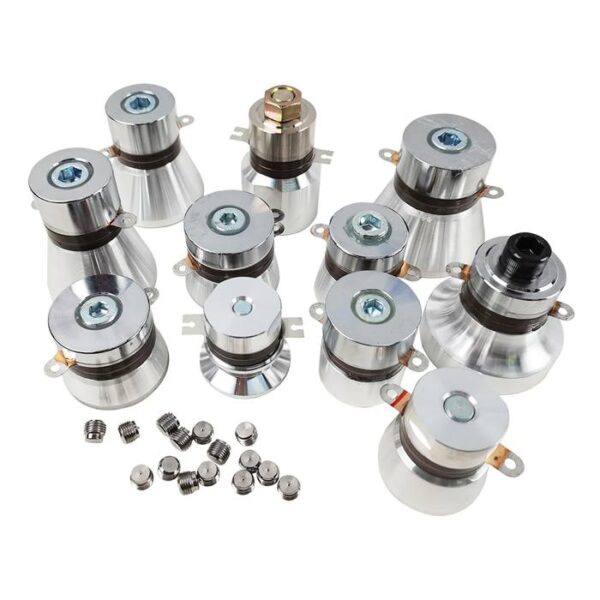
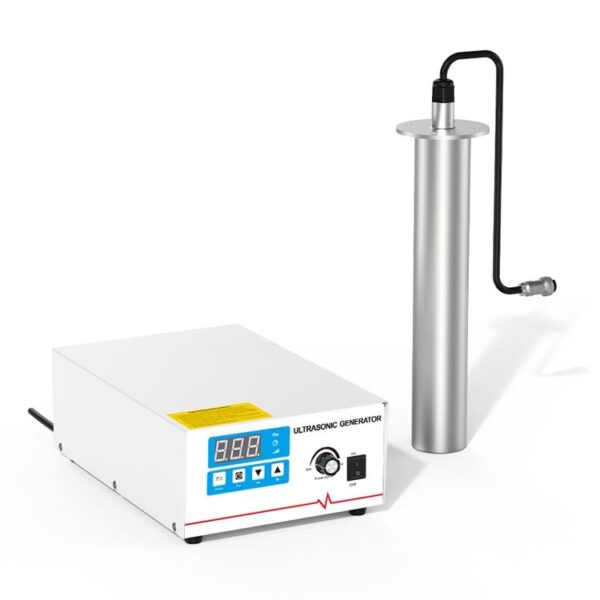
To understand why vinegar behaves differently inside an ultrasonic machine than in an ordinary soak bucket, one must look at the operating principle of ultrasonic cleaning. The process relies entirely on acoustic cavitation. Transducers mounted underneath or along the walls of the tank convert electrical power into sound waves that vibrate at frequencies far above human hearing, commonly between 28 kHz and 40 kHz. These sound waves travel through the liquid, creating alternating waves of high and low pressure.
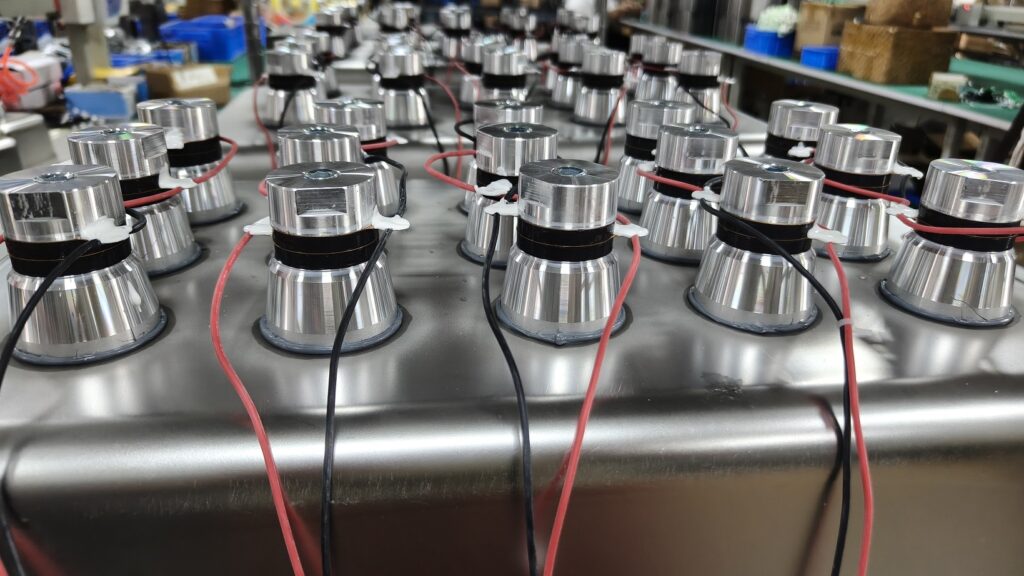
Ultrasonic Transducers Installed at the Bottom of the Cleaning Tank
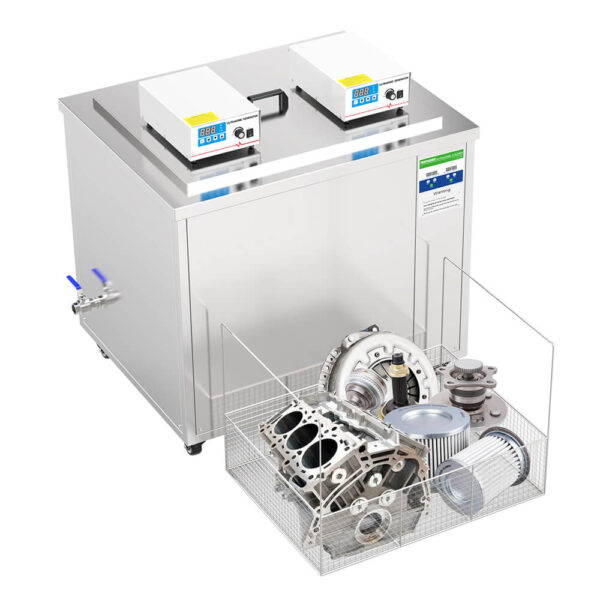
During the low-pressure phase, microscopic vacuum bubbles form throughout the liquid. When the high-pressure phase immediately follows, these tiny bubbles collapse inward with immense speed and force. As thousands of these micro-bubbles implode against the submerged surfaces every second, they produce microscopic jets of fluid that dislodge dirt, scale, and surface debris. As detailed in this overview of operational factors influencing ultrasonic cleaning results, the density, temperature, and chemical makeup of the liquid determine how effectively these cavitation bubbles form and do their work.
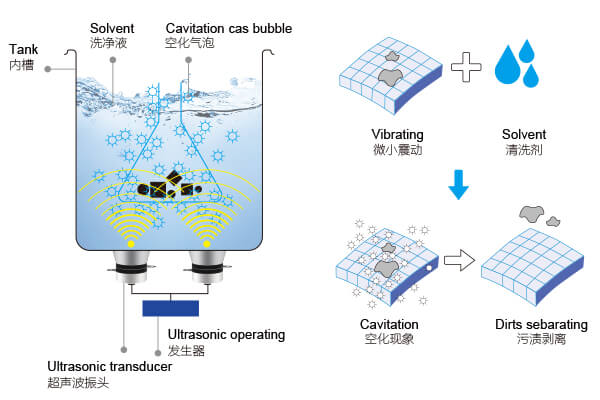
The Principle Behind Ultrasonic Cleaning
How Acidic Fluids React Under Sonic Energy
In an ordinary resting bowl, vinegar cleans slowly. As the acid reacts with scale, a thin barrier of dissolved residue forms over the surface, slowing down the reaction until the liquid is stirred. In an ultrasonic machine, acoustic cavitation continuously scrubs that barrier away. The collapsing bubbles constantly sweep away spent liquid and bring fresh acid molecules into direct contact with the surface.
This rapid mechanical action means that a five-minute cycle inside an ultrasonic unit can dissolve mineral scale faster than hours of static soaking. However, this same boost in activity also means that any corrosive effect the acid has on metals, plating, or finishes is multiplied. What would normally be a harmless short dip in vinegar can quickly turn into an aggressive chemical attack under continuous ultrasonic energy.
Why Pouring Vinegar Directly into the Tank Causes Damage
The biggest mistake users make when trying vinegar is pouring it straight into the machine’s main reservoir. Most ultrasonic tanks are pressed from SUS304 or SUS316 stainless steel. Stainless steel stays rust-free because it forms an invisible, self-healing shield of chromium oxide when exposed to air. This shield stands up well to neutral water, soapy mixtures, and specialized mild detergents.
Acidic solutions break this protective barrier down. Scientific findings published in the paper Effect of HAc on the Metastable Pitting Corrosion of 304 SS in NaCl Solution (PMC) reveal that even dilute acetic acid makes 304 stainless steel far more prone to microscopic pitting, especially when small amounts of dissolved minerals or salts are present. Once the protective layer is compromised, localized corrosion begins to take hold in the microscopic grain boundaries of the metal.
The Double Threat of Chemical Etching and Mechanical Erosion
The damage becomes much worse when acoustic cavitation is added to the equation. As the sound waves run, cavitation bubbles pound against the bottom and sides of the tank. In clean water or neutral detergents, the metal’s protective film heals itself immediately after being struck. In an acidic vinegar bath, the liquid prevents this protective layer from reforming.
Over time, the combined chemical attack and mechanical bubble impact erode the steel floor. This erosion often shows up as dull, cloudy gray patches, rough micro-pitting, or tiny black specks at the bottom of the basin. In severe cases, microscopic pinholes can develop, allowing water to leak into the delicate electronics and transducer elements beneath the tank. For this reason, equipment guidelines explicitly warn against filling the main stainless steel chamber directly with acidic liquids.
The Safe Solution: How Indirect Cleaning Works
Fortunately, there is a simple, safe way to harness the descaling power of vinegar without endangering the machine: the indirect cleaning method. In this setup, the main tank holds only plain water, acting purely as a transfer medium for the sound waves. The vinegar and the dirty item sit inside a separate, secondary container that is placed into the water bath.
Because sound waves travel effortlessly through rigid materials like glass, acoustic cavitation passes straight through the walls of the inner container and into the vinegar solution. The item gets the full scrubbing benefit of cavitation and acid, while the machine’s stainless steel basin remains protected by ordinary tap or distilled water.
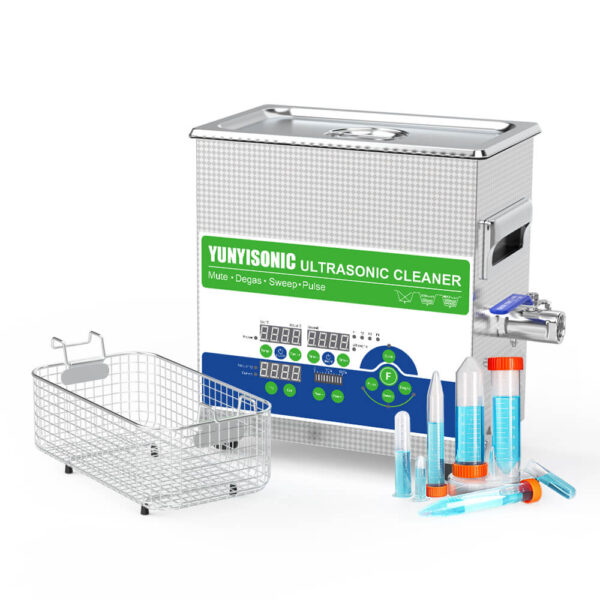
For home workshops, small repair benches, or jewelry care, a versatile compact unit like the 1.3-liter benchtop digital ultrasonic cleaner provides the right balance of precision and convenience for indirect cleaning. Featuring a 40 kHz frequency, an adjustable digital timer, built-in heating, and an integrated degassing mode, this size makes it easy to suspend a standard glass beaker or small jar in the center of the tank without dampening the sound waves or touching the bottom floor.
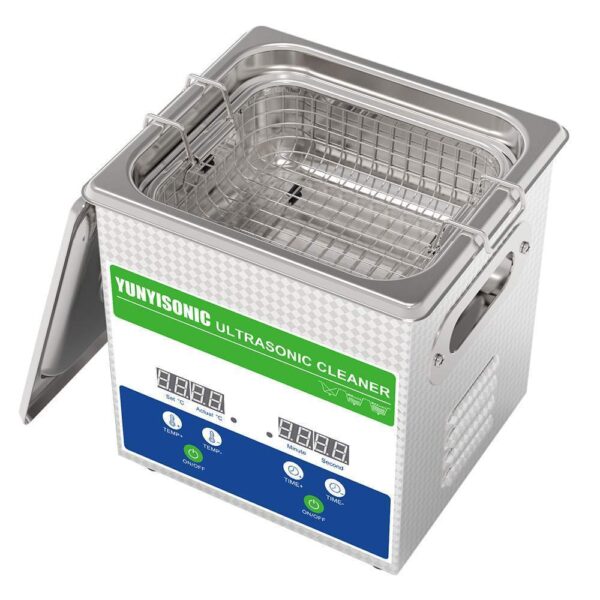
Click to view: 1.3L Ultrasonic Cleaner with Digital Panel and Touch Control | Portable Ultrasonic Cleaning Machine Direct from Manufacturers
Setting Up a Glass Beaker or Jar System
Rigid, non-porous containers deliver the best cleaning results. Standard borosilicate glass beakers, canning jars, or rigid polypropylene plastic containers work well because their firm walls transmit sound vibrations into the cleaning liquid with minimal energy loss. Soft, flexible plastic containers or silicone pouches should be avoided, as their spongy walls absorb the sound waves and stop cavitation from developing inside.
The secondary container must never rest directly on the metal floor of the ultrasonic cleaner. Placing any solid object directly on the bottom dampens the vibration of the transducers, reduces cleaning power across the entire bath, and can cause excessive localized heating that damages the tank. Always hang the container using an accessory beaker holder, or set it inside a perforated cleaning basket that keeps it raised at least a half-inch above the bottom.
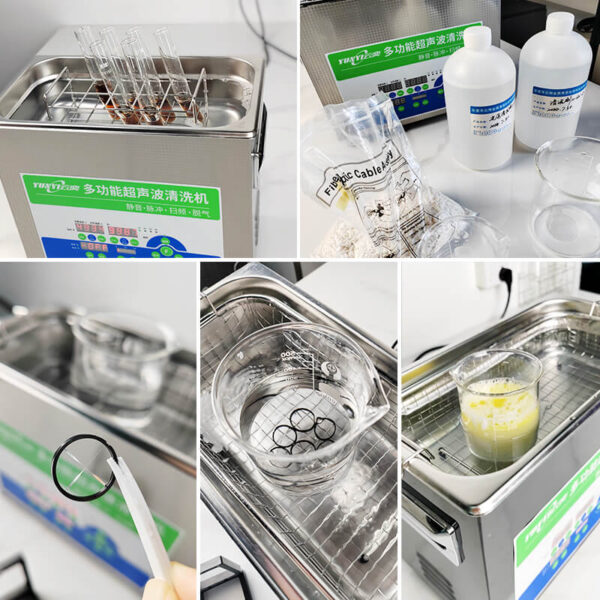
Extraction and Cleaning Using a Glass Container in a Water Bath
Material Compatibility: What Can and Cannot Be Cleaned
Even when using an indirect setup, vinegar is not safe for every object. The pairing of acid and cavitation can strip surfaces, dissolve coatings, and ruin soft stones in just a few minutes. Knowing which materials can handle an acidic bath is essential before starting any cleaning cycle.
| Material | Can You Use Vinegar? | Key Considerations and Risks |
|---|---|---|
| Glass & Glazed Ceramics | Yes (Safe) | Highly resistant to mild acids; excellent for descaling lab glass and ceramics. |
| High-Grade Stainless Steel | Yes (Short Cycles) | Safe for brief runs; requires immediate rinsing to prevent surface spotting. |
| Pure Gold & Platinum | Yes (Solid Metal Only) | Solid precious metals do not react with dilute acetic acid. |
| Plated Jewelry & Costume Pieces | No (High Risk) | Acid creeps under thin plating; cavitation flakes the outer layer off quickly. |
| Aluminum & Zinc Alloys | No (Incompatible) | Acid quickly etches aluminum, turning it dull gray with severe pitting. |
| Pearls, Coral & Soft Stones | Never (Severe Damage) | Acid rapidly dissolves calcium-based gems, permanently destroying their luster. |
| Brass & Copper | Caution (Short Dips Only) | Removes tarnish, but prolonged exposure causes uneven etching and pink spots. |
Aluminum requires special caution. While it might be tempting to clean small carburetor parts or aluminum brackets with vinegar, acetic acid aggressively reacts with aluminum alloys. The metal will lose its sheen, turn dark or chalky gray, and develop surface roughness that cannot be polished away. For aluminum parts, a pH-neutral cleaner formulated specifically for light metals is necessary.
Jewelry also demands strict care. Diamonds, sapphires, and rubies are durable enough to handle mild vinegar, but organic and porous stones are not. Pearls, turquoise, amber, coral, and opals should never be put into vinegar or an ultrasonic cleaner. Vinegar literally dissolves the calcium carbonate matrix of pearls and shells, ruining them permanently.
Soil Types: When Vinegar Helps and When It Fails
Vinegar is not an all-purpose detergent. It is an acid, which means it excels at breaking down alkaline and mineral-based soils, but struggles with greasy or synthetic contaminants. Matching the cleaning liquid to the specific type of grime saves time and prevents disappointment.
Vinegar delivers great results on items coated with hard water crust, white calcium scale, coffee maker residue, and light surface rust. It works well for unclogging showerhead nozzles, descaling metal tools, cleaning laboratory glassware, and brightening dull stainless steel hardware. The acid softens the crusty mineral bonds, while the cavitation bubbles blast the softened scale away from threads and tiny crevices.
On the other hand, vinegar performs poorly against oils, motor grease, carbon buildup, and waxy residues. As outlined in this practical guide on using vinegar in an ultrasonic cleaner, acetic acid lacks the wetting and emulsifying properties found in true detergents. It cannot break oil down into tiny droplets or keep it suspended in water. Instead, oil simply floats to the top of the vinegar bath and sticks right back onto the item as soon as it is lifted out of the jar.
Best Operating Practices: Ratios, Times, and Temperatures
When an item is suitable for vinegar cleaning, setting up the bath correctly ensures fast results while keeping risks low. A few simple adjustments to concentration, run time, and heat make a substantial difference in cleaning safety.
- Dilute with Clean Water: Avoid using neat, straight white vinegar whenever possible. A mixture of one part vinegar to two or three parts distilled water is plenty strong for most limescale and mineral crusts. Using distilled water prevents the minerals in ordinary tap water from interfering with the reaction.
- Keep Cycles Short: Ultrasonic energy works quickly. Set the timer for two to three minutes first, then inspect the item. Most light mineral scale comes off within five minutes. Running parts in an acidic solution for fifteen to thirty minutes increases the chance of micro-etching on bare metal surfaces.
- Avoid High Heat: Keep the bath temperature between 25°C and 40°C (77°F to 104°F). While warm water makes cavitation more active, heating vinegar above 50°C (122°F) creates strong, pungent acetic acid vapors. These fumes irritate eyes and breathing passages and can cause corrosion on nearby tools or machine covers.
- Degas the Water First: Fresh water holds a lot of tiny dissolved air bubbles that cushion sound waves. Before placing the beaker into the tank, run the machine for five minutes using its degas function (or simply let it run normally) to release trapped air and maximize cavitation power.
Following strict operational standards like ASTM G131-96(2023)e1 – Standard Practice for Cleaning of Materials and Components by Ultrasonic Techniques (ANSI Webstore) demonstrates that consistent control over temperature, time, and liquid chemistry is the most reliable way to achieve thorough surface cleanliness without pitting or altering precision components.
Post-Cleaning Steps: Rinsing and Machine Care
What happens right after the timer rings is just as critical as the cleaning cycle itself. Removing an item from an acidic bath leaves an invisible film of acid and loosened salts on its surface. If that residue is left to air-dry, it can quickly cause flash rusting on steel or permanent discoloration on brass.
Always rinse cleaned items immediately and thoroughly under running water, preferably using clean distilled or warm tap water. For items prone to flash rust, dipping them into a mild baking soda solution (one teaspoon of baking soda in a cup of water) instantly neutralizes any lingering traces of acid. After neutralizing and rinsing, dry the parts right away using a clean microfiber cloth or a blast of dry compressed air.
Protecting the Ultrasonic Equipment After Use
Proper cleanup also extends to the ultrasonic cleaner itself. Even when using the indirect beaker technique, tiny splashes or condensed vapors can land on the main stainless steel tank or around the plastic rim. Over time, these stray droplets can cause spotting or corrode bare metal seams.
Once finished, carefully lift out the secondary beaker and dispose of the used vinegar solution responsibly. Drain the coupling water from the main tank, rinse the interior with clean freshwater, and wipe it dry with a soft cloth. Storing the machine dry with the lid slightly ajar prevents odors, stops moisture from lingering on internal seals, and keeps the stainless steel basin looking like new for years to come.
Ready-Made Alternatives for Tough Cleaning Tasks
While vinegar is inexpensive and easy to find in any grocery store, it is not always the best tool for demanding cleaning jobs. Specialized cleaning solutions offer distinct advantages because they are engineered to be tough on dirt while remaining gentle on metals and machinery.
For tackling limescale and light rust without the harsh odor and pitting risks of vinegar, mild citric acid solutions are a popular choice. Citric acid acts as a chelating agent, binding to mineral ions and lifting them smoothly without aggressive etching. When dealing with oily machinery, greasy engine components, or dirty watch bands, a mild dish soap or a dedicated ultrasonic detergent with surfactants easily outperforms vinegar by breaking surface tension and holding grease in suspension. Those interested in simple, safe recipes can review this helpful guide to preparing safe ultrasonic solutions at home to discover effective formulas for everyday tasks.
References
- Effect of HAc on the Metastable Pitting Corrosion of 304 SS in NaCl Solution (PMC)
- ASTM G131-96(2023)e1 – Standard Practice for Cleaning of Materials and Components by Ultrasonic Techniques (ANSI Webstore)
- Can You Use Vinegar in an Ultrasonic Cleaner?
- What Influences Ultrasonic Cleaning Effectiveness
- Best Homemade Cleaning Solutions for Ultrasonic Cleaners