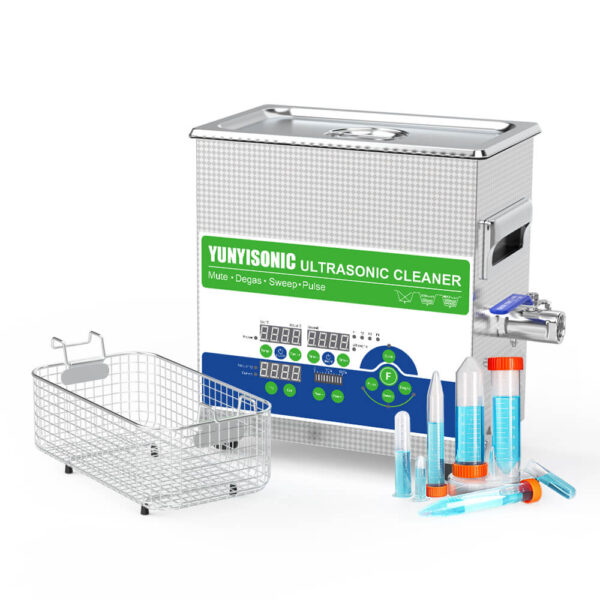


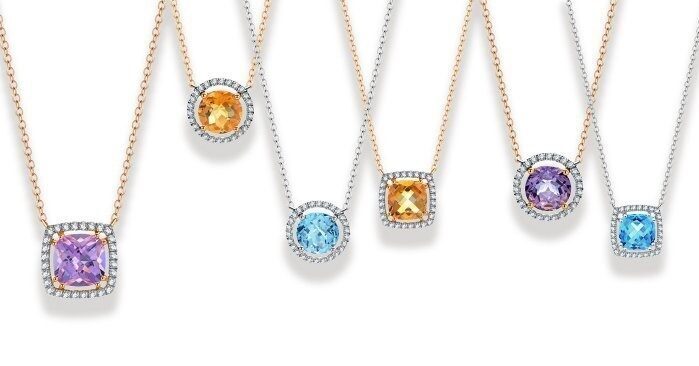

Can you use water in an ultrasonic jewelry cleaner? Yes. Water is the normal base liquid for ultrasonic cleaning, and plain water can remove loose dust, recent skin oils, water-soluble residue, and particles from suitable jewelry. For best results, distilled or deionized water is often preferable to hard tap water because it reduces the chance of mineral spots or deposits remaining on polished metal and gemstones after drying.
Water alone has limits. It does not dissolve heavy grease, hardened cosmetics, polishing compound, or persistent residue as effectively as a jewelry-safe ultrasonic cleaning solution. For jewelry that is structurally sound and known to be compatible with ultrasonic cleaning, a small amount of low-foaming, neutral cleaning concentrate can improve wetting and soil removal. The liquid must be selected for the jewelry materials, not only for the cleaner itself.
The more important safety question is not whether water can be used in the ultrasonic jewelry cleaner. It is whether the specific item can tolerate ultrasonic cleaning. A solid gold ring with a secure untreated diamond has very different cleaning requirements from a pearl necklace, an emerald ring with fracture filling, a plated fashion bracelet, or jewelry with adhesive-set stones.
When Water Alone Is Suitable for Jewelry Cleaning
plain water
Plain water is a practical starting point for light cleaning when jewelry has accumulated dust, fingerprints, fresh perspiration, or a thin film of skin oil. It can also be useful for a preliminary rinse cycle before a separate, material-compatible cleaning stage. Water is nonflammable, readily available, and generally less likely than strong household chemicals to react with durable precious metals.
A water-only ultrasonic cycle is most suitable when the jewelry is made from robust materials and there is no need to dissolve stubborn contamination. Examples can include plain solid gold, platinum, stainless steel, or sterling-silver pieces without fragile stones, coatings, loose settings, intentional oxidation, or adhesive-bonded details. Even for these materials, a visual inspection should occur before cleaning.
Water is not a polishing agent and will not reverse scratches, worn plating, tarnish damage, corrosion, or physical wear. It also does not repair a loose prong or remove residue trapped behind a poorly secured stone. Ultrasonic cleaning can reveal pre-existing jewelry defects by removing the soil that conceals them, but it should never be used as a substitute for inspection or repair.
When jewelry is valuable, antique, repaired, or made from unidentified materials, conservative manual cleaning is more appropriate until a qualified jeweler confirms the construction and gemstone treatments. A short water cycle does not make an incompatible item safe.
How Water Supports Ultrasonic Cleaning
Acoustic Cavitation in a Water-Based Bath
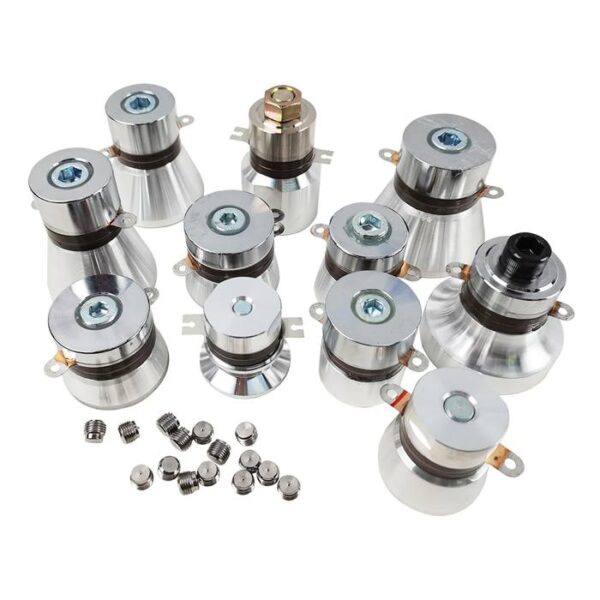
Ultrasonic cleaning works through acoustic cavitation. Ultrasonic transducers are bonded to or integrated with the cleaning tank. They convert electrical energy into high-frequency pressure waves that travel through the liquid. These pressure waves create alternating low-pressure and high-pressure phases in the water.
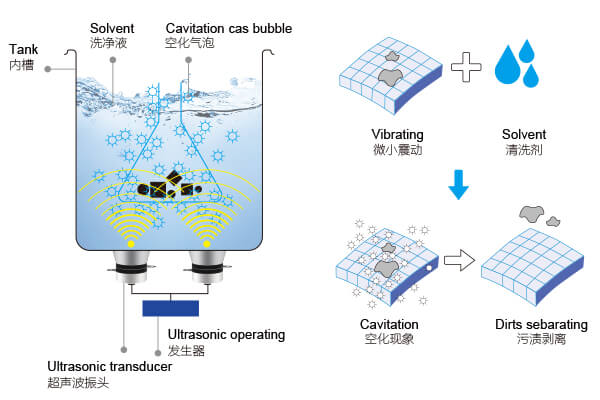
The Principle Behind Ultrasonic Cleaning
During the low-pressure phase, microscopic bubbles form in the liquid. During the high-pressure phase, those bubbles collapse rapidly. The formation and collapse of microscopic bubbles release localized energy near submerged surfaces, helping loosen particles and residues from fine gaps, engraved details, prong areas, chain links, and other hard-to-reach features.
This process is not mechanical stirring or mixing. Any pumped circulation, spray cleaning, or mechanical stirring system is separate from ultrasonic cleaning. In an ultrasonic jewelry cleaner, the primary cleaning action comes from the pressure waves generated by the ultrasonic transducers and the resulting acoustic cavitation within the liquid bath.
Compact jewelry cleaners commonly operate near 40 kHz. This frequency range is widely used for general small-part cleaning because it can reach fine details while avoiding the more forceful cavitation commonly associated with lower-frequency industrial applications. Frequency alone does not determine whether jewelry is safe to clean. The jewelry’s materials, gemstone treatments, setting condition, liquid chemistry, temperature, and exposure time remain decisive factors.
Why Water Does Not Remove Every Type of Soil
Water can transport loosened particles away from a jewelry surface, but its ability to dissolve oils is limited. Skin oils, sunscreen, hand cream, makeup, hair products, wax, and polishing residue often contain hydrophobic compounds that resist plain water. These substances may soften during a warm water cycle but can remain on the surface or redeposit if the bath becomes heavily soiled.
A small amount of a compatible low-foaming detergent can address this limitation. Surfactants reduce surface tension and help water spread over the jewelry surface. They also help lift oily soil and keep it dispersed in the cleaning bath. Too much detergent is counterproductive because excess foam can absorb ultrasonic energy and reduce the effectiveness of acoustic cavitation.
For this reason, a water-only cycle is best regarded as a light-maintenance method. A purpose-formulated jewelry cleaning solution, used at the correct dilution, is generally more effective for compatible jewelry that has visible buildup. Strong household cleaners, bleach, chlorine products, abrasive powders, and unverified chemical mixtures should not be used in an ultrasonic jewelry cleaner.
Tap Water, Distilled Water, and Deionized Water
Tap water can be used for routine cleaning in many regions, but its mineral content varies. Hard water contains dissolved calcium and magnesium compounds that may leave spots, streaks, or a fine residue after drying. These marks are especially noticeable on polished silver, gold, glass, and transparent gemstones.
Distilled water is often the better option for jewelry cleaning because it contains fewer dissolved minerals. It can reduce spotting and leaves less residue in the ultrasonic tank. Distilled water is particularly useful for final rinsing when a jewelry item has been cleaned with detergent or when a high-polish finish must be dried without water marks.
Deionized water has had dissolved ions removed and is commonly used in controlled technical processes. For household jewelry cleaning, it performs a similar role to distilled water by reducing mineral residue. However, neither distilled nor deionized water replaces suitable cleaning chemistry when the contamination is oily or strongly bonded.
| Water Type | Typical Use | Primary Advantage | Important Limitation |
|---|---|---|---|
| Tap water | Light routine cleaning | Accessible and economical | May leave mineral spots in hard-water areas |
| Distilled water | Fine jewelry and final rinsing | Lower risk of mineral residue | Does not remove heavy oils without suitable detergent |
| Deionized water | Controlled cleaning and residue-sensitive work | Low dissolved-ion content | Requires the same material screening as any water bath |
Water quality also affects tank maintenance. Repeated use of hard tap water can leave deposits on the tank floor and heating elements in heated units. Regular draining and wiping reduce residue accumulation and help preserve the appearance of the stainless-steel tank.
When to Add a Jewelry-Safe Cleaning Solution
A jewelry-safe ultrasonic cleaning solution is useful when water alone does not remove body oils, lotion, cosmetic residue, fingerprints, or grime trapped beneath a secure setting. The preferred chemistry is usually neutral or mildly alkaline, low foaming, and specifically intended for the materials being cleaned. Concentration should follow the solution supplier’s instructions.
Only a small quantity is normally required. Adding extra detergent does not create stronger ultrasonic cleaning. It can create foam, reduce cavitation efficiency, leave residue on jewelry, and make rinsing more difficult. Cleaning performance depends on the balance between liquid chemistry, temperature, ultrasonic frequency, cleaning time, and the type of contamination.
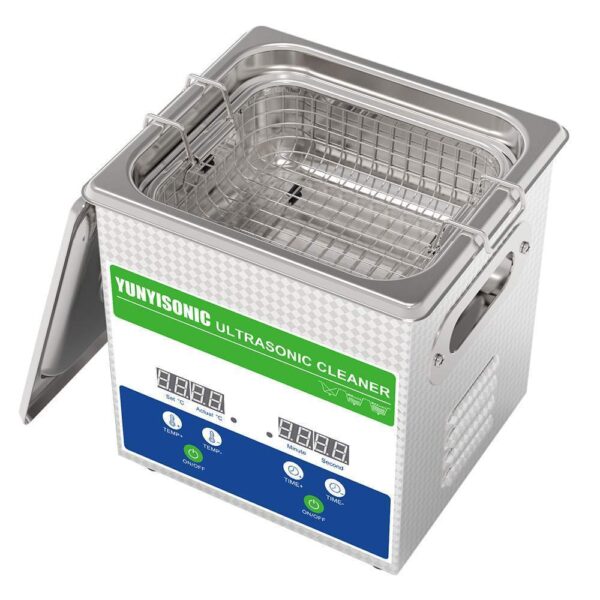
For small durable jewelry items that have passed material screening, a 1.3L Ultrasonic Cleaner for Jewelry, Small Hardware, and Spark Plugs | Easy Operation Household Cleaner offers a compact tank size for controlled water-based cleaning. A small working volume helps avoid unnecessarily large solution batches when cleaning rings, earrings, metal watchbands, or other compatible small items. Jewelry should be placed in a basket rather than directly on the stainless-steel tank bottom.
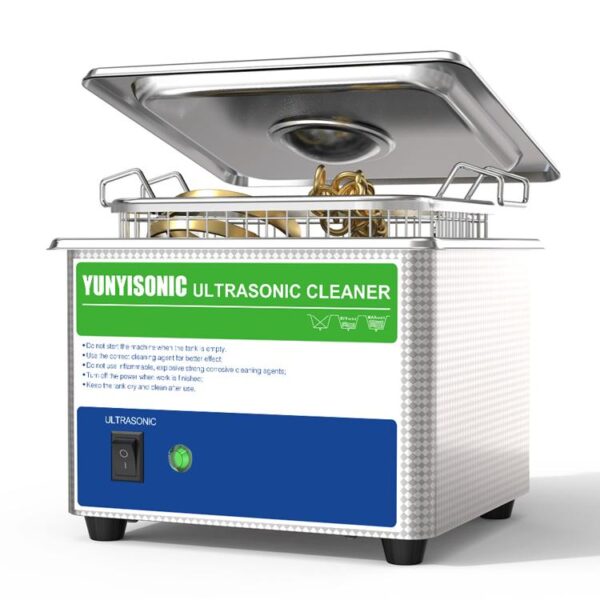
Click to view: 1.3L Ultrasonic Cleaner for Jewelry, Small Hardware, and Spark Plugs | Easy Operation Household Cleaner
The choice between water alone and water with a cleaning concentrate should be based on the soil. Light dust may need only clean water. Oily residue may require a few drops of compatible detergent. Tarnish, plating wear, scratches, and damaged coatings require other approaches and should not be addressed by increasing cleaning time or detergent concentration.
Additional guidance on selecting liquids for different jewelry materials is available in Ultrasonic Cleaning Jewelry Solutions: Safe and Sparkling Results. The key process principle is to match the liquid to both the contamination and the least durable component of the jewelry piece.
Jewelry Materials That Need Extra Caution
Suitable Jewelry for Water-Based Ultrasonic Cleaning
Water-based ultrasonic cleaning may be appropriate for durable jewelry only when the materials are known, the construction is secure, and the item has no sensitive treatments or coatings. The following table provides a practical screening guide.
| Jewelry Material or Type | Water-Based Ultrasonic Cleaning | Conditions for Use | Main Risk to Check |
|---|---|---|---|
| Plain solid gold | Usually suitable | Use a short cycle at room temperature or mild temperature; confirm that the item has no glued components or delicate finish. | Loose settings, hollow construction, plating, or surface damage. |
| Platinum | Usually suitable | Suitable when the setting is structurally sound and all gemstones are confirmed compatible. | Loose prongs, weakened solder joints, or vulnerable gemstones. |
| Plain sterling silver | Often suitable | Use a brief water-based cycle for structurally sound pieces without oxidized details, coatings, or sensitive stones. | Intentional oxidation, loose stones, and tarnish that requires polishing rather than cleaning. |
| Stainless-steel jewelry | Usually suitable | Suitable for plain, durable items with no painted, plated, or adhesive-bonded decorative elements. | Scratches caused by contact with other items in the basket. |
| Untreated diamonds, rubies, and sapphires | May be suitable | Only clean when stones are securely mounted, untreated, and free of relevant fractures or damage. | Fractures, coatings, fillings, loose prongs, and unstable settings. |
Before ultrasonic cleaning, inspect prongs, bezels, hinges, clasp mechanisms, solder joints, and stone settings. Do not place the item in the cleaner if a stone moves, a prong is bent, a clasp is worn, or a joint appears damaged. Acoustic cavitation can remove debris from narrow spaces, but it can also reveal or worsen an existing weakness in the construction.
Place jewelry in a basket in a single layer with adequate spacing. Rings, chains, earrings, and pendants can strike each other during ultrasonic cleaning, which may cause scratches, dents, chipped edges, or damage to delicate settings. Jewelry should never rest directly on the tank bottom.
Jewelry That Should Not Be Cleaned with an Ultrasonic Cleaner
The following materials and jewelry constructions should not be placed in an ultrasonic jewelry cleaner, even when the tank contains only water.
| Material or Jewelry Type | Why It Is Unsuitable | Safer Care Method |
|---|---|---|
| Pearls, coral, shell, amber, and ivory | These organic materials can be affected by water exposure, heat, cleaning chemicals, and acoustic cavitation. | Wipe gently with a soft, slightly damp cloth, then dry immediately. |
| Opal, turquoise, lapis lazuli, malachite, and other porous stones | Porous or layered materials may absorb moisture or suffer surface and structural changes. | Use a soft dry cloth or follow stone-specific professional care guidance. |
| Emeralds with fractures or clarity treatment | Many emeralds contain oil, resin, or other fracture-filling treatments that ultrasonic cleaning may affect. | Use gentle manual cleaning after confirming the jeweler’s recommended method. |
| Coated or fracture-filled gemstones | Acoustic cavitation can affect surface coatings and internal filling materials. | Clean manually with a soft cloth and minimal moisture where appropriate. |
| Plated, painted, lacquered, or costume jewelry | Thin surface layers may wear, discolor, lift, or lose adhesion during cleaning. | Use a dry microfiber cloth or a jewelry-care method approved for the finish. |
| Jewelry with glued stones or decorative elements | Water and ultrasonic energy can weaken aging adhesives or allow stones to detach. | Use careful spot cleaning without soaking the adhesive area. |
| Enamel, oxidized finishes, and delicate decorative coatings | The process can alter intentional surface contrast, chip enamel, or affect decorative layers. | Use a soft dry cloth or approved hand-cleaning method. |
| Watches and electronic jewelry | Water resistance does not confirm resistance to ultrasonic pressure waves; internal components and seals may be damaged. | Use manufacturer-approved cleaning procedures only. |
| Vintage, repaired, or unknown-material jewelry | Hidden repairs, weakened solder joints, unknown alloys, and unverified treatments create unpredictable risk. | Request inspection and cleaning advice from a qualified jeweler. |
Key decision point: water resistance is not the same as ultrasonic-cleaning compatibility. The jewelry’s stone treatment, setting method, coating, adhesive use, repair history, and physical condition must be checked before an ultrasonic cleaning cycle is selected.
How to Use Water in an Ultrasonic Jewelry Cleaner
A controlled process reduces risk and makes results more consistent. The tank should be filled to the marked operating level before the unit is switched on. Running an ultrasonic cleaner without sufficient liquid can damage the transducers or other components. The jewelry should then be placed in a suitable basket, never directly on the tank floor.
- Inspect the jewelry for loose stones, damaged prongs, cracks, worn plating, adhesives, or materials that are unsuitable for ultrasonic cleaning.
- Fill the tank with distilled water, deionized water, or clean tap water to the recommended fill level.
- Add only a small quantity of jewelry-safe, low-foaming cleaning solution if oils or cosmetic residues are present.
- Allow a new solution to degas if the cleaner includes a degas function, or run a brief empty cycle before adding jewelry. Dissolved air can reduce early-cycle cleaning consistency.
- Place jewelry in the basket with spacing between items to prevent contact damage.
- Use a short cycle, commonly two to five minutes for compatible jewelry, and inspect the item before considering another cycle.
- Rinse thoroughly in clean distilled or deionized water after detergent use.
- Dry with a lint-free cloth and allow chain links, stone settings, and crevices to dry fully before storage.
Temperature should remain conservative. Mild warmth can improve the removal of some oils, but heat can also affect adhesives, coatings, certain stones, and temperature-sensitive materials. When jewelry composition is uncertain, use cool or room-temperature water and select a non-ultrasonic hand-cleaning method instead.
Equipment Features That Influence Results
Tank capacity should match the typical jewelry load. A compact tank is useful for rings, earrings, pendants, and small bracelets because it requires less water and allows easier solution replacement. Larger tanks are appropriate only when the jewelry can be placed with adequate separation and fully submerged without crowding.
Timer control supports repeatable cleaning. A short timed cycle prevents unnecessary exposure and helps users inspect the piece between stages. Longer cleaning does not guarantee better results. If residue remains after a short cycle, the cause may be unsuitable chemistry, tarnish, a worn finish, or contamination that requires manual or professional treatment.
Heating control can be useful for durable metal parts, but it should be used cautiously for jewelry. A basket or dedicated jewelry holder is equally important because it protects both the workpiece and the tank. Direct metal contact with the tank floor can scratch jewelry and may interfere with consistent cleaning performance.
Common Mistakes With Water-Based Jewelry Cleaning
- Assuming water makes every item safe: The ultrasonic process, rather than the liquid alone, can be unsuitable for fragile stones, treatments, and weak settings.
- Using too much detergent: Excess foam can reduce acoustic cavitation and leave residue on the jewelry.
- Cleaning jewelry directly on the tank bottom: This can scratch the item and the tank surface.
- Overloading the basket: Jewelry pieces can strike each other, causing scratches, dents, or chipped details.
- Using high heat for delicate items: Temperature can affect adhesives, plating, gemstones, and coatings.
- Extending cycles without inspection: Repeated exposure adds risk without necessarily improving cleaning results.
- Skipping the rinse and drying stage: Detergent residue and hard-water minerals can dull a polished finish.
Rinsing, Drying, and Cleaner Maintenance
Rinsing is necessary whenever detergent or a cleaning concentrate has been used. A separate rinse in distilled or deionized water helps remove residual chemistry from settings, chain links, and engraved features. Rinsing should be performed in a secure container rather than over an open drain, especially when jewelry has small or potentially loose components.
Dry jewelry with a clean lint-free cloth, then allow time for moisture to leave narrow gaps. Compressed air can be useful for durable pieces with complex geometry, but high air pressure should be avoided around loose stones or fragile settings. Jewelry should be completely dry before it is returned to a closed storage box or pouch.
Drain the ultrasonic tank after each use. Used water contains the oils, particles, and cleaning residues removed from jewelry, so it should not be saved for a later cycle. Wipe the tank with a soft cloth, avoid abrasive pads, and do not leave standing water inside the unit. Regular maintenance supports stable ultrasonic cleaning performance and reduces mineral buildup.
Water is an appropriate and effective base for ultrasonic jewelry cleaning when the jewelry is durable, structurally secure, and suitable for acoustic cavitation. Distilled or deionized water provides the cleanest finish, while a correctly diluted jewelry-safe solution improves removal of oils and cosmetic films. Careful material screening, short cycles, basket support, thorough rinsing, and complete drying are more important than attempting to clean every item with the same water-based process.
References
- Ultrasonic Cleaners for Gems: What You Need to Know (Gemological Institute of America)
- Ultrasonic Cleaning Jewelry Solutions: Safe and Sparkling Results