


Can You Use Vinegar in an Ultrasonic Cleaner
Can you use vinegar in an ultrasonic cleaner? Yes, but only for selected materials and cleaning tasks, and it is usually better not to pour vinegar directly into the main ultrasonic tank. Vinegar contains acetic acid, which can help loosen light mineral scale, hard-water residue, oxidation staining, and alkaline deposits. It is not a universal ultrasonic cleaning liquid, and it is not the preferred choice for oily contamination, precision assemblies, plated items, sensitive metals, electronics, or mixed-material components.
From an equipment-design and process-control perspective, the lower-risk method is indirect ultrasonic cleaning. The main tank is filled with clean water, while diluted vinegar is placed in a separate compatible beaker or insert container. This limits direct acid exposure to the stainless-steel tank while allowing ultrasonic energy to pass through the water bath and into the secondary cleaning solution.
Material compatibility must be confirmed before vinegar is used. A liquid that removes mineral residue effectively from glass or a solid stainless-steel fitting may discolor aluminum, dull plated surfaces, weaken adhesive joints, or attack zinc-containing alloys. The correct decision depends on the contaminant, the base material, the surface finish, the ultrasonic cleaner’s tank construction, cleaning temperature, and cycle duration.
When Vinegar Can Be Used for Ultrasonic Cleaning
Vinegar can be useful when the primary soil is mineral-based. Common examples include calcium deposits, lime scale, dried water spots, soap residue, mild oxidation staining, and light rust-related deposits on compatible metal parts. These residues may not respond well to plain water because they are bonded to the surface or built up in threads, grooves, narrow passages, and recessed areas.
Acidic chemistry can help soften or dissolve alkaline mineral deposits. Ultrasonic cleaning then improves liquid access to small features where manual wiping is difficult. This combination can be effective for durable, non-electronic parts that have been assessed for acid compatibility.
Vinegar is less suitable when the contamination is oil, grease, wax, polishing compound, carbonized residue, adhesive, or thick industrial soil. These contaminants normally respond better to a neutral or mildly alkaline detergent with surfactants. A suitable ultrasonic detergent can lower surface tension, improve wetting, lift oily residues, and keep removed soil suspended rather than allowing it to settle back onto the part.
A vinegar-based process should therefore be treated as a specialized short-cycle option for light descaling or deposit removal. It should not be used as the default liquid for every ultrasonic cleaning application.
How Vinegar Works in an Ultrasonic Cleaning Process
The Principle Behind Ultrasonic Cleaning
Acoustic Cavitation and Cleaning Chemistry
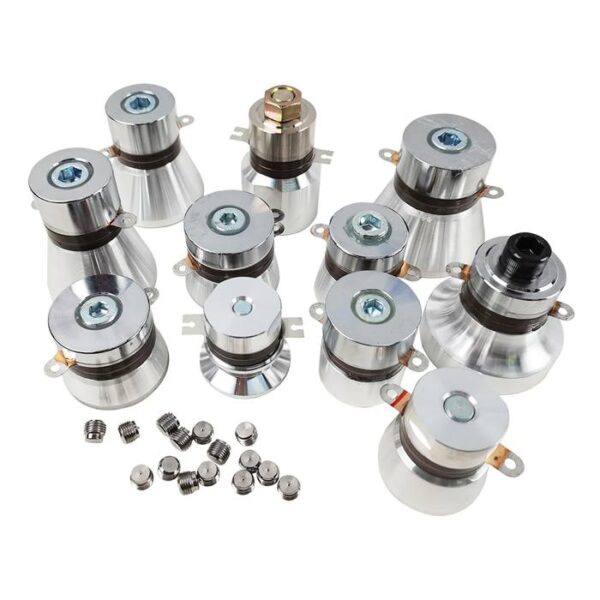
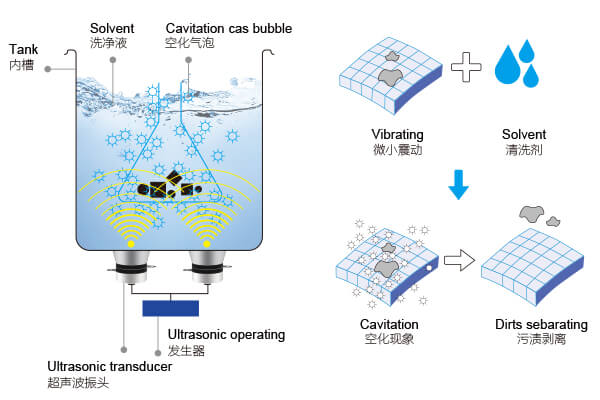
Ultrasonic cleaning depends on acoustic cavitation. Ultrasonic transducers generate high-frequency pressure waves in the liquid bath. These pressure waves create alternating low-pressure and high-pressure zones. During the low-pressure phase, microscopic bubbles form in the liquid. During the high-pressure phase, the bubbles collapse rapidly near the surface of the submerged part.
The collapse of these microscopic bubbles releases localized energy that helps detach contaminants from detailed surfaces. This enables ultrasonic cleaning to reach threads, holes, joints, grooves, blind recesses, and other areas that may be difficult to clean manually. The cleaning liquid remains essential because acoustic cavitation removes loosened material most effectively when the solution can wet the surface, dissolve contamination, or keep particles dispersed.
Suitable ultrasonic cleaning chemistry should be low foaming, compatible with the material being processed, and easy to rinse from the part. Guide to Ultrasonic Cleaning of Medical Devices: How Ultrasonics Work and More (STERIS Corporation) explains that ultrasonic cleaning performance depends on the relationship between cleaning chemistry, cavitation, loading practices, and the equipment’s operating conditions.
Mineral Deposits, Oxides, and Organic Soils
Vinegar’s acetic acid content can assist with deposits that are alkaline or mineral in composition. Calcium and magnesium residues from hard water are common examples. These deposits may appear as white film, crusty residue, cloudy spots, or build-up inside narrow channels. When a compatible part is exposed to a diluted acidic solution for a short period, the deposit may soften and become easier to rinse away.
However, vinegar does not provide the same degreasing performance as a formulated detergent. Oils and lubricants generally require surfactants or emulsifiers to lift them away from the surface. Attempting to remove heavy grease with vinegar can lead to poor results, longer cleaning cycles, and unnecessary acid exposure to the ultrasonic equipment and workpiece.
For parts affected by both oil and mineral deposits, a staged process is usually more reliable. A compatible detergent cycle can remove oil and organic soil first. After rinsing, a short acidic treatment may be considered only if scale or oxidation remains and the material is confirmed to tolerate the chemistry.
Why Direct Vinegar Use Can Be Risky for Ultrasonic Tanks
Stainless Steel, Acetic Acid, and Chloride Exposure
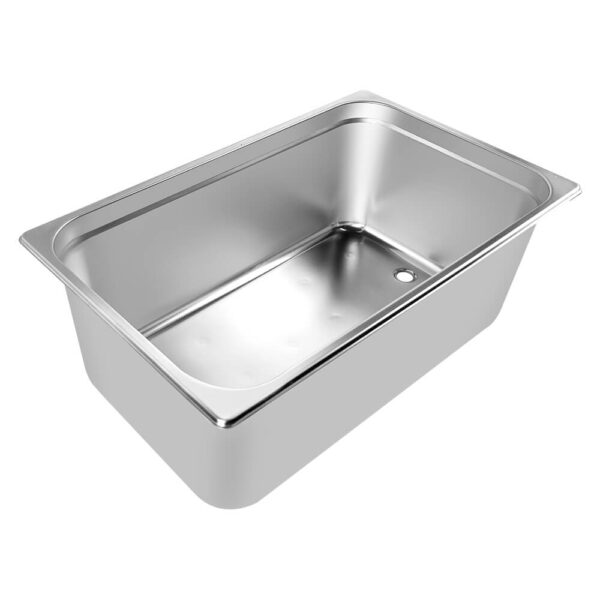
Many benchtop ultrasonic cleaners use SUS304 or AISI 304 stainless-steel tanks. This material is durable and corrosion-resistant in many water-based cleaning applications, but corrosion resistance is not unlimited. Acid concentration, solution temperature, contact duration, weld condition, chloride contamination, and tank maintenance all influence long-term performance.
Diluted vinegar is less aggressive than concentrated acetic acid, but direct repeated use can still introduce avoidable risk. The concern is not only the broad tank surface. Acidic liquid can remain around weld seams, drain fittings, scratches, tank corners, baskets, and deposits on the tank floor. If chloride-containing contamination is present, localized pitting risk can increase.
Selection of stainless steels for handling acetic acid (CH3COOH) (British Stainless Steel Association) notes that stainless-steel selection for acetic-acid service depends on acid concentration and temperature, while chloride contamination can contribute to pitting corrosion. This engineering principle supports the use of a separate cleaning container rather than direct acidic operation in a standard stainless-steel ultrasonic tank.
The Influence of Temperature and Cleaning Time
Heat can accelerate chemical reactions. A diluted vinegar solution at room temperature may be suitable for a brief descaling task, while the same liquid at elevated temperature can become more active against both deposits and susceptible surfaces. Heating also increases odor and may cause users to extend exposure unnecessarily.
Cleaning time should be kept short. A two-minute test cycle followed by inspection is more controlled than running a long cycle without confirming results. If the deposit does not respond to a short cycle, the correct solution may be a different chemistry, manual treatment, or professional restoration rather than longer vinegar exposure.
Acoustic cavitation and heat must also be considered separately. Ultrasonic cleaning is generated by the transducers and their high-frequency pressure waves. Heating changes the liquid’s chemical activity and viscosity, but it does not make an incompatible acidic solution safe for the tank or the workpiece.
Indirect Cleaning: The Preferred Method for Vinegar
Indirect cleaning is the preferred practice when vinegar is required for a limited ultrasonic cleaning task. The main tank is filled with water to its specified operating level. A smaller glass beaker or compatible chemical-resistant container is placed inside a basket or suspended holder. The diluted vinegar solution and the workpiece are placed inside that secondary container.
The water in the main tank transfers ultrasonic energy into the secondary vessel. Acoustic cavitation can then occur within the vinegar solution, while the main tank is protected from continuous direct contact with acid. The container should not rest directly on the tank bottom because direct contact can scratch the tank, interfere with energy distribution, and place unnecessary stress on the tank surface.
Indirect cleaning also reduces chemical consumption. Only enough diluted vinegar is needed to cover the part in the beaker, rather than filling the whole tank with acidic liquid. This improves process control and simplifies rinsing and disposal.
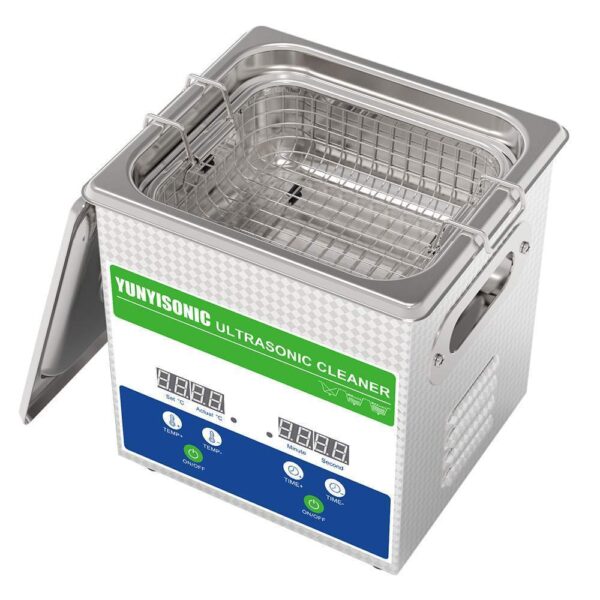
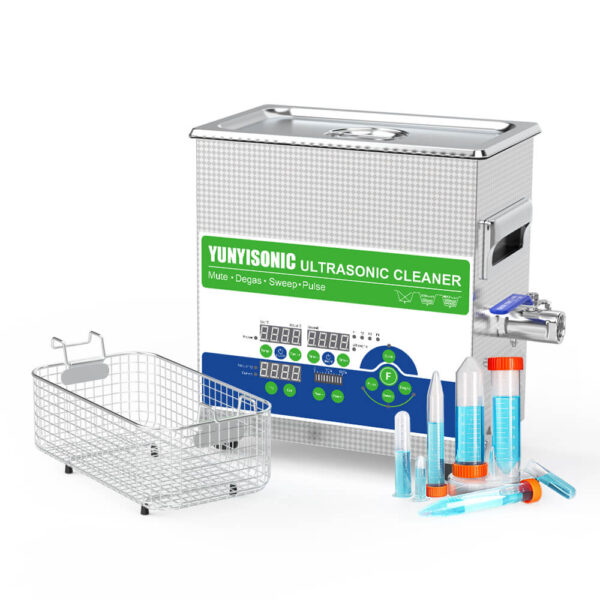
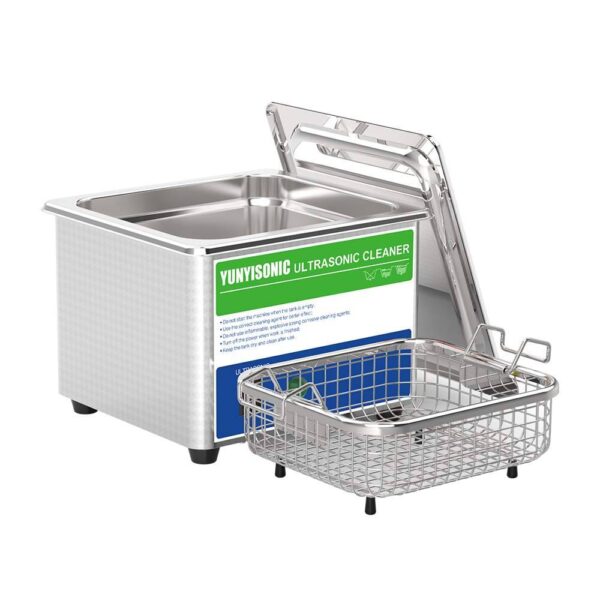
For small compatible hardware, a compact 1.3L Ultrasonic Cleaner for Jewelry, Small Hardware, and Spark Plugs | Easy Operation Household Cleaner can support this indirect method because its 1.3 L SUS304 tank provides a practical water-bath volume for a small insert container. The 40 kHz operating frequency is suitable for general small-part ultrasonic cleaning, but vinegar compatibility must still be determined by the workpiece material rather than by the machine’s frequency or tank capacity.
Recommended Vinegar Dilution and Cleaning Procedure
For light mineral deposits on compatible materials, begin with a conservative dilution. A one-to-one mixture of plain white vinegar and distilled or deionized water is a practical starting point for short indirect cleaning cycles. More concentrated vinegar should not be assumed to be more effective, particularly when the part has a coating, finish, narrow tolerance, or unknown alloy composition.
- Inspect the workpiece for paint, plating, oxidation-sensitive finishes, adhesive joints, rubber parts, cracks, corrosion, electronics, and unknown materials.
- Confirm that the component manufacturer does not prohibit acidic cleaning.
- Fill the main ultrasonic tank with clean water to the required operating level.
- Prepare diluted white vinegar in a compatible glass or chemical-resistant insert container.
- Place the workpiece in the insert without overcrowding or allowing multiple parts to rub together.
- Run a short cycle of approximately two to five minutes at room temperature or with no added heat.
- Inspect the part before repeating the process. Do not increase cycle time automatically.
- Rinse the workpiece thoroughly with clean water to remove acidic residue.
- Dry the item immediately using a lint-free cloth, clean compressed air, or another material-appropriate drying method.
- Drain and dry the ultrasonic tank after the cleaning process is complete.
A test clean should be performed before processing valuable, vintage, plated, repaired, or unknown-material items. Testing one noncritical part is particularly important where surface appearance, dimensional accuracy, or corrosion resistance is important.
Compatible and Incompatible Materials
Short indirect vinegar cleaning may be suitable for selected glass, ceramic, and solid stainless-steel components with light mineral residue. Certain brass or copper items can also be processed cautiously, but these metals may darken, lose surface brightness, or develop color variation if exposure is excessive. Immediate rinsing and drying are important.
Aluminum and aluminum alloys should be approached with caution. Acidic liquids can dull, stain, or etch bare aluminum, while damaged anodized coatings may be especially vulnerable. Zinc, magnesium, galvanized steel, die-cast alloys, and unknown mixed metals are generally poor candidates for vinegar cleaning.
Vinegar should also be avoided for plated parts, painted items, lacquered finishes, printed markings, optical coatings, natural stone, pearls, shell, coral, porous gemstones, adhesive-bonded assemblies, watches, batteries, circuit boards, speakers, microphones, and electronic devices. A durable-looking item may contain hidden adhesives, seals, coatings, or decorative layers that do not tolerate acid exposure.
When a Purpose-Made Ultrasonic Cleaning Solution Is Better
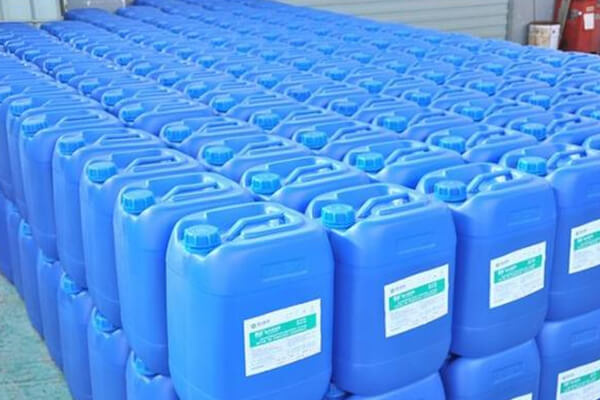
A purpose-made ultrasonic cleaning solution is usually the better choice for routine cleaning because it is formulated for a specific soil type and material group. Neutral and mildly alkaline cleaners are commonly selected for oils, fingerprints, light grease, machining residues, polishing compound, and general handling contamination. Acidic products are normally reserved for scale, rust, oxide, and mineral deposits after material compatibility has been checked.
Cleaning liquids for ultrasonic cleaning (Sonixtek) states that cleaning chemistry should be matched to the soil, workpiece material, and tank material. The guidance also warns that acidic and chloride-containing liquids can pit AISI 304 stainless steel and recommends using a beaker or insert tank when acid cleaning is necessary.
Formulated cleaners also provide more predictable concentration guidance, rinsing behavior, foam control, and material compatibility data. This is particularly important in workshops, laboratories, repair facilities, and production environments where repeatability matters. Vinegar may be suitable for occasional household descaling, but it should not replace a validated cleaning chemistry where part quality and equipment life are important.
Common Mistakes When Using Vinegar in an Ultrasonic Cleaner
- Pouring undiluted vinegar into the main tank: This exposes the tank and accessories to unnecessary acid contact.
- Using heat to speed up cleaning: Higher temperature can increase chemical attack and may damage sensitive surfaces.
- Cleaning oil-covered parts with vinegar: Acidic vinegar is not an efficient substitute for a surfactant-based degreaser.
- Leaving parts in vinegar after the cycle ends: Cleaning should be followed by inspection, rinsing, and drying without delay.
- Using vinegar on unknown alloys: Material appearance alone does not confirm acid compatibility.
- Ignoring surface coatings: The base metal may tolerate vinegar while plating, paint, lacquer, or anodizing does not.
- Skipping the final rinse: Residual acid can continue reacting with a surface after ultrasonic cleaning has stopped.
Post-Cleaning Tank Care and Maintenance
Even when indirect cleaning is used, small splashes or vapor condensation may reach the tank rim, basket, lid, or surrounding surfaces. After using vinegar near an ultrasonic cleaner, the main water bath should be drained. The tank should then be wiped with a soft cloth and dried completely.
Do not store water, vinegar, detergent, or used cleaning liquid in the tank between cleaning sessions. Standing liquid can leave deposits, create odor, and increase the possibility of corrosion or staining. Regular inspection of the tank floor, corners, drain area, and welded sections can help identify residue or early surface changes before they become more significant.
References
- Guide to Ultrasonic Cleaning of Medical Devices: How Ultrasonics Work and More (STERIS Corporation)
- Selection of stainless steels for handling acetic acid (CH3COOH) (British Stainless Steel Association)
- Cleaning liquids for ultrasonic cleaning (Sonixtek)