

Yes, an ultrasonic cleaner can be used on Invisalign aligners when the equipment is suitable for delicate dental appliances and operated under controlled conditions. A compact unit with moderate acoustic output, a short timer, cool or lukewarm water, and an aligner-compatible cleaning solution is generally more appropriate than a powerful industrial ultrasonic bath. The aligner should be rinsed after cleaning, inspected for damage, and returned to the mouth only after all solution residue has been removed.
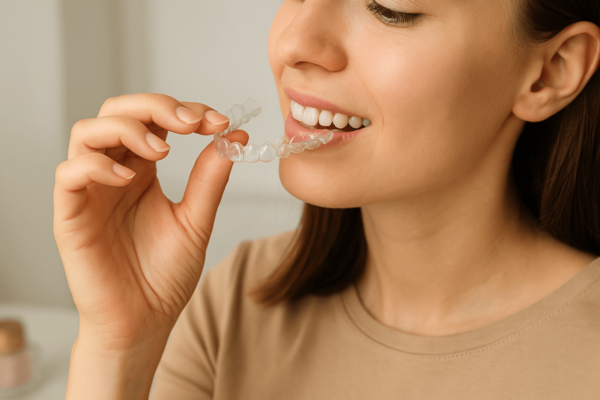
Braces
Why Ultrasonic Cleaning Can Be Suitable for Invisalign
Aligners have a complex three-dimensional shape. Their inner surfaces contain tooth impressions, narrow transitions, trimmed edges, and spaces around attachments. Manual brushing can clean these areas, but the pressure and contact pattern may not be uniform. Ultrasonic cleaning allows the liquid to reach recessed regions without requiring a brush to touch every surface directly.
How acoustic cavitation removes deposits
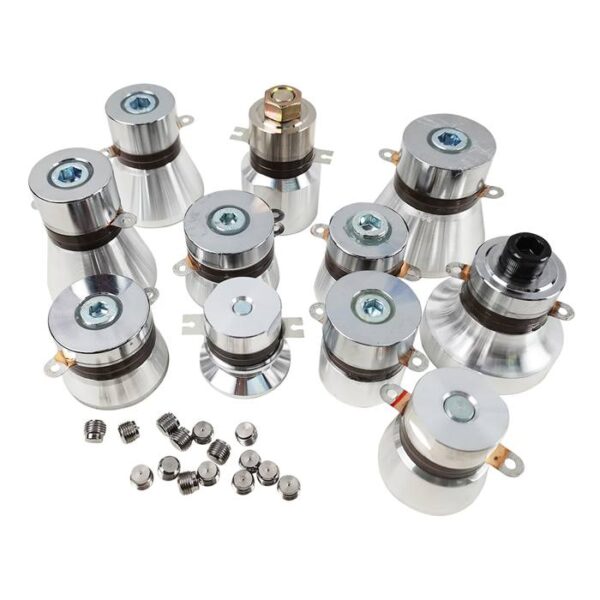
The cleaning process begins when electrical energy is converted into mechanical vibration by the transducer. The transducer transfers high-frequency pressure waves into the liquid. During low-pressure portions of the sound cycle, microscopic bubbles form; during high-pressure portions, those bubbles collapse. This repeated bubble activity creates microflows that separate contaminants from the aligner surface.
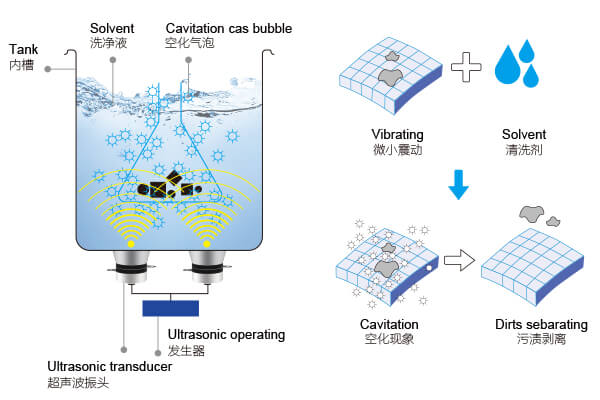
The Principle Behind Ultrasonic Cleaning
The result depends on several variables rather than frequency alone. Cleaning performance is affected by acoustic power per liter, transducer location, tank shape, liquid level, temperature, dissolved gases, contaminant type, and the position of the aligner. An aligner that is folded, pressed against the tank, or partly above the liquid may receive uneven treatment.
Some ultrasonic equipment includes additional functions such as pumped circulation, spray cleaning, mechanical movement, or liquid filtration. These functions are separate from ultrasonic cleaning. Pumped circulation can improve liquid uniformity, while spray systems provide direct mechanical impact. Neither function should be confused with acoustic cavitation generated by the ultrasonic transducers.
Why aligner material and fit require controlled cleaning
Invisalign aligners are thin thermoformed polymer appliances. Their effectiveness depends on a close fit and carefully designed geometry. Excessive heat can soften or distort polymer materials, while strong solvents may affect transparency, surface appearance, or mechanical properties.
Heat is a particular concern because ultrasonic operation itself can gradually raise the liquid temperature. A tank with a heater may be designed to reach temperatures suitable for metal parts, glassware, or industrial components, but those settings are not automatically appropriate for clear aligners. The American Association of Orthodontists advises using lukewarm water and avoiding hot or boiling water because heat can warp plastic retainers. The same material-care principle should be applied to removable clear aligners. This guidance is described in How to Clean Retainers: AAO’s Guide to Retainer Care (American Association of Orthodontists).
How to Select an Ultrasonic Cleaner for Clear Aligners
The most suitable cleaner is not necessarily the model with the highest power, largest tank, or highest maximum temperature. For one or two aligners, a small household or dental-oriented bath is easier to control and generally reduces unnecessary water, solution, and energy use.
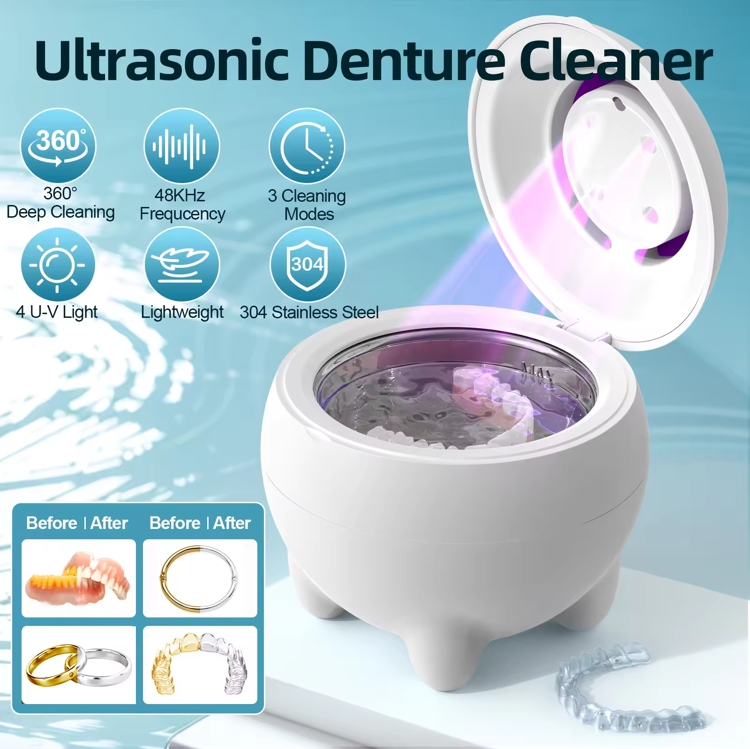
Click to view : Portable 48kHz UV Ultrasonic Cleaner for Dental Appliances | 360° Deep Cleaning for Dentures Jewelry Travel Use
Frequency and power density
Frequency affects the size and behavior of cavitation bubbles. Lower-frequency systems commonly create more energetic bubble collapses, while higher-frequency systems tend to produce smaller bubbles and a more distributed cleaning effect. A 40 kHz compact cleaner is widely used for small-item cleaning, but the frequency should always be considered with the actual power density and product application.
Power density describes the ultrasonic power relative to the liquid volume. A small bath with 60 watts may have a very different acoustic intensity from a 20-liter bath with the same nominal power. For clear aligners, moderate output and a short exposure are preferable to aggressive settings intended for grease, tooling, or industrial parts.
When selecting a unit, useful technical specifications include:
- Operating frequency suitable for small and delicate objects.
- Low or moderate power density rather than industrial output.
- A short adjustable timer, preferably with automatic shutoff.
- A removable basket that prevents direct contact with the tank bottom.
- A temperature display or controlled heater that can remain switched off.
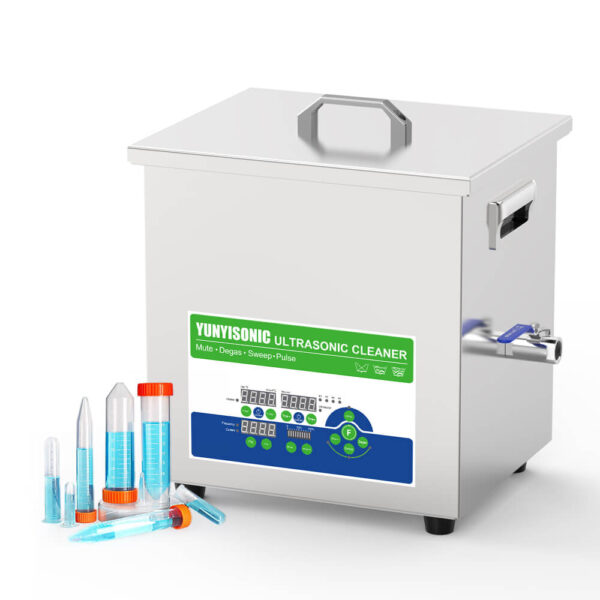
- A degassing function for improving liquid conditions before cleaning.
- A tank volume large enough to submerge the aligner without bending it.
Tank capacity and basket design
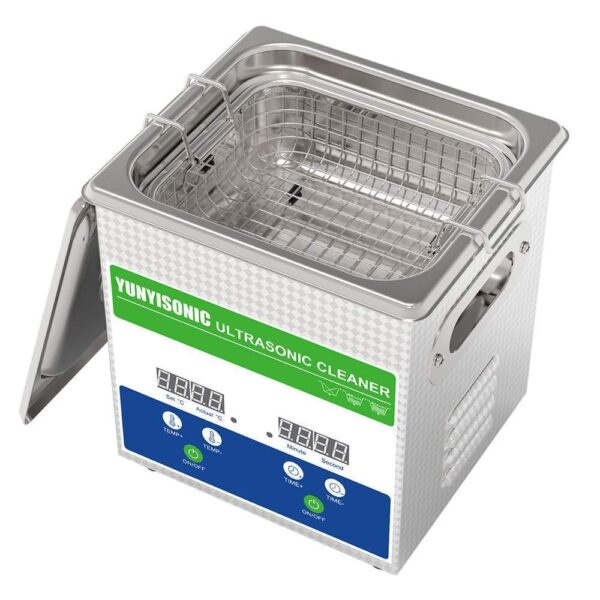
A compact tank between approximately 0.8 and 2 liters is generally practical for household aligner cleaning. The aligner should fit without being forced against the side walls. A basket also makes removal easier and helps prevent direct contact with the stainless-steel tank.
An 800ml digital benchtop unit is a representative example that fits this profile. Its compact footprint, 40 kHz frequency, and removable mesh basket provide adequate space to fully submerge appliances without crowding the chamber walls. While such multi-purpose units often include digital timers, degassing, and heating elements, the heating function must remain turned off to prevent thermal damage to thermoplastic materials like Invisalign.
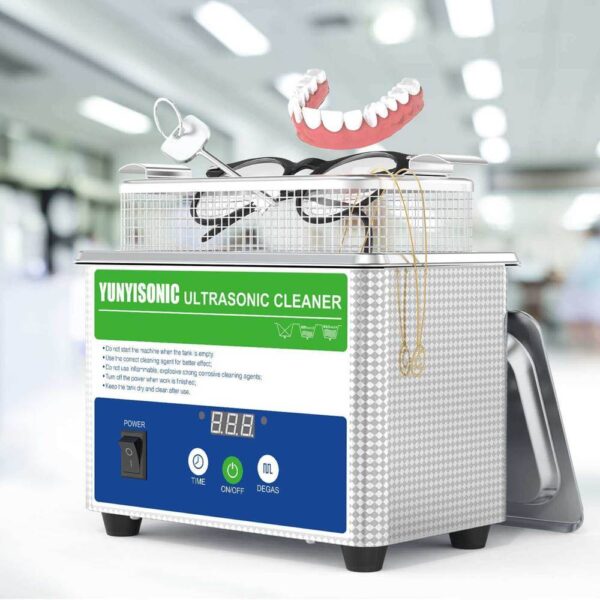
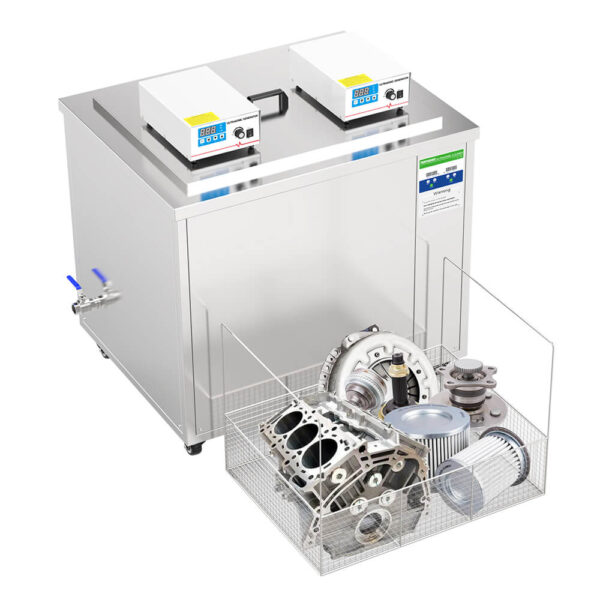
A large laboratory bath can be technically capable of cleaning aligners, but it may be impractical for household use. Larger tanks often provide more power, more complex controls, and higher heating capacity than needed. Industrial units should not be selected for aligners merely because they offer a stronger cleaning effect.
Timer, degassing, and temperature control
A timer allows the operator to repeat a consistent cycle. For routine aligner cleaning, a short cycle of approximately three to five minutes is a reasonable starting point when the equipment instructions do not specify another duration. Longer exposure may increase heat buildup without delivering a proportional improvement.
Degassing is a preparation function that removes dissolved air from newly filled water. Dissolved gases can absorb part of the ultrasonic energy and interfere with stable cavitation. A degassing cycle can help the bath reach more consistent operating conditions, but it is not the same as the actual cleaning cycle.
Temperature control should be treated as a safety feature rather than a performance advantage. Use cool or lukewarm water and keep the heater off unless a specific aligner-care instruction permits heating. The liquid temperature should be checked if the cleaner is operated repeatedly or if the tank becomes warm during a cycle.
How to Use an Ultrasonic Cleaner on Invisalign
Remove the aligner from the mouth before cleaning. Rinse it with cool or lukewarm water to remove loose food residue and saliva. Inspect the aligner for cracks, sharp edges, whitening, cloudiness, or distortion. An appliance that no longer fits correctly should be evaluated by the treating dentist or orthodontist rather than cleaned repeatedly in an attempt to restore its fit.
Preparation and loading
Fill the tank to the marked liquid level. Do not operate the cleaner with insufficient liquid because the acoustic field may become uneven and the equipment may be damaged. Place the aligner fully under the water and avoid folding or twisting it.
If a basket is supplied, use it. The basket creates spacing between the aligner and the tank and reduces the risk of scratching or impact. Do not stack multiple aligners unless the equipment instructions specifically allow it. Stacked appliances can trap air and shield portions of the surface from the cavitation field.
For two aligners, position them so that liquid can circulate around both pieces. Avoid pressing them tightly together. If bubbles remain attached to the inner surface, briefly reposition the aligner or use the cleaner’s approved degassing function before beginning the cleaning cycle.
Water, cleaning solution, and cycle time
Plain water may be sufficient for light daily residue. When a cleaning solution is required, use a product specifically intended for clear aligners or retainers. A dental appliance solution should be compatible with polymer materials and suitable for oral contact after rinsing.
Do not use bleach, acetone, strong alcohol-based liquids, household disinfectants, abrasive powders, or concentrated detergents. A chemical that works well on stainless steel, automotive components, or jewelry may damage an aligner or leave a residue that irritates the mouth.
The official Invisalign™ Cleaning System (Invisalign Accessory Store USA) specifies warm water rather than hot water and provides a separate soaking procedure for its cleaning crystals. If those crystals or another approved solution are used in an ultrasonic cleaner, the solution instructions and the aligner manufacturer’s instructions should both be followed. The ultrasonic cycle should not be assumed to replace the chemical product’s specified contact time.
For an unvalidated home setup, begin with a short cycle and evaluate the result. A three- to five-minute cycle is generally more conservative than running the unit continuously. The objective is to remove deposits while limiting thermal exposure and repeated mechanical stress.
Rinsing, drying, and storage
After the cycle ends, remove the aligner with clean hands or a clean basket. Rinse it thoroughly under cool or lukewarm running water. This step is essential when any cleaning solution has been used because chemical residue may remain in tooth pockets, attachment recesses, or trimmed edges.
Allow the aligner to drain and air-dry, or use a clean lint-free cloth. Avoid abrasive towels and do not place the aligner in a dishwasher, clothes dryer, microwave, or other heat source. Store it in a clean, ventilated protective case when it is not being worn. The FDA identifies cleaning as one of the reasons clear aligners are removable, while professional supervision remains important for monitoring fit and treatment progress, as described in Clear Dental Aligners (U.S. Food and Drug Administration).
What Not to Put in an Ultrasonic Cleaner
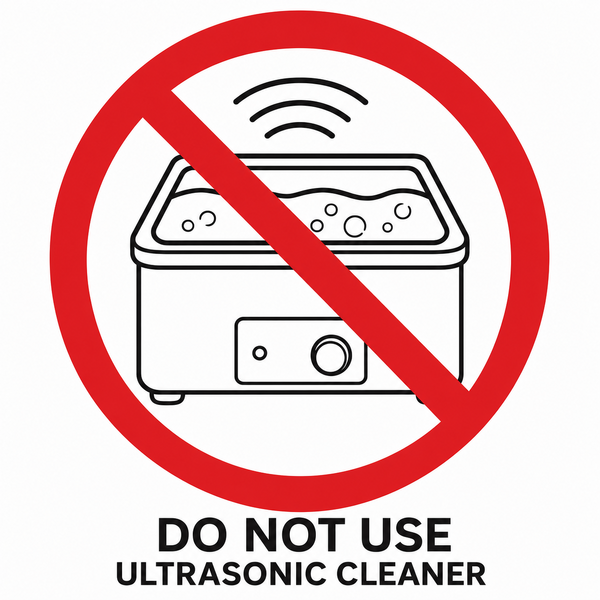
Do Not Use
Hot water is the most common avoidable risk. Even if an aligner appears unchanged, heat exposure can alter its dimensions enough to affect seating. Avoid boiling water, high-temperature heater settings, and placing a hot aligner directly into cold water because rapid temperature changes can also stress the material.
Toothpaste is another poor choice for ultrasonic cleaning. Many toothpastes contain abrasive particles intended for tooth surfaces. These particles can create fine scratches on clear polymer, making the surface appear dull and potentially creating locations where future deposits can accumulate.
Do not clean an aligner together with jewelry, tools, coins, firearm parts, or greasy components. Contaminants removed from those items can transfer into the liquid and onto the aligner. A dedicated tank or a thoroughly cleaned tank with fresh water is the better practice.
Do not place a cracked, warped, or sharp-edged aligner into service after cleaning. Ultrasonic cleaning can remove deposits, but it cannot restore material strength, correct deformation, or repair a change in fit.
Advantages and Limitations of Ultrasonic Cleaning
Ultrasonic cleaning offers several practical benefits for aligner maintenance. It can reach internal contours that are difficult to brush, provide repeatable timed cycles, reduce direct brushing force, and clean more uniformly when the aligner is correctly positioned. It can also be useful for retainers, night guards, and similar removable appliances when the material and care instructions permit the process.
The process has clear limitations. Ultrasonic cleaning does not automatically sterilize an aligner, remove every mineral deposit, reverse discoloration caused by material aging, or replace tooth brushing and flossing. It also cannot determine whether an appliance still fits correctly. A clean aligner may still be unsuitable for wear if it has warped or if the patient’s treatment plan has changed.
For ordinary daily care, rinsing with lukewarm water and using a soft brush with mild soap may be sufficient. The American Association of Orthodontists recommends regular cleaning and warns against hot water, abrasive toothpaste, bleach, and harsh chemicals. These lower-complexity methods may be more appropriate when an ultrasonic cleaner is unavailable or when the orthodontist has not approved additional equipment.
Routine Maintenance and Troubleshooting
Drain and rinse the tank after every use. Wipe the tank and basket with a soft cloth, then allow them to dry. Do not leave used cleaning solution in the tank because organic residue and chemical concentration may increase over time.
If the cleaner produces weak results, verify the liquid level, confirm that the aligner is fully submerged, and check whether excessive foam is present. Foam can interfere with cavitation. If the unit includes degassing, run that function with fresh water before the cleaning cycle.
If the water becomes unexpectedly hot, stop the cycle and allow the equipment to cool. Inspect the heater setting, timer, and ventilation around the unit. Abnormal vibration, electrical odor, leakage, or irregular noise requires the equipment to be disconnected and inspected according to the service instructions.
Inspect the aligner after each deep-cleaning cycle. Persistent cloudiness, cracks, rough edges, odor, or a change in fit should be reported to the dental professional. Cleaning performance should never be judged only by visual brightness; dimensional stability and comfortable seating are more important for an orthodontic appliance.
Ultrasonic cleaning is a suitable option for Invisalign when the system is compact, the acoustic output is controlled, the water remains cool or lukewarm, and the cleaning chemistry is compatible with the appliance. The best equipment design emphasizes stable cavitation, short timed cycles, manageable tank capacity, and protection against overheating. Used in combination with daily rinsing, oral hygiene, proper storage, and orthodontic follow-up, ultrasonic cleaning can help maintain a clearer and more hygienic aligner without exposing it to unnecessary heat or chemical stress.
References
- Clear Dental Aligners (U.S. Food and Drug Administration)
- How to Clean Retainers: AAO’s Guide to Retainer Care (American Association of Orthodontists)
- Invisalign™ Cleaning System (Invisalign Accessory Store USA)