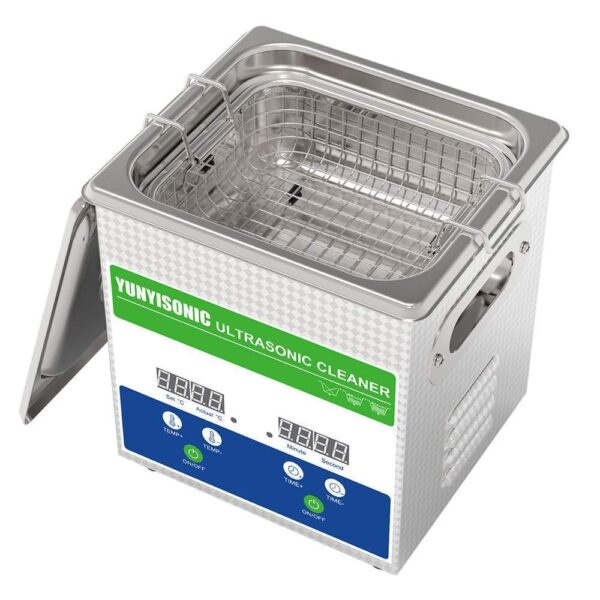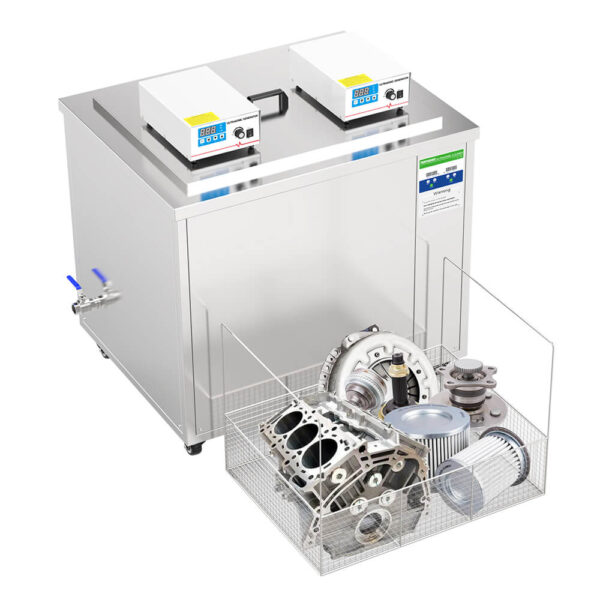


Yes, an ultrasonic cleaner can be used for jewelry, but it is not suitable for every piece. Ultrasonic cleaning is effective for removing oil, dust, makeup, soap residue, polishing compound, and other deposits from suitable jewelry. It is particularly useful for cleaning areas that are difficult to reach with a cloth or soft brush, such as the underside of gemstone settings, chain links, clasps, grooves, and spaces around prongs.
The main limitation is material compatibility. Some gemstones, treatments, coatings, adhesives, and fragile settings may be damaged by ultrasonic cleaning. Jewelry with pearls, opals, turquoise, coral, fracture-filled stones, glued components, or loose gemstones requires a different cleaning method or professional inspection.
An ultrasonic cleaner provides the physical cleaning action through acoustic cavitation. Ultrasonic transducers generate high-frequency pressure waves in the cleaning liquid, causing microscopic bubbles to form and collapse. The collapse of these bubbles produces localized liquid movement, shear forces, and microjets near solid surfaces that help loosen contamination.
The equipment does not determine safety by itself. The jewelry construction, gemstone treatment, setting condition, cleaning solution, temperature, cycle time, and loading arrangement must all be considered before the process begins.

Various Types of Jewelry
How Ultrasonic Cleaning Works on Jewelry
Acoustic Cavitation
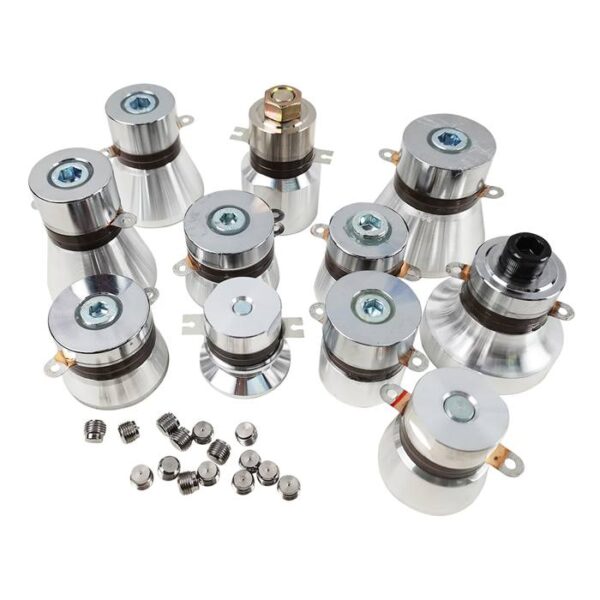
An ultrasonic cleaner contains an electrical generator and one or more ultrasonic transducers. The generator supplies a high-frequency electrical signal, and the transducers convert that energy into pressure waves within the liquid.
When the pressure changes are strong enough, microscopic bubbles form and collapse throughout the bath. This process is called acoustic cavitation. The bubble collapse creates localized turbulence, shear forces, and liquid microjets near immersed surfaces.
These effects help remove contamination from narrow areas that are difficult to reach manually. Dirt beneath a diamond, residue between chain links, and polishing compound around a clasp may be loosened without aggressive brushing.
Acoustic cavitation is the primary operating principle of ultrasonic cleaning. It should not be described as mechanical stirring. If a machine includes a separate pump, spray system, or mechanical circulation feature, that function operates independently from the ultrasonic cleaning process.
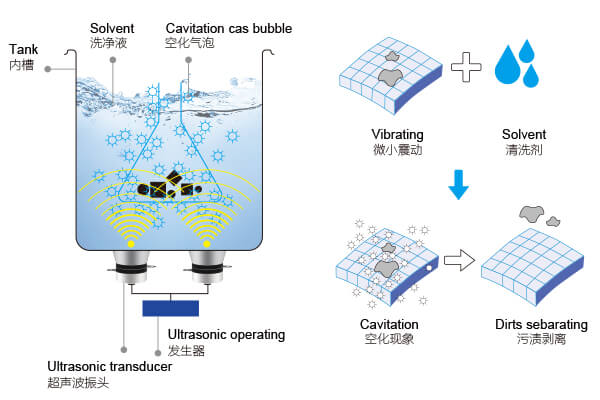
The Principle Behind Ultrasonic Cleaning
Cleaning Solution and Operating Conditions
Water provides the liquid medium required for acoustic cavitation, while a compatible jewelry-cleaning solution helps loosen oils and organic deposits. A suitable solution should provide effective wetting, controlled foaming, and low residue after rinsing.
Cleaning performance depends on several interacting variables:
- Ultrasonic frequency and acoustic power
- Tank geometry and transducer placement
- Water level and jewelry position
- Cleaning-solution concentration
- Liquid temperature
- Cycle duration
- Jewelry size, shape, and loading arrangement
Higher power or longer treatment does not automatically produce better results. Excessive acoustic energy may increase the risk of damage to fragile settings, treated gemstones, thin coatings, or adhesive-mounted components.
A professional jewelry cleaner should use a low-foaming solution approved for ultrasonic equipment. Household bleach, abrasive powders, strong solvents, and unapproved chemicals should not be added to the tank. Some chemicals may attack metal alloys, coatings, gemstones, seals, or the stainless-steel tank.
Why Jewelry Design Affects the Result
Jewelry is usually a combination of materials rather than a single uniform object. A ring may include a precious-metal alloy, solder, a gemstone, a coating, a setting, and an adhesive-mounted decorative part. These components may have different levels of resistance to heat, chemicals, and vibration.
A secure untreated diamond in platinum is not equivalent to an emerald set in gold, a pearl pendant, or an antique ring with aged solder. Gemstone durability, internal fractures, treatment history, mounting condition, and previous repairs all affect the suitability of ultrasonic cleaning.
The Gemological Institute of America explains that ultrasonic cleaners can remove dirt from difficult areas, but warns that not all gemstones and jewelry designs can be safely cleaned in them. See Ultrasonic Cleaners for Gems: What You Need to Know (Gemological Institute of America).
Which Jewelry Is Suitable for Ultrasonic Cleaning?
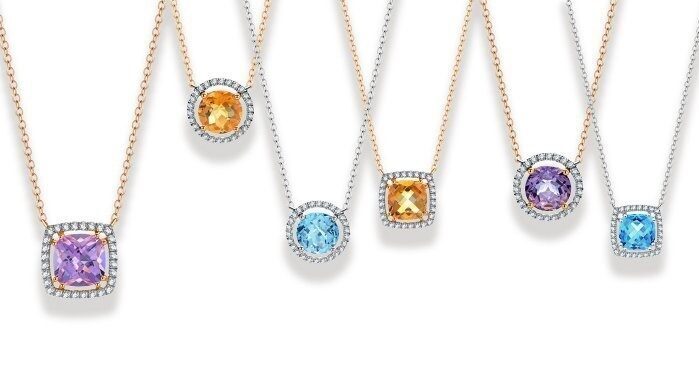
Jewelry and Accessories
Gold, Platinum, and Suitable Diamonds
Solid gold and platinum jewelry may be suitable for ultrasonic cleaning when the gemstones are compatible and the settings are secure. The metal itself is often durable enough for controlled immersion, but the complete jewelry piece must still be assessed.
Most untreated diamonds can tolerate ultrasonic cleaning. However, diamonds with significant inclusions, surface-reaching fractures, or certain treatments require caution. A diamond’s hardness does not guarantee resistance to every type of impact. The stone may still chip at a vulnerable edge or become damaged if it contacts another stone during the cycle.
GIA states that ultrasonic cleaners can be used for suitable diamond jewelry but warns that treated diamonds, loose stones, and settings with contacting girdles may present risks. See Secrets to Keeping Your Diamond Sparkling (Gemological Institute of America).
Some untreated sapphires, rubies, spinel, and other durable gemstones may also tolerate ultrasonic cleaning. Suitability still depends on inclusions, fractures, treatments, and the condition of the setting. Spinel, for example, may be cleaned ultrasonically in many cases, but fractures can create a potential problem. See Spinel Care and Cleaning Guide (Gemological Institute of America).
Gemstones That Require Caution
Several gemstones may be vulnerable to heat, liquid penetration, internal fractures, chemical exposure, or treatment damage. Examples include emerald, opal, turquoise, lapis lazuli, malachite, tanzanite, moonstone, sunstone, fluorite, iolite, kunzite, topaz, and some varieties of zircon.
The gemstone name alone does not always determine the correct cleaning method. Treatment history and internal condition may be more important than the general durability classification.
Emeralds are commonly treated with oil, resin, or other materials to improve apparent clarity. Ultrasonic cleaning may affect these treatments or worsen existing fractures. GIA also recommends avoiding ultrasonic cleaning for many gemstones that contain filled surface-reaching fractures or have been impregnated or coated with oil, plastic, or wax. See Ultrasonic Cleaners for Gems: What You Need to Know (Gemological Institute of America).
Plated, Antique, and Mixed-Material Jewelry
Gold-plated, silver-plated, rhodium-plated, and other coated jewelry requires additional care. The visible surface layer may be thin, worn, or poorly bonded. Ultrasonic cleaning may expose existing wear or affect the surface when combined with heat and cleaning chemicals.
Antique and estate jewelry may contain thin metal sections, aged solder, fragile mountings, hollow parts, previous repairs, or decorative materials that are not obvious during a quick inspection.
Mixed-material jewelry containing enamel, leather, wood, textile elements, adhesives, or glued stones should be evaluated conservatively. The most sensitive component should determine the cleaning method for the complete piece.
Which Jewelry Should Not Go in an Ultrasonic Cleaner?
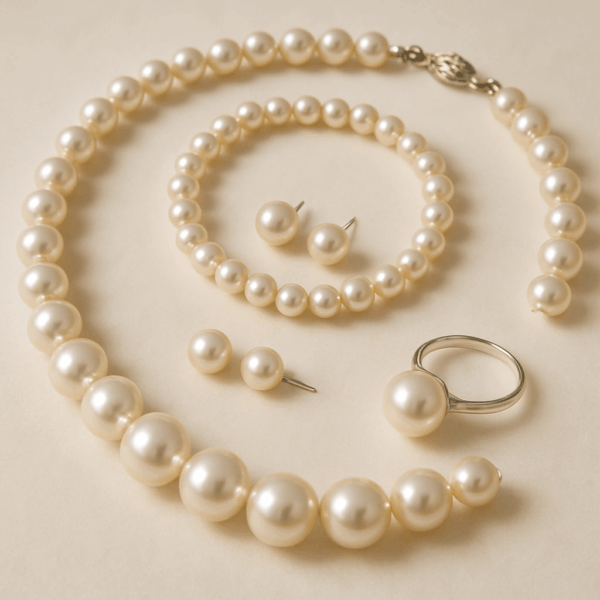
Pearl Necklace
Pearls and Organic Gem Materials
Pearls, coral, amber, ivory, shell, tortoiseshell, jet, and other organic or porous materials should generally not be placed in an ultrasonic cleaner. These materials may absorb cleaning liquid or be affected by heat, chemicals, and acoustic cavitation.
Pearls are especially sensitive because the nacre surface can be damaged by harsh cleaning conditions. Coral and other porous materials may absorb chemicals and change appearance. The safest method is usually gentle wiping or careful cleaning with a soft, damp cloth according to the material’s care requirements.
GIA advises against ultrasonic cleaning for organic gem materials and other sensitive stones. See Ultrasonic Cleaners for Gems: What You Need to Know (Gemological Institute of America).
Treated and Fracture-Filled Stones
Fracture filling, oiling, resin filling, waxing, dyeing, coating, and impregnation can change the cleaning requirements of a gemstone. Some treatments are not permanent and may be affected by ultrasonic cleaning, heat, or chemicals.
The Federal Trade Commission states that consumers should be informed when a gemstone treatment creates special care requirements, including cases where ultrasonic cleaners or solvents should not be used. See In the Loupe: Advertising Diamond, Gemstones and Pearls (Federal Trade Commission).
If the treatment history is unknown, ultrasonic cleaning should be avoided until the stone has been identified or examined by a qualified jeweler or gemologist.
Loose Stones and Fragile Settings
Jewelry with a loose stone, worn prongs, damaged bezels, cracked metal, loose enamel, or weak solder should not be placed in an ultrasonic cleaner. Vibration can worsen an existing defect or cause a stone to fall out during the cycle.
GIA warns that ultrasonic vibration may loosen gemstones or damage stones whose girdles are touching. See Ultrasonic Cleaners for Gems: What You Need to Know (Gemological Institute of America).
A stone that moves, rattles, clicks, or appears tilted should be inspected before cleaning. An ultrasonic cleaner cannot tighten a setting or repair a worn prong.
How to Use an Ultrasonic Cleaner for Jewelry

Click to view : 800ml Digital Timer Jewelry Ultrasonic Cleaner Watches Bracelets Glasses SUS304 Tank
Inspection Before Cleaning
Identify the metal, gemstones, treatments, plating, and construction method as far as possible. Inspect the jewelry under bright lighting for missing prongs, worn claws, damaged clasps, peeling coatings, loose stones, cracks, and nonmetallic components.
Examine the jewelry from multiple angles. A stone may appear secure from the top while the underside of the setting is damaged. Halo, pavé, cluster, and channel settings require particular attention because they contain multiple small stones and narrow metal sections.
If the jewelry contains unknown gemstones or treatments, professional identification is safer than testing the piece in an ultrasonic cleaner.
Solution, Temperature, and Loading
Use clean water and a low-foaming jewelry-cleaning solution approved for ultrasonic equipment. Follow the solution manufacturer’s instructions for concentration and temperature.
Do not use bleach, chlorine-based cleaners, abrasive powders, toothpaste, ammonia-based household products, or unapproved solvents. GIA warns that some household cleaners and abrasives can damage jewelry metals and gemstones. See Holiday Buying Guide: How to Clean Jewelry (Gemological Institute of America).
Place the jewelry in a basket rather than directly on the tank bottom. Do not stack pieces or allow them to strike one another. Chains should be arranged loosely, and small components should be secured so they cannot enter the drain.
Use the shortest effective cycle and the lowest effective temperature permitted by the equipment and jewelry-care instructions. Longer treatment may increase heat and mechanical exposure without improving cleaning performance.
Rinsing and Post-Cleaning Inspection
Rinse the jewelry with clean water after cleaning to remove loosened particles and detergent residue. Rinsing over a secure container is safer than rinsing directly over an open sink.
Dry the jewelry with a soft, lint-free cloth or another approved method. Hollow jewelry and complex settings may require additional drying to remove retained liquid.
Inspect the piece after cleaning. Check for loose stones, chipped edges, damaged prongs, missing components, discoloration, or changes in the surface finish. If a stone has moved, stop using the jewelry and arrange professional inspection.
Common Problems and Maintenance
Cloudy or Streaked Jewelry
Cloudiness may result from remaining oil, mineral deposits, detergent residue, surface damage, or a deteriorated coating. Fresh cleaning solution and a clean rinse may resolve residue-related haze, but additional ultrasonic cycles cannot repair a damaged surface.
Loose Stones After Cleaning
A loose stone after cleaning may indicate a pre-existing setting problem. Ultrasonic vibration can expose weaknesses in worn prongs, bezels, or other mounting components.
Stop using the jewelry and place it in a secure container. Do not attempt to tighten the setting with household tools.
Uneven Cleaning
Uneven cleaning may result from overloading, poor positioning, trapped air, weak acoustic coverage, or contamination that requires a different chemical treatment.
Repositioning may improve cleaning for suitable jewelry, but repeated cycles should not be used to compensate for fragile materials or a damaged setting.
Equipment Maintenance
The tank should be emptied, rinsed, and dried after use. Oil, particles, and detergent residue can collect on the tank walls, basket, lid, drain, and internal corners.
- Replace the solution when it becomes visibly dirty or less effective.
- Clean the basket and tank after each jewelry batch.
- Keep the electrical housing dry.
- Check for unusual noise, overheating, or reduced cleaning performance.
- Follow the equipment manufacturer’s descaling instructions.
- Do not mix different cleaning chemicals in the same tank.
References
- Ultrasonic Cleaners for Gems: What You Need to Know (Gemological Institute of America)
- Secrets to Keeping Your Diamond Sparkling (Gemological Institute of America)
- Spinel Care and Cleaning Guide (Gemological Institute of America)
- Holiday Buying Guide: How to Clean Jewelry (Gemological Institute of America)
- In the Loupe: Advertising Diamond, Gemstones and Pearls (Federal Trade Commission)