

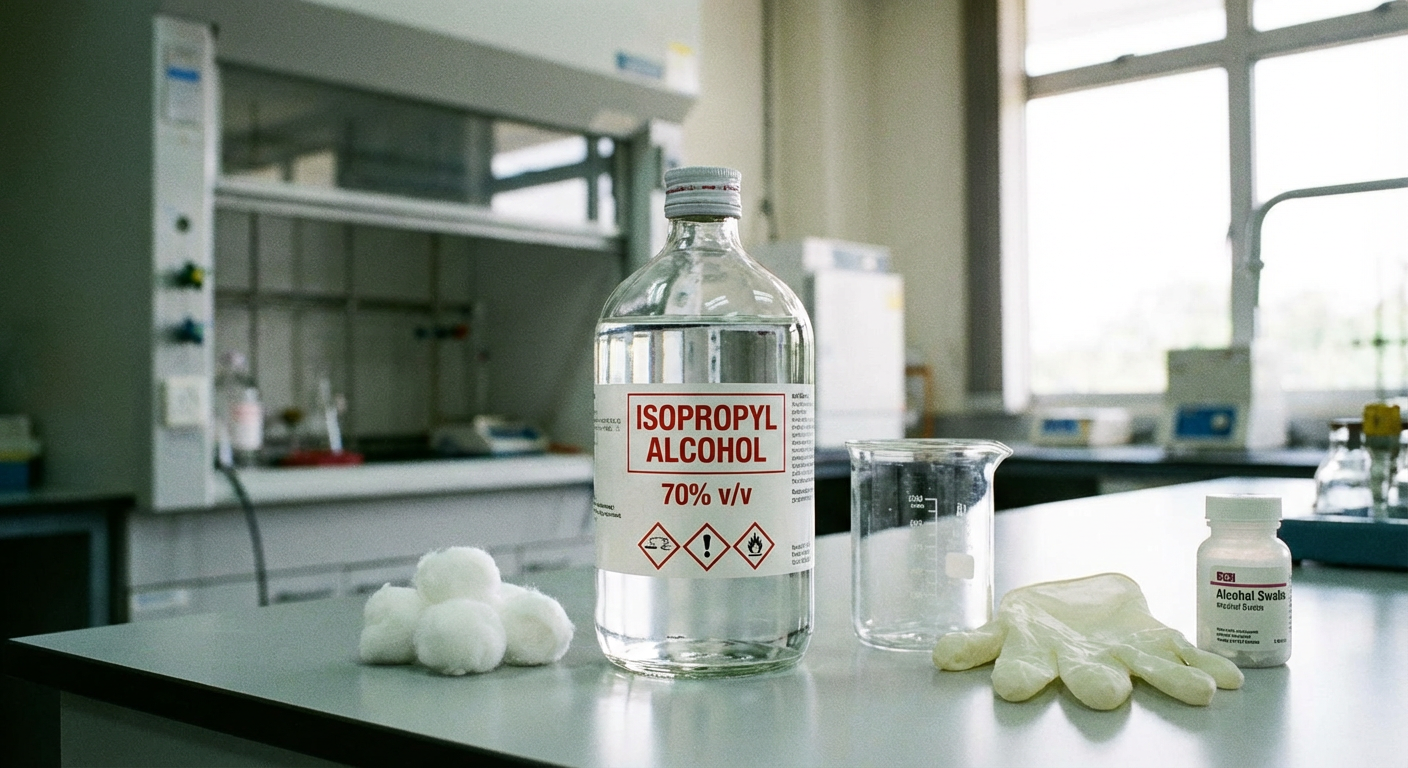

Alcohol can be used in ultrasonic cleaners under specific conditions, but doing so presents significant fire and explosion hazards that require careful consideration. The decision depends on alcohol type, concentration, equipment design, and safety measures in place. Most standard ultrasonic cleaners are not designed for flammable solvents and should never contain pure or high-concentration alcohol without proper safety features.
The primary concern involves alcohol’s low flashpoint temperature, typically between 12 and 24 degrees Celsius for common types. Ultrasonic cleaning generates heat through transducer operation and cavitation energy, raising solution temperature during use. When alcohol vapors accumulate in enclosed spaces or near the cleaner, ignition sources including electrical components create fire risk.
Many manufacturers explicitly prohibit flammable solvents in standard ultrasonic cleaners. Equipment warranty terms often become void when users introduce prohibited substances. However, specialized explosion-proof ultrasonic cleaners exist for applications requiring flammable solvents, incorporating design features that mitigate fire and explosion risks.
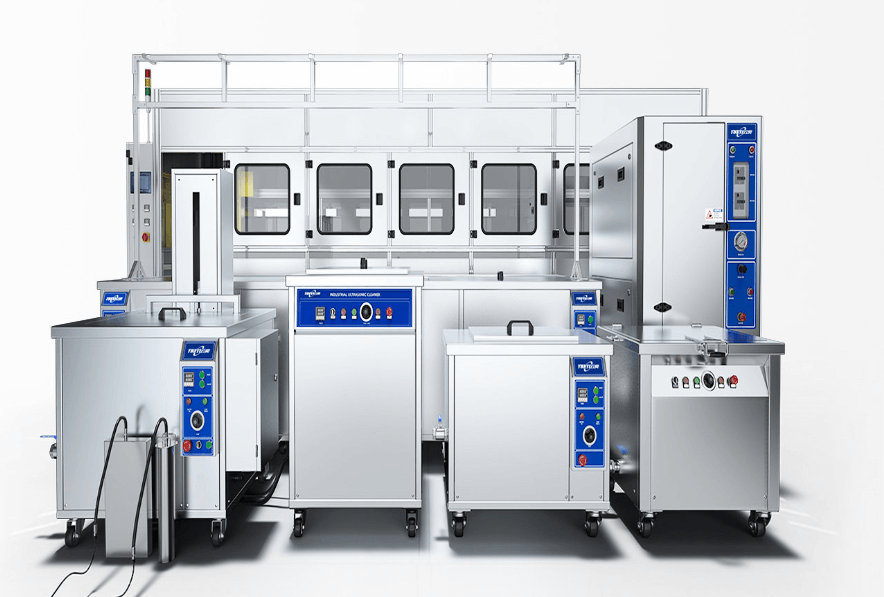
Professional Ultrasonic Cleaning Equipment
Types of Alcohol and Their Compatibility
Isopropyl alcohol
Isopropyl Alcohol (IPA)
Isopropyl alcohol, available in concentrations from 70% to 99%, represents the most common alcohol considered for ultrasonic cleaning. The 70% solution contains 30% water, reducing flammability compared to higher concentrations while maintaining cleaning effectiveness for many applications. The flashpoint of 70% IPA sits around 21 degrees Celsius, while 99% IPA has a flashpoint near 12 degrees Celsius.
IPA effectively dissolves oils, greases, fluxes, and residues from electronics manufacturing and precision instruments. The solvent evaporates quickly leaving minimal residue. However, the vapor pressure at room temperature creates hazardous vapor accumulation without adequate ventilation. Prolonged exposure to IPA vapors causes respiratory irritation and central nervous system effects in workers.
Ethanol
Ethanol or ethyl alcohol exists in various grades including laboratory-grade absolute ethanol and lower-concentration solutions. Pure ethanol has a flashpoint of 13 degrees Celsius, creating similar fire hazards as high-concentration IPA. The 95% ethanol azeotrope commonly available contains 5% water, slightly raising the flashpoint but maintaining significant flammability.
Ethanol serves as an effective cleaning solvent for biological materials, some polymers, and general degreasing. Food and pharmaceutical industries sometimes prefer ethanol over IPA due to lower toxicity if residues remain on cleaned items. The cleaning performance in ultrasonic applications matches IPA for most purposes.
Methanol
Methanol presents greater toxicity than other common alcohols, with severe health effects from inhalation or skin absorption. The flashpoint of 11 degrees Celsius makes methanol extremely flammable. Few applications justify methanol use in ultrasonic cleaners given safer alternatives exist. Industrial laboratories handling methanol for specific chemical processes might include it in ultrasonic cleaning protocols, but only with exceptional safety measures.
Methanol exposure causes vision damage, organ failure, and death at relatively low doses. Vapors produced during heated ultrasonic cleaning concentrate the exposure risk. Most manufacturers strongly discourage or prohibit methanol use regardless of equipment design.
Denatured Alcohol
Denatured alcohol contains ethanol mixed with additives making it unfit for consumption. Common denaturants include methanol, isopropyl alcohol, methyl ethyl ketone, and bittering agents. The specific formulation varies by manufacturer and intended use. Flashpoints depend on the denaturant mixture but generally fall in the 12 to 20 degrees Celsius range.
Denatured alcohol costs less than pure ethanol or IPA, making it attractive for industrial cleaning. However, denaturants may leave residues or react with materials being cleaned. The mixed composition creates unpredictable compatibility with some plastics and coatings. Manufacturers typically recommend against denatured alcohol unless the specific formulation has been tested for compatibility.
How Alcohol Interacts with Ultrasonic Cavitation
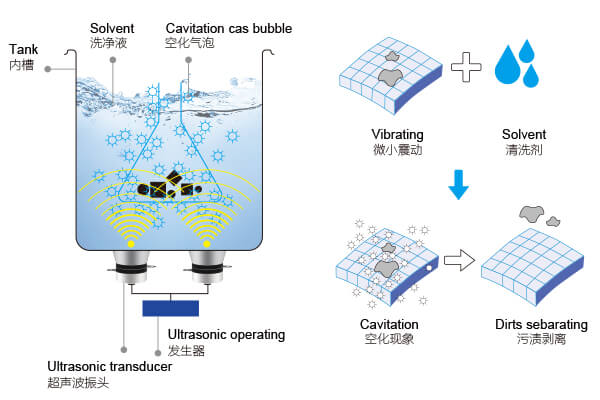
Diagram of the Cavitation Principle and Mechanism in an Ultrasonic Cleaner
Cavitation Behavior in Alcohol Solutions
Cavitation efficiency depends on liquid properties including surface tension, vapor pressure, viscosity, and density. Alcohol exhibits lower surface tension than water, requiring less energy to form cavitation bubbles. This characteristic might suggest enhanced cleaning performance, but the relationship proves more complex.
Lower surface tension creates smaller, more numerous cavitation bubbles that collapse with less individual energy compared to water-based solutions. The cleaning action becomes gentler, which benefits delicate items but may reduce effectiveness on stubborn contamination. Pure alcohol produces different cavitation patterns than diluted alcohol-water mixtures, with optimal cavitation often occurring at intermediate concentrations around 40% to 60% alcohol.
Vapor Pressure and Bubble Formation
Alcohol’s higher vapor pressure compared to water affects bubble formation and stability. Vapor pressure represents the tendency of liquid molecules to escape into gas phase. High vapor pressure means bubbles form more readily but contain more vapor and less vacuum, reducing implosion intensity.
The cavitation threshold, the minimum acoustic power needed to initiate cavitation, decreases with higher vapor pressure. Alcohol solutions begin cavitating at lower ultrasonic intensities than water. However, the resulting bubbles contain alcohol vapor cushioning the collapse and diminishing the violent implosion that creates effective cleaning action.
Temperature strongly influences vapor pressure. As ultrasonic operation heats the solution, alcohol vapor pressure rises faster than water vapor pressure. This accelerating vapor content in bubbles progressively weakens cavitation effectiveness during extended cleaning cycles. The same temperature increase that might enhance water-based cleaning actually degrades alcohol-based cleaning performance.
Temperature Effects on Alcohol Solutions
Standard ultrasonic cleaners generate heat during operation from transducer inefficiency and cavitation energy conversion. Solution temperature typically rises 10 to 30 degrees Celsius during a 15-minute cycle depending on cleaner power, solution volume, and ambient conditions. This temperature increase creates multiple concerns with alcohol solutions.
Rising temperature approaches and may exceed alcohol flashpoint, dramatically increasing fire risk. Simultaneously, the elevated temperature boosts vapor pressure, weakening cavitation and filling the workspace with flammable vapors. Alcohol evaporation concentrates any dissolved contaminants in the remaining solution and requires frequent solution replacement.
Some applications benefit from elevated cleaning temperatures, but alcohol solutions impose strict temperature limits for safety. This constraint restricts process optimization compared to water-based solutions that safely operate at 60 to 80 degrees Celsius.
Fire and Explosion Hazards
Flashpoint Temperatures
Flashpoint defines the lowest temperature where liquid produces sufficient vapor to form an ignitable mixture with air. Common alcohols have flashpoints well below typical ultrasonic cleaning operating temperatures. Isopropyl alcohol flashpoint ranges from 12 degrees Celsius for 99% concentration to 21 degrees Celsius for 70% concentration. Ethanol flashpoint sits at 13 degrees Celsius for pure alcohol.
These flashpoint values fall within or below room temperature in many facilities, meaning alcohol solutions produce flammable vapors immediately upon filling the ultrasonic cleaner. As ultrasonic operation raises temperature, vapor production accelerates exponentially. At temperatures 10 to 15 degrees above flashpoint, vapor concentration can reach the lower explosive limit, creating conditions where any ignition source causes fire or explosion.
Vapor Accumulation Risks
Alcohol vapors are heavier than air, with vapor density approximately 2 to 2.6 times air density depending on alcohol type. This characteristic causes vapors to sink and accumulate in low areas, inside the ultrasonic cleaner housing, and throughout poorly ventilated rooms. Vapor concentration builds gradually, creating hazardous conditions workers may not notice until reaching dangerous levels.
The lower explosive limit for isopropyl alcohol is approximately 2% by volume in air, while the upper explosive limit reaches 12%. Within this range, any spark, static discharge, or hot surface ignites the vapor-air mixture. Electrical components in standard ultrasonic cleaners including switches, relays, heating elements, and even transducer connections can provide ignition sources.
Vapor accumulation inside the ultrasonic cleaner housing presents particular danger. Many cleaners contain electrical components in the base directly below the tank. Vapors seeping through tank seals or condensing on internal surfaces create explosive mixtures in the confined space surrounding energized electrical parts.
Heat Generation During Operation
Ultrasonic transducers convert electrical energy to mechanical vibration with efficiency typically between 50% and 80%. The remaining energy becomes heat dissipating into the cleaning solution and tank structure. High-power industrial ultrasonic cleaners operating at 500 to 1000 watts can generate substantial heat, raising solution temperature rapidly.
Cavitation energy also converts to heat when bubbles collapse. The extreme temperature spike during individual bubble implosion is localized and brief, but millions of bubbles collapsing each second contribute cumulative heating to the bulk solution. This cavitation heating adds to transducer waste heat, accelerating temperature rise.
Standard ultrasonic cleaners lack temperature controls or possess only simple thermostatic heaters that prevent overheating water-based solutions. These basic controls prove inadequate for flammable solvents requiring strict temperature limits. Without active cooling and precise temperature monitoring, alcohol solutions quickly reach dangerous temperatures.
Material Compatibility Concerns
Tank and Transducer Materials
Ultrasonic cleaner tanks are typically constructed from stainless steel, though some smaller units use plastic tanks. Stainless steel shows excellent compatibility with alcohol, resisting corrosion and degradation during normal use. However, alcohols may act as solvents for adhesives bonding transducers to tank bottoms or securing protective coatings.
Epoxy and other bonding agents attaching piezoelectric transducers to the tank exterior can soften or degrade in alcohol, particularly at elevated temperatures. This degradation loosens transducers, reducing ultrasonic transmission efficiency and potentially causing complete transducer detachment. Manufacturers design bonding systems for water-based solutions, not solvent exposure.
Some ultrasonic cleaners incorporate plastic components in tank construction including sight glasses, drain valves, and tank liners. Common plastics like polycarbonate, acrylic, and some ABS formulations are attacked by alcohols, causing stress cracking, crazing, or dissolution. Only certain plastics including polypropylene, PTFE, and some polyethylene grades resist alcohol exposure.
Seal and Gasket Degradation
Seals and gaskets preventing leakage around tank drains, lids, and transducer mounting points may deteriorate in alcohol. Natural rubber and many synthetic rubbers swell, harden, or dissolve in alcohol depending on compound formulation. This degradation allows solution leakage and permits flammable vapors to enter electrical compartments.
Nitrile rubber (Buna-N) shows moderate alcohol resistance but degrades with prolonged exposure, particularly to pure alcohols at elevated temperature. Fluoroelastomers (Viton) and PTFE seals provide excellent alcohol resistance but are not standard equipment on most ultrasonic cleaners. Replacing standard seals with alcohol-compatible materials requires manufacturer approval to maintain safe operation.
Items Being Cleaned
Alcohol compatibility with items being cleaned requires verification before ultrasonic processing. Many plastics, rubbers, adhesives, and coatings are damaged by alcohol exposure. Polycarbonate lenses cloud and crack. Some medical device labels dissolve or detach. Paint and powder coat finishes may soften.
The ultrasonic cavitation intensifies alcohol’s solvent action, accelerating degradation compared to simple immersion. Items that tolerate brief alcohol wiping might suffer damage during 5 to 15-minute ultrasonic exposure with repeated intense cavitation impacts. Testing representative samples before production cleaning prevents costly damage to finished parts or critical instruments.