

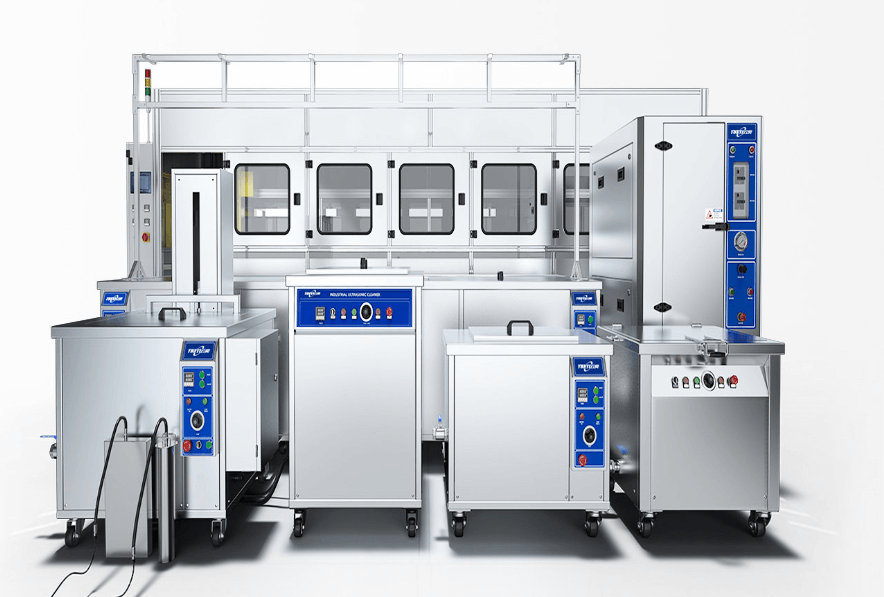

No, acetone should not be used in standard ultrasonic cleaners designed for aqueous solutions. The combination creates multiple serious safety hazards including fire risk, explosion potential, and equipment damage. Acetone’s extremely low flash point of negative 20 degrees Celsius, combined with heat generated during ultrasonic operation, creates dangerous conditions where flammable vapors can ignite from static electricity, electrical sparks, or hot surfaces.
Standard ultrasonic cleaners lack the specialized safety features required for flammable solvent use. These consumer and light industrial units are engineered specifically for water-based cleaning solutions with safety certifications based on aqueous operation. Using acetone in these systems violates manufacturer specifications, voids warranties, and creates liability exposure.
Only specialized explosion-proof ultrasonic cleaners with proper certifications, sealed construction, and integrated vapor recovery systems are designed for acetone and similar volatile solvents. These industrial units cost significantly more than standard models and incorporate extensive safety engineering including grounded construction, spark-proof switches, and forced ventilation systems.
The risks extend beyond immediate fire hazards. Acetone degrades many plastics, rubbers, and adhesives used in standard ultrasonic cleaner construction. Tank seals, drain valves, lid gaskets, and plastic components may fail after acetone exposure, leading to leaks and equipment malfunction.
Safer alternatives including isopropyl alcohol at appropriate concentrations, specialized biodegradable degreasers, and purpose-formulated ultrasonic cleaning solutions achieve similar cleaning results without the extreme hazards associated with acetone.
Why Acetone Creates Safety Hazards in Ultrasonic Cleaners
Understanding acetone’s specific properties reveals why this solvent poses exceptional dangers in ultrasonic cleaning applications.
Flammability and Vapor Ignition Risks
Acetone ranks among the most flammable common solvents with ignition characteristics that create dangerous conditions during ultrasonic cleaning.
The flash point of negative 20 degrees Celsius means acetone vapors can ignite at temperatures far below freezing. Any acetone vapor concentration between 2.5% and 12.8% in air forms an explosive mixture requiring only a tiny ignition source. Room temperature acetone continuously produces flammable vapors that accumulate above the liquid surface.
Standard ultrasonic cleaners contain multiple potential ignition sources. Electrical components including heaters, thermostats, and transducer connections can produce sparks during normal operation or component failure. Static electricity buildup from liquid movement and cavitation creates another ignition path. The transducers themselves generate localized heat during operation.
Vapor density of acetone at 2.0 (compared to air at 1.0) causes vapors to sink and accumulate in low areas rather than dispersing upward. This characteristic creates dangerous vapor concentration zones around floor-level areas and inside equipment enclosures. Standard room ventilation often fails to adequately disperse heavy vapors.
Testing conducted by industrial safety laboratories demonstrates that acetone vapor concentrations reach explosive levels within minutes in typical ultrasonic cleaner configurations. Open-top tanks allow continuous vapor release into surrounding areas. Even with local exhaust ventilation, vapor concentrations can exceed safe limits during filling, operation, and part removal.
The autoignition temperature of 465 degrees Celsius seems safely high, but localized hot spots from electrical components or ultrasonic transducers can approach dangerous temperatures. Component failures creating arcing or short circuits easily exceed acetone’s ignition temperature.
Low Flash Point Temperature Concerns
Acetone’s exceptional volatility creates hazardous conditions even without external heat application.
Standard ultrasonic cleaners operate at temperatures between 40 and 70 degrees Celsius for optimal cleaning performance. These temperatures drastically increase acetone evaporation rates, creating dense vapor clouds above the cleaning solution. The temperature differential between the warm solvent and cooler room air promotes rapid vapor generation.
Evaporation rates at typical ultrasonic operating temperatures exceed water by factors of 5 to 10. A liter of acetone in a heated ultrasonic cleaner can produce cubic meters of flammable vapor hourly. This massive vapor generation quickly overwhelms standard ventilation and creates extensive flammable atmospheres.
Manufacturers design standard ultrasonic cleaners assuming water-based solution evaporation characteristics. The heating elements, temperature controls, and operational parameters reflect aqueous solution properties. Using acetone fundamentally changes the thermal and vapor dynamics beyond design specifications.
Thermal runaway scenarios become possible when volatile solvents heat in standard ultrasonic equipment. As temperature rises, evaporation increases, removing liquid volume. This causes remaining solvent to heat faster, accelerating evaporation further. The cycle can rapidly produce extremely high vapor concentrations.
Safety testing data shows acetone vapor concentrations in standard ultrasonic cleaner environments can reach 50% to 100% of the lower explosive limit within 10 to 15 minutes of operation. This provides minimal safety margin before reaching explosive mixture concentrations.
Vapor Accumulation in Enclosed Spaces
The confined nature of many ultrasonic cleaner installations amplifies acetone vapor hazards.
Ultrasonic cleaners typically operate in workshops, laboratories, maintenance facilities, and industrial spaces with varying ventilation quality. Many installations place equipment in corners, under benches, or in areas with limited air circulation. These locations promote vapor stagnation and accumulation.
Room volume calculations demonstrate the hazard scale. A 5-liter ultrasonic cleaner using acetone in a small 20 square meter workshop with 2.5 meter ceilings (50 cubic meter volume) can produce explosive atmosphere concentrations throughout the entire room within 30 minutes of operation without adequate ventilation.
Building codes and ventilation standards assume typical workshop chemical use patterns. The exceptional vapor generation from heated acetone exceeds these standard assumptions. Facilities with adequate ventilation for water-based cleaners or moderate solvent use may lack sufficient air exchange rates for heated acetone vapor management.
Vapor detection systems required for safe acetone use rarely exist in facilities using standard ultrasonic cleaners. Industrial installations handling large solvent volumes typically include continuous vapor monitoring with automatic shutoffs and alarms. Standard ultrasonic cleaner users lack these critical safety systems.
The combination of high vapor generation, poor dispersion characteristics, and inadequate ventilation creates conditions where a single spark from any source can ignite explosive vapor mixtures affecting entire work areas.
How Ultrasonic Cavitation Affects Volatile Solvents
The ultrasonic cleaning mechanism itself exacerbates the hazards associated with volatile solvents like acetone.
Heat Generation During Ultrasonic Operation
Ultrasonic transducers convert electrical energy into mechanical vibration with inherent efficiency losses generating heat.
Transducer efficiency typically ranges from 50% to 70%, meaning 30% to 50% of input electrical power converts to heat rather than useful mechanical vibration. A 100-watt ultrasonic cleaner may generate 30 to 50 watts of heat continuously during operation. This heat transfers directly into the cleaning solution.
Standard water-based solutions absorb this heat with minimal temperature rise due to water’s high specific heat capacity. The thermal mass of several liters of water moderates temperature increases. However, acetone’s lower specific heat capacity means identical heat input produces greater temperature rise.
Continuous operation common in production environments compounds heating effects. Running an ultrasonic cleaner for hours accumulates substantial heat in the solvent. Without active cooling, acetone temperatures can rise well above safe handling temperatures, dramatically increasing vapor generation.
The heating effect becomes self-reinforcing. As acetone warms, viscosity decreases and cavitation intensity increases. More intense cavitation generates additional heat, further warming the solvent. This positive feedback loop drives rapid temperature increases beyond the thermostat setpoint designed for aqueous solutions.
Industrial measurements show acetone in standard ultrasonic cleaners can reach 15 to 25 degrees Celsius above the thermostat setting due to cavitation heating. This additional temperature drastically increases evaporation and vapor hazards beyond user expectations based on thermostat readings.
Increased Evaporation Rates from Cavitation
Cavitation bubble collapse dramatically accelerates solvent evaporation beyond simple thermal evaporation rates.
Cavitation mechanics involve forming and violently collapsing microscopic bubbles throughout the liquid. Each bubble collapse creates a microscopic area of extreme temperature and pressure for microsecond durations. These intense localized conditions promote molecular-scale solvent vaporization.
The cavitation process continuously brings fresh solvent to the surface through intense mixing and microstreaming flows. This circulation eliminates the stagnant surface layer that normally limits evaporation rates. Fresh solvent continuously reaches the air interface where rapid evaporation occurs.
Surface area effects multiply through cavitation. While a static acetone surface has defined area based on tank dimensions, the cavitation-induced turbulence creates enormous effective surface area through droplet formation, splashing, and microscopic surface disruption. This increased area dramatically accelerates vapor generation.
Testing comparing static acetone evaporation versus evaporation during ultrasonic operation shows 3 to 5 times higher vapor generation rates with cavitation active. This effect operates independently of bulk temperature increases, adding to thermal evaporation enhancement.
The aerosol generation from intense cavitation creates fine acetone droplets suspended in air above the tank. These droplets provide additional evaporating surface area and can carry solvent vapor to unexpected locations. Standard ventilation designed for vapor capture may not effectively contain aerosols.
Temperature Rise in Extended Cleaning Cycles
Cleaning cycles lasting 10 to 30 minutes standard for ultrasonic cleaning accumulate substantial temperature rise with volatile solvents.
Heat accumulation in acetone proceeds much faster than water due to physical property differences. Water requires 4.18 joules per gram per degree Celsius for heating, while acetone needs only 2.15 joules per gram per degree Celsius. This means acetone heats twice as fast as water with identical energy input.
Extended cleaning cycles for heavily contaminated parts or large batches compound temperature rise. Production environments may run ultrasonic cleaners continuously for hours, with solution temperatures climbing steadily. Even thermostatically controlled heaters cannot prevent cavitation-induced temperature rise above setpoints.
Thermal momentum means temperature continues rising after power shutoff. The tank walls, transducers, and mounting structures absorb heat during operation. This thermal mass continues heating the solvent even after cavitation stops, maintaining elevated temperatures and high evaporation rates during cooldown.
Temperature monitoring during typical ultrasonic cleaning cycles with acetone shows 5 to 10 degree Celsius temperature rise above starting temperature within 15 minutes of operation. This rise occurs even with heaters disabled, purely from cavitation energy conversion.
The cumulative effect of all heating mechanisms means acetone in ultrasonic cleaners operates at much higher temperatures than users anticipate. This creates vapor generation rates and fire hazards exceeding expectations based on ambient temperature acetone handling.
Tank and Seal Material Compatibility Issues
Beyond immediate fire hazards, acetone chemically attacks many materials used in standard ultrasonic cleaner construction.
Plastic Component Degradation
Standard ultrasonic cleaners incorporate plastic components throughout their construction that acetone damages or destroys.
Drain valves commonly use plastic bodies and seals for cost-effective manufacturing. Acetone rapidly swells, softens, or dissolves many plastics including polystyrene, ABS, acrylic, polycarbonate, and some polyethylene formulations. Valve failure from acetone exposure leads to uncontrolled solvent drainage, creating additional fire and environmental hazards.
Control panel covers, switch housings, and indicator lenses typically use transparent or translucent plastics. Acetone exposure through vapor contact clouds, cracks, or dissolves these components. The cosmetic damage indicates deeper structural issues including potential electrical component exposure.
Basket construction in many ultrasonic cleaners uses plastic-coated wire or molded plastic materials. Acetone strips coatings and attacks plastic baskets, releasing particles into the cleaning solution and potentially jamming or damaging parts. Failed baskets may drop items onto tank bottoms, causing damage.
Lid assemblies often incorporate plastic components including handles, hinges, and structural elements. Acetone vapor exposure gradually degrades these components through both direct chemical attack and plasticizer extraction. The deterioration manifests as brittleness, cracking, and eventual mechanical failure.
Internal wiring insulation in transducer assemblies and heating elements may use plastic materials vulnerable to acetone. While not directly immersed, vapor exposure over time degrades insulation, creating potential short circuit and shock hazards. This hidden damage may not become apparent until catastrophic failure occurs.
Rubber Seal Swelling and Failure
Rubber and elastomer seals throughout ultrasonic cleaner construction are particularly vulnerable to acetone.
Tank gaskets sealing the cleaning chamber from electronic components provide critical leak protection. Acetone swells most rubber formulations including nitrile, neoprene, and natural rubber. The swelling distorts seal geometry, creating leak paths and equipment damage.
Swollen seals often fail to return to original dimensions after acetone exposure ends. This permanent deformation means even switching back to water-based solutions may not restore proper sealing. Equipment requires seal replacement to regain functionality.
O-ring failures in drain assemblies, sight glasses, and transducer mounts create immediate leakage. Acetone dissolving through swollen seals runs onto electrical components, creating shock and fire hazards. The leakage also represents chemical exposure and environmental contamination.
Heating element seals particularly critical for safety fail when acetone penetrates into electrical enclosures. The resulting electrical shorts can ignite acetone vapor or liquid, creating immediate fire. These failures typically occur without warning after cumulative acetone exposure.
Pump seals in systems with filtration or circulation features fail rapidly with acetone exposure. The resulting pump failure contaminates the motor with acetone, creating electrical hazards and potentially igniting vapors inside the motor housing.
Testing various elastomers in acetone shows swelling ranging from 20% to over 100% volume increase within hours of exposure. This dramatic swelling exceeds the design tolerances of seal grooves and compression fittings, guaranteeing leakage.
Stainless Steel Tank Reactions
While stainless steel tanks generally resist acetone chemically, practical issues arise affecting long-term reliability.
Weld zone attack represents a subtle but significant concern. The heat-affected zones adjacent to welds contain different metallurgical structures than base stainless steel. While uncommon with pure acetone, contaminated acetone containing chlorides or acids preferentially attacks these zones.
Tank welds also trap residues from water-based cleaning solution use. Switching to acetone can mobilize these deposits, creating concentrated chemical environments at weld seams. This effect promotes unexpected corrosion in tanks that successfully handled water-based solutions.
Transducer bonding failure occurs when acetone penetrates the adhesive layer bonding transducers to tank bottoms. Most ultrasonic cleaners use epoxy adhesives for transducer mounting. Acetone gradually dissolves or weakens these bonds, causing transducer detachment and equipment failure.
The dissolved adhesive contaminates cleaning solution and deposits on parts being cleaned. The contamination may be difficult to remove and can interfere with subsequent processing steps including coating or bonding.
Passivation layer effects on stainless steel may be disrupted by acetone vapor condensation cycles. Repeated wetting and drying as vapors condense then evaporate can gradually degrade the protective oxide layer, particularly in presence of atmospheric contaminants. This slow process may take months to manifest but eventually increases corrosion susceptibility.
Manufacturer Design Standards and Certifications
Standard ultrasonic cleaners receive safety certifications based on specific intended use that excludes flammable solvents.
UL and CE Safety Requirements
Product safety certifications reflect tested and approved operational parameters that flammable solvent use violates.
UL listing standards for ultrasonic cleaners test equipment with water and approved aqueous cleaning solutions. The electrical safety, temperature limits, and operational controls receive approval based on these test conditions. Using acetone represents operation outside tested and certified parameters.
The UL certification explicitly states approved liquid types and operating conditions. Flammable solvents typically appear in exclusion lists unless the equipment carries special ratings. Standard ultrasonic cleaners lack the required design features for flammable liquid certification.
CE marking for European markets similarly bases conformity assessment on declared intended use. Manufacturer declarations specify water-based solutions, and product testing validates safety with these solutions. Acetone use contradicts the declaration basis for CE marking.
Insurance companies and regulatory agencies rely on product certifications for risk assessment and compliance verification. Operating equipment outside certification parameters typically voids insurance coverage and may violate workplace safety regulations.
Liability implications extend to equipment manufacturers. Using acetone in standard ultrasonic cleaners contrary to manufacturer instructions transfers all liability to the user. Accidents, fires, or injuries resulting from inappropriate solvent use provide no basis for manufacturer responsibility.
Solvent-Rated vs Water-Based Equipment
Distinct design categories separate ultrasonic cleaners for different solution types with substantial engineering differences.
Water-based ultrasonic cleaners represent the vast majority of units sold, designed exclusively for aqueous solutions, detergents, and non-flammable water-miscible chemistries. These units cost significantly less than solvent-rated equipment because they omit expensive safety features.
Standard water-based units include open tank construction, standard electrical components, plastic materials throughout, and conventional heating and control systems. These design choices are completely appropriate for water but dangerous with flammable solvents.
Solvent-rated ultrasonic systems incorporate explosion-proof electrical construction, vapor-tight tank enclosures, special ventilation, vapor recovery systems, and extensive safety interlocks. These specialized units typically cost 3 to 10 times more than equivalent-capacity water-based cleaners.
The price differential reflects real engineering and certification costs. Explosion-proof electrical components, intrinsically safe controls, sealed construction, and safety testing for flammable atmospheres add substantial manufacturing expense.
Industrial solvent systems designed for production environments include additional features such as automated loading, refrigerated vapor recovery, continuous vapor monitoring, automatic fire suppression, and specialized exhaust treatment. These systems represent major capital equipment rather than benchtop tools.
Attempting to economize by using acetone in standard water-based ultrasonic cleaners ignores the legitimate engineering reasons for cost differences between equipment categories. The safety features aren’t optional upgrades but essential requirements.
Warranty Voidance with Improper Solvents
Manufacturer warranties specifically exclude damage from unauthorized chemical use.
Warranty terms for ultrasonic cleaners explicitly list approved solution types and exclude coverage for damage from unauthorized chemicals. Acetone use definitively voids warranty coverage, leaving users responsible for all repair costs.
The warranty exclusions extend beyond obvious chemical damage to include any defects discovered after improper solvent use. Manufacturers reasonably decline coverage because determining whether pre-existing defects or improper chemical use caused failures becomes impossible.
Service refusal by authorized repair centers commonly occurs after detecting evidence of improper solvent use. Technicians identifying solvent damage typically refuse further service due to liability concerns and contamination of repair facilities.
Equipment showing acetone damage often cannot be economically repaired even outside warranty. The extensive seal replacement, plastic component replacement, and necessary safety verification exceed repair value for most standard ultrasonic cleaners.
Documentation requirements by manufacturers include maintaining logs of chemicals used in ultrasonic cleaners. Commercial and industrial users seeking warranty service must provide chemical use records. Acetone appearing in these logs immediately voids coverage.
The cumulative effect of warranty voidance, repair refusal, and potential liability makes acetone use in standard ultrasonic cleaners economically irrational even ignoring safety considerations.
Safe Alternatives to Acetone for Ultrasonic Cleaning
Multiple effective alternatives achieve comparable or superior cleaning results without acetone’s extreme hazards.
Isopropyl Alcohol Solutions
Isopropyl alcohol (IPA) provides solvent cleaning capability with substantially improved safety compared to acetone.
Flash point of pure isopropyl alcohol at 11.7 degrees Celsius remains dangerously low, but IPA diluted with water to 70% to 90% concentration increases flash points above 20 degrees Celsius. This improvement provides meaningful safety margins compared to acetone’s negative flash point.
The vapor pressure of IPA at 33 mmHg (20 degrees Celsius) substantially below acetone’s 184 mmHg produces slower vapor generation and easier vapor management. Standard ventilation more effectively controls IPA vapors than acetone.
Cleaning effectiveness of 70% to 90% IPA rivals acetone for many applications including removing oils, fluxes, light greases, and general contaminants. The water content in diluted IPA actually enhances cleaning on some soils by providing both solvent and water-based cleaning mechanisms.
Material compatibility of IPA exceeds acetone significantly. Most plastics, rubbers, and elastomers tolerate IPA exposure with minimal effects. While some plastics still show incompatibility, the range of affected materials is much narrower than acetone.
Regulatory advantages for IPA include less stringent handling requirements, lower hazard classifications, and simplified disposal compared to acetone. Many facilities can use IPA without special permits required for more hazardous solvents.
Diluted IPA concentrations between 70% and 90% represent optimal balances of cleaning effectiveness, safety, and cost. These concentrations work effectively in standard ultrasonic cleaners within manufacturer specifications for alcohol solutions.
Specialized Biodegradable Degreasers
Modern biodegradable degreaser formulations provide excellent ultrasonic cleaning performance with minimal environmental and safety concerns.
Terpene-based cleaners derived from citrus oils effectively dissolve oils, greases, waxes, and many adhesives. These natural solvents offer good cleaning performance with low toxicity, biodegradability, and pleasant citrus aroma. Flash points typically exceed 50 degrees Celsius, providing good safety margins.
The cleaning mechanism combines solvent action dissolving hydrocarbon soils with surfactant chemistry lifting and suspending contaminants. This dual action often outperforms simple solvents on complex soil mixtures.
Water-soluble concentrates designed specifically for ultrasonic use include surfactants, builders, emulsifiers, and corrosion inhibitors. These formulations dilute with water at ratios from 1:10 to 1:50, providing economical operation and convenient disposal.
Application-specific formulations address particular contaminant types including heavy petroleum greases, cutting oils, buffing compounds, and carbon deposits. Selecting appropriate formulations matches cleaning chemistry to specific soil types for optimal effectiveness.
pH-neutral cleaners suit applications requiring gentle chemistry including aluminum, brass, and sensitive materials. These formulations achieve good cleaning without the corrosion risks associated with highly alkaline or acidic cleaners.
Biodegradable cleaners work effectively at moderate temperatures between 50 and 60 degrees Celsius, compatible with standard ultrasonic cleaner heating systems. The formulations typically include defoaming agents preventing excessive foam that interferes with cavitation.
Aqueous Alkaline Cleaners
Alkaline cleaning solutions excel at removing oils, greases, and organic contaminants in ultrasonic applications.
High pH formulations between pH 11 and 13 provide aggressive degreasing through saponification reactions converting fats and oils to water-soluble soaps. The alkalinity also promotes soil suspension and prevents redeposition on cleaned surfaces.
Sodium hydroxide (caustic), potassium hydroxide, and sodium metasilicate provide common alkalinity sources in industrial cleaners. Formulated products combine these bases with surfactants, chelating agents, and corrosion inhibitors for complete cleaning systems.
Material compatibility considerations with alkaline cleaners include avoiding aluminum, zinc, brass, and other alkali-sensitive metals. However, stainless steel, iron, and most plastics tolerate alkaline solutions well. Proper material selection enables safe alkaline cleaning.
The non-flammable nature of aqueous alkaline solutions eliminates fire hazards entirely. These cleaners represent the safest option for ultrasonic cleaning applications where material compatibility permits their use.
Disposal advantages for alkaline solutions include simple neutralization with acid before drain disposal in many jurisdictions. The biodegradable surfactants and absence of hazardous solvents simplify environmental compliance compared to solvent systems.
Temperature requirements for effective alkaline cleaning typically range from 60 to 80 degrees Celsius. These elevated temperatures enhance chemical reaction rates and soil dissolution, maximizing cleaning performance.
Purpose-Formulated Ultrasonic Solutions
Commercial ultrasonic cleaning solutions designed specifically for cavitation-enhanced cleaning optimize multiple performance factors.
Defoaming technology in purpose-formulated solutions prevents excessive foam that dampens cavitation and reduces cleaning effectiveness. The specialized surfactant systems clean effectively while minimizing foam generation even under intense ultrasonic energy.
Cavitation enhancement through appropriate surfactant selection and solution chemistry improves bubble formation and collapse efficiency. These formulations produce better cleaning results at lower concentrations compared to general-purpose cleaners.
Multi-metal compatibility formulations safely clean mixed metal assemblies without selective corrosion. The corrosion inhibitor systems protect steel, aluminum, copper, and other metals simultaneously, enabling cleaning of complex assemblies.
Residue-free rinsing characteristics reduce the need for multiple rinse steps. The surfactant systems completely dissolve and rinse away without leaving films or residues that interfere with subsequent coating, bonding, or precision assembly operations.
Application-specific variants address particular industries including medical device cleaning, electronics manufacturing, precision machining, jewelry finishing, and optical component processing. These specialized formulations meet regulatory requirements and performance standards for specific applications.
Concentration flexibility allows users to adjust cleaning strength based on soil levels and cleaning difficulty. Light maintenance cleaning may use 1% to 2% concentration while heavy degreasing may require 5% to 10% concentration of the same concentrate.
Industrial Solvent-Rated Ultrasonic Systems
When acetone use remains necessary despite hazards, only purpose-built solvent-rated equipment provides adequate safety.
Explosion-Proof Design Features
True explosion-proof ultrasonic cleaners incorporate extensive specialized engineering throughout their construction.
Class I Division 1 electrical rating means all electrical components meet stringent requirements for operation in explosive atmospheres. This includes sealed motor housings, explosion-proof junction boxes, and intrinsically safe control circuits that cannot produce ignition-capable sparks.
The electrical system design contains any internal explosions within reinforced enclosures and prevents flame propagation to external flammable atmospheres. Switch contacts use special sealing and arc suppression ensuring that the normal sparking during switch operation cannot ignite external vapors.
Transducer construction in solvent-rated units employs special potting compounds and sealed assemblies preventing solvent penetration to electrical connections. The transducer cables use chemical-resistant insulation and sealed entry points preventing vapor infiltration.
Heating systems when included use special sealed tubular heaters or external heat exchangers eliminating exposed electrical elements. Temperature controls use explosion-proof sensors and intrinsically safe control circuits.
Static grounding systems throughout the equipment safely dissipate static charge accumulation from liquid movement and part handling. Proper grounding prevents static discharge sparks that could ignite solvent vapors.
The construction typically uses heavy-gauge stainless steel throughout with welded rather than bolted assemblies. This robust construction provides both mechanical strength and sealing integrity necessary for solvent containment.
Ventilation and Vapor Recovery Systems
Solvent-rated ultrasonic equipment incorporates extensive vapor management systems as integral components.
Forced ventilation using explosion-proof blowers continuously removes solvent vapors from the cleaning chamber and surrounding equipment areas. The ventilation rates typically provide 10 to 20 air changes per hour minimum, preventing explosive atmosphere development.
Vapor exhaust connects to facility exhaust systems designed for solvent vapor handling. The ductwork must use appropriate materials resistant to solvent attack and properly grounded to prevent static accumulation.
Refrigerated condensers recover solvent vapors for recycling rather than venting to atmosphere. The condenser cools exhaust vapors below solvent condensation temperature, converting vapors back to liquid for return to the cleaning system. This approach reduces both solvent costs and environmental releases.
Carbon adsorption systems provide alternative vapor recovery using activated carbon beds capturing solvent vapors from exhaust streams. The carbon requires periodic regeneration or replacement but effectively removes solvents preventing atmospheric release.
Vapor monitoring systems continuously measure solvent vapor concentrations in equipment enclosures and work areas. These monitors trigger alarms and automatic equipment shutoffs if vapor concentrations approach explosive or hazardous levels.
The vapor management systems represent substantial additional cost but remain essential for safe solvent operation. Attempting acetone use without proper vapor management creates unacceptable hazards.
Specialized Tank Construction
Solvent-rated ultrasonic tanks incorporate design features addressing chemical compatibility and safety requirements.
Tank sealing uses continuous welded construction rather than gasketed assemblies. This eliminates seal failure paths that plague standard equipment when exposed to aggressive solvents. All tank penetrations for drains, sensors, and utilities use welded fittings.
The tank cover provides vapor-tight sealing with chemical-resistant gaskets when closed. Interlock systems prevent ultrasonic operation without proper cover closure, ensuring vapor containment during cleaning cycles.
Material selection throughout fluid-contact areas uses only acetone-resistant materials including stainless steel, PTFE, and specialized fluoropolymers. Plastic components that standard cleaners use extensively are eliminated or replaced with metal alternatives.
Drain systems incorporate multiple layers of protection including primary valves, backup valves, and leak detection. The drain routing prevents solvent release to workplace areas by directing any leaks to containment systems.
Overflow protection prevents tank overfilling that could compromise vapor containment or cause solvent spills. Level sensors automatically shut off solvent addition and trigger alarms if fill levels exceed safe maximums.
The tank often sits within a secondary containment basin sized to hold the complete tank volume in case of tank failure. This double-barrier approach provides additional protection against catastrophic leaks.