

Yes, certain sunglasses can be safely cleaned in ultrasonic cleaners, but compatibility depends heavily on lens materials, coatings, frame construction, and decorative elements. Basic sunglasses with glass lenses and metal frames typically tolerate ultrasonic cleaning well, while models featuring polarized lenses, mirror coatings, or specialty materials often suffer irreversible damage from cavitation forces. Understanding which sunglasses suit ultrasonic cleaning and which require alternative methods prevents costly damage while achieving superior cleaning results for compatible eyewear.
The appeal of ultrasonic cleaning for sunglasses stems from the technology’s ability to remove accumulated oils, dust, and debris from hard-to-reach areas including nose pads, hinge mechanisms, and frame crevices. Traditional manual cleaning struggles to access these zones effectively, leaving residues that compromise appearance and hygiene. Ultrasonic cavitation reaches into every surface contour and gap, potentially delivering cleaning results impossible through conventional methods.
However, the same intense microscopic cleaning action that makes ultrasonic technology so effective also creates risks for sunglasses constructed with sensitive materials or applied coatings. The rapid formation and collapse of cavitation bubbles generates localized forces sufficient to disrupt molecular bonds in certain coatings, delaminate layered lens structures, or loosen adhesive bonds in frame assemblies. Optical retailers and eyewear manufacturers report consistent damage patterns when inappropriate sunglass types undergo ultrasonic processing.
Risk assessment requires examining every component of the sunglasses rather than making blanket assumptions about compatibility. A pair might feature ultrasonic-safe lenses but incorporate frame elements that cannot withstand cavitation exposure. Conversely, durable frames might support vulnerable lens coatings requiring special handling. Comprehensive evaluation of materials, construction methods, and surface treatments determines whether ultrasonic cleaning represents a safe option for specific sunglasses.
Understanding Ultrasonic Cleaning Mechanics
The physical processes occurring during ultrasonic cleaning create both benefits and risks for sunglasses depending on their construction characteristics.

The Principle Behind Ultrasonic Cleaning
How Cavitation Affects Different Materials
Ultrasonic transducers generate high-frequency sound waves that propagate through cleaning solution, creating alternating high-pressure and low-pressure zones. During low-pressure phases, microscopic bubbles form throughout the liquid. These bubbles collapse violently when encountering high-pressure zones, producing intense localized energy release at bubble implosion sites.
When cavitation bubbles collapse against solid surfaces, they generate micro-jets of liquid traveling at hundreds of meters per second. These jets impact surfaces with force sufficient to dislodge contamination without damaging most durable materials. However, the repetitive nature of cavitation means that thousands or millions of bubble collapses occur against sunglasses surfaces during typical cleaning cycles.
Materials respond differently to sustained cavitation exposure. Dense, homogeneous substances like metal and glass absorb the impact energy without structural changes. The material’s internal bonding strength exceeds forces generated by individual bubble collapses, preventing damage accumulation. Softer plastics, layered structures, and surface coatings may lack sufficient mechanical strength to resist cavitation forces indefinitely, particularly when cleaning extends beyond optimal durations.
The interface between dissimilar materials represents a vulnerability zone where cavitation effects concentrate. Lens coatings bonded to substrate materials experience differential stress as cavitation impacts the coating surface while the underlying lens material responds differently. Similarly, adhesive joints between frame components face shear forces as cavitation energy transfers through materials with different acoustic impedances.
Frequency and Intensity Considerations
Ultrasonic cleaning equipment operates across various frequency ranges, typically between 25 and 80 kilohertz for consumer and professional applications. Lower frequencies around 25 to 40 kilohertz generate larger, more aggressive cavitation bubbles suitable for heavy cleaning tasks. Higher frequencies above 60 kilohertz produce smaller, gentler bubbles appropriate for delicate items.
Sunglasses cleaning ideally employs higher frequency equipment that provides thorough cleaning action while minimizing mechanical stress on vulnerable components. The smaller bubble size at elevated frequencies distributes cleaning energy more uniformly across surfaces rather than concentrating impacts in localized areas. This reduces peak forces experienced by coatings and adhesive bonds during processing.
Power intensity settings available on adjustable ultrasonic cleaners allow fine-tuning of cavitation strength. Maximum power delivers fastest cleaning but imposes greatest stress on materials. Reduced power settings extend processing time while decreasing damage risk for marginal compatibility cases. Unfortunately, most consumer ultrasonic cleaners lack adjustable power, operating at fixed output determined by manufacturer design choices.
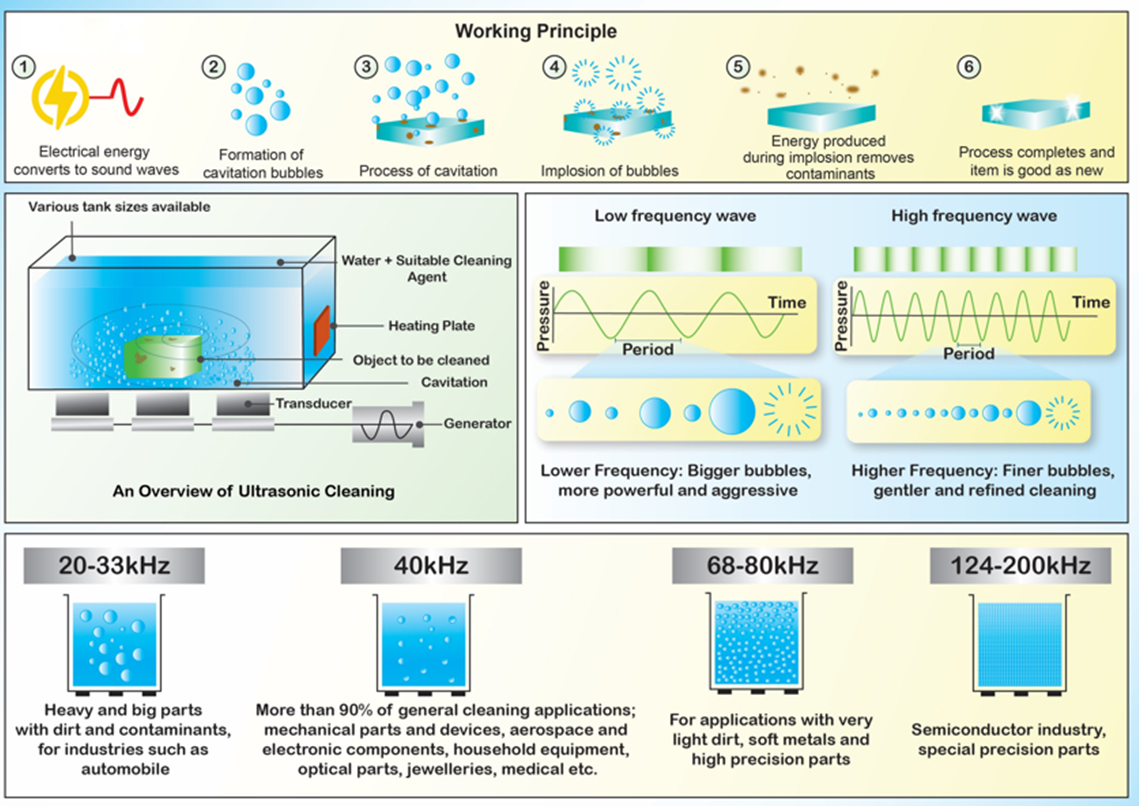
Ultrasonic Frequency Select Guide
Duration and Temperature Variables
Processing duration directly correlates with cumulative cavitation exposure and potential for progressive damage development. Brief cleaning cycles of two to three minutes generally prove safe for compatible sunglasses while providing adequate contamination removal. Extended processing beyond five minutes increases risks without proportional cleaning benefits, as most accessible contamination removes during initial minutes of ultrasonic exposure.
Temperature affects both cleaning effectiveness and material stress. Heated ultrasonic solutions between 40 and 50 degrees Celsius improve cleaning performance by reducing solution viscosity and accelerating chemical cleaning action. However, elevated temperatures also soften thermoplastic frame materials and can compromise adhesive bonds in assembled frames. Some lens coatings exhibit temperature-dependent stability, performing adequately at room temperature but degrading when heated.
The combination of mechanical cavitation stress and thermal exposure creates synergistic effects where damage occurs under combined conditions despite each factor individually remaining within tolerable ranges. Conservative processing parameters, keeping both duration and temperature moderate, provide margins of safety for borderline compatibility situations.

Material Compatibility Assessment
Different sunglass components exhibit varying tolerance levels for ultrasonic cleaning based on their material properties and manufacturing methods.
Plastic and Polycarbonate Lenses
Polycarbonate lenses, valued for impact resistance and light weight, generally tolerate ultrasonic cleaning when uncoated or featuring factory-applied hard coatings. The base polycarbonate material possesses sufficient toughness to withstand cavitation forces without crazing or surface degradation. Factory hard coatings applied through vacuum deposition or similar industrial processes typically bond strongly enough to survive ultrasonic exposure.
However, polycarbonate’s relatively soft surface compared to glass makes it more susceptible to fine scratching if contamination particles remain suspended in cleaning solution. Using fresh, filtered cleaning solution and limiting processing duration helps prevent abrasion damage. Some optical professionals avoid ultrasonic cleaning for premium polycarbonate lenses to eliminate any scratching risk, even when material compatibility otherwise permits processing.
CR-39 plastic lenses, another common optical material, demonstrate mixed ultrasonic compatibility. Uncoated CR-39 usually survives ultrasonic cleaning without issues, though the material’s softer nature compared to glass increases scratching vulnerability. Coated CR-39 lenses require coating-specific evaluation, as application methods and coating formulations vary widely between manufacturers.
Acrylic lenses used in budget sunglasses often prove unsuitable for ultrasonic cleaning. The relatively brittle nature of acrylic combined with typical crazing resistance problems means that cavitation exposure can induce surface stress cracks or cloudiness. Unless manufacturer specifications explicitly approve ultrasonic cleaning, acrylic lenses warrant alternative cleaning approaches.
Glass Lenses
Glass lenses represent the most ultrasonic-compatible optical material due to glass’s superior hardness, chemical inertness, and structural stability. The dense, homogeneous nature of glass readily absorbs cavitation impact forces without damage. Glass lenses without surface coatings can undergo repeated ultrasonic cleaning cycles throughout their service life without degradation concerns.
Mineral glass used in premium sunglasses offers excellent durability combined with superior optical properties. This material thrives under ultrasonic cleaning conditions that would damage lesser materials. The primary consideration involves coatings applied to glass lenses rather than the substrate material itself.
Tempered and chemically strengthened glass variants used in safety eyewear and sports sunglasses maintain the inherent ultrasonic compatibility of standard glass. The strengthening processes alter internal stress patterns without affecting surface characteristics relevant to cavitation exposure.
Frame Materials and Their Tolerances
Metal frames manufactured from stainless steel, titanium, or aluminum alloys demonstrate excellent ultrasonic cleaning compatibility. These materials resist corrosion, maintain dimensional stability during processing, and tolerate mechanical stresses from cavitation without problems. Metal frame sunglasses represent ideal candidates for ultrasonic cleaning from a material perspective.
Acetate frames, popular for fashion sunglasses, present variable compatibility depending on manufacturing quality and assembly methods. High-quality acetate frames typically survive ultrasonic cleaning, particularly when processing stays brief and temperature remains moderate. Lower-quality acetate may soften excessively in heated solutions or develop surface cloudiness from prolonged cavitation exposure.
Injection-molded plastic frames vary widely in ultrasonic suitability based on specific polymer formulations and frame design. Rigid, well-cured plastics generally tolerate processing, while flexible or rubberized frames risk permanent deformation. Frame designs relying on press-fit assembly or adhesive bonding may separate during ultrasonic cleaning as vibration and cavitation compromise retention forces.
Mixed-material frames combining metal and plastic components introduce compatibility challenges. The frame might incorporate ultrasonic-safe metals with vulnerable plastic inserts, or feature durable plastic frames with decorative metal elements attached via adhesives. Each component requires individual evaluation, with overall compatibility limited by the most sensitive element.
Coating and Treatment Vulnerabilities
Anti-reflective coatings applied to sunglass lenses represent the most common source of ultrasonic cleaning damage. These thin-film coatings, typically consisting of multiple dielectric layers totaling only a few hundred nanometers thickness, bond to lens surfaces through processes ranging from simple dip coating to sophisticated vacuum deposition.
Coating adhesion strength varies dramatically based on application methods and substrate preparation. Factory-applied anti-reflective coatings deposited under controlled conditions using modern processes generally withstand ultrasonic cleaning. Aftermarket coatings or those applied using older technologies may exhibit marginal adhesion that fails under cavitation stress, causing coating delamination visible as peeling or flaking.
Hydrophobic and oleophobic coatings designed to repel water and oils prove particularly sensitive to ultrasonic exposure. These coatings function through molecular-scale surface treatment rather than deposited films, making them vulnerable to disruption from intense mechanical action. Sunglasses featuring these treatments often show diminished water-repellent properties after ultrasonic cleaning, even when visual coating damage doesn’t occur.
Scratch-resistant coatings exhibit variable ultrasonic tolerance depending on formulation and application methods. Hard coatings create additional challenges during ultrasonic cleaning because their brittleness compared to underlying lens materials concentrates stress at the coating-substrate interface. Properly applied factory hard coats usually survive, but inferior coating jobs may crack or separate under cavitation forces.
Identifying Sunglasses Suitable for Ultrasonic Cleaning
Specific visual and construction indicators help determine whether particular sunglasses likely tolerate ultrasonic processing safely.
Glasses
Construction Quality Indicators
Premium sunglasses from established optical manufacturers typically employ superior materials and assembly methods that withstand ultrasonic cleaning better than budget alternatives. Recognizable quality indicators include substantial frame weight suggesting solid construction, smooth finish quality without visible defects, and precise fit of all components without gaps or looseness.
Metal frames should exhibit seamless construction at joints without visible adhesive beads or gaps. Screw-assembled metal frames generally prove more ultrasonic-compatible than adhesively bonded alternatives, as mechanical fasteners resist vibration effects better than adhesive joints. High-quality spring hinges and barrel hinges maintain integrity during ultrasonic processing, while cheap friction hinges may loosen.
Plastic and acetate frames demonstrating uniform color and finish throughout indicate quality manufacturing with complete polymer curing. Cheaper frames sometimes show color variations or surface texture inconsistencies suggesting incomplete curing or inferior materials. These characteristics correlate with reduced ultrasonic tolerance.
Lens mounting methods provide compatibility clues. Full-frame designs where lenses seat securely in frame grooves typically survive ultrasonic cleaning. Semi-rimless and rimless designs relying on mechanical fasteners or adhesives face greater risk, as ultrasonic vibration can loosen connections over time.
Lens Coating Types
Uncoated lenses present minimal ultrasonic risk regardless of substrate material. The absence of thin-film coatings eliminates the primary damage mechanism affecting optical components. Simple tinted lenses without additional coatings clean safely in ultrasonic equipment appropriate for the base lens material.
Factory-applied hard coatings on polycarbonate and plastic lenses usually tolerate ultrasonic processing when applied by reputable manufacturers. These coatings undergo quality control ensuring adequate adhesion and durability. The coating application occurs during lens manufacturing under optimal conditions, producing strong bonds to substrate materials.
Single-layer or simple multi-layer anti-reflective coatings from quality manufacturers demonstrate reasonable ultrasonic compatibility. Modern AR coatings benefit from improved adhesion promoters and advanced deposition techniques that create robust coating structures. However, AR-coated lenses still represent higher risk than uncoated alternatives, warranting conservative processing parameters.
Frame Assembly Methods
Sunglasses assembled entirely through mechanical means using screws, rivets, or interference fits demonstrate superior ultrasonic tolerance compared to adhesively bonded construction. Mechanical assemblies resist vibration and cavitation effects that compromise adhesive bonds over time.
Welded or brazed metal frame joints create permanent connections unaffected by ultrasonic exposure. These construction methods appear in quality metal frames and indicate excellent durability for cleaning applications.
Molded-in-place components where frame elements integrate during manufacturing rather than through post-production assembly eliminate joint failure concerns. Single-piece frame designs or those featuring minimal assembly points reduce vulnerability to ultrasonic effects.
Sunglasses That Should Never Enter Ultrasonic Cleaners
Certain sunglass categories virtually guarantee damage when subjected to ultrasonic cleaning regardless of careful processing.
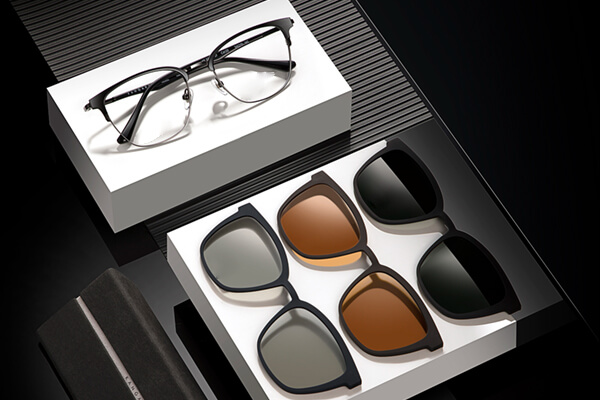
Glasses
Polarized Lens Concerns
Polarized sunglasses incorporate a polarizing film laminated between lens layers or bonded to lens surfaces. This film consists of aligned molecules that selectively block light waves oscillating in specific orientations, reducing glare from reflective surfaces.
Ultrasonic cavitation frequently causes delamination of polarizing films from host lens materials. The film-to-lens bond represents a weak interface where cavitation forces concentrate, progressively separating the layers during processing. Visible damage appears as bubbling, clouding, or peeling affecting the polarized lens structure.
Testing across multiple polarized sunglass brands consistently demonstrates incompatibility with ultrasonic cleaning. Even brief processing at conservative settings often initiates damage that progresses over hours or days following treatment. The polarizing film may initially appear intact but develops defects as stress-induced separation continues after ultrasonic exposure ends.
Manufacturers of polarized sunglasses universally recommend against ultrasonic cleaning in product care instructions. This prohibition applies regardless of price point or quality level, as the fundamental incompatibility stems from polarizing film construction rather than manufacturing quality variables.
Mirror and Reflective Coatings
Mirror-coated lenses featuring metallic reflective layers demonstrate extreme sensitivity to ultrasonic cavitation. These coatings consist of thin metal depositions, often aluminum or silver, applied to lens surfaces to create the distinctive reflective appearance.
The metal coating thickness, typically measured in nanometers, provides minimal resistance to mechanical stress from cavitation. Mirror coatings routinely separate, crack, or develop localized damage visible as dark spots or areas of missing reflectivity after ultrasonic exposure. The damage pattern often resembles pepper specks or irregular patches where coating has detached.
Flash mirror treatments, where partially reflective coatings overlay tinted lenses, prove equally vulnerable despite thinner coating thickness. Any visible metallic reflectivity on lens surfaces indicates ultrasonic incompatibility requiring alternative cleaning methods.
Gradient mirror coatings that transition from highly reflective at top to minimal reflectivity at bottom face additional vulnerability. The varying coating thickness creates differential stress patterns during ultrasonic exposure, with damage typically initiating at coating transition zones.
Wood and Natural Material Frames
Wooden frame sunglasses cannot tolerate ultrasonic cleaning due to wood’s cellular structure and moisture sensitivity. Ultrasonic cavitation drives solution deep into wood grain, causing swelling, warping, and finish degradation. The vibration also tends to open wood checks and splits, accelerating structural deterioration.
Bamboo frames share similar incompatibility with ultrasonic processing. Despite bamboo’s density and strength compared to conventional woods, the material’s hygroscopic nature and composite structure make it unsuitable for immersion in vibrating cleaning solutions.
Horn and tortoiseshell frames, whether genuine or synthetic, demonstrate poor ultrasonic tolerance. These materials lack the structural uniformity necessary to withstand cavitation forces without surface degradation or delamination between material layers.
Carbon fiber frames might appear durable enough for ultrasonic cleaning, but the composite structure creates vulnerability at resin-fiber interfaces. Cavitation can initiate delamination between carbon layers or cause resin matrix damage invisible until frame failure occurs.
Fashion Sunglasses with Decorative Elements
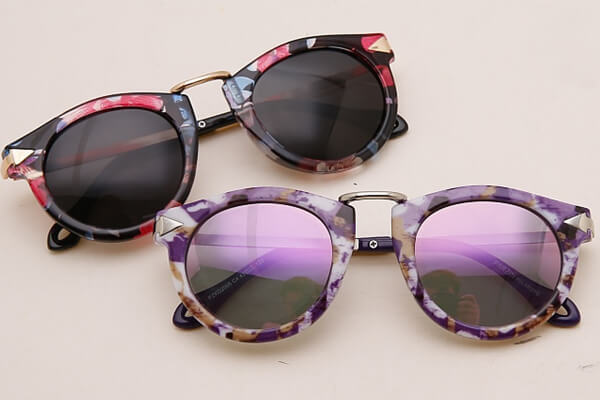
Sunglasses incorporating rhinestones, crystals, or decorative emblems attached via adhesive bonding cannot safely undergo ultrasonic processing. The cleaning action reliably loosens adhesive bonds, causing decorative elements to detach during processing or shortly thereafter.
Painted or screen-printed designs on frames typically suffer rapid damage under ultrasonic exposure. The cavitation action removes or dulls painted details, particularly when designs lack protective clear coating. Even protected paint designs show accelerated wear compared to normal handling.
Leather, fabric, or cork wrapped frames obviously cannot tolerate liquid immersion required for ultrasonic cleaning. These materials absorb solution, distort during processing, and rarely recover original appearance after drying.
Sunglasses featuring internal LED lighting, electronic displays, or other technology integration must never enter ultrasonic cleaners. The combination of liquid immersion and mechanical vibration virtually guarantees electronic damage regardless of advertised water resistance ratings.
Proper Ultrasonic Cleaning Procedure for Compatible Sunglasses
When sunglass compatibility has been confirmed through material assessment and testing, following correct procedures maximizes cleaning effectiveness while minimizing damage risk.
Pre-Cleaning Inspection
Visual examination before ultrasonic processing identifies potential problems and establishes baseline condition for post-cleaning comparison. Check for existing coating damage, loose frame components, or cracks that might worsen during processing.
Tighten all screws in metal frames using appropriate eyewear screwdrivers. Loose screws can fall out during ultrasonic vibration, potentially becoming lost in cleaning solution or tank drainage. Properly secured fasteners resist loosening from vibration effects.
Remove any detachable accessories including nose pads if replacement-type, decorative side shields, or clip-on sun lenses. These components may possess different material compatibility than primary sunglasses and could detach during processing.
Test frame flexibility and joint tightness to establish normal ranges before cleaning. This baseline allows recognition of any loosening or structural changes resulting from ultrasonic exposure.
Solution Selection
Plain water with a small amount of dish soap serves adequately for basic sunglass cleaning in ultrasonic equipment. The soap reduces surface tension for improved cavitation while providing mild cleaning chemistry. Avoid excessive soap that creates foam, which dampens ultrasonic effectiveness.
Commercial eyewear cleaning solutions formulated for ultrasonic use provide optimal results without material compatibility concerns. These products feature surfactants designed for optical applications with pH and chemical composition safe for all common eyewear materials.
Avoid ammonia-based solutions with sunglasses, as ammonia can attack certain plastic materials and adhesives even without ultrasonic exposure. The mechanical agitation from cavitation accelerates any chemical attack, making material damage more likely.
Room temperature or slightly warm solution proves sufficient for sunglasses cleaning. Elevated temperatures above 40 degrees Celsius increase risks without proportional cleaning improvement for typical eyewear contamination. Most sunglass soiling consists of oils, dust, and cosmetic residues that remove easily in moderate temperature solutions.
Optimal Settings and Duration
Position sunglasses in the ultrasonic tank avoiding direct contact with tank bottom or sides. Use a basket or holder that suspends items within the solution cavity where cavitation intensity remains optimal. Contact with rigid tank surfaces can cause scratching or transmit excessive vibration to frames.
Orient sunglasses with temples open and lenses vertical for best solution circulation through all frame areas. This positioning allows cavitation bubbles access to nose pads, hinge mechanisms, and other detailed areas requiring thorough cleaning.
Process for 20 to 30 seconds during the initial cleaning cycle. Inspect the item immediately afterward to verify contamination removal and confirm that no damage has occurred. Additional cleaning time is rarely necessary and may gradually increase cumulative stress on certain materials.
If stubborn contamination persists after initial processing, allow sunglasses to air dry completely before a second brief ultrasonic cycle. This prevents heat buildup that could occur with continuous processing and allows visual confirmation that cleaning is progressing safely.
Post-Cleaning Care
Rinse sunglasses thoroughly with clean water after ultrasonic processing to remove any residual cleaning solution. Solution left on frames can dry leaving deposits or potentially affect coatings over time.
Pat dry with soft, lint-free cloths rather than allowing air drying. This prevents water spotting and allows immediate inspection of cleaning results. Microfiber cloths designed for eyewear provide ideal drying characteristics without scratching risks.
Inspect carefully for any signs of damage including coating changes, loose components, or frame distortion. Address any issues immediately rather than continuing sunglass use, as small problems often progress to major failures.
Apply lubricant to metal hinges after cleaning and drying. The ultrasonic action can remove lubricants from hinge mechanisms, potentially causing increased friction or squeaking. A tiny amount of eyewear-appropriate lubricant restores smooth operation.
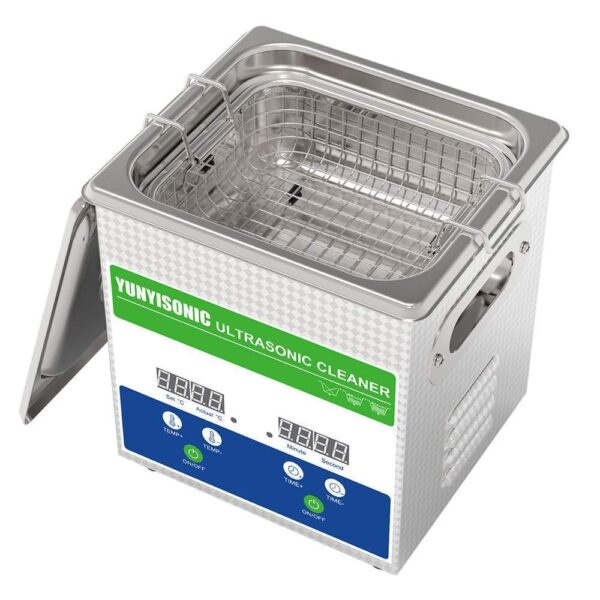
Ultrasonic Cleaner Suitable for Cleaning Glasses
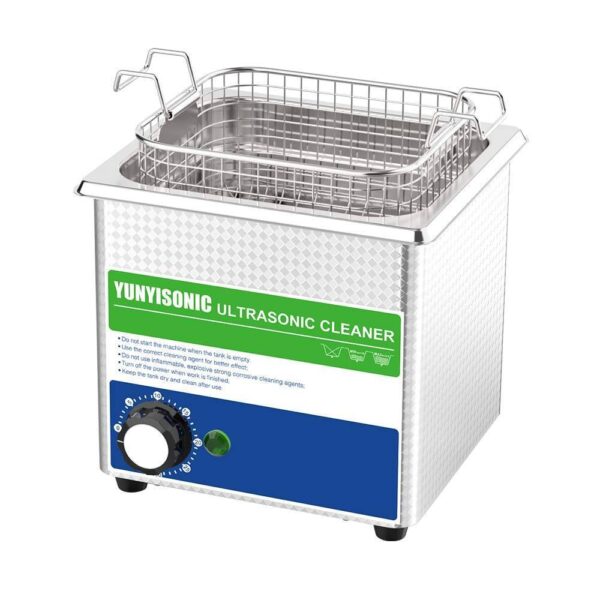
2L Timer Dial Ultrasonic Cleaner for Jewelry Rings Watches Coins Dentures | Household Ultrasonic Cleaning Machine
In stock
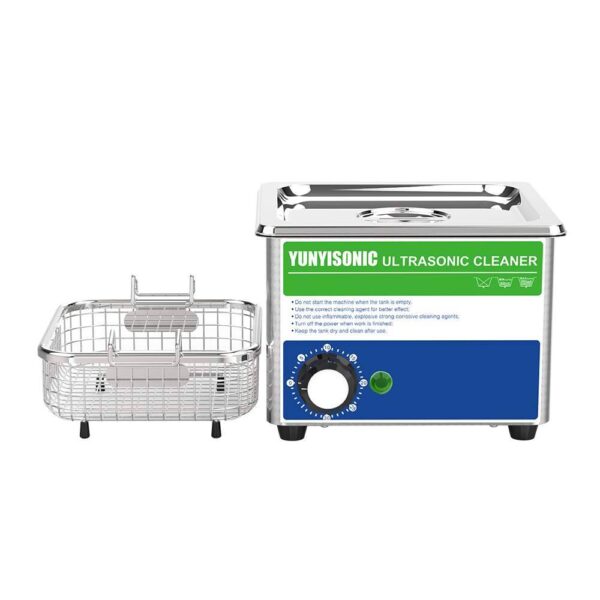
1.3L Mechanical Timer Ultrasonic Cleaner for Watches, Dental Clinics, Clock Repair, Optical Shops
In stock
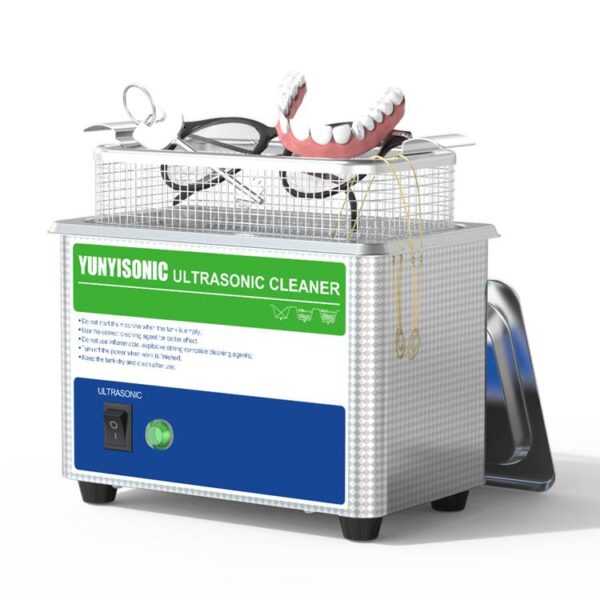
0.8L Ultrasonic Eyeglass Cleaner | Efficient Clean Spectacles, Magnifying Glasses, Optical Lenses, Jewelry, Dentures
In stock
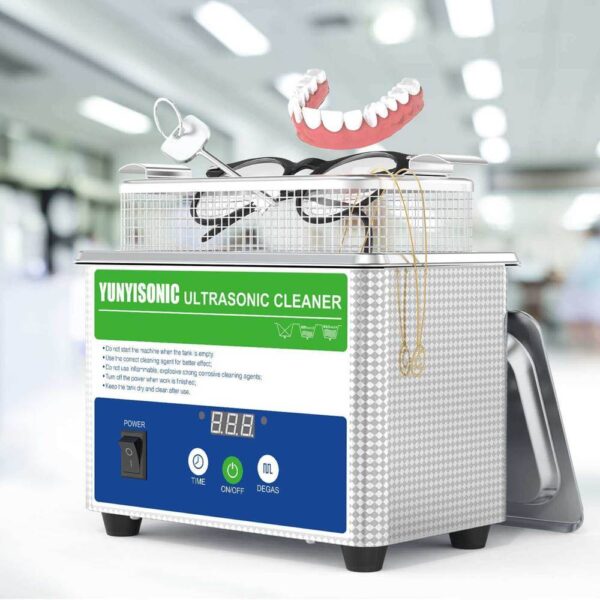
800ml Digital Ultrasonic Jewelry Cleaner | Compact Sonic Cleaning Machine with Timer for Household Cleaning
In stock
Common Damage Patterns from Improper Ultrasonic Cleaning
Recognition of typical ultrasonic-induced damage helps identify cause when sunglasses develop problems after processing.
Coating delamination appears as peeling edges around lens perimeters or localized bubbling where coatings separate from substrates. This damage results from cavitation forces exceeding coating adhesion strength, progressively lifting coating edges during processing. Once initiated, delamination typically continues spreading even without further ultrasonic exposure.
Polarizing film separation manifests as cloudy or distorted zones within lenses where laminated polarizing films detach from adjacent lens layers. The affected areas often show rainbow-like patterns or dark spots when viewed at certain angles. Damage may be subtle immediately after cleaning but becomes more obvious over subsequent days.
Mirror coating loss presents as irregular dark patches where reflective metallic coatings have separated from lens surfaces. The pattern typically shows random distribution rather than following any specific geometry, distinguishing it from normal wear patterns that concentrate at high-contact areas.
Frame loosening occurs when ultrasonic vibration works screws loose or weakens press-fit connections in frame assemblies. Temples may become floppy, nose pads shift position, or lens mounting loses tension. This damage develops progressively with repeated ultrasonic exposure even when individual cleaning cycles appear safe.
Adhesive failure causes decorative elements, nose pads, or frame components to detach during or shortly after ultrasonic processing. The cavitation and vibration compromise adhesive bonds that would otherwise remain secure indefinitely under normal wear conditions.
Plastic crazing appears as fine surface cracks or cloudiness in plastic frame materials subjected to excessive ultrasonic exposure. The damage resembles stress cracking but develops in patterns suggesting cavitation impact points rather than mechanical stress concentrations.
Alternative Cleaning Methods for Delicate Sunglasses
Sunglasses incompatible with ultrasonic processing require alternative approaches for safe, effective cleaning.
Manual Cleaning Techniques
Warm water rinse followed by gentle rubbing with fingers effectively removes most surface contamination from sunglasses. This simple method works well for routine maintenance cleaning when contamination levels remain light.
Mild dish soap applied with fingertips provides additional cleaning power for oils and cosmetic residues. The surfactants in dish soap emulsify oils while remaining safe for virtually all eyewear materials. Rinse thoroughly after soap application to prevent residue formation.
Soft-bristle brushes designed for eyewear reach into frame details including nose pads and hinges better than finger cleaning alone. Use gentle pressure and confirm brush bristles remain soft, as hardened or contaminated bristles can scratch lenses.
Cotton swabs moistened with appropriate cleaning solution address stubborn contamination in tight spaces. This targeted approach removes buildup from nose pad contact areas and around hinge pins without subjecting entire sunglasses to aggressive cleaning.
Microfiber and Cleaning Solutions
Quality microfiber cloths specifically designed for optical use provide safe, effective lens cleaning without scratching risks. The microscopic fiber structure captures and removes contamination through mechanical action enhanced by static attraction.
Pre-moistened lens cleaning wipes offer convenience combined with proper solution chemistry. These disposable wipes contain cleaning agents formulated for optical surfaces with appropriate pH and solvent characteristics. Individual packaging prevents contamination buildup that occurs with reusable cloths.
Spray cleaning solutions designed for eyewear pair effectively with microfiber cloths for thorough manual cleaning. These products feature surfactants that lift contamination without attacking coatings or frame materials. Application technique matters, as excessive solution can seep into frame assemblies causing later problems.
Professional Optical Cleaning Services
Optical retailers and eyewear professionals possess specialized equipment and expertise for cleaning challenging sunglasses safely. Professional cleaning typically costs minimal amounts while guaranteeing proper treatment for expensive or problematic eyewear.
Many optical shops offer complimentary cleaning for sunglasses purchased from their stores, representing excellent value for maintaining investment eyewear. The service provides not just cleaning but also adjustment and inspection ensuring optimal performance.
Professional ultrasonic equipment differs from consumer models in having adjustable parameters allowing customization for specific eyewear types. Trained technicians understand material compatibility and processing requirements for various sunglass constructions.