





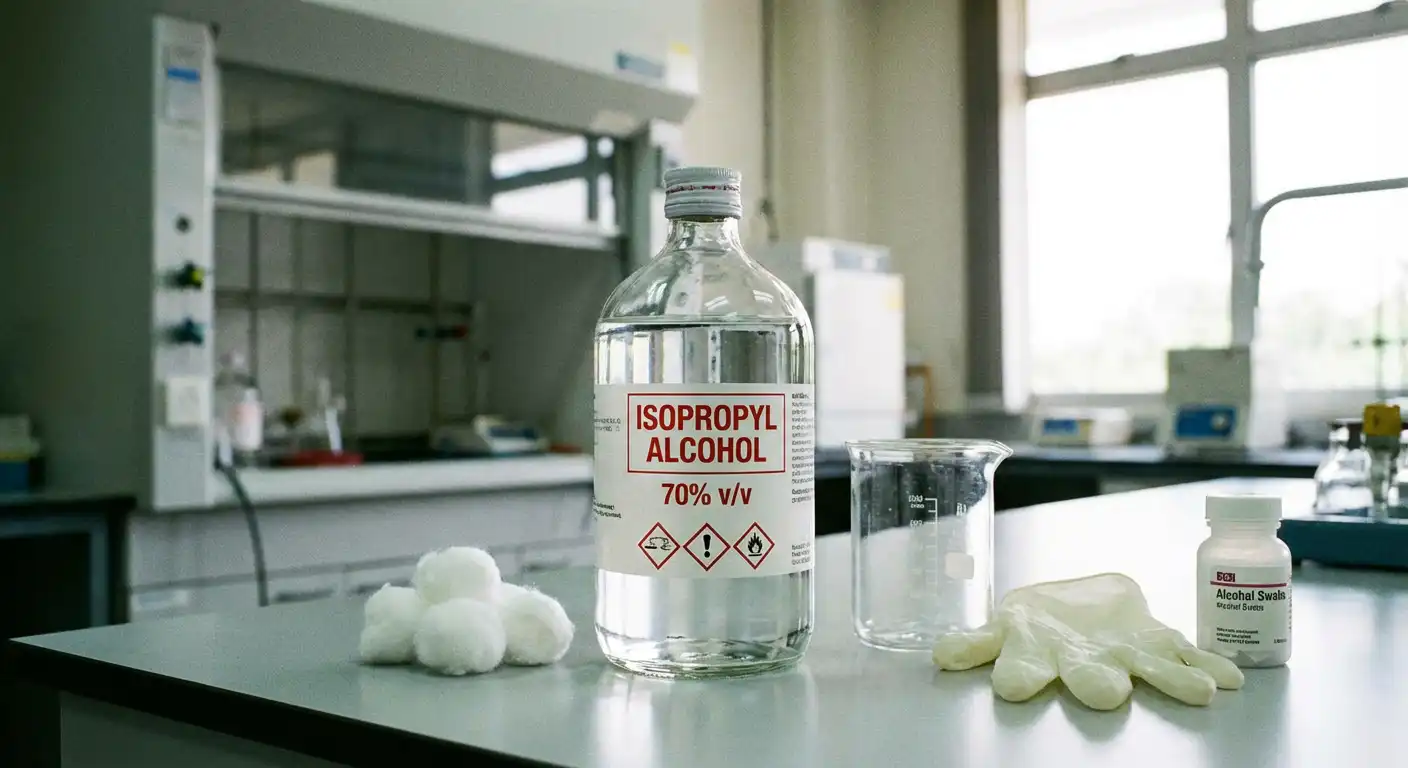

You’re standing in front of your ultrasonic cleaner with a bottle of isopropyl alcohol, wondering if this powerful solvent might deliver better cleaning results than water or commercial solutions. Maybe you’ve heard that electronics technicians use alcohol in their ultrasonic tanks, or perhaps you’re dealing with stubborn residues that water-based cleaners can’t touch. The question seems straightforward, but the answer involves serious safety considerations that could prevent fires, equipment damage, or personal injury.
Isopropyl alcohol presents unique advantages for certain cleaning applications, dissolving oils, flux residues, and contaminants that resist water-based solutions. However, its flammability and chemical properties create risks that demand careful understanding before you pour it into your ultrasonic cleaner. The decision isn’t simply yes or no, but rather depends on your specific equipment, what you’re cleaning, and whether you can implement proper safety measures.
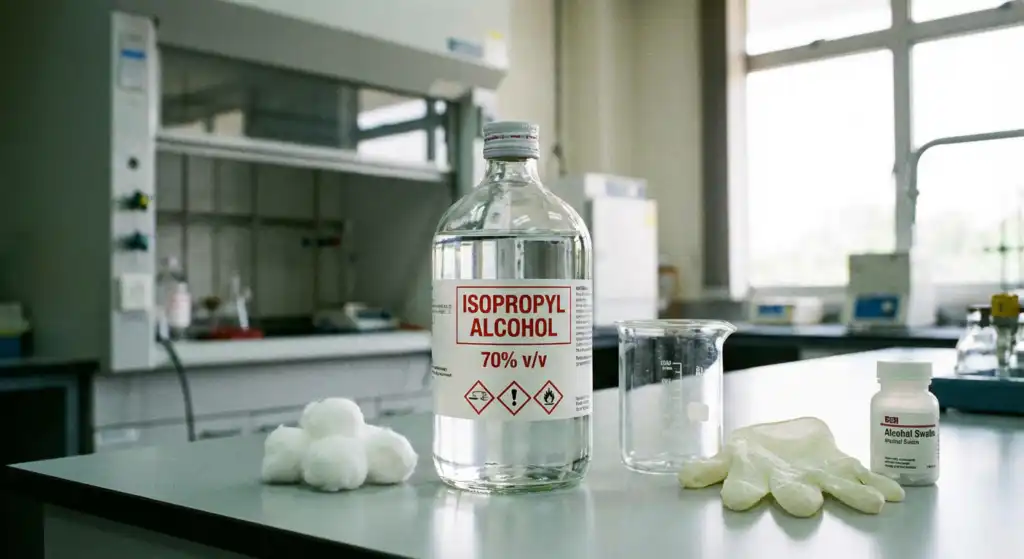
Isopropyl alcohol
Understanding Isopropyl Alcohol as a Cleaning Agent
Isopropyl alcohol, also called isopropanol or rubbing alcohol, ranks among the most versatile solvents available for cleaning applications. Its molecular structure gives it properties that make it simultaneously useful and potentially dangerous in ultrasonic cleaning contexts.
How Isopropyl Alcohol Works in Ultrasonic Applications
The alcohol molecule contains both a hydrophobic carbon chain and a hydrophilic hydroxyl group. This dual nature allows isopropyl alcohol to dissolve substances that pure water cannot touch, including oils, greases, rosin flux, and many organic compounds. When you place isopropyl alcohol in an ultrasonic cleaner, the cavitation bubbles form just as they do in water, but the cleaning action becomes dramatically more aggressive.
Cavitation bubble collapse in alcohol generates similar mechanical forces to water-based cavitation. However, the chemical solvent action of alcohol works simultaneously with the mechanical cleaning. As bubbles implode against contaminated surfaces, they don’t just knock dirt loose through physical impact. The alcohol immediately begins dissolving the contaminants, breaking them down chemically and carrying them away into solution.
The low surface tension of isopropyl alcohol, approximately 21 dynes per centimeter compared to water’s 72 dynes per centimeter, provides significant advantages for ultrasonic cleaning. Lower surface tension means cavitation bubbles form more easily and become smaller before collapsing. Smaller bubbles can penetrate tighter spaces and create more uniform cleaning coverage across complex surface geometries.
Electronic circuit boards represent one of the most common and appropriate applications for isopropyl alcohol ultrasonic cleaning. Circuit boards with rosin flux residue that resist 10 minutes of water-based cleaning can emerge completely clean after just 3 minutes in 99% isopropyl alcohol. The difference proves dramatic, with every trace of sticky flux dissolved and removed through the combined chemical and mechanical action.
The Chemistry Behind Alcohol-Based Cleaning
Isopropyl alcohol’s effectiveness stems from its position as a polar protic solvent. This classification means it can donate hydrogen atoms to form hydrogen bonds with other molecules while also having an uneven distribution of electrical charge across its structure. These properties allow isopropyl alcohol to interact with and dissolve a remarkably wide range of substances.
Non-polar contaminants like mineral oils, petroleum greases, and silicone compounds dissolve readily in isopropyl alcohol. The carbon chain portion of the alcohol molecule interacts favorably with these materials, surrounding and breaking apart their molecular structures. This makes alcohol-based ultrasonic cleaning particularly effective for removing machining oils from metal parts or handling greases from mechanical components.
Polar contaminants including rosin flux, which contains abietic acid and other organic acids, also dissolve in isopropyl alcohol through different molecular interactions. The hydroxyl group on the alcohol molecule forms hydrogen bonds with the polar portions of flux compounds, pulling them into solution. This dual-action capability gives isopropyl alcohol cleaning range that exceeds most other single solvents.
The evaporation rate of isopropyl alcohol provides both advantages and complications. Alcohol evaporates much faster than water, typically leaving surfaces completely dry within minutes at room temperature. This rapid drying prevents water spots and eliminates the need for compressed air drying in many applications. However, the evaporation also releases flammable vapors into the air, creating the primary safety concern with alcohol-based ultrasonic cleaning.
Concentration matters significantly for cleaning effectiveness and safety. Isopropyl alcohol comes in various concentrations, most commonly 70%, 91%, and 99%. The higher concentrations dissolve non-polar substances more effectively because less water interferes with the solvent action. However, 70% alcohol sometimes cleans polar substances better because the water component helps with certain types of contamination.
Can You Safely Use Isopropyl Alcohol in Ultrasonic Cleaners?
The technical answer is yes, you can put isopropyl alcohol in an ultrasonic cleaner, but this simple yes carries enormous caveats. The practice remains common in electronics manufacturing, medical device production, and precision engineering. However, it requires specific equipment designed for flammable solvents and strict adherence to safety protocols that most home users cannot implement.
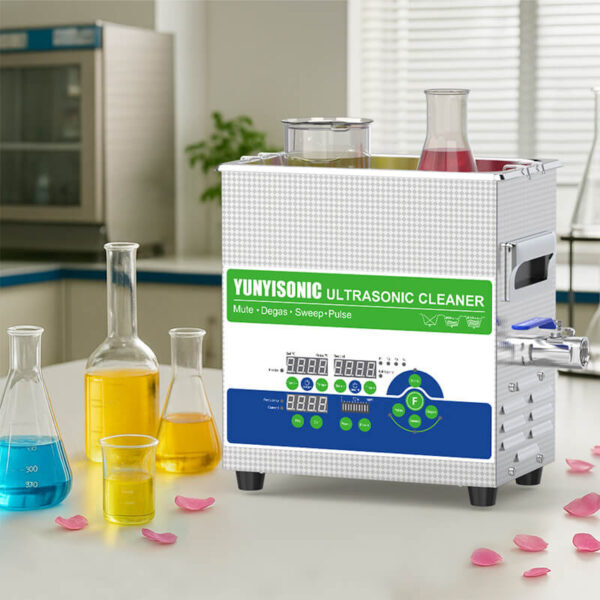
Ultrasonic Cleaner
Fire and Explosion Risks You Must Know
Isopropyl alcohol’s flashpoint, the temperature at which it produces enough vapor to ignite if exposed to a spark or flame, sits at approximately 53 degrees Fahrenheit for 99% concentration. This temperature is well below room temperature in most environments. The 70% concentration has a slightly higher flashpoint around 60 degrees Fahrenheit, but this still presents serious fire risk.
When you operate an ultrasonic cleaner filled with isopropyl alcohol, several ignition sources could trigger a fire. The transducer and heating element, if your cleaner has one, generate heat during operation. While properly designed equipment keeps these components isolated from the cleaning solution, any electrical fault could create sparks or excessive heat. The ultrasonic energy itself doesn’t generate enough heat to ignite alcohol under normal circumstances, but the cumulative heat from extended operation can raise solution temperature above the flashpoint.
The cavitation process releases alcohol vapors into the air above the cleaning tank. These vapors are heavier than air and accumulate rather than dispersing quickly. If vapor concentration in the air reaches between 2% and 12% by volume, the mixture becomes explosive. A single spark from static electricity, a light switch, or any electrical device can ignite this vapor cloud, causing a flash fire or explosion.
Documented incidents of isopropyl alcohol fires in electronics repair environments highlight the dangers of ignoring safety protocols. In typical scenarios, consumer-grade ultrasonic cleaners filled with 99% alcohol and run continuously for 30 minutes in poorly ventilated spaces create hazardous vapor accumulation. Static discharge from operators reaching across units can ignite vapor clouds above tanks. Such flash fires commonly cause second-degree burns to hands and forearms, destroy ultrasonic cleaners, and damage surrounding equipment. These fires often burn out quickly when tanks aren’t completely full, though partial filling doesn’t eliminate the serious injury risk.
Most consumer ultrasonic cleaners explicitly state in their manuals that flammable solvents should never be used. These units lack the safety features required for alcohol-based cleaning. The electrical components aren’t spark-proof, the tanks aren’t designed to contain vapor safely, and the units lack the interlocks and sensors that industrial equipment uses to prevent fires.
Equipment Compatibility Concerns
Beyond fire risk, isopropyl alcohol creates compatibility issues with many ultrasonic cleaner components. The solvent can degrade certain plastics, rubbers, and sealing materials commonly used in consumer-grade equipment.
Tank materials require careful consideration. Stainless steel tanks tolerate isopropyl alcohol perfectly well and represent the standard for industrial alcohol-compatible ultrasonic cleaners. However, some consumer units use plastic tanks or plastic-lined tanks. Alcohol can craze, crack, or dissolve certain plastics including some grades of polycarbonate, polystyrene, and acrylic. Even if the plastic doesn’t fail immediately, repeated alcohol exposure weakens the material progressively.
Seals and gaskets in ultrasonic cleaners typically use nitrile rubber, silicone, or other elastomers. Isopropyl alcohol swells and degrades nitrile rubber over time, eventually causing leaks. Silicone seals resist alcohol better but still experience gradual degradation. Only specialized fluoroelastomers like Viton provide long-term resistance to isopropyl alcohol exposure, and these materials rarely appear in consumer ultrasonic cleaners.
Electronic components can suffer damage if alcohol vapors penetrate the electronics housing. While isopropyl alcohol doesn’t conduct electricity when pure, the 70% and 91% concentrations contain enough water to create conductivity. Vapor condensation on circuit boards can cause corrosion or short circuits. Industrial ultrasonic cleaners designed for solvent use have sealed electronics compartments with separate ventilation, preventing this problem.
The transducer bonding adhesive represents another vulnerability. Most ultrasonic transducers attach to tank bottoms using epoxy or polyurethane adhesives. Isopropyl alcohol can slowly penetrate these bonds, reducing adhesion strength. I’ve examined consumer ultrasonic cleaners used with alcohol where the transducers literally fell off the tank bottom after 20 to 30 hours of cumulative use. Professional solvent-rated equipment uses specialized adhesives or mechanical attachment methods resistant to chemical attack.
When Isopropyl Alcohol Makes Sense for Ultrasonic Cleaning
Despite the serious risks and requirements, certain applications genuinely benefit from isopropyl alcohol ultrasonic cleaning enough to justify the safety investment. Understanding these legitimate use cases helps determine whether alcohol-based cleaning suits your needs.
Electronics and Circuit Board Applications
Electronics manufacturing and repair represent the most common legitimate use of isopropyl alcohol in ultrasonic cleaners. After soldering operations, circuit boards accumulate rosin flux residues that must be removed for reliability and appearance. Water-based cleaners struggle with rosin flux because it’s specifically designed to resist water while remaining soluble in alcohols.
No-clean flux presents a particular challenge. Despite its name suggesting cleaning isn’t needed, residues from no-clean flux can cause problems in demanding applications. These residues contain activators and rosin derivatives that only dissolve effectively in strong solvents. Isopropyl alcohol at 99% concentration excels at removing no-clean flux residues, especially when combined with ultrasonic agitation.
SMT component cleaning benefits enormously from alcohol ultrasonic cleaning. Surface-mount technology places components incredibly close together with minimal gaps between parts. Flux residues hide beneath components where they’re nearly impossible to reach with spray cleaners or brushes. Ultrasonic cavitation in isopropyl alcohol penetrates these tight spaces, dissolving and removing flux that would otherwise remain indefinitely.
The process requires careful execution. Circuit boards should be cleaned within 24 hours of soldering when flux residues remain relatively fresh and easiest to remove. The alcohol concentration should be at least 91%, with 99% preferred for best results. Cleaning time typically ranges from 2 to 5 minutes depending on flux type and contamination level. Longer cleaning times offer minimal additional benefit while increasing vapor exposure risk.
After cleaning, immediate drying becomes critical. While isopropyl alcohol evaporates quickly, water from lower-concentration alcohol can remain trapped under components. Professional operations use hot air ovens or vacuum drying chambers to ensure complete moisture removal before powering boards. This step prevents corrosion and electrical problems that could develop from residual moisture.
Medical and Laboratory Equipment Cleaning
Healthcare and research facilities use isopropyl alcohol ultrasonic cleaning for instruments that cannot tolerate water or require sterile-level cleanliness. Surgical instruments, dental tools, and laboratory glassware benefit from alcohol’s powerful solvent action and rapid evaporation.
Surgical instrument cleaning often involves multiple stages, with isopropyl alcohol ultrasonic cleaning serving as a final step before sterilization. Blood proteins, tissue residues, and biological materials must be completely removed from instruments to prevent infection transmission. While enzymatic cleaners handle the heavy contamination, isopropyl alcohol removes any remaining organic residues and provides fast drying.
Medical facilities using isopropyl alcohol for ultrasonic cleaning employ industrial-grade equipment with extensive safety features. These units operate inside ventilated enclosures, use explosion-proof electrical components, and include vapor sensors that shut down operation if vapor concentration approaches dangerous levels. The equipment cost runs into thousands or tens of thousands of dollars, reflecting the engineering required for safe operation.
Laboratory glassware cleaning represents another appropriate alcohol ultrasonic application. Analytical glassware must be absolutely free of organic contamination to prevent interference with sensitive tests. Isopropyl alcohol dissolves organic residues that might survive water-based cleaning, then evaporates completely without leaving any residue itself. This makes alcohol cleaning ideal for spectrophotometry cuvettes, NMR tubes, and other precision glassware.
Research labs follow strict protocols for alcohol ultrasonic cleaning. The process occurs in chemical fume hoods with adequate exhaust ventilation. Alcohol vapors extract through dedicated ventilation systems rather than accumulating in the workspace. Fire suppression equipment, typically carbon dioxide extinguishers rated for Class B flammable liquid fires, must be immediately accessible.
Proper Safety Protocols for Alcohol-Based Ultrasonic Cleaning
If your application genuinely requires isopropyl alcohol ultrasonic cleaning and you have appropriate equipment, following comprehensive safety protocols makes the process manageable. These requirements aren’t suggestions but essential practices that prevent fires, injuries, and equipment damage.
Ventilation and Fire Prevention Requirements
Adequate ventilation stands as the single most critical safety measure for alcohol ultrasonic cleaning. The goal is removing alcohol vapor from the workspace faster than the cleaning process generates it, preventing vapor accumulation that could ignite.
Chemical fume hoods provide the gold standard for ventilation. These enclosures draw air away from the operator and exhaust it outdoors or through filtration systems. The hood must maintain face velocity of at least 100 feet per minute, meaning air moves into the hood at this speed when measured at the opening. This airflow keeps vapors contained and protects the operator from exposure.
For operations outside fume hoods, local exhaust ventilation becomes necessary. This involves positioning duct openings above and around the ultrasonic cleaner to capture rising vapors. The exhaust system must provide at least 4 complete air changes per minute in the immediate area surrounding the cleaner. Simply opening windows or using box fans provides insufficient ventilation for safe alcohol ultrasonic cleaning.
Spark-proof electrical equipment eliminates ignition sources near the cleaning operation. Standard electrical switches, outlets, and equipment can generate sparks during normal operation. These tiny sparks easily ignite alcohol vapor. Industrial facilities use explosion-proof electrical components rated for Class I, Division 1 environments where flammable vapors are routinely present. These components cost considerably more than standard equipment but provide essential protection.
Grounding procedures prevent static electricity buildup and discharge. The ultrasonic cleaner, the work surface, and the operator should all connect to electrical ground. Anti-static wrist straps grounded to the cleaner frame prevent static discharge when placing items into or removing them from the alcohol bath. Even a small static spark carries enough energy to ignite alcohol vapor.
Fire suppression equipment must be rated for Class B fires involving flammable liquids. Water extinguishers are useless and potentially dangerous for alcohol fires because water doesn’t mix with burning alcohol effectively. Carbon dioxide or dry chemical extinguishers provide appropriate fire suppression. The extinguisher should be mounted within 10 feet of the cleaning station and clearly marked.
Concentration Guidelines for Different Applications
Selecting appropriate isopropyl alcohol concentration balances cleaning effectiveness against safety concerns and cost considerations. Higher concentrations clean better but evaporate faster, producing more vapor and increasing fire risk.
99% isopropyl alcohol provides maximum solvent power for difficult residues like rosin flux, heavy oils, and stubborn organic contaminants. This concentration contains minimal water, allowing it to dissolve substances that resist lower concentrations. However, 99% alcohol also evaporates most rapidly and creates the highest vapor concentration in the workspace. Reserve this concentration for applications where lower concentrations genuinely cannot achieve adequate cleaning.
The evaporation rate of 99% alcohol means you’ll need to add fresh alcohol to the ultrasonic tank periodically during extended cleaning sessions. As alcohol evaporates, the cleaning bath becomes progressively weaker and less effective. Professional operations monitor bath concentration using hydrometers or refractometers, adding fresh alcohol to maintain target strength.
91% isopropyl alcohol offers a reasonable compromise between cleaning power and safety for many applications. The slightly higher water content moderately reduces evaporation rate and lowers vapor concentration in the air. This concentration still dissolves most organic contaminants effectively, including flux residues and oils. For circuit board cleaning and general degreasing, 91% alcohol usually performs adequately.
The water in 91% alcohol does introduce drying complications. After ultrasonic cleaning, items retain more residual moisture than with 99% alcohol. You’ll need to dry parts thoroughly, either with compressed air, in a heated oven, or by allowing extended air drying time. For electronics, residual water can cause corrosion or electrical problems if not completely removed before powering devices.
70% isopropyl alcohol sees less use in ultrasonic cleaning applications because the high water content limits its solvent power. However, this concentration offers advantages for biological contamination. The water helps denature proteins and enhances penetration into cellular materials. For medical instruments or laboratory equipment with biological contamination, 70% alcohol provides better disinfection than higher concentrations.
The lower evaporation rate of 70% alcohol reduces fire risk moderately but doesn’t eliminate it. This concentration still produces flammable vapor and requires proper ventilation and fire prevention measures. The primary advantage lies in slower vapor generation, giving ventilation systems more time to remove vapors before dangerous concentrations develop.
Temperature control affects both cleaning effectiveness and safety with any alcohol concentration. Heating isopropyl alcohol improves its solvent action by reducing viscosity and increasing molecular activity. However, heat also dramatically increases evaporation rate and vapor generation. Most safety protocols prohibit heating isopropyl alcohol above 85 degrees Fahrenheit in ultrasonic cleaners. If you must use heat, implement enhanced ventilation and continuous vapor monitoring.
Alternatives to Pure Isopropyl Alcohol
Given the significant risks and requirements for pure alcohol ultrasonic cleaning, exploring safer alternatives makes sense for many applications. Several options provide much of alcohol’s cleaning power while substantially reducing fire risk and equipment compatibility issues.
Water-Alcohol Mixtures and Their Benefits
Diluting isopropyl alcohol with water creates cleaning solutions that retain considerable solvent power while dramatically improving safety characteristics. The water content raises the flashpoint, slows evaporation, and reduces vapor concentration in the workspace.
50/50 water-alcohol mixtures provide surprising cleaning effectiveness for many applications. This concentration still dissolves oils, greases, and many organic residues adequately. The water component actually enhances cleaning of some contaminants by providing different chemical interactions than pure alcohol. The mixture’s flashpoint rises to approximately 70 to 75 degrees Fahrenheit, still flammable but less immediately dangerous than pure alcohol.
25% alcohol solutions push the balance further toward safety while sacrificing some cleaning power. At this dilution, the flashpoint exceeds 100 degrees Fahrenheit, creating much less fire risk. The solution still outperforms plain water for dissolving organic contaminants thanks to the alcohol’s surfactant and solvent properties. This concentration works well for maintenance cleaning where heavy contamination isn’t present.
The cavitation characteristics of water-alcohol mixtures differ somewhat from pure substances. The mixed solution has intermediate surface tension and vapor pressure compared to pure water or pure alcohol. Cavitation bubbles still form readily but may be slightly less aggressive than in pure alcohol. For practical cleaning purposes, this difference rarely matters as long as cleaning time increases modestly to compensate.
Commercial Solutions Designed for Safety
The ultrasonic cleaning industry offers commercial formulations that provide alcohol-like solvent power without fire hazards. These products typically combine surfactants, water-miscible solvents, and other ingredients to achieve effective cleaning with substantially improved safety profiles.
D-limonene based cleaners derive from citrus peel oil and offer powerful degreasing action rivaling isopropyl alcohol. D-limonene dissolves oils, greases, and many organic residues effectively while having a much higher flashpoint around 115 degrees Fahrenheit. This natural solvent smells pleasant, unlike alcohol’s harsh odor, making the cleaning environment more comfortable.
However, d-limonene cleaners have important limitations. They work slowly compared to alcohol, often requiring 10 to 15 minutes of ultrasonic cleaning time versus 2 to 5 minutes for alcohol. The residue left after d-limonene evaporates can be sticky and may require additional rinsing with water or alcohol. For electronics cleaning, this residue problem makes d-limonene unsuitable despite its safety advantages.
Aqueous cleaners with surfactants provide the safest option for applications that can tolerate water-based chemistry. Modern formulations combine multiple surfactant types, chelating agents, and pH buffers to achieve cleaning performance that approaches solvent-based methods. These products pose no fire risk, cause minimal environmental concerns, and work safely in any ultrasonic cleaner.
The limitation of aqueous cleaners becomes apparent with water-sensitive items or water-insoluble contaminants. Electronics can corrode if moisture remains after cleaning, requiring thorough drying. Some organic compounds simply won’t dissolve in water-based cleaners regardless of formulation, necessitating true solvent cleaning.
Specialized electronics cleaners designed for ultrasonic use offer perhaps the best compromise for circuit board cleaning. These products typically contain proprietary solvent blends with flashpoints above 140 degrees Fahrenheit, high enough to prevent fire in normal use. They dissolve flux residues effectively and evaporate cleanly without residue. Brands like Branson EC, Micro-90, and Liquinox produce ultrasonic-compatible electronics cleaners that professional repair shops prefer over isopropyl alcohol.
The cost of commercial cleaners exceeds isopropyl alcohol substantially. A gallon of specialized electronics cleaner costs $40 to $80 compared to perhaps $15 for a gallon of 99% isopropyl alcohol. However, when you factor in the safety equipment and procedures required for alcohol use, commercial cleaners often prove more economical overall. The convenience and peace of mind from reduced fire risk add value beyond simple cost comparison.
What NOT to Clean with Isopropyl Alcohol
Even when you implement proper safety measures and use appropriate equipment, certain materials and items should never undergo isopropyl alcohol ultrasonic cleaning. Understanding these limitations prevents damage and disappointment.
Materials That React Poorly with Alcohol
Plastics and polymers show widely varying compatibility with isopropyl alcohol. While some plastics tolerate alcohol exposure well, others degrade rapidly. Polycarbonate, commonly used in electronics housings and eyeglass lenses, can craze and crack when exposed to isopropyl alcohol. The stress crazing creates a network of fine cracks that permanently clouds transparent parts and weakens structural components.
Acrylic, another common clear plastic, softens and swells in isopropyl alcohol. Extended exposure can cause dimensional changes that prevent proper fit of precision components. Even brief alcohol contact can mar acrylic’s optical clarity, creating permanent haze or milky appearance. If you must clean items containing acrylic, water-based cleaners provide the only safe option.
ABS plastic, widely used in electronics cases and consumer products, dissolves partially in isopropyl alcohol. The surface becomes tacky and may transfer material to anything it touches. This damage appears immediately upon contact and cannot be reversed. Always check plastic compatibility before using alcohol for cleaning.
Painted and coated surfaces frequently suffer damage from isopropyl alcohol exposure. Many paints, lacquers, and powder coatings use polymers that dissolve in alcohol. The ultrasonic cavitation accelerates the attack, stripping coatings away in minutes. This applies to decorative finishes on electronics, coated jewelry, and painted mechanical parts.
I learned this lesson the hard way when cleaning a vintage guitar pickup in isopropyl alcohol. The pickup had a black wax coating that I hoped to leave intact while removing dirt underneath. Three minutes of ultrasonic cleaning in 91% alcohol stripped the coating completely, exposing bare metal and devaluing the part significantly. Water-based cleaning would have preserved the coating while still removing the dirt.
Certain gemstones and organic materials react poorly with alcohol exposure. Pearls, opals, and emeralds can suffer damage from isopropyl alcohol because it extracts moisture or penetrates structural weaknesses. While these materials also shouldn’t undergo ultrasonic cleaning for mechanical reasons, alcohol exposure adds chemical risk to the physical danger.
Amber and similar fossilized resins dissolve partially in isopropyl alcohol, creating surface crazing and cloudiness. Coral and ivory can dry out and crack when exposed to alcohol. Any jewelry containing these materials requires water-based cleaning or no ultrasonic cleaning at all.
Common Mistakes That Damage Items
Cleaning items with hidden water sensitivity represents a frequent error when using isopropyl alcohol. People often assume that because alcohol isn’t water, it’s safe for water-sensitive items. However, 70% and 91% alcohol contain substantial water content. Electronic devices cleaned in these concentrations can suffer corrosion if water penetrates into sealed compartments or under components.
Watches present a particular hazard. Even waterproof watches can have microscopic flaws in their seals that allow alcohol vapors to enter the case. Once inside, these vapors condense and the water content can fog the crystal or corrode movement parts. Watches should only be cleaned in professional settings where cases are opened and movements are removed before cleaning.
Overestimating solvent compatibility leads to dissolved adhesives and separated assemblies. Many items use adhesives that dissolve in isopropyl alcohol. When you place these assemblies in an ultrasonic alcohol bath, the cavitation helps alcohol penetrate bonded joints. Within minutes, the adhesive softens and parts separate. This applies to electronics assemblies, bonded optical components, and adhesive-assembled jewelry.
Ignoring cumulative exposure effects causes gradual degradation that may not become apparent for weeks or months. A plastic part might survive brief alcohol exposure without obvious damage. However, repeated cleaning sessions cause cumulative stress crazing, chemical attack, and dimensional changes. Eventually, the part fails, often at an inconvenient moment.
The compatibility of items with isopropyl alcohol cleaning requires careful research before attempting the process. When in doubt, test a small hidden area first or choose water-based cleaning methods. The aggressive solvent action that makes alcohol effective for some applications makes it dangerous for many materials. No amount of ultrasonic agitation will improve results if the chemistry fundamentally attacks the substrate you’re trying to clean.
Using isopropyl alcohol in ultrasonic cleaners delivers powerful cleaning performance for appropriate applications like electronics repair and specialized industrial processes. The practice requires industrial-grade equipment designed for flammable solvents, comprehensive safety protocols including proper ventilation and fire prevention, and careful material compatibility assessment. For most home users and general cleaning applications, safer water-based cleaners or commercial formulations provide better overall value when you account for equipment costs, safety requirements, and risk management. The question isn’t just whether you can put isopropyl alcohol in an ultrasonic cleaner, but whether you should, given your specific situation, equipment capabilities, and safety infrastructure. Make this decision carefully with full awareness of the significant responsibilities and risks involved.