


Yes, rubber can be cleaned in ultrasonic cleaners, but with important qualifications. Most rubber materials tolerate ultrasonic cleaning when proper parameters are applied. However, rubber type, condition, and component design significantly affect cleaning safety and effectiveness. Hard, vulcanized rubber withstands ultrasonic cavitation better than soft, aged, or degraded rubber materials.
The key to successful rubber cleaning lies in understanding material properties and adjusting ultrasonic parameters accordingly. High-quality synthetic rubbers including nitrile, neoprene, and EPDM handle standard ultrasonic cleaning without damage. Natural rubber and aged materials require gentler settings or alternative cleaning methods.
Equipment operators must evaluate each rubber item individually considering material composition, age, visible degradation signs, and component function. A rigid O-ring differs substantially from a soft rubber gasket or flexible tubing despite all being classified as rubber.
Understanding Ultrasonic Cavitation Effects on Materials
Ultrasonic cleaning generates microscopic cavitation bubbles through high-frequency sound waves traveling through cleaning solution. These bubbles form and collapse thousands of times per second creating localized high-pressure impacts that dislodge contamination from surfaces.
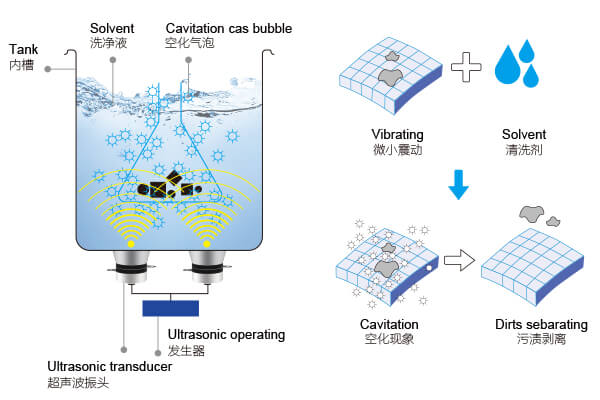
The Principle Behind Ultrasonic Cleaning
Cavitation intensity varies with ultrasonic frequency and power density. Lower frequencies around 25-40 kHz produce larger bubbles with more aggressive collapse forces. Higher frequencies from 40-80 kHz generate smaller bubbles with gentler cleaning action. Material tolerance to these forces determines cleaning safety.
Hard materials like metals, glass, and ceramics easily withstand cavitation forces without damage. Softer materials including plastics and rubber may experience surface erosion or structural damage if cleaning parameters exceed material tolerance thresholds.
Rubber’s elasticity provides both advantages and vulnerabilities during ultrasonic cleaning. The flexible nature absorbs some cavitation energy reducing damage risk compared to rigid plastics. However, this same flexibility allows cavitation bubbles to penetrate surface irregularities and existing cracks potentially accelerating degradation.
Material fatigue concerns arise when repeatedly cleaning the same rubber components. Each ultrasonic exposure subjects material to mechanical stress. While a single cleaning cycle causes negligible damage, cumulative effects over dozens or hundreds of cycles may reduce material lifespan.
Surface condition critically affects how rubber responds to ultrasonic cleaning. Smooth, intact surfaces resist cavitation penetration. Cracked, porous, or degraded surfaces allow cavitation forces to attack internal material structure accelerating deterioration.
Types of Rubber and Their Ultrasonic Tolerance
Natural Rubber Characteristics
Natural rubber derived from latex demonstrates good elasticity and flexibility but shows sensitivity to ultrasonic cleaning under certain conditions. Fresh, high-quality natural rubber tolerates moderate ultrasonic exposure without issues. However, natural rubber degrades over time through oxidation and UV exposure making older components more vulnerable.
Temperature sensitivity represents a primary concern with natural rubber. Ultrasonic cleaning solutions heated above 60°C may soften natural rubber causing dimensional changes or surface damage. Maintaining solution temperatures below 50°C protects natural rubber components during cleaning.
Chemical compatibility also affects natural rubber ultrasonic cleaning success. Petroleum-based solvents and strong alkaline solutions degrade natural rubber. Aqueous cleaning solutions with neutral or mildly alkaline pH levels provide safer alternatives.
Synthetic Rubber Variations
Synthetic rubber compounds offer diverse properties and ultrasonic cleaning tolerance levels. Nitrile rubber (NBR) commonly used in automotive and industrial applications demonstrates excellent ultrasonic cleaning compatibility. The material withstands both cavitation forces and most cleaning solution chemistries.
Neoprene (polychloroprene) provides good resistance to oils, chemicals, and environmental degradation. This synthetic rubber tolerates ultrasonic cleaning well across typical frequency and power ranges. Neoprene components including gaskets, seals, and protective coverings clean effectively without damage concerns.
EPDM rubber (ethylene propylene diene monomer) offers outstanding weather resistance and chemical compatibility. Industrial applications frequently specify EPDM for sealing applications due to its durability. Ultrasonic cleaning does not compromise EPDM properties when appropriate parameters are applied.
Viton (fluoroelastomer) represents premium rubber materials with exceptional chemical resistance. The high-performance characteristics that make Viton suitable for demanding applications also provide excellent ultrasonic cleaning tolerance. Viton components handle aggressive cleaning without degradation.
Silicone Rubber Properties
Silicone rubber occupies a unique category with different characteristics than natural or synthetic rubbers. The material demonstrates excellent temperature stability maintaining properties from -50°C to 200°C+. This thermal stability simplifies ultrasonic cleaning since solution temperature variations cause minimal concern.
Chemical inertness makes silicone rubber compatible with diverse cleaning solutions. Medical-grade silicone components clean ultrasonically without absorption or reaction concerns. However, silicone’s relatively low mechanical strength compared to other rubbers requires attention to cavitation intensity.
High-frequency ultrasonic cleaning suits silicone rubber better than low-frequency aggressive cavitation. Settings appropriate for delicate materials protect silicone components while achieving effective contamination removal.
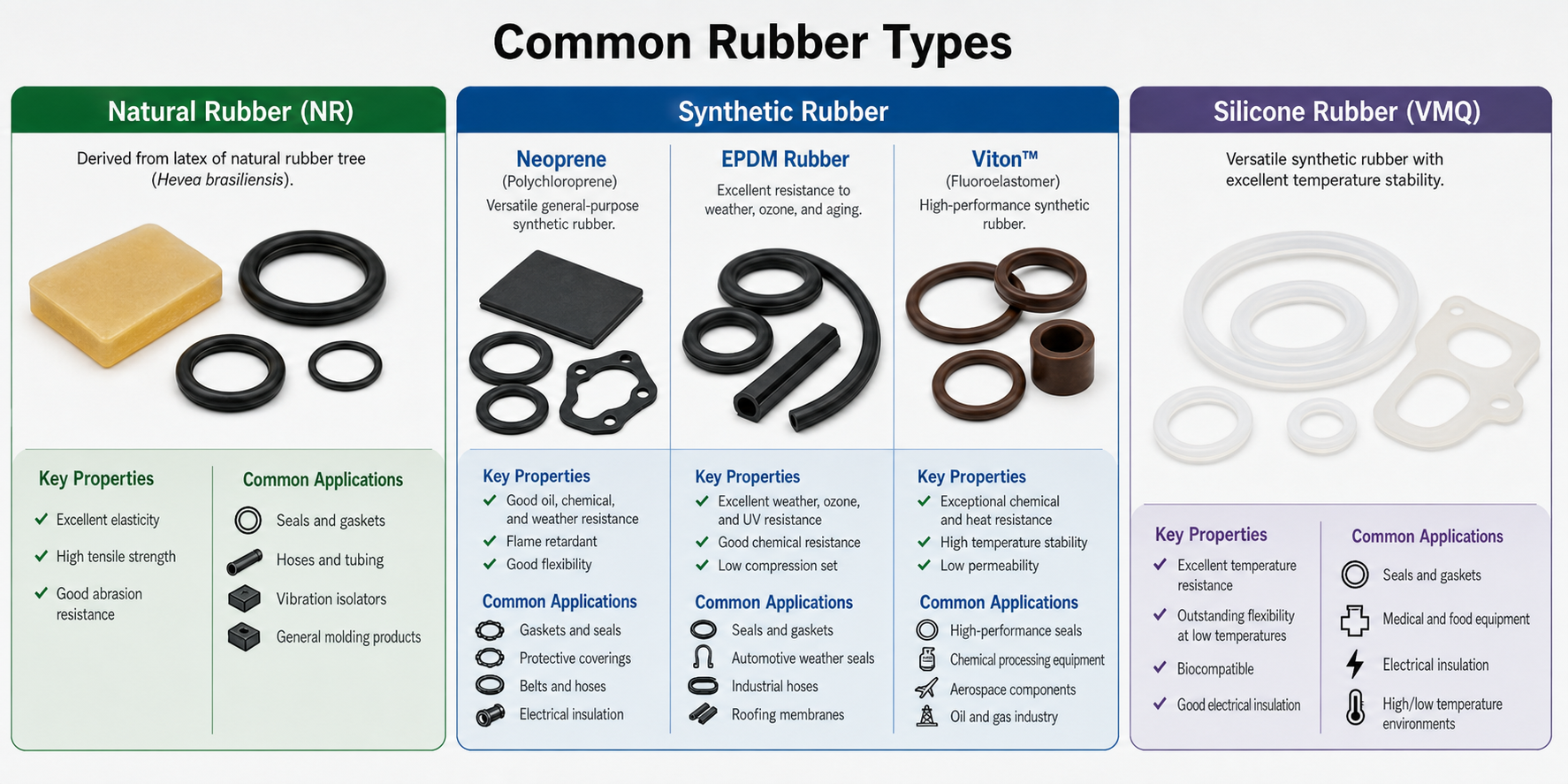
Types of Rubber
Potential Risks When Cleaning Rubber Items
Several failure modes can occur when rubber items experience inappropriate ultrasonic cleaning conditions. Understanding these risks enables operators to recognize problems early and adjust parameters accordingly.
Surface erosion manifests as roughened texture or material loss from rubber surfaces. Excessive cavitation intensity or prolonged exposure causes this damage. Soft rubber grades show particular susceptibility to surface erosion under aggressive ultrasonic conditions.
Crack propagation accelerates when existing material defects experience ultrasonic cavitation forces. Small surface cracks extend deeper into material structure compromising mechanical properties. Aged or weathered rubber containing micro-cracks should not undergo aggressive ultrasonic cleaning.
Dimensional changes occur when cleaning solution temperature or chemistry affects rubber’s physical properties. Swelling from solution absorption or softening from excessive heat alters critical dimensions. Components requiring tight tolerances may fail functional requirements after improper cleaning.
Bond line failures affect rubber-to-metal or rubber-to-plastic assemblies. Ultrasonic energy can debond adhesive interfaces if cavitation attacks the bond line. Assembled components containing rubber parts require careful evaluation before ultrasonic cleaning.
Material hardening sometimes results from chemical reactions between cleaning solutions and rubber compounds. Plasticizer extraction or chemical cross-linking changes material flexibility. Hardened rubber loses sealing capability and may crack under operational stresses.
Safe Rubber Items for Ultrasonic Cleaning
Many rubber components clean successfully using ultrasonic equipment when proper techniques are applied. These applications demonstrate proven compatibility across various industries.
Automotive O-rings and seals made from nitrile or EPDM rubber handle ultrasonic cleaning during engine and transmission rebuilding. The process removes oil residue, carbon deposits, and contamination preparing components for inspection and reuse. Thousands of automotive shops routinely clean rubber seals ultrasonically without issues.
Industrial gaskets manufactured from neoprene, Viton, or synthetic rubber compounds tolerate ultrasonic cleaning as part of maintenance procedures. Removing process contamination from gaskets before reinstallation extends service life and improves sealing performance.
Medical silicone components including tubing, connectors, and sealing elements clean ultrasonically as part of reprocessing protocols. Medical-grade silicone’s chemical stability and mechanical properties remain unaffected by validated ultrasonic cleaning processes.
Laboratory rubber stoppers and tubing undergo ultrasonic cleaning removing chemical residues and contamination. Synthetic rubber laboratory supplies demonstrate excellent cleaning compatibility supporting research and quality control requirements.
Electronic component grommets made from various rubber compounds clean ultrasonically during manufacturing and rework processes. Removing flux residues, handling oils, and particulate contamination from rubber grommets ensures proper assembly and function.
Rubber Components That Require Caution
Certain rubber items and conditions warrant careful evaluation before ultrasonic cleaning. These situations require modified parameters or alternative cleaning methods.
Aged rubber components showing visible cracking, hardening, or surface degradation should not undergo aggressive ultrasonic cleaning. The compromised material structure cannot withstand cavitation forces without accelerated damage. Gentle manual cleaning better suits degraded rubber items.
Soft rubber materials with Shore A hardness below 40 demonstrate higher vulnerability to cavitation damage. Ultra-soft rubber including some foam materials and flexible tubing may require hand cleaning or very gentle ultrasonic parameters.
Thin-walled rubber components including diaphragms, thin gaskets, and flexible membranes risk tearing or perforation under standard ultrasonic conditions. Reducing power intensity and limiting cycle duration protects delicate rubber structures.
Bonded rubber assemblies containing adhesive attachment of rubber to substrates may experience bond line attack. Ultrasonic energy penetrating the interface can cause delamination. Testing sample assemblies before processing production quantities prevents costly failures.
Specialty compounds with unknown composition present unpredictable cleaning compatibility. Without material specifications confirming ultrasonic tolerance, conservative parameters or test cleaning of representative samples should precede full processing.
Optimal Settings for Rubber Cleaning
Frequency Selection Considerations
Operating frequency significantly impacts rubber cleaning safety and effectiveness. Higher frequencies generally provide safer rubber cleaning through gentler cavitation action.
40-45 kHz frequency represents the optimal range for most rubber cleaning applications. This frequency produces effective contamination removal while minimizing material stress. Standard commercial ultrasonic cleaners operating at 40 kHz handle typical rubber components safely.
Low-frequency cleaning at 25-28 kHz delivers aggressive cavitation suitable for heavily contaminated robust rubber items. Industrial rubber components with significant oil or carbon buildup benefit from low-frequency cleaning. However, soft or degraded rubber should avoid low-frequency exposure.
High-frequency processing above 60 kHz provides maximum safety for delicate rubber items. Medical device cleaning and precision rubber components benefit from gentle high-frequency cavitation. Cleaning effectiveness decreases requiring longer cycle times or stronger cleaning solutions.
Power Intensity Adjustments
Ultrasonic power density determines cavitation field strength affecting both cleaning effectiveness and material risk. Adjustable power controls enable optimization for rubber cleaning.
Medium power settings around 50-70% of maximum capacity suit most rubber applications. This intensity removes typical contamination without excessive material stress. Operators should start at medium power and increase only if cleaning proves inadequate.
Low power operation below 50% capacity protects sensitive rubber materials. Extended cycle times compensate for reduced cavitation intensity. Delicate components warrant conservative power settings preventing damage.
Maximum power should be reserved for robust rubber items with heavy contamination. Continuous monitoring during high-power cleaning detects any adverse material effects allowing immediate parameter adjustment.
Temperature Control Guidelines
Cleaning solution temperature affects both cleaning chemistry activity and rubber material properties. Proper temperature selection balances cleaning effectiveness against material safety.
Room temperature cleaning between 20-30°C provides safest conditions for rubber items with unknown heat tolerance. Many contamination types respond to room temperature ultrasonic cleaning when appropriate solutions are used.
Moderate heating to 40-50°C accelerates cleaning chemistry and reduces solution viscosity improving cavitation effectiveness. Most synthetic rubber compounds tolerate this temperature range without degradation. Natural rubber components also handle moderate temperatures safely.
Elevated temperatures above 60°C risk rubber softening, dimensional changes, or accelerated degradation. Only heat-resistant rubber compounds including silicone and Viton should experience high-temperature ultrasonic cleaning. Temperature should never exceed rubber’s continuous service temperature rating.
Cleaning Solution Compatibility with Rubber
Solution chemistry dramatically affects rubber cleaning outcomes. Incompatible solutions damage rubber even without ultrasonic cavitation while compatible formulations enable effective safe cleaning.
Neutral pH aqueous solutions provide broad rubber compatibility. Water-based cleaners with pH 6-8 clean many contamination types without attacking rubber materials. Surfactant-based aqueous solutions remove oils, greases, and particulates effectively.
Mildly alkaline solutions with pH 9-10.5 increase cleaning power against organic contamination while maintaining compatibility with most synthetic rubbers. Nitrile, neoprene, and EPDM tolerate alkaline cleaning well. Natural rubber shows more sensitivity requiring pH limitation below 10.
Solvent-based cleaners require careful material compatibility evaluation. Petroleum solvents attack natural rubber and some synthetic compounds causing swelling or degradation. Alcohol-based solutions demonstrate better rubber compatibility for applications requiring solvent cleaning.
Specialty rubber-safe formulations designed specifically for elastomer cleaning provide optimal performance. These solutions balance contamination removal effectiveness with material compatibility. Automotive parts cleaning solutions often include rubber-safe formulations.
Manufacturers’ technical data sheets specify chemical compatibility for rubber compounds. Consulting these resources before selecting cleaning solutions prevents material damage. Testing sample parts in proposed cleaning solutions confirms compatibility before processing production quantities.
Duration and Cycle Time Recommendations
Exposure duration affects both cleaning completeness and cumulative material stress. Optimizing cycle time balances thorough contamination removal against minimizing rubber exposure.
Short cycles of 3-5 minutes suit lightly soiled rubber components. Brief ultrasonic exposure removes surface contamination with minimal material stress accumulation. Multiple short cycles with inspection between stages provide controlled cleaning progression.
Standard cycle times between 5-10 minutes handle typical contamination levels on rubber items. Most rubber components tolerate these durations without issues when appropriate frequency and power settings are applied.
Extended cleaning beyond 15 minutes should prompt evaluation of whether ultrasonic cleaning suits the application. If contamination requires excessive exposure time, alternative cleaning methods or pre-cleaning steps may prove more appropriate.
Continuous ultrasonic exposure differs from intermittent processing. Pausing between cycles allows solution degassing and material stress relaxation. This intermittent approach reduces cumulative damage risk compared to continuous extended exposure.
Pre-Cleaning Inspection Requirements
Visual examination before ultrasonic processing identifies rubber components unsuitable for cleaning and prevents damage to compromised items.
Crack detection through careful surface inspection reveals existing material damage. Components showing cracks should not undergo ultrasonic cleaning unless replacement is already planned. Cavitation will propagate cracks causing failure.
Hardness assessment through tactile evaluation identifies degraded rubber. Hardened, brittle rubber indicates material degradation making ultrasonic cleaning risky. Components should maintain appropriate flexibility for their rubber grade.
Swelling signs suggest previous chemical exposure or moisture absorption. Swollen rubber may have compromised mechanical properties vulnerable to ultrasonic stress. Allow affected components to fully dry and stabilize before cleaning decisions.
Color changes including yellowing, darkening, or bleaching indicate chemical degradation or UV damage. While color changes alone may not prevent cleaning, they warrant conservative parameter selection and careful post-cleaning inspection.
Surface condition evaluation identifies rough, porous, or eroded rubber requiring gentle treatment. Smooth surfaces tolerate ultrasonic cleaning better than degraded surfaces providing cavitation attack points.
Alternative Cleaning Methods for Sensitive Rubber
When rubber components prove unsuitable for ultrasonic cleaning, several alternative methods achieve contamination removal without material damage.
Manual cleaning using soft brushes and appropriate solutions provides complete operator control. This labor-intensive approach suits high-value sensitive rubber components where damage risk outweighs productivity concerns.
Spray washing with pressurized cleaning solution removes loose contamination without mechanical agitation. Automated spray washers handle production volumes while avoiding ultrasonic stress on vulnerable materials.
Soak cleaning relies on extended contact time in appropriate chemical solutions loosening contamination without mechanical force. This gentle method suits aged or degraded rubber components. Solution chemistry selection becomes critical since extended exposure time increases chemical interaction risks.
Wipe cleaning using solvent-dampened cloths removes contamination from accessible surfaces. Medical device reprocessing frequently employs wipe cleaning for silicone components before sterilization. This method provides control and documentation but requires significant labor.
Agitation washing in baskets or tumblers with cleaning solution provides mechanical action gentler than ultrasonic cavitation. Parts washers using basket agitation clean rubber components while minimizing damage risk.
Industrial Applications Involving Rubber Components
Multiple industries successfully incorporate rubber component ultrasonic cleaning into standard processes demonstrating practical compatibility under proper conditions.
Automotive rebuilding routinely cleans O-rings, seals, and gaskets during engine and transmission overhaul. Shops clean hundreds of rubber components daily using ultrasonic equipment without systematic failures. Standard 40 kHz cleaners with automotive-specific solutions provide effective processing.
Hydraulic system maintenance includes ultrasonic cleaning of nitrile seals and O-rings during cylinder and valve rebuilding. Contamination removal before reassembly prevents premature wear and system failures. The practice demonstrates rubber durability under proper ultrasonic conditions.
Medical device reprocessing incorporates ultrasonic cleaning of silicone components in validated cleaning processes. Regulatory compliance requirements drive rigorous process development confirming material compatibility and cleaning effectiveness.
Industrial equipment maintenance cleans neoprene and EPDM gaskets from pumps, compressors, and processing equipment. Contamination removal during preventive maintenance extends component service life and reduces replacement costs.
Electronics manufacturing uses ultrasonic cleaning for rubber grommets, gaskets, and protective components during assembly and rework. Flux residue and handling contamination removal ensures proper component function and product reliability.
Common Rubber Items and Cleaning Suitability
Different rubber products demonstrate varying ultrasonic cleaning compatibility based on design and material properties.
O-rings represent ideal rubber items for ultrasonic cleaning. The simple geometry, typically robust material, and lack of complex features provide excellent ultrasonic tolerance. Standard nitrile, Viton, and EPDM O-rings clean safely across wide parameter ranges.
Gaskets clean effectively when material thickness and condition support ultrasonic exposure. Thin gaskets require gentler settings than thick robust designs. Flat gaskets tolerate cleaning better than formed or molded gaskets with complex geometries.
Seals including shaft seals and face seals clean successfully though bonded metal-rubber assemblies require parameter attention preventing bond line damage. Simple rubber seals without bonded elements present minimal concerns.
Grommets and bushings made from medium to hard rubber compounds handle ultrasonic cleaning well. The solid construction and typical material grades provide adequate mechanical strength resisting cavitation forces.
Tubing presents variable compatibility depending on wall thickness and material softness. Thick-walled tubing cleans safely while thin-walled flexible tubing may require hand cleaning or very gentle ultrasonic parameters.
Diaphragms and membranes represent challenging components due to thin flexible construction. Most diaphragms should avoid ultrasonic cleaning unless specifically designed and tested for ultrasonic compatibility.
Rubber coatings on tools, handles, or components typically tolerate ultrasonic cleaning since the rubber bonds to rigid substrates providing mechanical support. However, coating adhesion and thickness affect compatibility requiring evaluation.
Signs of Rubber Degradation During Cleaning
Monitoring components during and after ultrasonic cleaning detects adverse effects enabling parameter correction before significant damage occurs.
Surface roughening indicates excessive cavitation intensity eroding material. Affected areas show matte appearance compared to original smooth glossy finish. Reducing power intensity or shortening cycle time prevents progression.
Dimensional changes including swelling or shrinkage suggest chemical incompatibility between cleaning solution and rubber compound. Switching to neutral aqueous solutions typically resolves chemistry-related dimensional issues.
Loss of flexibility appears as increased stiffness or rigidity after cleaning. This condition may result from plasticizer extraction by cleaning solution or thermal effects from excessive temperature. Component function may be compromised requiring rejection.
Color changes beyond removal of surface contamination indicate chemical reaction or degradation. Darkening, bleaching, or color shifts suggest incompatible cleaning conditions. Material properties may be affected even without visible physical damage.
Cracking or tearing represents clear failure requiring immediate process changes. Components showing new cracks or tears after cleaning prove the parameters exceeded material tolerance. All cleaning should stop pending parameter reevaluation.
Best Practices for Rubber Ultrasonic Cleaning
Following established guidelines maximizes rubber cleaning success while minimizing damage risks.
Conduct test cleaning on representative samples before processing production quantities. This practice identifies incompatibilities and optimizes parameters without risking valuable components.
Start with conservative parameters using moderate frequency (40 kHz), reduced power (50-60%), and ambient temperature. Increase intensity incrementally only if cleaning proves inadequate.
Limit cycle duration to minimum time achieving adequate contamination removal. Avoid excessive exposure accumulating unnecessary material stress.
Use appropriate cleaning solutions with confirmed rubber compatibility. Consult material specifications and cleaning solution technical data sheets ensuring chemical compatibility.
Inspect components before and after cleaning documenting condition. Early detection of adverse effects enables correction before widespread damage.
Maintain proper solution levels ensuring complete component immersion. Partial immersion creates inconsistent cleaning and potential damage at air-liquid interfaces.
Position parts properly in cleaning baskets preventing contact with tank walls or bottom. Direct contact with vibrating surfaces may damage rubber components.
Control solution temperature maintaining levels appropriate for rubber material grade. Monitor temperature throughout cleaning preventing thermal excursions.
Replace degraded solutions regularly preventing accumulated contamination from redepositing on cleaned components. Dirty solutions reduce cleaning effectiveness requiring longer exposure times.
Document successful parameters for recurring cleaning tasks. Standardized procedures ensure consistent results and prevent parameter drift toward unsafe conditions.
When to Avoid Ultrasonic Cleaning for Rubber
Certain conditions and component types make ultrasonic cleaning inappropriate regardless of parameter optimization.
Severely aged rubber showing extensive cracking, hardening, or surface deterioration cannot safely undergo ultrasonic cleaning. The compromised material will deteriorate further under cavitation forces. Replace rather than clean severely degraded components.
Unknown rubber compounds without material specifications present unpredictable cleaning responses. When material identification proves impossible and test samples are unavailable, alternative cleaning methods eliminate uncertainty.
Ultra-soft materials below Shore A 30 hardness lack mechanical strength resisting cavitation. Hand cleaning or gentle spray washing better suits extremely soft rubber items.
Critical low-tolerance components where dimensional changes or material property shifts cause functional failure require careful evaluation. If cleaning risks outweigh contamination concerns, leave components installed or use non-invasive cleaning methods.
Bonded assemblies with questionable adhesive compatibility should avoid ultrasonic cleaning unless manufacturer documentation confirms process suitability. Delamination risks often exceed cleaning benefits.
Antique or historical items made from aged rubber compounds prioritize preservation over cleanliness. Conservation specialists should determine appropriate cleaning approaches for valuable historical rubber items.