


Yes, water-based Simple Green products can be used in ultrasonic cleaning machines, provided that the specific product, dilution, equipment, and workpiece are compatible. Simple Green states that its water-based products are compatible with ultrasonic cleaning machines, while solvent-based ultrasonic systems should not be used with Simple Green products. See Ultrasonic Cleaning (Official Manufacturer Guidance).
The important qualification is that “Simple Green” refers to a range of cleaning products rather than one universal formulation. All-Purpose Cleaner, Industrial Cleaner and Degreaser, Pro HD, Extreme Simple Green Aircraft and Precision Cleaner, and other products have different strengths, ingredients, dilution recommendations, and material-compatibility profiles.
Simple Green can be useful in an ultrasonic cleaner because its water-based chemistry helps wet surfaces, loosen oils and organic residues, and keep contaminants suspended in the bath. Ultrasonic cavitation then improves liquid movement around the part and helps reach grooves, holes, threads, and other difficult areas.
However, the product should not be poured into the tank at full strength unless the product instructions specifically allow that use. The correct concentration depends on the Simple Green formulation, contamination level, material being cleaned, tank volume, operating temperature, and required corrosion protection.
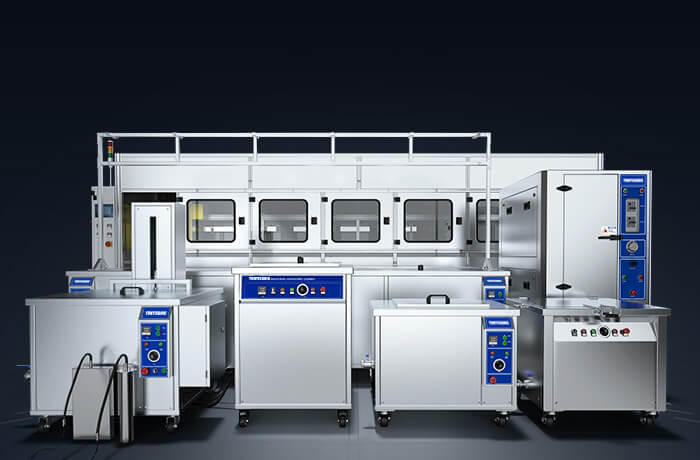
Yunyisonic Ultrasonic Cleaner Manufacturer
Why Simple Green Can Be Used in an Ultrasonic Cleaner
Simple Green can be effectively used in an ultrasonic cleaner because its water-based surfactant chemistry complements the mechanical energy of acoustic cavitation. According to official manufacturer guidance, Simple Green aqueous formulations are fully compatible with ultrasonic equipment designed for water-soluble cleaning solutions.
However, suitability depends on both equipment design and process parameters. Simple Green is formulated specifically for aqueous systems and must not be used as a replacement for organic solvents in solvent-dedicated machines. Furthermore, achieving safe, optimal results requires balancing chemical dilution, bath temperature, cycle time, and material compatibility—especially when cleaning sensitive surfaces like aluminum, brass, or rubber seals.
Aqueous Compatibility vs. Solvent-Based Systems
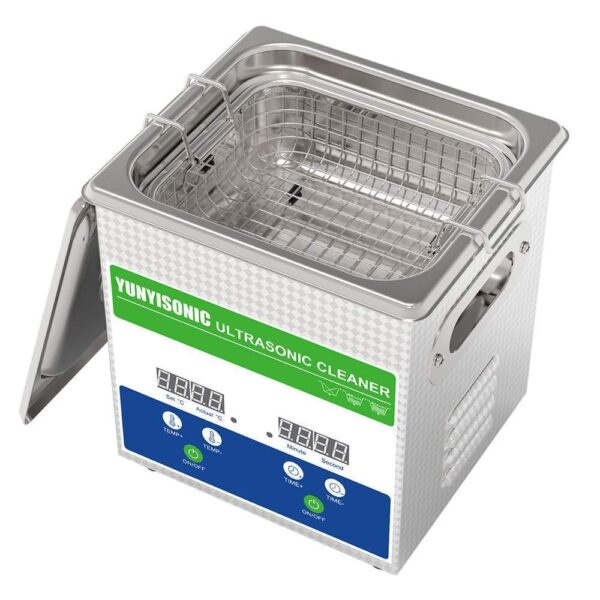
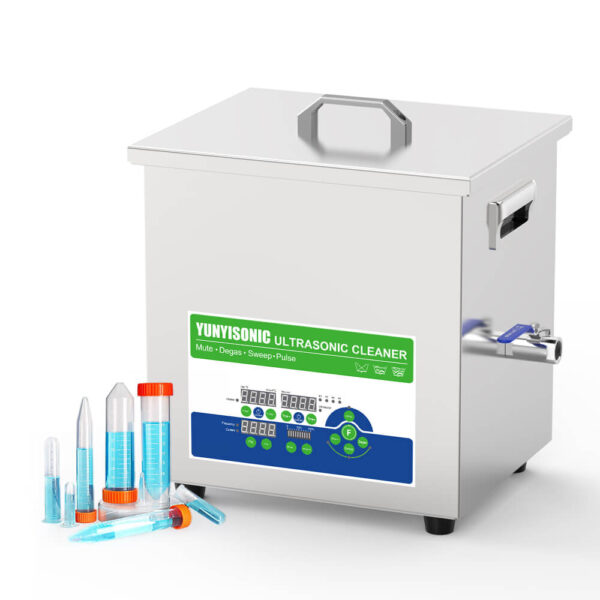
Ultrasonic cleaning machines fall into two primary categories: aqueous systems and solvent-based vapor/immersion systems. Aqueous units rely on water-soluble cleaning concentrates and are built with stainless-steel tanks, immersion heaters, and filtration stages. In contrast, solvent systems require explosion-proof enclosures, vapor containment, and specialized seals to handle volatile organic compounds.
According to Simple Green’s Official Guidance, water-based Simple Green products are engineered specifically for aqueous machines. In standard benchtop units, the cleaner must always be properly diluted with water rather than used straight from the bottle, as excessive chemical concentrations can cause unstable foaming, leave heavy residues, and attack sensitive substrates.
The Synergy of Chemistry and Acoustic Cavitation
Simple Green functions effectively in an ultrasonic environment because it works in tandem with the physical scrubbing power of high-frequency sound waves:
- Chemical Wetting and Emulsification: The surfactant formulation reduces the surface tension of water, allowing the solution to wet intricate surfaces quickly, penetrate stubborn grease and oil, and encapsulate dislodged debris to prevent redeposition onto cleaned parts.
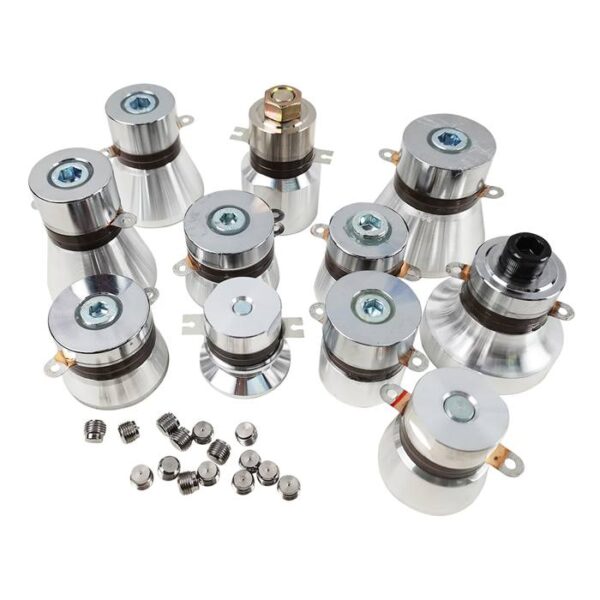
- Acoustic Cavitation: Ultrasonic transducers generate alternating high- and low-pressure sound waves, forming microscopic vapor bubbles that violently collapse. This implosion produces high-energy micro-jets that physically dislodge softened contaminants from blind holes, internal threads, and complex geometries unreachable by manual scrubbing.
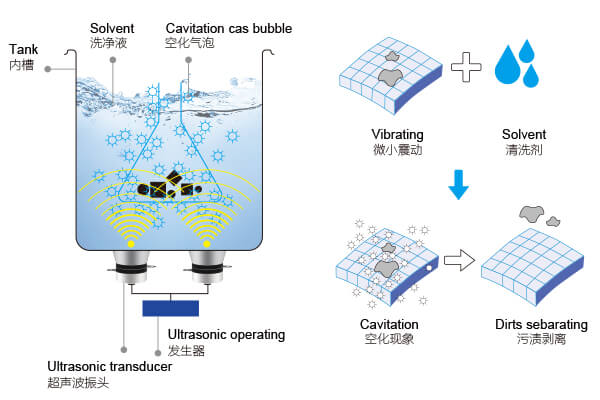
The Principle Behind Ultrasonic Cleaning
Foam Control and Material Considerations
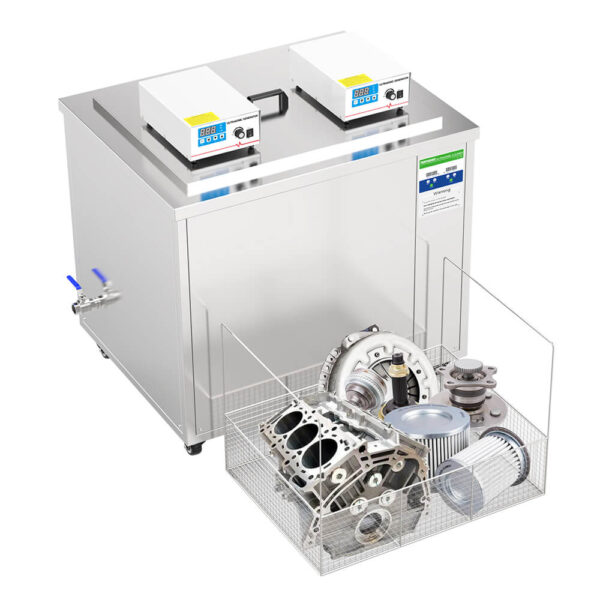
While Simple Green is ideal for degreasing automotive parts, carburetors, machinery components, and workshop tools, effective process control remains essential:
Excessive foam dampens ultrasonic wave transmission, significantly reducing cleaning efficiency. Maintaining the recommended dilution ratio and operating temperature prevents excessive foaming while maximizing cavitation energy. Additionally, higher chemical concentrations do not always yield better results—overly alkaline solutions can etch or discolor soft metals such as aluminum. Always validate the dilution and cycle time on a sample part before routine production cleaning.
Which Simple Green Products Are Suitable?
All-Purpose Cleaner
Simple Green All-Purpose Cleaner is a water-based product with dilution guidance for heavy-duty, general-purpose, and light cleaning. The manufacturer lists heavy-duty use from full strength to 1:1 dilution, general-purpose cleaning up to 1:10, and light cleaning up to 1:30. See Simple Green® All Purpose Cleaner (Official Manufacturer Guidance).
These ratios are general application guidance and should not automatically be treated as a universal ultrasonic-tank recipe. A part-cleaning process may require a different concentration based on the tank volume, soil level, material, and rinsing capability.
For light contamination, a more dilute solution may reduce foam and residue. For heavy grease, a stronger solution may improve soil removal, but it should be evaluated for corrosion and material compatibility before use.
Industrial and Heavy-Duty Formulations
Industrial Cleaner and Degreaser, Pro HD, and similar products are designed for more demanding cleaning work. These products may be appropriate for industrial parts, tools, equipment, and maintenance applications, but the product label and technical documentation should be checked for the actual material and process.
A heavy-duty cleaner may be more effective against oil and grease than a general-purpose formulation, but it may also be more chemically active. Components made from aluminum, copper, zinc, magnesium, painted metal, plated surfaces, or elastomers should be tested before full-scale cleaning.
Parts with trapped solution should receive particular attention. Blind holes, hollow structures, overlapping sheets, and narrow channels can retain alkaline or detergent residues after ultrasonic treatment. A rinse stage may be required to prevent residue-related corrosion or later contamination.
Precision and Aircraft Cleaners
For sensitive components, a precision-oriented Simple Green formulation may be more suitable than a general household cleaner. The manufacturer identifies Extreme Simple Green Aircraft and Precision Cleaner for ultrasonic applications in aviation and precision-cleaning environments.
The product documentation provides different dilution levels for different cleaning conditions and identifies a 1:13 dilution as the maximum dilution for non-corrosion to metals under an AMS1526B test for that product. This specification applies to the named formulation and test condition; it should not be transferred automatically to every Simple Green product or every alloy. See Heavy Duty Precision Cleaner (Official Manufacturer Guidance).
Precision cleaning also requires better control of rinsing, drying, bath contamination, and inspection. A product that performs well during general maintenance may not be adequate for a validated aerospace, medical-device, optical, or electronics-cleaning process.
How to Use Simple Green in an Ultrasonic Cleaner
Choosing the Correct Dilution
The dilution should be selected from the instructions for the exact Simple Green product being used. The ratio should be measured based on the final tank volume rather than estimated by adding an arbitrary amount of concentrate.
Simple Green explains that its dilution ratios are given as parts of cleaner to parts of water. For example, a 1:10 ratio means one part cleaner and ten parts water. See Dilutions (Official Manufacturer Guidance).
There is no single correct Simple Green concentration for every ultrasonic application. A useful starting point is the lowest product-specific dilution that can remove the target contamination without producing excessive foam, residue, or material attack. A test part should be inspected after cleaning and rinsing before the process is applied to valuable or production components.
Preparing the Tank and Solution
Begin with a clean tank and fresh water. Residue from previous chemicals can alter the solution’s pH, foaming behaviour, conductivity, or corrosion performance. Mixing Simple Green with bleach, acids, solvents, or other unapproved chemicals should be avoided.
Fill the tank to the marked operating level. The liquid must cover the workpieces while leaving sufficient space to prevent splashing or overflow. If the cleaner has a heater, use only the temperature permitted by the equipment manual and the part manufacturer.
Many ultrasonic cleaners benefit from a short degassing period before parts are loaded. Removing dissolved air can improve cavitation consistency, although the correct procedure depends on the machine design. The equipment manual should take priority over general operating practices.
Loading Parts and Setting the Cycle
Parts should be placed in a basket or fixture rather than directly on the tank bottom. Components should not be stacked tightly because contact surfaces may be shielded from the ultrasonic field. Hollow parts and blind holes should be oriented to allow liquid to enter and drain.
The cleaning cycle should be long enough to remove the contamination but not unnecessarily extended. Excessive time can increase temperature, chemical exposure, and the possibility of surface damage. If heavy contamination remains, pre-rinsing, brushing, filtration, or a staged cleaning process may be more effective than simply adding more time.
Small parts should be secured so they cannot fall into the drain or become trapped near a transducer. Delicate coatings, labels, adhesives, and soft materials should be supported to prevent movement and impact.
Rinsing and Drying
After ultrasonic cleaning, parts should be rinsed with clean water when the application requires removal of detergent and soil residues. A single rinse may not be sufficient for parts with blind holes, porous surfaces, or complex internal passages.
Drying is important because retained water can promote corrosion, interfere with electrical performance, or leave mineral deposits. Compressed air, filtered air, heated air, or controlled ambient drying may be used depending on the material and process requirements.
For critical components, cleanliness should be verified using an appropriate inspection method. Visual inspection may be sufficient for maintenance work, while precision applications may require residue testing, water-break testing, particle analysis, dimensional inspection, or functional testing.
What Materials Can Be Cleaned?
Steel and Other Metals
Many steel parts, tools, fasteners, and industrial components can be cleaned with a properly diluted water-based Simple Green solution. Ultrasonic cleaning is particularly useful for removing oil and grease from threads, holes, gears, and irregular surfaces.
Carbon steel should not remain wet after cleaning because water and residual contamination can promote flash rust. Rinsing, drying, and corrosion protection should be included in the process where necessary.
Stainless steel is generally more resistant to corrosion, but its grade, surface condition, welds, crevices, and exposure time still matter. Stronger solutions and elevated temperatures should be evaluated rather than assumed to be harmless.
Aluminum, Coatings, and Plated Surfaces
Aluminum and its alloys require particular care. Some alkaline cleaning solutions can darken, stain, etch, or otherwise alter aluminum surfaces, especially at high concentration, high temperature, or extended contact time.
Anodized, painted, powder-coated, plated, polished, or chemically treated surfaces may also be affected. Ultrasonic action can expose weak adhesion, lift damaged coatings, or reveal pre-existing defects that were hidden beneath dirt.
Simple Green’s product-specific technical information should be checked before cleaning aluminum or coated parts. A small hidden-area test is advisable when the finish is important.
Plastic, Rubber, and Electronic Components
Many rigid plastics can tolerate diluted aqueous cleaning, but compatibility varies by polymer, additives, age, and stress condition. Rubber seals, gaskets, adhesives, labels, and soft coatings may swell, harden, soften, or lose adhesion.
Electronic assemblies require additional caution. Water-based cleaning may be possible for certain boards or components, but the complete assembly must be compatible with immersion, ultrasonic energy, and drying. Batteries, displays, speakers, microphones, relays, sealed switches, and moisture-sensitive components may be damaged.
Printed circuit boards should be cleaned only when the board manufacturer or process documentation permits it. Ionic or detergent residues can impair electrical reliability if rinsing and drying are incomplete.
Limitations and Common Problems
Foaming
Excessive foam can reduce cavitation efficiency and make the machine difficult to operate. It may result from excessive cleaner concentration, contamination in the bath, high temperature, or a formulation with strong surface-active ingredients.
Reducing the concentration may help, but the solution should remain within the product’s intended operating range. If foam remains excessive, a low-foaming ultrasonic concentrate may be more appropriate.
Residue and Incomplete Rinsing
A detergent film may remain on parts if the solution is too concentrated, the rinse water is dirty, or the component geometry traps liquid. Residue may appear as a slippery film, white deposit, haze, or altered surface appearance.
Improve the rinse stage before increasing the detergent concentration. Fresh rinse water, multiple rinses, spray rinsing, agitation, and forced drying may be necessary for complex components.
Corrosion or Surface Discoloration
Corrosion or discoloration may result from unsuitable concentration, excessive temperature, extended exposure, contaminated bath water, galvanic contact, or incomplete drying. The risk is higher for reactive metals, damaged coatings, and parts with crevices.
Simple Green identifies product-specific dilution and material guidance, but no general cleaner is safe for every alloy and finish. If discoloration appears, stop the process and compare a cleaned test part with an untreated control.
Inadequate Cleaning Results
Poor cleaning may be caused by weak or uneven cavitation, overloaded baskets, insufficient liquid contact, heavy contamination, an unsuitable product, or a bath that is already saturated with oil and soil.
Ultrasonic energy cannot compensate for a chemistry that does not dissolve the contaminant. A staged process may be required, such as pre-wiping, scraping, brushing, soaking, ultrasonic cleaning, rinsing, and drying.