

Isopropyl alcohol, commonly called IPA or isopropanol, should not be poured into a standard open ultrasonic cleaner unless the equipment is specifically designed, approved, and protected for flammable solvents. Most general-purpose ultrasonic cleaners are intended for water-based cleaning solutions and may not include the vapor control, electrical protection, ventilation, fire suppression, or solvent recovery systems required for IPA.
IPA is a Class IB flammable liquid. It has a flash point of approximately 53°F (11.7°C), a lower explosive limit of about 2% by volume in air, and a vapor pressure that allows it to evaporate readily at room temperature. These characteristics make an open ultrasonic tank a potential source of flammable vapor, especially when ultrasonic energy and heat increase evaporation. (cdc.gov)
Purpose-built solvent ultrasonic cleaning systems can use IPA under controlled conditions. Such systems may include sealed chambers, vapor containment, explosion-protected electrical components, flammable-vapor detection, fire suppression, cooling, and solvent-recovery equipment. A standard tabletop unit with an uncovered tank should not be treated as equivalent to this type of industrial system. (crest-ultrasonics.com)
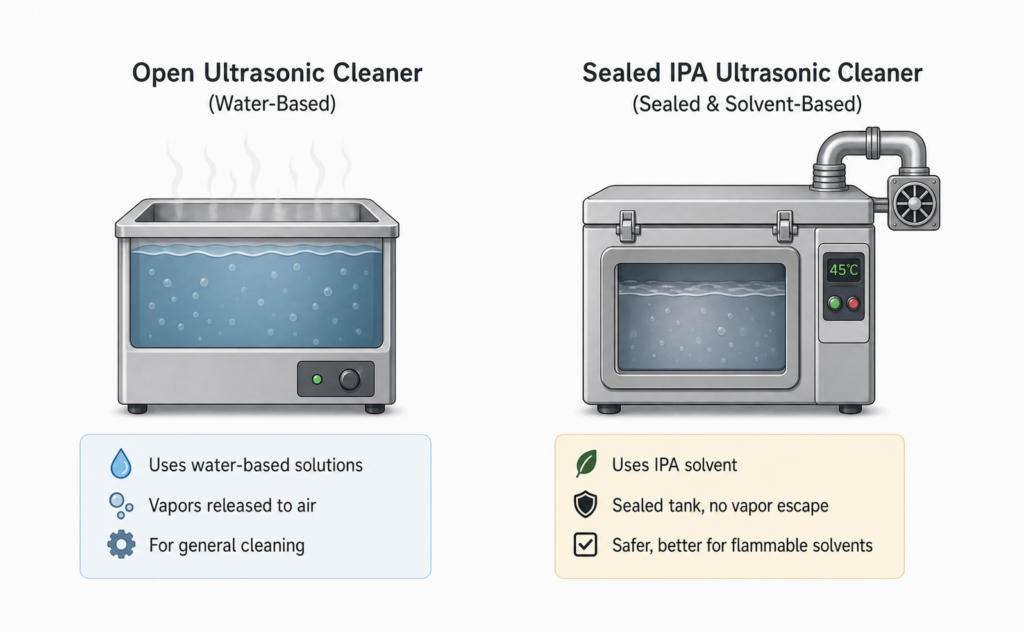
Side-by-side comparison of a standard open-top stainless steel ultrasonic cleaner for aqueous cleaning solutions and a sealed IPA solvent ultrasonic cleaning system, showing differences in construction, explosion prevention, solvent recovery, operator safety, and precision cleaning performance
Can You Use IPA in an Ultrasonic Cleaner?
The Short Answer
IPA can be used in an ultrasonic cleaner only when the complete system is specifically rated for flammable solvents and the operating instructions authorize IPA. It is not safe to assume that a stainless-steel tank, a high-frequency transducer, or a sealed lid makes a conventional ultrasonic cleaner suitable for isopropyl alcohol.
Many ultrasonic cleaner manuals explicitly prohibit flammable liquids. For example, Elmasonic operating instructions warn users not to fill the cleaning tank with flammable liquids and identify additional risks associated with volatile, corrosive, or aggressive cleaning agents. (elma-ultrasonic.com)
This restriction applies even when the IPA concentration is relatively low. Diluting IPA with water may reduce flammability in some circumstances, but the resulting mixture cannot be assumed to be nonflammable. The actual flash point, vapor behavior, and applicable safety classification depend on concentration, temperature, tank volume, ventilation, and the specific formulation.
The correct decision should be based on the equipment documentation and the solvent’s safety data sheet. If the manual says “do not use flammable liquids,” IPA should not be used in the tank, regardless of the intended cleaning time.
Why Standard Ultrasonic Cleaners Are Usually Not Suitable
A standard ultrasonic cleaner is typically designed around water-based liquids. Its electrical components, switches, heating elements, wiring, ventilation openings, and control systems may not be designed for operation in an atmosphere containing flammable solvent vapor.
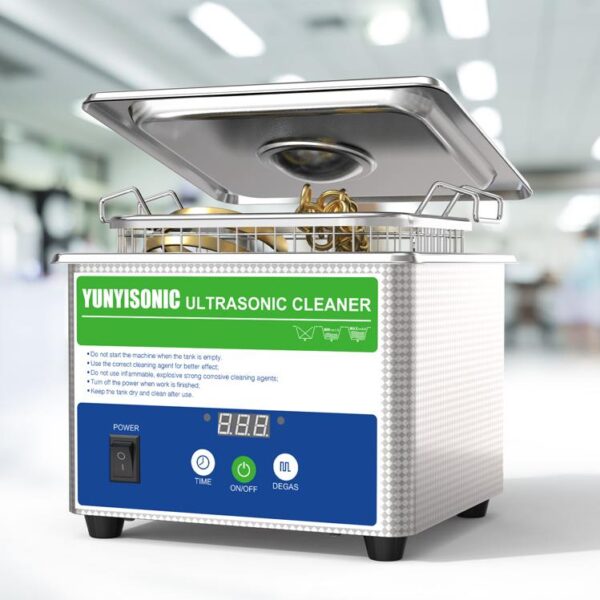
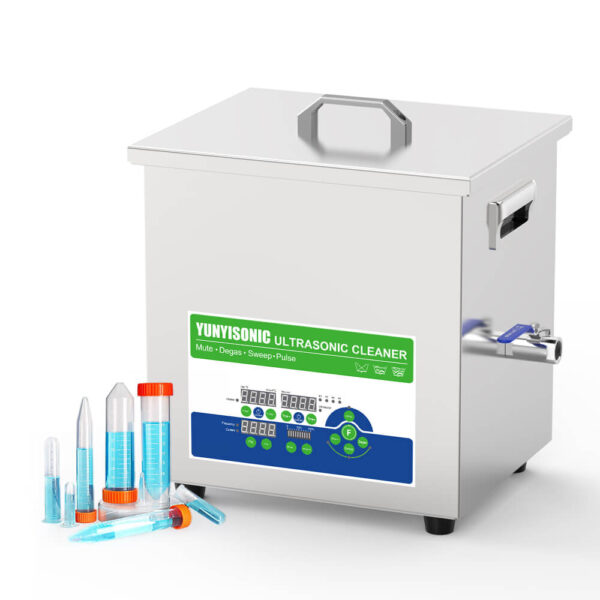
Click to view : Standard Ultrasonic Cleaners
Ultrasonic cleaning also creates conditions that can increase vapor generation. The liquid is continuously agitated, and many machines include an integral heater. Even when the heater is not activated, the transducers can transfer some energy into the bath as heat. Agitation increases the liquid’s exposed surface activity and can accelerate evaporation.
An uncovered tank creates an additional hazard because IPA vapor can accumulate near the work surface. Isopropyl alcohol vapor is heavier than air, which means it may collect in low areas or move toward an ignition source. NIOSH identifies IPA as a flammable liquid and lists fire and explosion as the principal safety hazards associated with its use. (cdc.gov)
Why IPA Is Classified as a High-Risk Cleaning Liquid
Isopropyl alcohol (IPA)
Flash Point and Vapor Formation
The flash point is the lowest temperature at which a liquid produces enough vapor to form an ignitable mixture with air under specified test conditions. IPA’s flash point is approximately 53°F, meaning that ordinary indoor temperatures may be close to or above this threshold. (cdc.gov)
The flash point does not mean that IPA automatically ignites at that temperature. Ignition still requires a suitable source, such as a spark, flame, hot surface, static discharge, or an electrical fault. However, it indicates that vapor formation must be treated as a routine process hazard rather than an unusual event.
Ultrasonic cleaning may increase the rate at which vapor enters the air. A heated or actively agitated bath can produce a higher solvent concentration above the tank than a stationary container. The risk becomes more significant when the tank is large, the room is poorly ventilated, or the process runs for an extended period.
Fire and Explosion Hazards
The principal concern is not that ultrasonic waves themselves are a flame. The concern is that a conventional cleaner may contain ignition sources while IPA vapor is present. Electrical relays, switches, motors, heating elements, damaged wiring, and static discharge can all become relevant in a solvent-handling environment.
OSHA lists IPA’s lower explosive limit at approximately 2.0% by volume in air. If vapor concentration reaches an ignitable range and an ignition source is present, combustion can occur rapidly. (osha.gov)
A documented OSHA incident involved a worker who was burned after a lighter ignited vapor above an ultrasonic cleaner containing isopropyl alcohol. The accident report also noted that the equipment manufacturer’s warning stated not to use flammable liquids. (osha.gov) This example illustrates why casual use of IPA in an open ultrasonic tank should not be treated as a minor operating error.
Worker Exposure and Ventilation
IPA exposure can occur through inhalation, eye contact, skin contact, and accidental ingestion. NIOSH identifies possible irritation of the eyes, nose, throat, and respiratory system, along with symptoms such as dizziness, headache, and drowsiness at elevated exposure levels. (cdc.gov)
Ventilation is necessary, but ordinary room ventilation is not automatically sufficient for an open ultrasonic solvent bath. A compliant industrial process may require local exhaust ventilation, vapor monitoring, restricted ignition sources, proper solvent storage, and documented operating procedures.
Personal protective equipment is also important, but PPE is not a substitute for engineering controls. Gloves, eye protection, and protective clothing should be selected based on the IPA concentration, exposure duration, and the safety data sheet. The primary risk reduction should come from appropriate equipment design and vapor containment.
How IPA Behaves in an Ultrasonic Cleaning Process
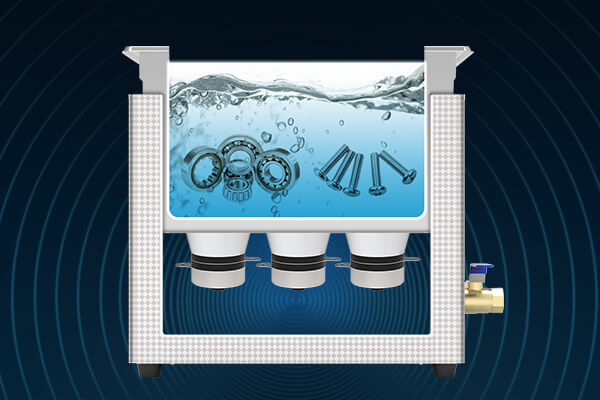
Ultrasonic Cleaner Operating Structure Diagram
Cavitation and Solvent Agitation
Ultrasonic cleaners use a generator and transducers to introduce high-frequency mechanical vibration into a liquid. The alternating pressure waves can form and collapse microscopic bubbles, producing cavitation. Cavitation creates local fluid movement and shear forces that help detach particles, oils, flux residues, and other contaminants from a component.
IPA has different physical properties from water, including lower surface tension, lower viscosity, and higher volatility. These properties influence bubble formation, collapse behavior, acoustic transmission, and heat transfer. A tank optimized for water may therefore produce different cleaning results when filled with IPA.
The presence of IPA does not automatically improve cavitation. In some systems, solvent properties can reduce the stability or intensity of cavitation compared with water. Ultrasonic frequency, power density, tank geometry, liquid level, temperature, and dissolved gas content all influence performance.
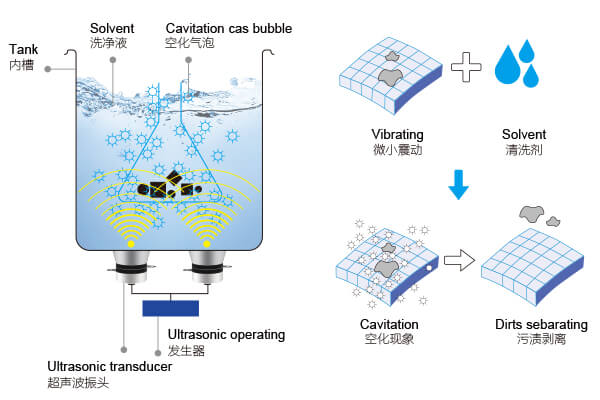
The Principle Behind Ultrasonic Cleaning
Heating and Vapor Generation
Heating is one of the most important factors in solvent ultrasonic cleaning. As the liquid temperature rises, IPA evaporation increases. A standard cleaner with an uncontrolled or exposed heater can create a dangerous condition even when the ultrasonic function itself appears to operate normally.
Purpose-built solvent systems may use temperature limits, cooling coils, condensers, closed chambers, or vapor-recovery arrangements. These controls are intended to keep vapor emissions and solvent temperature within defined operating limits. A conventional cleaner generally does not provide the same level of process control.
For this reason, the heater should never be activated with IPA unless the equipment is specifically designed for it. Turning off the heater does not make an unapproved system safe, because the transducers and ambient conditions can still contribute to vapor formation.
Effects on Cleaning Performance
IPA is commonly selected for precision cleaning because it can dissolve certain oils, fingerprints, flux residues, and other organic contaminants while evaporating relatively quickly. It may be useful for electronics, optical components, metal parts, and laboratory hardware when material compatibility and process safety have been established.
However, ultrasonic cleaning with IPA is not a universal process. Some contaminants are more effectively removed with aqueous alkaline solutions, semi-aqueous cleaners, specialty solvents, or a multistage process. IPA may also spread dissolved contamination throughout the bath if filtration, bath replacement, or solvent management is inadequate.
When IPA May Be Used in Ultrasonic Equipment
Purpose-Built Solvent Ultrasonic Systems
Industrial solvent-rated ultrasonic systems are engineered differently from ordinary water-based cleaners. Depending on the design, they may include:
- Sealed or enclosed cleaning chambers
- Explosion-protected electrical components
- Flammable-vapor detection
- Fire suppression systems
- Local exhaust or controlled ventilation
- Temperature monitoring and shutdown controls
- Condensers or solvent-recovery equipment
- Grounding and bonding provisions
- Compatible seals, hoses, pumps, and tank materials
Some commercial systems are specifically configured for low-flashpoint solvents such as IPA, acetone, and cyclohexane. Their design may also include sealed loading areas and vapor-management systems to limit emissions. (crest-ultrasonics.com)
The term “solvent ultrasonic cleaner” should still be evaluated carefully. A system may be suitable for a modified alcohol or a nonflammable solvent blend but not for 70% or 99% IPA. The approved solvent list, concentration range, temperature limit, and ventilation requirements should be confirmed before operation.
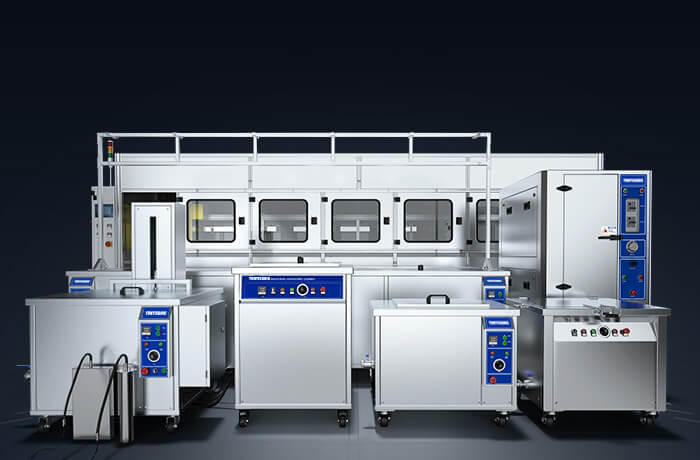
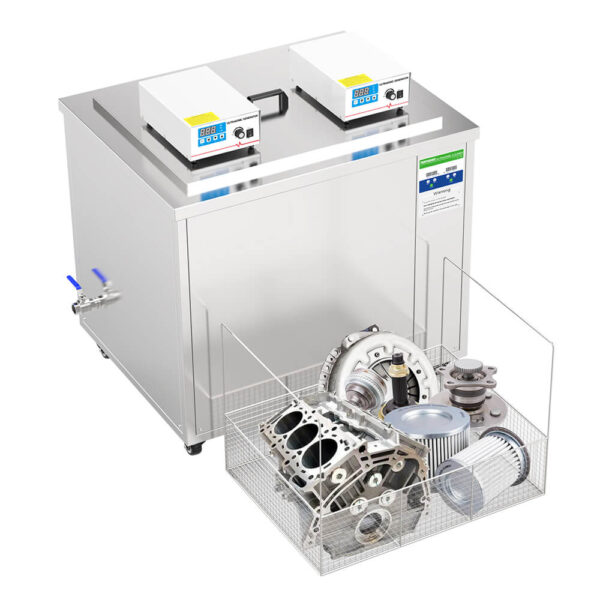
Click to view: Large industrial ultrasonic cleaning machine
Closed-Chamber and Vapor-Degreasing Equipment
Some industrial systems combine ultrasonic cleaning with vapor degreasing or solvent vapor processing. These machines use controlled chambers, condensation, and solvent recovery to reduce vapor release. Their operating principles differ substantially from an open tabletop bath.
A closed system is not automatically risk-free. It must be installed, maintained, and operated according to the manufacturer’s requirements. Door seals, condensers, vapor sensors, fire-protection systems, and solvent recovery components require inspection and periodic service.
Approved Solvent Formulations
In some precision-cleaning applications, a manufacturer may recommend a modified alcohol or engineered solvent instead of conventional IPA. These formulations can be designed for specific evaporation rates, residue levels, material compatibility, or flammability characteristics.
For example, some commercial solvent products combine IPA with other components to create a formulation intended for specific solvent-cleaning equipment. The product safety data sheet and equipment approval remain decisive. A product described as “IPA-based” should not be assumed to have the same hazard profile as pure IPA. (crest-ultrasonics.com)
Can IPA Be Used in a Water-Filled Ultrasonic Cleaner?
Why Adding IPA to the Tank Is Unsafe
Adding a small amount of IPA to a water-filled ultrasonic cleaner is not automatically safe. The mixture may still generate flammable vapor, particularly when the tank is heated or agitated. The risk depends on concentration, temperature, tank volume, room ventilation, and the presence of ignition sources.
The common assumption that “a small quantity cannot ignite” is not an adequate engineering control. Even a diluted mixture can produce vapor, and the actual concentration near the tank may differ from the average concentration in the liquid.
A water-based cleaning solution formulated for ultrasonic use is generally a safer choice for a standard machine. If IPA is required for a particular contaminant, the component can often be cleaned separately after ultrasonic treatment, or a solvent-rated system can be selected.
Indirect Cleaning Containers and Their Limitations
An indirect cleaning arrangement places the workpiece and solvent in a separate container while the ultrasonic tank contains water. This method can reduce direct contact between the solvent and the tank, but it does not automatically eliminate the flammability hazard.
IPA vapor can still escape from an open beaker, bag, or loosely covered container. The ultrasonic tank may also transfer energy and heat into the solvent container. If the surrounding machine is not rated for flammable vapor, the indirect method should not be used as a substitute for a certified solvent-cleaning system.
A sealed container may create pressure if the solvent warms or vaporizes. Ordinary zip-top bags and household containers are not pressure-rated process vessels. They may leak, rupture, or allow vapor release. Any indirect method must therefore be specifically authorized by the equipment manufacturer and supported by a documented risk assessment.
Safer Water-Based Alternatives
For standard ultrasonic cleaners, water-based formulations are usually the preferred operating medium. Suitable solutions may include neutral detergents, mildly alkaline cleaners, or specialty aqueous concentrates formulated for the target material and contamination.
The correct solution depends on the component. Electronics may require low-residue or deionized-water-compatible chemistry. Metals may require corrosion inhibitors. Optical parts may require low-foaming, residue-controlled formulations. Plastics and elastomers require compatibility testing.
A water-based cleaner may not dissolve every oil or flux residue as effectively as IPA, but it can provide a safer process when used in equipment that is designed for aqueous cleaning.
Material Compatibility with IPA
Metals and Electronic Components
IPA is often compatible with many metals, including stainless steel and some aluminum alloys, but compatibility depends on surface condition, temperature, exposure time, and the presence of other chemicals. High temperatures and prolonged exposure can increase the possibility of attack on vulnerable materials or finishes.
For electronic assemblies, the main concerns may include flux residues, conformal coatings, labels, adhesives, connectors, and plastic housings. IPA can affect certain coatings, inks, adhesives, and elastomers even when the metal substrate is unaffected.
Ultrasonic energy may intensify the process by driving solvent into seams, interfaces, and bonded areas. A component that tolerates brief wiping with IPA may not tolerate prolonged ultrasonic immersion.
Plastics, Rubber, Adhesives, and Coatings
IPA can affect some plastics, rubber components, coatings, and adhesives. NIOSH documentation notes that isopropyl alcohol may attack some plastics, rubber, and coatings, and may react with aluminum at high temperatures. (stacks.cdc.gov)
Compatibility should be evaluated for the complete assembly rather than for one material in isolation. A solvent may be acceptable for a rigid polymer but harmful to a gasket, adhesive, printed marking, or protective coating attached to it.
Potential signs of incompatibility include:
- Swelling or softening
- Cracking or embrittlement
- Whitening or stress crazing
- Loss of transparency
- Coating delamination
- Adhesive failure
- Fading of labels or markings
How to Verify Compatibility
A practical evaluation should begin with the component manufacturer’s cleaning specification. If no specification is available, testing should be conducted on representative materials or noncritical samples before production use.
The evaluation should consider the intended IPA concentration, temperature, ultrasonic frequency, acoustic power, exposure time, number of cycles, and drying method. Inspection should take place immediately after cleaning and again after aging or repeated-cycle testing.
For critical components, acceptance criteria may include dimensional measurement, optical inspection, adhesion testing, electrical performance, surface roughness, and residue analysis.
Proper Procedure for Approved IPA Ultrasonic Systems
Equipment Inspection
| Inspection Area | Requirements Before Operation |
|---|---|
| Equipment approval | Confirm that the ultrasonic cleaner is explicitly approved for use with flammable solvents. |
| Operating documentation | Verify that the documentation identifies the permitted solvent, acceptable concentration, maximum operating temperature, loading method, ventilation requirements, electrical classification, and emergency shutdown procedure. |
| Tank and lid | Check the tank and lid for cracks, deformation, corrosion, or other visible damage. |
| Seals and hoses | Inspect seals and hoses for wear, leaks, brittleness, or loose connections. |
| Filters and condenser | Confirm that the filters and condenser are clean, properly installed, and functioning correctly. |
| Vapor sensors | Verify that vapor sensors are installed, operational, and free from visible damage. |
| Grounding connections | Check that all grounding and bonding connections are secure and properly maintained. |
| Fire-protection equipment | Confirm that the required fire-protection equipment is available and ready for use. |
| Safety controls | Do not operate the cleaner if alarms, interlocks, exhaust systems, or vapor-monitoring devices have been bypassed or are not functioning correctly. |
| Defective components | Repair or replace any damaged or missing safety component before starting the cleaning process. |
Solvent Loading and Process Control
| Control Area | Requirements |
|---|---|
| Solvent selection | Use only the solvent specified and approved for the ultrasonic cleaning system. |
| Solvent volume | Use the required solvent volume and avoid overfilling. Excess liquid may cause splashing and increase vapor displacement and emissions. |
| Tank enclosure | Keep the tank closed whenever the equipment design requires an enclosed chamber. |
| IPA concentration | Maintain the concentration within the approved operating range. |
| Solvent temperature | Keep the solvent temperature within the specified limit. |
| Ultrasonic frequency | Operate the cleaner at the approved ultrasonic frequency. |
| Acoustic power | Set the acoustic power according to the validated process requirements. |
| Cleaning time | Use the specified cleaning time and avoid extending the cycle without process validation. |
| Load mass and geometry | Keep the component load, mass, arrangement, and geometry within the approved limits. |
| Ventilation rate | Maintain the required ventilation rate throughout the cleaning process. |
| Solvent level | Keep the solvent level within the equipment’s specified operating range. |
| Filtration or replacement interval | Filter or replace the solvent at the required intervals to maintain cleaning performance and control contamination. |
| Process validation | Validate the process using the actual component and target contamination. A cycle that removes fingerprints from stainless steel may not be suitable for a coated optical assembly or an electronics module. |
Ventilation, Fire Protection, and PPE
IPA handling requires ignition-source control, adequate ventilation, and suitable fire protection. Smoking, open flames, hot work, and non-rated electrical equipment should be excluded from the area. IPA should be stored in approved containers and managed according to applicable fire and chemical-safety requirements. (cdc.gov)
PPE may include chemical-resistant gloves, eye protection, and protective clothing selected from the safety data sheet. Gloves should be chosen for the concentration and exposure conditions rather than by material name alone.
Recovery, Disposal, and Maintenance
Used IPA may contain dissolved oils, particulates, flux residues, or other hazardous contaminants. It should not be poured into a drain. Collection, labeling, storage, and disposal should follow the facility’s hazardous-waste procedures and local regulations.
Solvent-rated equipment may use filtration, distillation, condensation, or other recovery methods. These systems must be maintained because contaminated solvent and blocked filters can reduce cleaning performance and increase operating risk.
The tank and work chamber should be inspected for residue, corrosion, seal degradation, and leaks. Maintenance records should include solvent changes, alarm checks, filter replacement, grounding verification, and safety-system tests.
Common Problems When IPA Is Used Incorrectly
Vapor Ignition
The most serious failure mode is ignition of accumulated vapor. A spark from a switch, relay, static discharge, or nearby equipment can ignite the vapor-air mixture. An open tank and inadequate ventilation increase the likelihood of this condition.
If an unauthorized machine has been filled with IPA, do not switch it on or off near the tank. Remove people from the area, eliminate ignition sources only when this can be done safely, and follow the site’s emergency-response procedure.
Excessive Heating
High temperature increases IPA evaporation and may create a flammable atmosphere. It can also damage seals, plastic components, adhesives, or the workpiece itself.
Temperature should be continuously controlled in approved equipment. A built-in heater intended for water does not provide adequate protection for IPA service.
Surface Damage
Ultrasonic energy combined with solvent exposure can cause damage that would not occur during ordinary wiping. Coatings may loosen, plastics may craze, and bonded components may separate after repeated cycles.
Cleaning validation should therefore include repeated exposure testing rather than a single visual inspection.
Unstable Cleaning Results
IPA can become contaminated quickly when used to remove oils or residues. As the solvent becomes dirty, cleaning performance may decline and redeposition may occur. Insufficient filtration, excessive loading, poor drainage, or uneven acoustic coverage can also produce inconsistent results.
A process should define when the solvent is replaced or purified. Visual clarity alone may not be enough to determine whether IPA remains suitable for precision cleaning.
Practical Alternatives to IPA
When a standard ultrasonic cleaner is the only available equipment, a compatible aqueous cleaner is generally the preferred option. The solution should be selected based on the workpiece material and the type of contamination.
For light fingerprints or final wipe-downs, a lint-free wipe and a controlled amount of IPA may be suitable outside the ultrasonic tank, provided that the component manufacturer permits IPA use and the work area has appropriate ventilation and ignition-source control.
For sensitive electronics or optical components, low-residue specialty cleaners may provide a better balance of cleaning performance and material compatibility. For heavy oils, a manufacturer-approved semi-aqueous or solvent process may be more appropriate than repeatedly increasing IPA concentration.
The cleaning method should be selected as a complete process, including pre-cleaning, ultrasonic treatment, rinsing, drying, inspection, and waste handling. Changing only the liquid without reviewing the equipment and safety controls can create an unsafe or unreliable process.
Final Recommendation
Can you use IPA in an ultrasonic cleaner? Only in an ultrasonic system specifically designed and approved for flammable solvents. Pure IPA, 70% rubbing alcohol, and IPA-containing mixtures should not be poured into a conventional open ultrasonic cleaner unless the manufacturer’s documentation explicitly permits that liquid and defines the required controls.
IPA is effective for dissolving certain organic contaminants, but it is also highly flammable and can damage plastics, rubber, coatings, and adhesives. Standard ultrasonic tanks commonly lack the sealed chamber, explosion-protected electrical design, vapor detection, ventilation, cooling, and fire protection needed for safe solvent operation. (cdc.gov)
For a water-based ultrasonic machine, use an approved aqueous cleaning solution. When IPA is essential, select a solvent-rated ultrasonic system, verify material compatibility, follow the safety data sheet, control temperature and vapor emissions, and establish documented cleaning and maintenance procedures before production use.