





Smudged lenses, dust in tiny crevices, and stubborn grime around nose pads can make your favorite eyeglasses feel perpetually dirty. If you own an ultrasonic cleaner or have considered buying one, you might wonder whether this powerful cleaning technology is safe for your prescription glasses or sunglasses. The answer depends on several factors, including your frame material, lens coatings, and the specific ultrasonic device you plan to use.
Ultrasonic cleaners have gained popularity for their ability to remove dirt from hard-to-reach places without manual scrubbing. They’re commonly used for jewelry, watches, and dental appliances. However, eyeglasses present unique challenges that require careful consideration before you drop them into a vibrating cleaning bath.
Understanding Ultrasonic Cleaning Technology
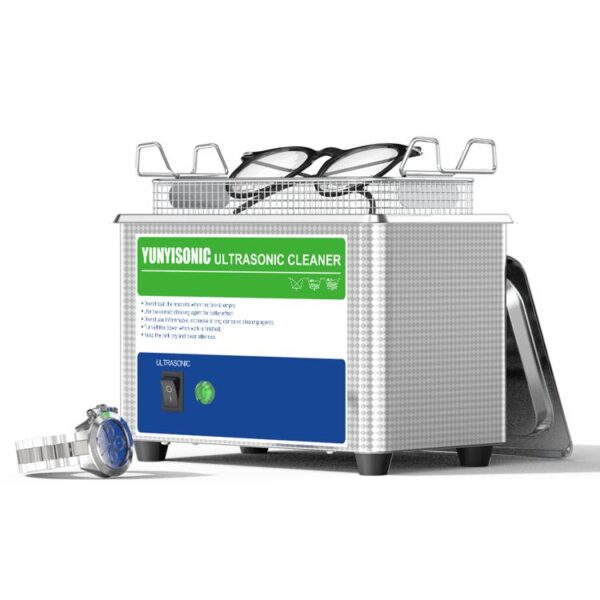
Click to view: 1L Portable Ultrasonic Cleaner For Clockworks Watchmakers Jewelers Electronic Auto parts
How Ultrasonic Cleaners Work
Ultrasonic cleaners operate through a process called cavitation. When you turn on the device, it generates high-frequency sound waves, typically between 20 kHz and 40 kHz, through a transducer attached to a cleaning tank. These sound waves create millions of microscopic bubbles in the cleaning solution. The bubbles rapidly form and collapse, creating tiny shock waves that dislodge dirt, oil, and debris from surfaces.
This cleaning action reaches into crevices and cracks that traditional cleaning methods cannot access. The vibrations work at a molecular level, essentially lifting contaminants away from the object being cleaned. For eyeglasses, this means the cleaner can target the narrow spaces between your frame and lenses, around screws, and in the tiny grooves of adjustable nose pads.

The Principle Behind Ultrasonic Cleaning
What Makes Ultrasonic Cleaning Effective
The effectiveness of ultrasonic cleaning comes from its non-abrasive nature combined with thorough coverage. Unlike wiping with a cloth, which can push particles across lens surfaces and potentially cause scratches, ultrasonic cleaning lifts debris away from surfaces entirely. The cleaning solution, combined with cavitation bubbles, penetrates every accessible surface simultaneously.
Professional optical laboratories have used industrial-grade ultrasonic cleaners for decades to clean eyeglasses during the manufacturing process and for customer maintenance. However, the equipment used in professional settings differs significantly from consumer-grade devices available for home use. Professional cleaners typically feature adjustable frequencies, temperature controls, and specific cleaning cycles designed for delicate optical equipment.
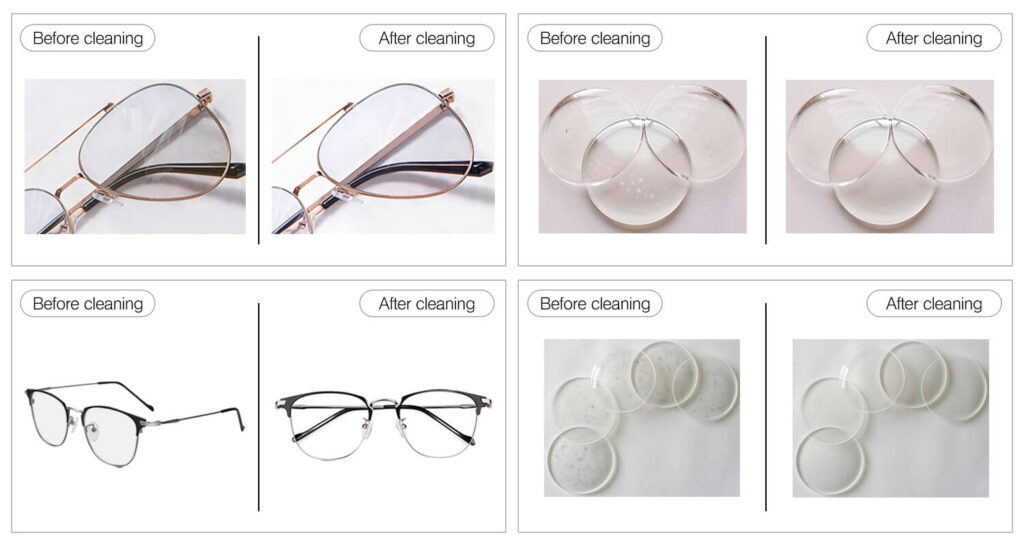
Cleaning effect comparison of optical lenses and eyeglasses using an ultrasonic cleaner
Safety Considerations for Eyeglasses in Ultrasonic Cleaners
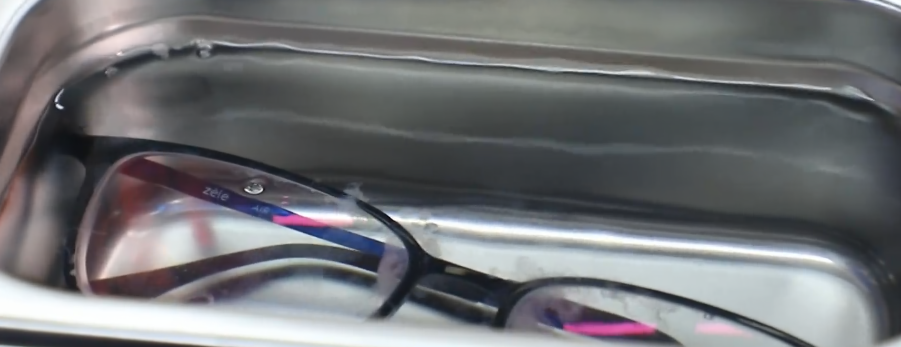
Eyeglasses being cleaned in an ultrasonic cleaner
Frame Material Compatibility
The material of your eyeglass frames plays a crucial role in determining whether ultrasonic cleaning is appropriate. Metal frames made from stainless steel, titanium, or aluminum alloys generally handle ultrasonic cleaning well. These materials are durable enough to withstand the vibrations without damage. However, some metal frames contain decorative elements or thin components that might loosen over time with repeated ultrasonic exposure.
Plastic frames require more caution. High-quality acetate frames from reputable manufacturers typically survive ultrasonic cleaning without issues. However, cheaper plastic materials can become brittle or develop stress cracks from prolonged exposure to vibrations. Some plastic frames contain air pockets or layered construction that might trap water, leading to cloudiness or delamination after ultrasonic cleaning.
Mixed-material frames that combine metal and plastic components pose additional challenges. The different materials may respond differently to ultrasonic vibrations, potentially causing joints or connections to loosen. If your frames include decorative elements like crystals, wood inlays, or painted details, ultrasonic cleaning might damage or dislodge these features.
Lens Coating Vulnerabilities
Modern eyeglass lenses come with various coatings that enhance their functionality. Anti-reflective coatings reduce glare, hydrophobic coatings repel water, and scratch-resistant coatings protect the lens surface. While these coatings improve your visual experience, they can be vulnerable to ultrasonic cleaning.
Anti-reflective coatings consist of multiple thin layers applied to the lens surface. Poor-quality AR coatings or older coatings that have begun to deteriorate may not withstand the intense vibrations of ultrasonic cleaning. The cavitation process can potentially cause these coatings to peel, crack, or bubble, especially around the edges where the coating is most vulnerable.
Photochromic lenses, which darken in sunlight, contain special molecules embedded within the lens material. While the lens substrate itself typically handles ultrasonic cleaning well, some photochromic technologies can be affected by prolonged ultrasonic exposure, particularly at higher temperatures. Polarized lenses also deserve special consideration, as the polarizing film can potentially separate from the lens substrate if the adhesive has weakened.
Special Features and Components
Many modern eyeglasses include features beyond basic frames and lenses. Progressive lenses with gradient prescriptions don’t typically suffer damage from ultrasonic cleaning, but any special coatings on these expensive lenses warrant extra caution. Rimless or semi-rimless frames use tiny screws and mounting hardware that ultrasonic vibrations might gradually loosen over time.
Spring hinges, which provide flexibility when you put on or remove your glasses, contain small springs and mechanisms that could potentially be affected by repeated ultrasonic cleaning. While a single cleaning session won’t likely cause problems, regular ultrasonic cleaning might accelerate wear on these moving parts. Adjustable nose pads, especially those made from soft silicone materials, generally handle ultrasonic cleaning well and often benefit from the deep cleaning that removes oils and skin cells trapped in the pad mechanisms.
When Ultrasonic Cleaning Works Best for Eyeglasses
Ideal Eyeglass Types for Ultrasonic Cleaning
Certain types of eyeglasses are particularly well-suited for ultrasonic cleaning. Basic prescription glasses with quality plastic or metal frames and standard lenses without extensive coatings represent the safest candidates. If your glasses came from a reputable optical retailer and include manufacturer-backed coatings, they’re more likely to withstand ultrasonic cleaning than bargain eyewear with unknown coating quality.
Sports glasses and safety glasses made from durable materials often benefit from ultrasonic cleaning. These glasses accumulate sweat, dirt, and environmental debris that manual cleaning struggles to fully remove. The robust construction of most sports eyewear means they can handle the vibrations without damage. Similarly, reading glasses with simple plastic frames and uncoated lenses pose minimal risk in an ultrasonic cleaner.
Glasses that you wear daily and that develop significant buildup in hard-to-reach areas represent prime candidates for occasional ultrasonic cleaning. The technology excels at removing the accumulated oils, skin cells, and microscopic debris that build up over weeks or months of regular wear. However, even with ideal candidates, ultrasonic cleaning should complement, not replace, regular manual cleaning with appropriate solutions and microfiber cloths.
Professional vs. Home Ultrasonic Cleaners
Professional ultrasonic cleaners used in optical shops operate with specific parameters designed for eyewear. These devices typically run at higher frequencies, around 40 kHz to 80 kHz, which provides effective cleaning while minimizing the risk of damage to delicate coatings. For professional optical lenses with strict requirements, frequencies of 120 kHz and above may be used to ensure the gentlest possible cleaning action. They also feature precise timers, with cleaning cycles typically lasting 30 seconds or less, rarely exceeding one minute, and some include heating elements that warm the solution to specific temperatures for optimal cleaning without thermal damage.
Home ultrasonic cleaners vary widely in quality and specifications. Budget models may lack precise frequency control or adequate timer functions, potentially exposing your glasses to excessive vibration. Higher-quality home units that advertise eyeglass cleaning capabilities often include specific settings or recommendations for optical items. When selecting a home ultrasonic cleaner for eyeglasses, look for models operating at frequencies of 40 kHz or higher, with adjustable power settings, reliable timers that allow short cleaning cycles, and tanks large enough to accommodate glasses without crowding.
The size of the cleaning tank matters more than many people realize. Your glasses should fit comfortably in the basket without touching the sides or bottom of the tank directly. Contact with the tank during operation can cause damage because the vibrations are strongest at the tank walls. A properly sized cleaner allows the glasses to suspend in the solution, fully submerged but not pressed against any surfaces.
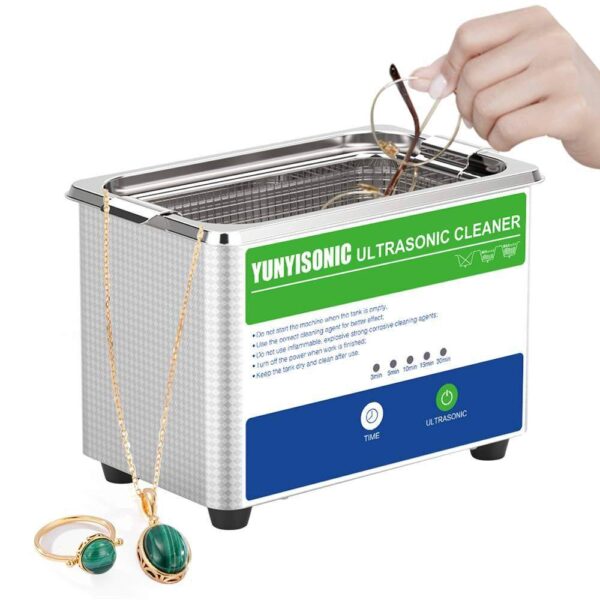
2L Digital Ultrasonic Cleaner for Watches, Small Parts, Metal Bands, Razors, and Dental Braces | Watchmakers and Jewelers Use
In stock
| Volumetric Weight | 2.65 kg |
|---|---|
| Package Dimensions | 25.5 × 24.2 × 21.5 cm |
| Model | YA020, YA020C, YA020G |
| Application Field | Car Parts, Clocks, Coins, Contact Lenses, Dental, Denture, Earrings, Eyeglasses, Jewelry, Optical Lenses, Rings, Toys, Watches |
| Brand | Yunyisonic |
| Origin | Shenzhen City, China |
| Capacity | 2L |
| Frequency | 40kHz |
| Power | 35W, 60W |
| Timer | 1-30mins |
| Tank Material | SUS304 Stainless Steel |
| Voltage | AC 110V 60Hz;AC 220V 50Hz |
| Plug Type | AU Plug, EU Plug, Other Plugs, UK Plug, US Plug |
| Certificates | CE, FCC, ROHS |
| Warranty | 1 Year |
| Customization | Logo/Pattern, Private Lable, White Label |
| Function | Clean Thoroughly, Degassing, Digital Control, Timing |
| Manufacturer | Yunyisonic Shenzhen Co., Ltd. |
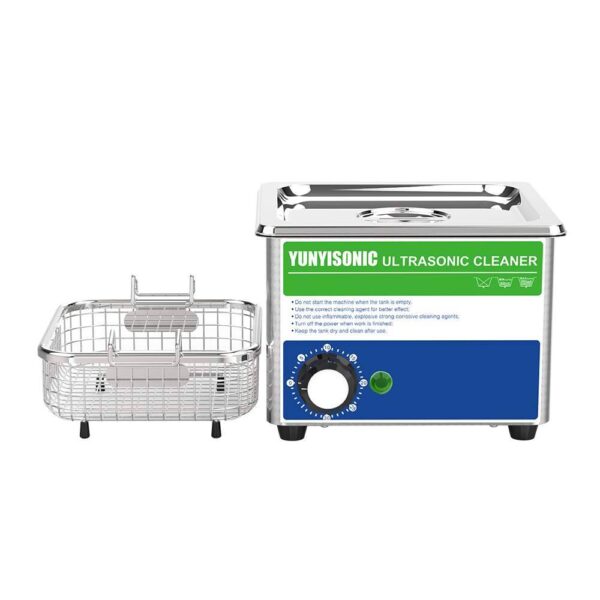
1.3L Mechanical Timer Ultrasonic Cleaner for Watches, Dental Clinics, Clock Repair, Optical Shops
In stock
| Volumetric Weight | 2.1 kg |
|---|---|
| Package Dimensions | 25.5 × 24.2 × 18 cm |
| Model | YA013B, YA013GB |
| Application Field | Brass, Coins, Dental, Denture, Earrings, Eyeglasses, Jewelry, Optical Lenses, Rings, Toys, Watches |
| Brand | Yunyisonic |
| Origin | Shenzhen City, China |
| Capacity | 1.3L |
| Frequency | 40kHz |
| Power | 35W, 60W |
| Tank Material | SUS304 Stainless Steel |
| Voltage | AC 110V 60Hz;AC 220V 50Hz |
| Plug Type | AU Plug, EU Plug, Other Plugs, UK Plug, US Plug |
| Certificates | CE, FCC, ROHS |
| Warranty | 1 Year |
| Customization | Logo/Pattern, Private Lable, White Label |
| Function | Clean Thoroughly, Timer Knob Control, Timing |
| Manufacturer | Yunyisonic Shenzhen Co., Ltd. |
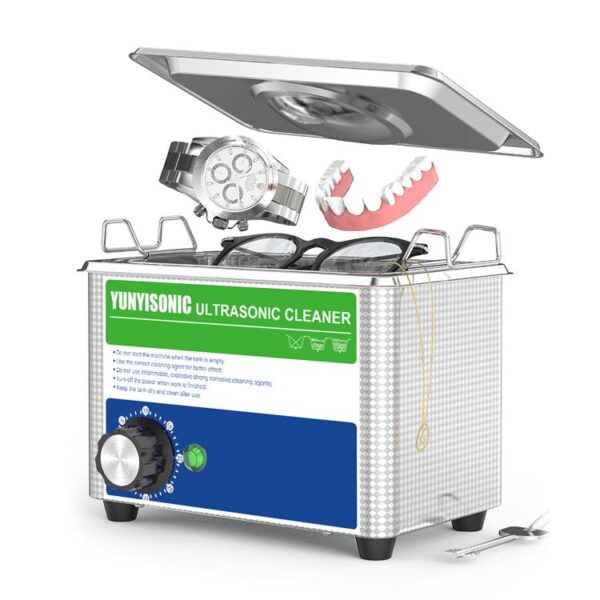
Eco 1L Ultrasonic Cleaner with Timer Knob for Glasses, Frames, Optical Lenses, and Watches | Removes Oil and Fingerprints
In stock
| Volumetric Weight | 1.70 kg |
|---|---|
| Package Dimensions | 23.5 × 17 × 18 cm |
| Model | YA010B, YA010GB |
| Application Field | Brass, Car Parts, Coins, Contact Lenses, Dental, Denture, Earrings, Eyeglasses, Jewelry, Optical Lenses, Toys, Watches |
| Brand | Yunyisonic |
| Origin | Shenzhen City, China |
| Capacity | 1L |
| Frequency | 40kHz |
| Power | 35W, 60W |
| Tank Material | SUS304 Stainless Steel |
| Voltage | AC 110V 60Hz;AC 220V 50Hz |
| Plug Type | AU Plug, EU Plug, Other Plugs, UK Plug, US Plug |
| Certificates | CE, FCC, ROHS |
| Warranty | 1 Year |
| Customization | Logo/Pattern, Private Lable, White Label |
| Function | Clean Thoroughly, Timer Knob Control, Timing |
| Manufacturer | Yunyisonic Shenzhen Co., Ltd. |
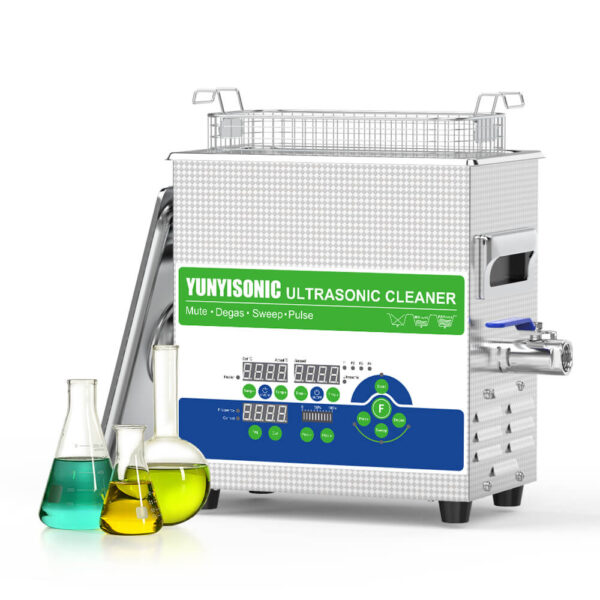
3.2L Single-Frequency Ultrasonic Bath, 120kHz, Adjustable Power 0–150W
In stock
| Volumetric Weight | 6 kg |
|---|---|
| Package Dimensions | 35 × 24.5 × 35 cm |
| Brand | Yunyisonic |
| Origin | Shenzhen City, China |
| Capacity | 3.2L |
| Frequency | 120kHz |
| Power | 0-150W |
| Timer | 1-9999s |
| Heater | RT~80°C |
| Tank Material | SUS304 Stainless Steel |
| Housing Material | SUS304 Stainless Steel |
| Voltage | AC 110V 60Hz;AC 220V 50Hz |
| Plug Type | AU Plug, EU Plug, Other Plugs, UK Plug, US Plug |
| Certificates | CE, FCC, ROHS |
| Warranty | 1 Year |
| Customization | 485 Port, Frequency, PLC System, Tanks Numbers |
| Assisted SystemsYunyisonic Laboratory Multi-Function Ultrasonic Cleaning System for Assisted Extraction Emulsification Homogening Dispersion Separation Mixing Defoaming Dissolution Washing | Cleaning, Defoaming, Dispersion, Dissolution, Emulsification, Extraction, Homogenization, Mixing, Separation, Washing |
| Function | Degassing, Digital Control, Noise Reduction, Power Adjustable, Pulse, Sweep |
| Manufacturer | Yunyisonic Shenzhen Co., Ltd. |
Step-by-Step Guide to Ultrasonic Eyeglass Cleaning
Preparation and Setup
Before placing your eyeglasses in an ultrasonic cleaner, inspect them carefully. Check for any loose screws, damaged hinges, or peeling coatings. If you notice existing damage, ultrasonic cleaning might exacerbate these problems. Tighten any loose screws using an eyeglass repair kit before cleaning.
Remove any detachable accessories from your glasses. Some sports glasses have removable prescription inserts or interchangeable lenses. Clean these components separately if possible, especially if they attach via clips or other mechanical connections that might loosen in the ultrasonic bath. If your glasses have adjustable temples or convertible features, ensure all mechanisms are securely fastened.
Fill the ultrasonic cleaner tank to the recommended level, typically marked inside the unit. Using too little solution reduces cleaning effectiveness, while overfilling can cause spillage when you add your glasses. The solution should be at room temperature or slightly warm, never hot, as excessive heat combined with vibrations can damage coatings or adhesives.
Cleaning Solution Selection
The cleaning solution you use matters as much as the ultrasonic cleaner itself. Plain distilled water works for basic cleaning and represents the safest option for glasses with uncertain coating quality. Distilled water prevents mineral deposits that tap water would leave on your lenses after cleaning.
For more thorough cleaning, add a few drops of mild dish soap to distilled water. Use only clear, fragrance-free dish soap without moisturizers or other additives. The soap helps break down oils and organic residues without the harsh chemicals found in some specialized cleaning solutions. Mix the solution gently to distribute the soap evenly without creating excessive foam.
Avoid using ammonia-based cleaners, alcohol solutions, or harsh chemical cleaners in your ultrasonic bath with eyeglasses. These substances can damage lens coatings even without ultrasonic vibrations, and the cavitation process might accelerate chemical reactions that harm your eyewear. Similarly, skip acidic solutions like vinegar or lemon juice, which can etch lens surfaces or corrode metal frame components over time.
Some ultrasonic cleaner manufacturers offer eyeglass-specific cleaning concentrates. If you choose a commercial solution, verify that it’s explicitly safe for coated lenses and read reviews from other eyeglass wearers. Many jewelry cleaning solutions are too harsh for optical applications despite working well in ultrasonic cleaners for their intended purpose.
Optimal Cleaning Duration and Settings
Start with the shortest cleaning cycle your ultrasonic cleaner offers, typically around 20 to 30 seconds for the first cleaning. This conservative approach allows you to assess how your specific glasses respond to ultrasonic cleaning without overexposure. Professional optical cleaning rarely exceeds 30 seconds, and most eyeglasses achieve thorough cleaning within this timeframe. Place your glasses in the cleaning basket if your unit includes one, rather than directly in the tank bottom.
Position the glasses with the lenses facing up or at a slight angle to allow any dislodged debris to fall away rather than resettling on the lens surfaces. Ensure the glasses are fully submerged but not crowded if you’re cleaning multiple pairs simultaneously. Overcrowding prevents proper solution circulation and can cause frames to knock against each other.
During the cleaning cycle, watch for any unusual activity. Excessive bubbling around specific areas might indicate a coating vulnerability or trapped air in the frame structure. If you notice coating flaking, clouding, or other signs of damage, stop the cleaning immediately and remove your glasses.
After the cycle completes, remove your glasses promptly. Leaving them in the solution after cleaning provides no additional benefit and exposes them to unnecessary chemical contact. Rinse the glasses thoroughly under lukewarm running water to remove any remaining cleaning solution and dislodged debris.
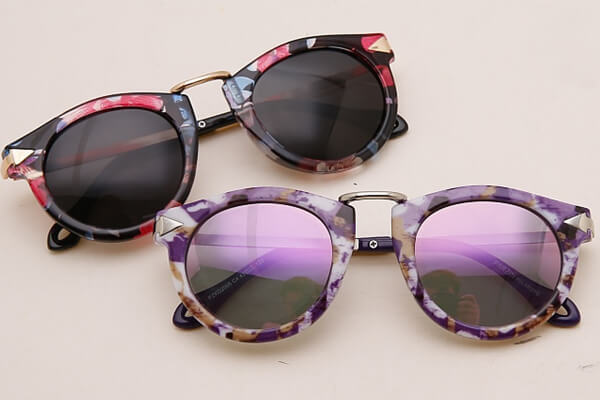
Glasses
Risks and Potential Damage to Avoid
Common Problems with Coated Lenses
The most frequent damage from ultrasonic cleaning affects lens coatings rather than the lenses themselves. Anti-reflective coating deterioration appears as small cracks, crazing, or a cloudy appearance that worsens over time. This damage is irreversible and typically requires lens replacement. If your AR coating already shows signs of wear before ultrasonic cleaning, the process will likely accelerate the degradation.
Blue light filtering coatings applied to computer glasses can also suffer from ultrasonic exposure. While these coatings are generally durable, some formulations are sensitive to the combination of chemical cleaning solutions and vibrations. Mirror coatings on sunglasses represent another vulnerable category, as the reflective layer can separate from the lens substrate if the bonding has weakened over time or if the coating quality is poor.
Transition or photochromic lenses occasionally develop uneven darkening or slower response times after aggressive ultrasonic cleaning. While this doesn’t happen with all photochromic lenses, certain older formulations or specific manufacturers’ products are more susceptible. The temperature of the cleaning solution contributes to this risk, with warmer solutions posing greater danger to photochromic molecules.
Frame Integrity Issues
Acetate frames might develop stress cracks at hinge points or around the lens grooves after repeated ultrasonic cleaning. These cracks often start small and propagate over time, eventually requiring frame replacement. The vibrations can also cause loosening of lens fits in full-rim frames, where the lens sits in a groove around the entire frame perimeter. If your lenses fit snugly before ultrasonic cleaning but become loose afterward, the vibrations have affected the frame tension.
Metal frame welding points and solder joints occasionally fail after ultrasonic exposure, particularly in older frames or those repaired previously. The vibrations can propagate through the frame structure and concentrate stress at these junction points. Decorative elements like rhinestones or logo plates may loosen or detach if the adhesive has aged or if the attachment method relies on friction rather than permanent bonding.
Frames with adjustable or flexible temple tips sometimes lose their adjustment capabilities after ultrasonic cleaning. The mechanism that allows these temples to bend and conform to your head involves small gripping surfaces or springs that ultrasonic vibrations can compromise. Similarly, cable temples common on safety glasses or sport eyewear might separate from the front frame piece if the connection has weakened.
Signs Your Glasses Shouldn’t Go in an Ultrasonic Cleaner
Several warning signs indicate that ultrasonic cleaning poses too much risk for your particular eyeglasses. If your lens coatings already show peeling, bubbling, or discoloration, ultrasonic cleaning will worsen these conditions rather than improve them. Glasses with visible frame damage like cracks, chips, or separated joints are poor candidates, as the stress of ultrasonic vibrations could cause complete failure of already compromised structures.
Very expensive or irreplaceable eyewear deserves extra caution. Designer frames with intricate details, vintage eyeglasses, or custom-made eyewear should probably stick with gentler cleaning methods unless you’re willing to accept the risk of damage. The same applies to specialty eyewear like prescription diving masks or virtual reality headset inserts, which may have unique construction that doesn’t respond well to ultrasonic cleaning.
If you’re uncertain about your lens coating quality or can’t verify the coating specifications from your optical provider, err on the side of caution. Many budget eyeglass retailers apply coatings that look acceptable initially but lack the durability of higher-quality products. These inferior coatings often fail dramatically when exposed to ultrasonic cleaning.
Alternative Cleaning Methods for Delicate Eyewear
Traditional Manual Cleaning
For glasses that shouldn’t go in an ultrasonic cleaner, proper manual cleaning remains highly effective. Start by rinsing your glasses under lukewarm running water to remove loose debris and particles that could scratch lenses during wiping. Apply a small drop of mild dish soap to each lens and gently rub with your fingertips using circular motions. This mechanical action, combined with the surfactant properties of soap, breaks down oils and removes most contaminants.
Rinse thoroughly under running water again, ensuring all soap residue is gone. Shake off excess water and use a clean microfiber cloth specifically designed for eyeglasses to dry the lenses. Avoid paper towels, tissues, or regular cloths, as these can scratch lens surfaces or leave lint behind. For frame details and hard-to-reach areas, a soft-bristled toothbrush works well. Dedicate a new toothbrush solely to eyeglass cleaning to avoid introducing contaminants.
Specialized eyeglass cleaning sprays offer convenience for quick cleanings throughout the day. Choose products specifically formulated for coated lenses and spray both sides of each lens, then wipe with a microfiber cloth. These sprays typically contain gentle surfactants and evaporating solvents that lift oils and residues without leaving streaks.
Professional Optical Store Cleaning
Many optical retailers offer complimentary professional cleaning services for customers. These shops use professional-grade ultrasonic cleaners along with proper cleaning solutions and trained staff who understand eyeglass construction. They can assess your frames and lenses before cleaning to identify any vulnerabilities that might cause problems.
Professional optical cleaning provides several advantages beyond just access to better equipment. Opticians can tighten screws, adjust fit, and replace worn nose pads during the same visit. They can spot developing problems like coating deterioration or frame stress before these issues become serious. If your glasses do suffer damage during professional cleaning, the shop typically takes responsibility and may repair or replace the damaged components.
For valuable or delicate eyewear, the nominal fee some optical shops charge for cleaning non-customers is worthwhile. Professional cleaning every few months, combined with daily manual maintenance at home, keeps glasses in optimal condition without the risks associated with home ultrasonic cleaning.
Expert Recommendations and Best Practices
Based on insights from opticians, optical engineers, and extensive consumer experience, several best practices emerge for those who want to use ultrasonic cleaners with eyeglasses. Limit ultrasonic cleaning frequency to once per month at most, even for glasses that handle the process well. More frequent cleaning provides diminishing returns while accumulating exposure to potential damage sources.
Always inspect glasses thoroughly after ultrasonic cleaning while they’re still wet. Water on the lenses makes coating damage more visible than dry lenses would. Look for cloudiness, rainbow patterns, or small cracks in the coating. Check frame joints and hinges for looseness or separation. If you notice any problems, document them immediately and avoid using ultrasonic cleaning on those glasses in the future.
Consider your glasses’ age and condition when deciding whether to use ultrasonic cleaning. Brand new glasses with fresh coatings and tight frame fits tolerate ultrasonic cleaning better than glasses you’ve worn for several years. As eyeglasses age, coatings naturally degrade, frame materials fatigue, and adhesives weaken, all of which increase vulnerability to ultrasonic damage.
For households with multiple pairs of glasses, test ultrasonic cleaning on your least valuable pair first. This approach lets you evaluate how your specific ultrasonic cleaner affects eyewear without risking your primary glasses. If the test pair emerges unscathed after several cleanings over a few months, you can feel more confident using the method on other glasses.
Maintain your ultrasonic cleaner properly to ensure consistent, safe performance. Change the cleaning solution regularly, as reusing dirty solution reduces effectiveness and can redeposit debris on your glasses. Clean the tank itself periodically according to manufacturer instructions to prevent buildup that might affect vibration patterns or solution chemistry.
Finally, recognize that even with perfect technique and ideal conditions, some level of risk accompanies ultrasonic cleaning of eyeglasses. Only you can decide whether the convenience and thorough cleaning justify that risk for your particular situation. Many people find that for everyday glasses, the benefits outweigh the risks, while reserving more cautious cleaning methods for expensive or special-purpose eyewear.
The decision to use an ultrasonic cleaner for your eyeglasses depends on multiple factors including frame material, lens coatings, and the quality of both your glasses and your cleaning equipment. While ultrasonic cleaning offers impressive results for removing stubborn dirt and debris, it carries real risks that require careful consideration. By understanding these risks, following proper procedures, and knowing when alternative cleaning methods are wiser, you can keep your eyeglasses clean and clear without unnecessary damage.