


Ultrasonic cleaners offer convenient jewelry maintenance, but understanding material compatibility prevents costly damage. Pearl jewelry requires different care than metal or hard gemstone pieces. The question of ultrasonic cleaning for pearls has a definitive answer backed by material science and jewelry industry standards.
No, Never Use Ultrasonic Cleaners on Pearls
Pearls should never be placed in ultrasonic cleaners under any circumstances. This prohibition applies to all pearl types, including natural pearls, cultured saltwater pearls, freshwater pearls, South Sea pearls, and Tahitian pearls. The organic composition and layered structure of pearls make them fundamentally incompatible with ultrasonic cleaning technology.
Equipment manufacturers explicitly exclude pearls from approved material lists. Jewelry industry associations, gemological laboratories, and professional jewelers universally recommend against ultrasonic pearl cleaning. This consensus reflects documented damage patterns and material vulnerability that makes ultrasonic exposure unacceptably risky.
The prohibition remains absolute regardless of cleaning duration, solution type, or equipment settings. Even brief ultrasonic exposure initiates damage processes that degrade pearl quality. No adjustments to standard ultrasonic cleaning procedures can make the process safe for pearls.
Why Ultrasonic Cleaners Damage Pearls
Pearl Structure and Composition
Pearls consist of nacre, a composite material containing approximately 85-90% calcium carbonate in aragonite crystal form, combined with 5-10% conchiolin protein and 2-4% water. This organic matrix creates beauty but also vulnerability. Unlike solid crystalline gemstones, pearls have a layered structure resembling microscopic bricks bonded with organic mortar.
The nacre forms through biological processes as mollusks deposit successive layers around an irritant. These layers create the lustrous appearance valued in pearls, but the interfaces between layers represent structural weak points. The organic protein binding the layers exhibits much lower strength than the mineral crystals it connects.
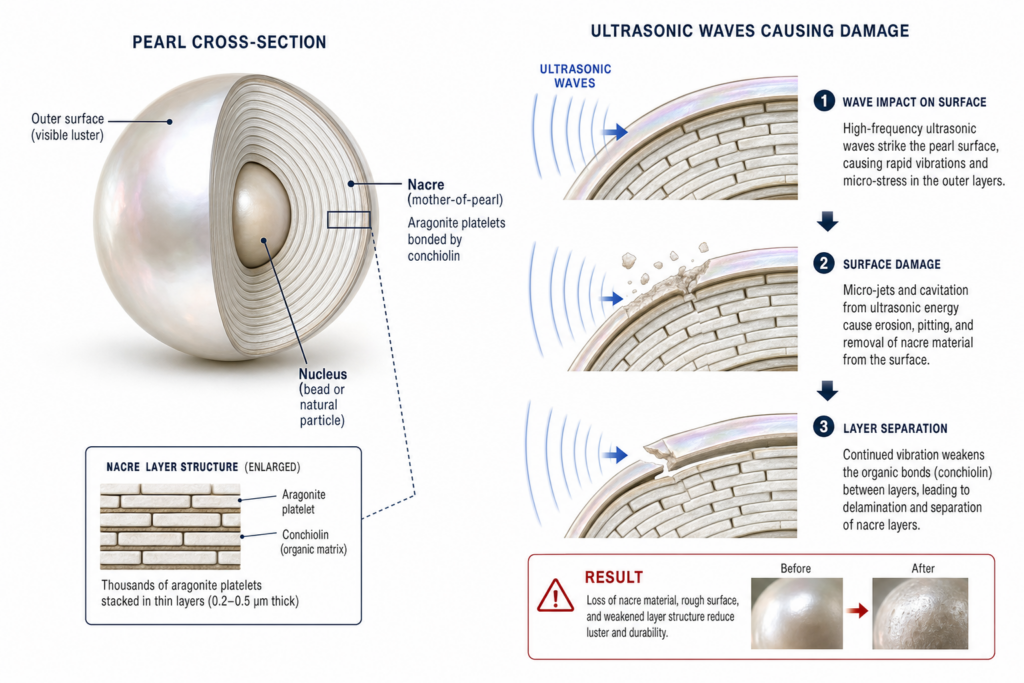
Diagram showing pearl crosssection with nacre layers and ultrasonic waves causing surface damage and layer separation
Pearls measure only 2.5 to 4.5 on the Mohs hardness scale, significantly softer than most gemstones. This relatively low hardness makes pearls susceptible to mechanical damage from forces that harder materials tolerate easily. For comparison, quartz measures 7 and diamond reaches 10 on this scale.
The surface porosity of pearls allows liquid penetration into the structure. Microscopic pores and spaces between crystals permit cleaning solutions to absorb into deeper layers. This permeability creates pathways for chemical attack beyond surface exposure.
How Cavitation Destroys Pearl Surfaces
Ultrasonic cleaners operate by generating acoustic cavitation in liquid. In typical household units, sound waves around 40 kHz create rapid pressure changes that form vapor bubbles. These bubbles collapse and produce micro-jets that remove light contaminants from surfaces.
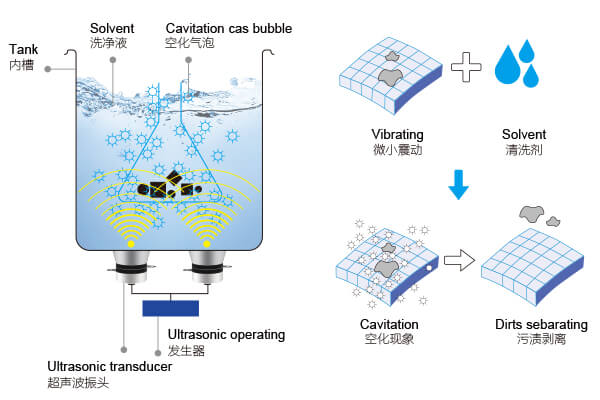
The Principle Behind Ultrasonic Cleaning
In contrast, professional and industrial ultrasonic cleaners operate across a wider frequency range—commonly 25–40 kHz for heavy-duty cleaning and 60–120 kHz (or higher) for precision applications. Lower frequencies generate larger, more aggressive cavitation bubbles suited for removing heavy grease or carbon deposits, while higher frequencies produce smaller, more controlled bubbles for cleaning delicate items without causing damage.
This cavitation effectively removes dirt from durable materials but proves destructive to soft organic substances like pearls. The repeated micro-impacts erode pearl surfaces, removing material at microscopic scales. Thousands of cavitation events occur per second, creating cumulative damage that progresses rapidly.
The mechanical energy from cavitation exceeds the bonding strength between nacre layers. The thin protein layers binding aragonite platelets separate under impact stress. This delamination begins at the surface but propagates deeper into the pearl structure with continued exposure.
Cavitation also generates localized heating at impact sites. These thermal spikes create stress from differential expansion between organic and mineral components. Repeated thermal cycling fatigues the material structure, promoting crack development that compounds mechanical damage.
Chemical Solution Risks
Ultrasonic cleaning solutions contain chemicals designed for metal and hard gemstone cleaning. Many formulations include acids, alkaline compounds, surfactants, chelating agents, and organic solvents. These chemicals react adversely with pearl materials even without ultrasonic agitation.
Calcium carbonate dissolves in acidic solutions through chemical reaction that produces calcium ions, water, and carbon dioxide. Even weak acids gradually etch pearl surfaces. Heated solutions accelerate this dissolution, and many ultrasonic cleaners operate at elevated temperatures for improved metal cleaning.
Surfactants in cleaning solutions penetrate pearl porosity and interact with organic conchiolin proteins. These compounds disrupt protein structure, weakening the bonds holding nacre layers together. Absorbed surfactants continue causing damage even after pearls are removed from solution because they remain trapped in internal pores.
Alkaline solutions damage the organic components through hydrolysis reactions that break down protein molecules. Chelating agents extract calcium from pearl structure. Organic solvents dissolve or denature proteins. The combination of multiple chemical stresses creates severe degradation beyond any single factor.
Types of Damage from Ultrasonic Cleaning
Surface Erosion and Luster Loss
The most visible damage from ultrasonic cleaning is luster degradation. Pearl luster results from light interference between reflections from successive nacre layers beneath the surface. Any disruption to this precise layered structure destroys the optical properties that create pearl beauty.
Cavitation roughens pearl surfaces at microscopic scales. This increased roughness scatters light randomly rather than allowing organized reflection patterns. The characteristic soft glow diminishes, replaced by dull or chalky appearance. This change represents permanent damage that cannot reverse through any treatment.
Surface measurements using profilometry detect texture changes after ultrasonic exposure. Professional appraisers identify damaged pearls through luster evaluation. The numerical grades used in pearl quality assessment decrease following ultrasonic treatment, directly reducing market value.
Internal Cracking and Delamination
Beneath visible surface changes, ultrasonic exposure causes internal structural damage. Micro-cracks initiate at surface imperfections or layer boundaries, then propagate deeper into the pearl. The layered composite structure provides preferred crack paths along weak interfaces between nacre layers.
Delamination separates nacre layers without necessarily creating visible surface cracks initially. The organic binder fails under repeated stress, allowing layers to separate internally. This subsurface damage disrupts optical continuity, scattering light and degrading luster even when surface appearance seems intact.
Pearls with pre-existing stress from formation irregularities prove especially vulnerable. Natural variations in layer thickness and crystal orientation create weak points where fractures propagate preferentially. Once initiated, cracks continue growing with minimal additional stress.
Irreversible Structural Damage
All damage from ultrasonic cleaning proves permanent and irreversible. Unlike tarnish on metal that cleaning removes, damaged pearl structure cannot regenerate. The biological processes that formed the nacre layers cannot reactivate to repair damage.
Polishing might restore surface smoothness but requires removing the damaged layer. This material removal reduces pearl size and may reveal subsurface damage previously hidden. Heavily damaged pearls lose so much luster that effective restoration becomes impossible without excessive material loss.
The progressive nature of ultrasonic damage means initial exposure may produce subtle changes while subsequent cleaning cycles cause increasingly severe degradation. Users observing no immediate obvious damage might incorrectly conclude ultrasonic cleaning is safe, only to discover cumulative effects after repeated exposure.
All Pearl Types Are Vulnerable

Pearl
Natural saltwater pearls, despite their rarity and superior quality, remain as vulnerable as any other pearl type. The dense nacre structure from slow natural formation provides no protection against cavitation forces or chemical attack. The high value of natural pearls makes damage prevention especially critical.
Freshwater cultured pearls often exhibit higher porosity than saltwater varieties due to faster formation rates. This increased porosity amplifies vulnerability to solution penetration and chemical damage. The generally softer material suffers faster erosion from cavitation impacts.
South Sea and Tahitian pearls command premium prices due to size, luster, and exotic colors. Their superior characteristics do not reduce ultrasonic vulnerability. Large pearls present greater surface area for cavitation exposure, potentially accelerating damage accumulation.
Treated or dyed pearls face additional risks beyond natural material vulnerabilities. Surface coatings strip away readily under cavitation. Absorbed dyes extract from porous structures during vigorous cleaning. Color treatments may destabilize under mechanical stress and chemical exposure.
Safe Cleaning Methods for Pearls
Damp Cloth Method
The safest routine pearl cleaning uses a soft, slightly dampened lint-free cloth. Microfiber cloths work exceptionally well due to fine fiber structure that captures particles effectively without scratching. Clean water dampening without added chemicals eliminates all chemical exposure risks.
Gently wipe each pearl with light pressure to remove surface oils, cosmetics, and dirt. The soft material and minimal moisture prove adequate for regular maintenance. This method cleans effectively while presenting zero damage risk to pearl structure.
Clean pearls after each wearing to prevent contamination buildup. Regular gentle maintenance eliminates the need for more aggressive cleaning methods. This preventive approach maintains pearl appearance indefinitely without damage risk.
Mild Soap Solution Technique
Occasional deeper cleaning uses very dilute mild soap for pearls requiring more than damp cloth wiping. Mix one drop of pure baby shampoo or Castile soap in one cup of lukewarm water. This minimal concentration provides cleaning action while limiting chemical exposure.
Dip a soft cloth in the solution and gently wipe pearl surfaces. Limit pearl contact with liquid to brief periods, just seconds for cleaning. Avoid prolonged soaking that allows liquid penetration into pearl structure.
Rinse thoroughly with clean water to remove all soap residues. Multiple rinses ensure complete removal. Lay jewelry flat on soft absorbent towels and allow air drying for several hours. Avoid heat sources that might cause thermal damage.
Professional Cleaning Services
Professional jewelers provide appropriate cleaning when home methods prove inadequate. Trained staff understand pearl vulnerabilities and employ safe techniques. Services include inspection for existing damage, secure mounting verification, and strand restringing when needed.
Jewelers can selectively clean metal components using appropriate methods while protecting pearls from exposure. Steam cleaning systems address tarnish on settings without pearl contact. This targeted approach handles mixed-material jewelry effectively.
Restringing services for pearl necklaces provide opportunity for thorough individual pearl cleaning. Fresh silk thread and professional knotting between pearls restore structural integrity. This comprehensive maintenance preserves both appearance and security.
Cleaning Pearl Jewelry with Metal Settings
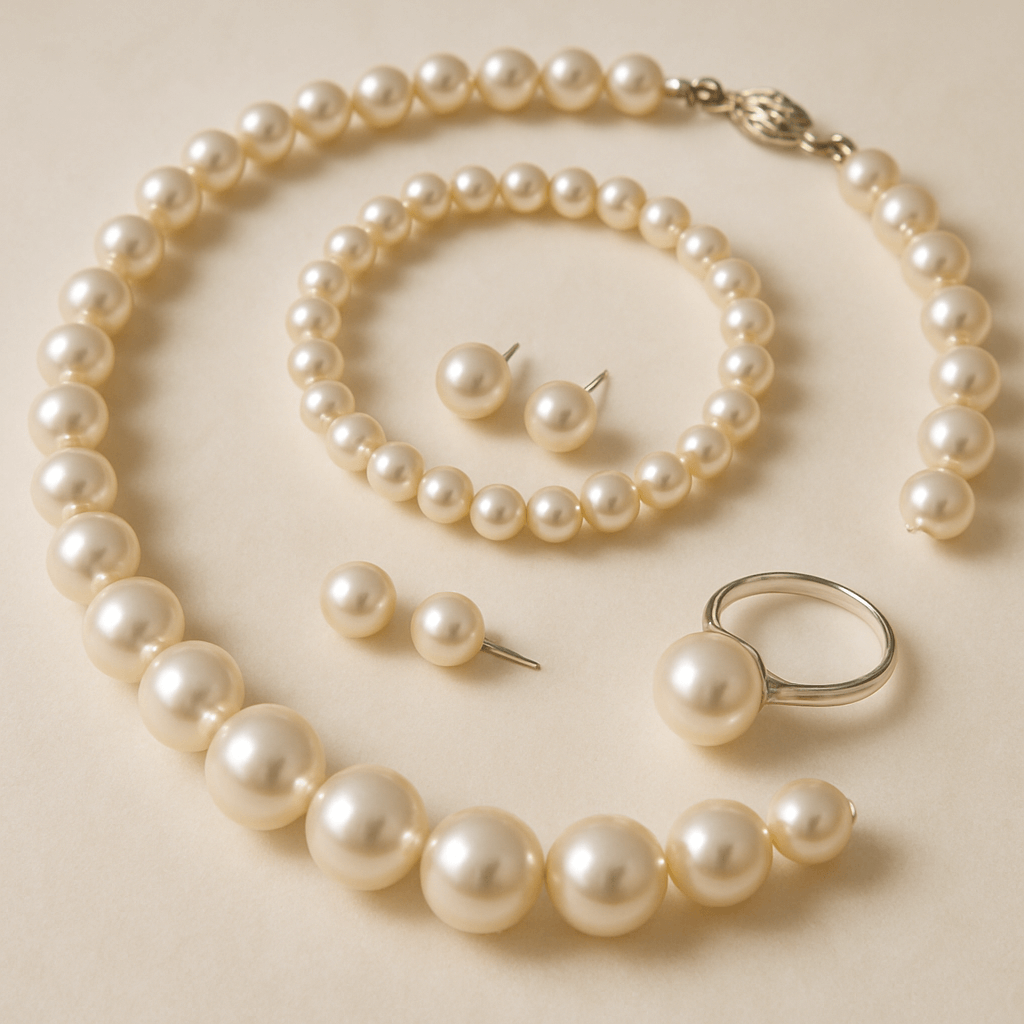
Pearl jewelry frequently combines pearls with gold, silver, or platinum settings. The pearl component determines cleaning method limitations for the entire piece. Even though metal normally tolerates ultrasonic cleaning, pearl presence absolutely prohibits this approach.
Selective hand cleaning addresses each material appropriately. Gently clean pearls with damp cloth while carefully treating metal components with suitable metal polish applied with cotton swabs. This segmented approach requires more effort but prevents damage to vulnerable pearls.
For jewelry with removable pearls, temporary disassembly allows optimal component cleaning. Remove pearls from mountings, clean metal aggressively as appropriate, then reassemble after both components receive proper care. This approach suits pieces where disassembly causes no structural concerns.
Adhesive-mounted pearls require extra caution. Many jewelry cements dissolve in common solvents. Even water exposure might weaken some adhesive bonds. Minimal liquid contact protects both pearls and mounting integrity.
What You Can Clean Ultrasonically

Application Range Diagram of Yunyisonic 0.8L Household Ultrasonic Cleaner
While pearls cannot tolerate ultrasonic cleaning, many jewelry materials clean safely with this technology. Diamonds demonstrate excellent compatibility due to extreme hardness and chemical stability. Secure settings allow aggressive cleaning that removes accumulated dirt from inaccessible areas behind stones.
Natural ruby and sapphire jewelry cleans effectively when stones lack fracture fillings or treatments. The corundum crystal structure exhibits hardness second only to diamond. These durable gemstones tolerate cavitation forces without damage when properly mounted.
Solid gold, platinum, and sterling silver jewelry without vulnerable components benefits from ultrasonic cleaning. These noble metals resist chemical attack from typical cleaning solutions. Cavitation removes tarnish and accumulated contamination efficiently.
However, certain gemstones besides pearls require ultrasonic exclusion. Emeralds commonly contain fracture fillings that dislodge. Opals suffer mechanical damage. Tanzanite can crack. Turquoise and other porous stones absorb solutions causing discoloration. Amber and coral share pearl vulnerabilities as organic materials. Always verify material compatibility before ultrasonic processing.
Best Practices for Pearl Maintenance
Proper pearl care extends beyond cleaning to include storage and wearing practices. Store pearls separately from other jewelry to prevent scratching from harder materials. Soft cloth pouches or lined jewelry boxes provide appropriate protection.
Apply cosmetics, perfumes, and hair products before putting on pearl jewelry. These substances contain chemicals that damage pearls with prolonged contact. Allow products to dry completely before pearl contact. Remove pearls before applying additional products.
Avoid pearl exposure to household chemicals including cleaners, chlorine bleach, and acids. Even weak acids like vinegar or lemon juice damage pearl surfaces. Swimming pools and hot tubs contain chlorine that degrades organic pearl components. Remove pearl jewelry before such exposures.
Pearl strands require periodic restringing. The silk thread stretches and weakens over time from wearing stress and absorbed moisture. Professional restringing every one to two years maintains security and provides inspection opportunity. Knotting between pearls prevents total loss if strand breaks.
Wear pearls regularly rather than storing them indefinitely. The slight moisture from skin contact helps maintain pearl hydration. Extremely dry storage environments can cause pearl desiccation leading to surface cracking. Regular wearing with proper cleaning maintains optimal condition.
Inspect pearl jewelry periodically for mounting security. Check that prongs hold firmly and adhesive bonds remain intact. Address any looseness immediately to prevent pearl loss. Professional inspection during cleaning appointments catches problems before failures occur.
Professional appraisal documents pearl jewelry value and condition. Updated appraisals every few years track condition changes and market value fluctuations. Detailed condition documentation helps detect gradual degradation from improper care or environmental exposure.
Understanding pearl vulnerabilities enables informed care decisions that preserve beauty and value. The absolute prohibition on ultrasonic cleaning represents just one aspect of comprehensive pearl maintenance. Gentle cleaning methods, proper storage, careful wearing practices, and professional services combine to ensure pearls remain beautiful for generations.