






People are drawn to ultrasonic cleaners for one simple reason: the promise of deep, effortless cleaning. The idea that tiny bubbles can clean what hands, brushes, and traditional soaks cannot is naturally appealing. Whether someone owns jewelry that has lost its shine, wears retainers or aligners that gather cloudy buildup, works with tools covered in oil or carbon dust, or handles delicate equipment that needs to be spotless, ultrasonic cleaning offers a solution that feels almost automatic. Place the item in the tank, add water and a suitable cleaning solution, and allow sound waves to do the hard work. This sense of simplicity is one of the main reasons ultrasonic cleaners have grown so popular in recent years.
Another reason people consider ultrasonic cleaners is the frustration that comes from trying to clean items with small crevices or fine details. Jewelry with narrow channels, rings with intricate settings, eyeglasses with tight hinges, dental appliances with grooves, and mechanical parts with threaded surfaces all share the same challenge: dirt hides in places that are nearly impossible to reach. Traditional brushing can only remove what it physically touches. Soaking loosens some residue but rarely achieves a complete clean. Many people realize quickly that manual methods leave behind unseen buildup that accumulates over time. This is where ultrasonic cleaning feels promising, because cavitation bubbles reach into spaces that even the thinnest toothbrush bristles cannot.
Ultrasonic cleaners also appeal to people who value hygiene. Dental appliances, aligners, and retainers can develop odors despite regular brushing. The surfaces look clean to the eye, yet bacteria linger in tiny spaces that daily cleaning does not address. The same issue applies to items used in laboratories or workshops, where invisible contaminants must be removed thoroughly. The idea that ultrasound can handle both visible and microscopic debris makes these machines attractive for people who want a higher level of cleanliness than normal routines offer.
A growing interest in DIY maintenance contributes to the popularity of ultrasonic cleaners as well. Many people enjoy restoring jewelry, refreshing personal items, or maintaining mechanical tools at home. The rise of online tutorials and cleaning experiments has made ultrasonic cleaning seem accessible, even for beginners. Owners of vintage watches, family heirlooms, or delicate accessories appreciate the ability to clean items thoroughly without risking mechanical damage. For these users, ultrasonic cleaners feel like a professional tool brought into the home environment.
Affordability plays a role too. Years ago, ultrasonic cleaners were used mainly in dental offices, jewelers’ workshops, and laboratories because of their high cost. Today, compact household units are widely available at prices far lower than professional-grade equipment. This accessibility has encouraged more people to consider them for their everyday cleaning needs. When something previously reserved for professionals suddenly comes within reach, curiosity naturally grows.
Beyond personal use, some people consider ultrasonic cleaners because they run small businesses or side projects. Jewelry sellers, watch refurbishers, repair shops, and even small laboratories find that an ultrasonic cleaner improves workflow. Deep cleaning becomes consistent and efficient, allowing them to refresh items that would otherwise require significant manual labor. For people in these fields, ultrasonic cleaners are less about convenience and more about productivity and reliability.
Even the psychological aspect of restoring items plays a role in the decision. Watching an old ring regain its brilliance, seeing a cloudy retainer turn crystal clear again, or watching a carburetor come out of a bath with layers of grime removed can be surprisingly satisfying. This visual transformation reinforces the feeling that ultrasonic cleaning is not just fast but also effective in ways that manual cleaning rarely achieves.
Yet despite all these appealing factors, people still wonder whether ultrasonic cleaners are worth the investment. Some worry they are gimmicks. Others question whether household units can match the performance of professional machines. Many are unsure whether ultrasonic cleaners work equally well on every type of material. These questions form the foundation of the search for a clear, thorough, and balanced understanding of the technology.
To fully evaluate whether ultrasonic cleaners are worth it, it helps to understand how they function. The real value becomes easier to judge once the science behind the bubbles is clear and the cleaning process makes sense not as a mystery, but as a predictable and measurable action.
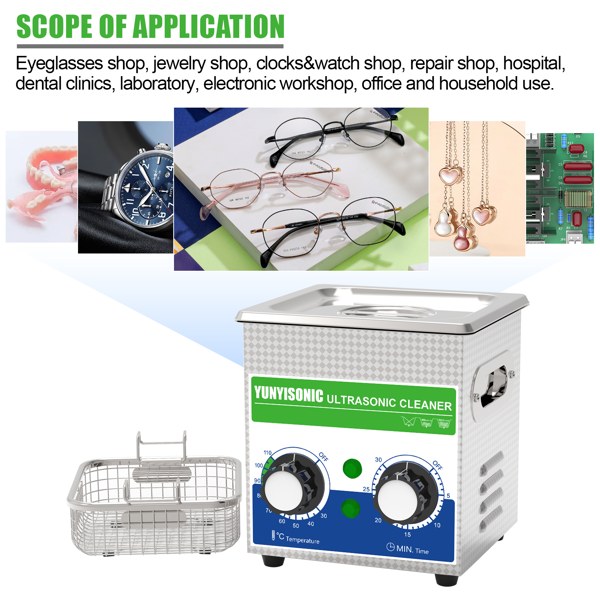
Applications of Ultrasonic Cleaners
How Ultrasonic Cleaning Actually Works
Ultrasonic cleaning might sound like a high-tech process reserved for laboratories or industrial workshops, but the science behind it is surprisingly elegant. At its core, ultrasonic cleaning uses sound — not just any sound, but high-frequency sound waves far beyond what human ears can hear. These sound waves create microscopic bubbles in water that collapse with enough force to lift dirt, oils, residues, and particles from the surfaces of objects. This happens in a controlled, consistent way, allowing even the smallest hidden areas to be cleaned thoroughly.
Inside every ultrasonic cleaner is a transducer, a component that converts electrical energy into ultrasonic vibrations. These vibrations travel through the water inside the cleaning tank. As they move, they create alternating high-pressure and low-pressure phases. During the low-pressure phase, the water molecules are pulled apart slightly, creating tiny vacuum bubbles. In the following high-pressure phase, these bubbles collapse. The movement happens thousands of times per second.
This process is called cavitation, and it is the heart of ultrasonic cleaning.
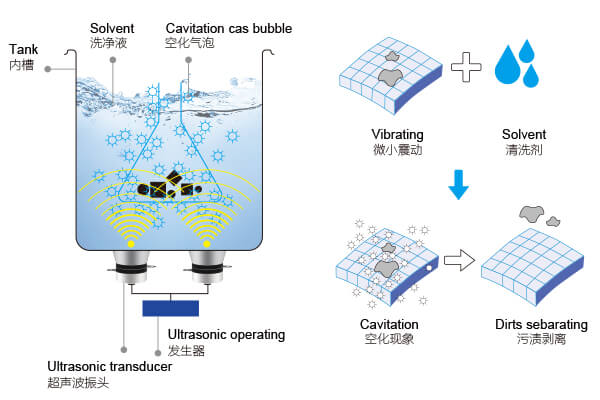
The Principle Behind Ultrasonic Cleaning
When a bubble collapses, it releases a small but concentrated burst of energy. Individually, these bursts are extremely small — far too small to damage most solid materials — but in mass, they create a powerful scrubbing effect. The bubbles form everywhere the water reaches, even in places where brushes cannot fit. This is what makes ultrasonic cleaning different from any manual or chemical cleaning method. It does not rely on friction, and it does not rely solely on chemistry. Instead, it relies on physics: the controlled collapse of microscopic bubbles.
One of the most impressive aspects of cavitation is how evenly it cleans. When an object is submerged in the tank, cavitation bubbles form on every accessible surface. The effect reaches into crevices, blind holes, carved patterns, and micro-grooves. A ring with a complex setting, a retainer with textured edges, or a mechanical part with threaded openings all experience the same level of cleaning without the need for additional scrubbing.
Temperature also influences ultrasonic action. Warmer water allows bubbles to form more easily and helps dissolve oils, which is why many ultrasonic cleaners can heat the solution. However, heating must be used carefully, because some materials — such as plastics, gemstones, or delicate coatings — are sensitive to temperature changes. Proper matching of temperature, cleaning solution, and material is essential for safe cleaning.
Another factor that shapes cleaning effectiveness is frequency. Most household ultrasonic cleaners operate around 40kHz, a frequency that produces moderately sized bubbles suitable for a wide range of items. Industrial applications may use lower frequencies, which create larger bubbles with more force, ideal for heavy grease or carbon deposits. High frequencies, such as 80kHz or 120kHz, create smaller, gentler bubbles used for precision cleaning of delicate instruments or sensitive optical components.
This variety of frequencies explains why ultrasonic cleaning is so versatile. A single technology adapts easily to jewelry, dental appliances, watch parts, circuit boards, injection nozzles, optics, and laboratory glassware — simply by using the right frequency, power level, and solution.
Speaking of solutions, the liquid used in the tank plays an important role. Water alone allows cavitation to occur, but it does not dissolve oils well. Adding a mild cleaning agent improves the process. Solutions designed for ultrasonic cleaning contain surfactants that lower water’s surface tension, helping cavitation bubbles form more efficiently and lift away contaminants more easily. Specialized solutions also prevent foaming, which interferes with ultrasonic waves.
Despite its impressive cleaning power, ultrasonic cleaning does not polish or repair surfaces. It cannot make a scratched ring look new or restore damaged metal. What it does extremely well is remove what should not be there: oils, grime, oxidation residues, leftover polishing compounds, hardened dirt, and microscopic particles that adhere to surfaces over time.
Understanding this balance is key to evaluating whether ultrasonic cleaners are worth the investment. The technology provides cleaning power that manual brushes cannot replicate, but it cannot replace polishing, repairing, or refinishing processes. For many users, that distinction becomes the deciding factor.
Because ultrasonic cleaning relies on sound waves and cavitation, its benefits vary depending on the type of object being cleaned. Some items respond exceptionally well, while others require caution or alternative methods. The next step in determining whether ultrasonic cleaners are worth it is to look at what they can clean effectively across different categories.
What Can Be Cleaned in an Ultrasonic Cleaner
Ultrasonic cleaners are surprisingly versatile, and their ability to handle a wide range of items is one of the main reasons people consider investing in one. The cavitation process adapts naturally to different shapes, surfaces, and levels of dirt. Whether the goal is cosmetic cleaning, hygienic maintenance, or preparing equipment for precise tasks, ultrasonic cleaners offer a level of thoroughness that standard methods rarely achieve. Understanding what these machines can clean — and how well they perform for each type of item — helps clarify their real value.
One of the most common uses for ultrasonic cleaners is jewelry, especially pieces that accumulate oils, lotions, and microscopic debris in their small seams. Rings, necklaces, bracelets, and earrings all benefit from ultrasonic cleaning because cavitation reaches the tiny crevices under prongs, around settings, and between links. Jewelry with intricate patterns or deep grooves emerges noticeably clearer because the bubbles access areas untouched by brushing or cloth polishing. Gold, platinum, and stainless steel respond especially well. Diamonds regain brilliance quickly, as ultrasonic cleaning removes the thin film that forms beneath the stone and dulls its sparkle. However, certain gemstones — such as opals, emeralds, turquoise, and pearls — require caution because they are sensitive to vibration and temperature.
In addition to jewelry, ultrasonic cleaners excel at refreshing dental appliances such as retainers, aligners, night guards, and removable dentures. These items constantly interact with saliva, bacteria, and food particles. Even with daily brushing, a sticky film tends to develop in the fine contours of the plastic or acrylic. Cavitation removes this film effectively, improving odor and transparency. For people who wear clear aligners, the difference can be dramatic, especially if the aligners have become cloudy or feel less clean near the end of their wear cycle. Metal-based dental appliances, such as Hawley retainers, also benefit because ultrasonic cleaning removes debris from wires and solder points that brushing misses.
Ultrasonic cleaners are also useful for eyeglasses, particularly the areas around the nose pads and hinges where oils accumulate. While the lenses themselves should be treated with care — especially if they have delicate coatings — the frame benefits significantly from ultrasonic cleaning. Dirt lodged in tiny spaces comes out easily, and the glasses often feel lighter and more comfortable afterward. For people who work in dusty environments, ultrasonic cleaning can restore clarity that daily wiping cannot achieve.
Another category where ultrasonic cleaning shines is watch parts, though with an important distinction: fully assembled watches should never be submerged unless they are professionally sealed for water pressure. However, watch repair professionals often disassemble movements and place metal components into ultrasonic cleaners to remove old lubricants, dust, and microscopic particles. The thoroughness of cavitation ensures that gears, springs, and pins are completely free of debris before reassembly. For hobbyists who refurbish vintage watches, ultrasonic cleaning speeds up a process that would otherwise take hours.
In workshops and garages, ultrasonic cleaners find their purpose with mechanical parts, especially small pieces with complex geometry. Carburetor jets, fuel injectors, nuts, bolts, and metal connectors often accumulate grease, carbon deposits, and stubborn grime. Ultrasonic cleaning loosens these residues without requiring harsh chemicals or scrubbing. A few minutes in the tank can prepare a part for reinstallation or further maintenance, making the process much more efficient. The ability to remove particles deep inside channels or threaded holes is particularly useful for ensuring mechanical precision.
Ultrasonic cleaners also play an important role in laboratories, where cleanliness affects the accuracy of experiments. Glassware, pipettes, and instruments used in chemical or biological procedures must be free of contaminants to ensure reliable results. Ultrasonic cleaning helps remove residues as small as microscopic grains or dried film, allowing researchers to start each experiment with clean, uncontaminated tools. Laboratories often choose multi-frequency ultrasonic systems that allow them to adjust cleaning intensity for different materials.
In the medical field, ultrasonic cleaners are used to clean surgical instruments before sterilization. Cavitation removes blood, tissue residues, and other contaminants from the small crevices where brushes cannot reach. Proper ultrasonic cleaning helps ensure the instruments are ready for autoclaving or other sterilization processes. Although household models cannot replace medical-grade systems, the underlying principle remains the same: controlling vibration and temperature leads to effective cleaning.
People who create or restore metalwork — such as hobbyists who work with coins, fasteners, or small components — also find ultrasonic cleaning helpful. It removes oxidation layers that form on the surface of metals, making the pieces easier to polish afterward. The same applies to small firearms components, fishing gear, drone parts, electronics boards, and anywhere fine detail requires precise cleaning without abrasion.
The diversity of items that respond well to ultrasonic cleaning highlights just how flexible the technology is. It can handle everything from delicate jewelry to hardened mechanical parts, often in the same tank with only a change in cleaning solution. This versatility partly explains why ultrasonic cleaners are considered valuable by people with different needs and interests.
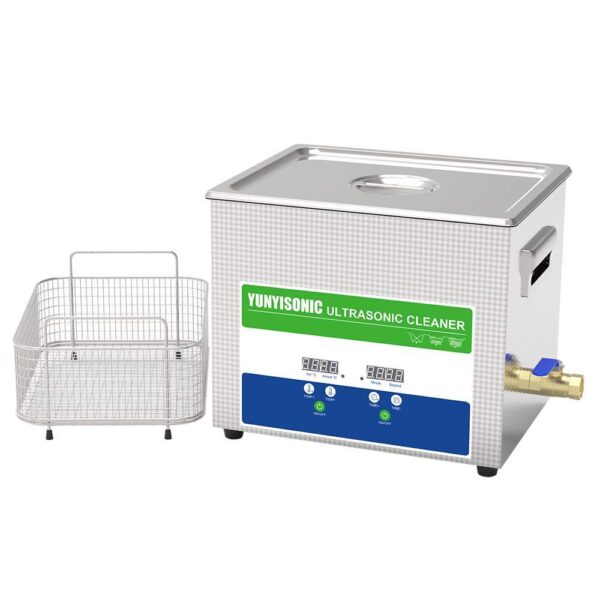
10L Precision Dental Ultrasonic Cleaner 360W with Degassing and Digital Control for Quality Cleaning
In stock
| Volumetric Weight | 12.5 kg |
|---|---|
| Package Dimensions | 43.5 × 36 × 35 cm |
| Model | YS0410, YS0610 |
| Application Field | Additive Manufacturing, Aerospace, Autoparts, Biopharmaceutical, Coins, Contact Lenses, Dental, Denture, Hospital, Laboratory, Watches |
| Brand | Yunyisonic |
| Origin | Shenzhen City, China |
| Capacity | 10L |
| Frequency | 40kHz |
| Power | 240W, 360W |
| Timer | 1-30mins |
| Heater | RT~80°C |
| Tank Material | SUS304 Stainless Steel |
| Voltage | AC 110V 60Hz;AC 220V 50Hz |
| Plug Type | AU Plug, EU Plug, Other Plugs, UK Plug, US Plug |
| Certificates | CE, FCC, ROHS |
| Warranty | 1 Year |
| Customization | Logo/Pattern, Private Lable, White Label |
| Function | Clean Thoroughly, Degassing, Digital Control, Heating, Timing |
| Manufacturer | Yunyisonic Shenzhen Co., Ltd. |
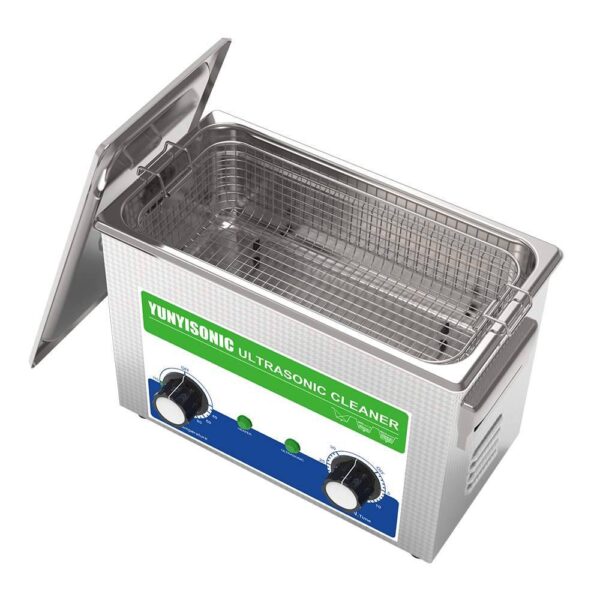
180W 4.5L/6.5L Ultrasonic Cleaning Machine | Medical and Home Use Surgical Cleaner for Efficient Cleaning
In stock
| Volumetric Weight | N/A |
|---|---|
| Package Dimensions | N/A |
| Model | YD0304, YD0306 |
| Application Field | Additive Manufacturing, Aerospace, Autoparts, Dental, Electronics, Industrial Use, Laboratory, Marine |
| Brand | Yunyisonic |
| Origin | Shenzhen City, China |
| Capacity | 4.5L, 6.5L |
| Frequency | 40kHz |
| Power | 180W |
| Timer | 1-30mins |
| Heater | RT~80°C |
| Tank Material | SUS304 Stainless Steel |
| Voltage | AC 110V 60Hz;AC 220V 50Hz |
| Plug Type | AU Plug, EU Plug, Other Plugs, UK Plug, US Plug |
| Certificates | CE, FCC, ROHS |
| Warranty | 1 Year |
| Customization | Logo/Pattern, Private Lable, White Label |
| Function | Clean Thoroughly, Heating, Timer Knob Control |
| Manufacturer | Yunyisonic Shenzhen Co., Ltd. |
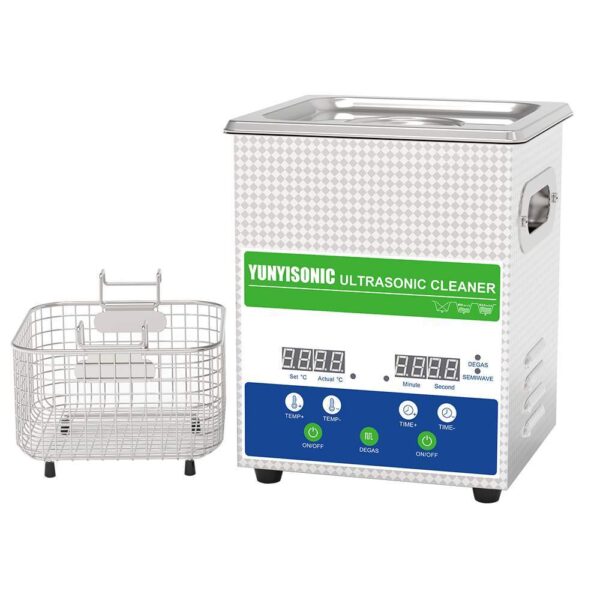
2L Mini Ultrasonic Cleaner with Semi-Wave Degas | Eco-Friendly Cleaning Machine for Coins, Glasses & Small Metal Parts
In stock
| Volumetric Weight | 3.3 kg |
|---|---|
| Package Dimensions | 25.5 × 24.2 × 27 cm |
| Model | YW0102, YW0202 |
| Application Field | Brass, Coins, Contact Lenses, Dental, Denture, Earrings, Eyeglasses, Jewelry, Optical Lenses, Rings, Watches |
| Brand | Yunyisonic |
| Origin | Shenzhen City, China |
| Capacity | 2L |
| Frequency | 40kHz |
| Power | 30/60W, 60/120W |
| Timer | 1-30mins |
| Heater | RT~80°C |
| Tank Material | SUS304 Stainless Steel |
| Voltage | AC 110V 60Hz;AC 220V 50Hz |
| Plug Type | AU Plug, EU Plug, Other Plugs, UK Plug, US Plug |
| Certificates | CE, FCC, ROHS |
| Warranty | 1 Year |
| Customization | Logo/Pattern, Private Lable, White Label |
| Function | Clean Thoroughly, Degassing, Digital Control, Heating, Semiwave, Timing |
| Manufacturer | Yunyisonic Shenzhen Co., Ltd. |
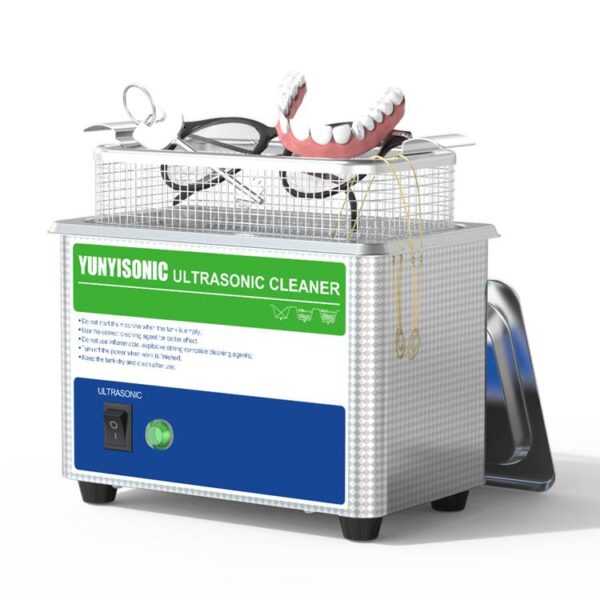
0.8L Ultrasonic Eyeglass Cleaner | Efficient Clean Spectacles, Magnifying Glasses, Optical Lenses, Jewelry, Dentures
In stock
| Volumetric Weight | 1.70 kg |
|---|---|
| Package Dimensions | 23.5 × 17 × 18 cm |
| Model | YA008A, YA008GA |
| Application Field | Brass, Car Parts, Coins, Dental, Denture, Earrings, Eyeglasses, Jewelry, Resin Prints, Toys, Watches |
| Brand | Yunyisonic |
| Origin | Shenzhen City, China |
| Capacity | 800ML |
| Frequency | 40kHz |
| Power | 35W, 60W |
| Tank Material | SUS304 Stainless Steel |
| Voltage | AC 110V 60Hz;AC 220V 50Hz |
| Plug Type | AU Plug, EU Plug, Other Plugs, UK Plug, US Plug |
| Certificates | CE, FCC, ROHS |
| Warranty | 1 Year |
| Customization | Logo/Pattern, Private Lable, White Label |
| Function | Clean Thoroughly |
| Manufacturer | Yunyisonic Shenzhen Co., Ltd. |
When Ultrasonic Cleaning Outperforms Manual Cleaning
Ultrasonic cleaning begins to reveal its real value when compared directly with manual methods. While hand cleaning, brushing, wiping, or soaking can handle surface-level dirt, these methods often fall short when contaminants hide in small spaces or cling tightly to a surface. Ultrasonic cleaners shine in situations where the dirt is not simply visible, but embedded, dried, layered, or tucked away in places where fingers and brushes never reach.
One of the clearest examples of ultrasonic superiority involves jewelry with intricate settings. Rings with pavé designs, bezel-set stones, or filigree details often accumulate oils and dust in tiny openings that look clean on the surface but hold debris underneath. Manual brushing can brighten the outer surface, but the dirt beneath the stone or inside the setting remains untouched. Ultrasonic cleaners send cavitation bubbles into these small pockets, detaching buildup without touching the jewelry physically. As the bubbles collapse, they lift residue away and carry it into the water, making even old jewelry pieces look noticeably brighter.
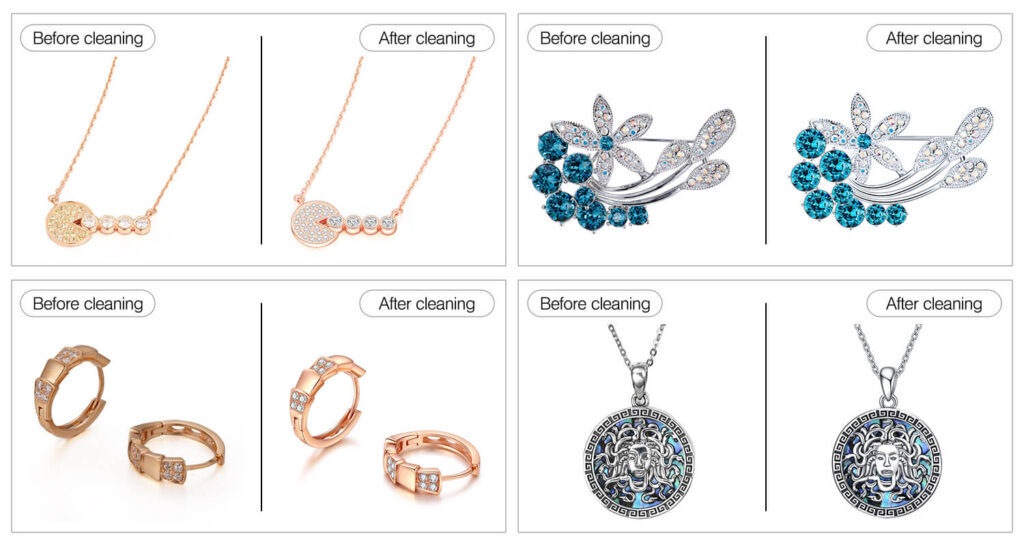
Jewelry Cleaning Effect Comparison Chart
The same advantage appears when cleaning dental appliances. Retainers, bite guards, and aligners collect a thin film that clings tightly to grooves and textured areas. Brushing with a soft toothbrush removes surface grime but fails to reach the inner curves or the deep impressions shaped to fit the teeth. Over time, this buildup becomes noticeable as cloudiness, odor, or roughness. Ultrasonic cleaners target these hidden areas, lifting the biofilm that brushing cannot dislodge. A few minutes in the tank often restores transparency and hygiene in a way manual cleaning cannot accomplish reliably.
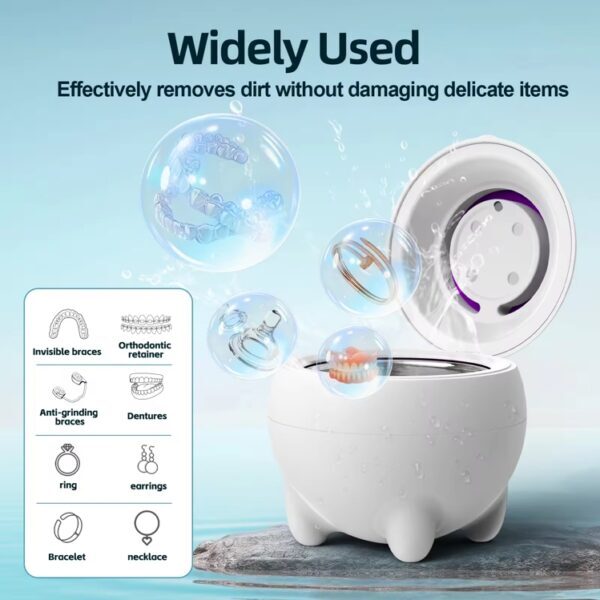
Mechanical parts show an even more dramatic difference. Components such as carburetor jets, fuel injectors, and small metal fittings often contain threaded sections, deep channels, or narrow openings where carbon deposits and oil accumulate. Scrubbing tools cannot reach these areas effectively without disassembling the part further. Even when disassembled, cleaning narrow tubes or precision holes by hand is difficult and time-consuming. Ultrasonic cleaners penetrate every surface the solution touches, including deep internal spaces. Cavitation breaks down hardened deposits, leaving the components noticeably cleaner and ready for fine tuning or lubrication.
Another area where ultrasonic cleaning excels is pre-cleaning before polishing or sterilization. Jewelers, dental offices, and laboratories often rely on ultrasonic cleaners to remove contaminants before proceeding to more specialized treatments. A polishing wheel cannot remove lingering compound in a ring’s inner channels if the debris is not loosened first. Similarly, sterilization equipment cannot properly sanitize surgical tools if biological residue remains in crevices. Ultrasonic cleaning prepares the item for further processes by removing anything that would interfere with polishing, coating, or sterilization.
Precision tools and delicate components, such as watch gears, camera parts, and optical instruments, also benefit from ultrasonic cleaning. Manual cleaning of these items risks bending, scratching, or misaligning small parts. Brushing can cause slight abrasions, while cloths leave fibers behind. Cavitation, on the other hand, cleans without touching the object directly. This contact-free cleaning method protects delicate parts while ensuring they are free from dust, lubricants, or film that affects performance.
Even items used in everyday life, such as eyeglasses, experience a level of cleaning that manual wiping cannot achieve. Dirt accumulates around the hinges, under the nose pads, and along the fine edges of metal frames. These areas are difficult to reach with cloths or cleaning solutions. Ultrasonic cleaners dislodge oils and residue quickly, leaving the frames feeling lighter and more comfortable and making the lenses easier to clean afterward.
In many cases, ultrasonic cleaning produces results that manual cleaning cannot match simply because of physics. Brushes apply force in one direction, but cavitation applies pressure from every angle. Soaking softens some debris, but it does not remove it completely. Ultrasonic bubbles form and collapse repeatedly, creating a consistent and thorough cleaning motion that reaches both visible and hidden surfaces. The effect is not just cleaner-looking items, but items that are genuinely free of contaminants.
Despite its strengths, ultrasonic cleaning does not replace all manual methods. It does not polish metals, repair scratches, or restore worn-down materials. It also cannot fix issues that require mechanical adjustment or professional treatment. However, when the objective is removing dirt — especially dirt that is buried, stubborn, or microscopic — ultrasonic cleaning excels far beyond what manual cleaning can accomplish.
This performance advantage is one of the strongest arguments for investing in an ultrasonic cleaner. But it is equally important to recognize that ultrasonic cleaning has limitations. Not every material responds safely to cavitation, and not every cleaning challenge requires ultrasonic force.
Limitations of Ultrasonic Cleaners You Should Know
Ultrasonic cleaners offer impressive cleaning power, but they are not ideal for every situation. Like any specialized tool, they have limitations that must be understood before deciding whether they are worth the investment. Some of these limitations relate to the cleaning technology itself, while others involve the materials being cleaned or the expectations people bring to the process. Recognizing these limitations helps ensure that ultrasonic cleaning is used safely, effectively, and realistically.
One of the most important limitations involves material sensitivity. While ultrasonic cleaners are gentle in the sense that they do not rely on mechanical scrubbing, the vibration generated during cavitation can be too strong for certain delicate materials. Soft gemstones, such as opals, emeralds, turquoise, and pearls, are particularly vulnerable. These stones can crack, discolor, or loosen in their settings when exposed to ultrasonic vibration. Even harder gemstones may be at risk if they contain internal fractures or have undergone treatments like oiling or resin filling, which may be disturbed by the cleaning process.
Ultrasonic cleaners also pose risks to items that have glued components. Jewelry, watches, and accessories that rely on adhesives to hold parts together can come apart during cleaning. Ultrasonic waves can weaken or dissolve glues, causing stones, decorative pieces, or small components to detach. This issue is especially common in costume jewelry, where adhesives are more common than metal settings. Because the cavitation bubbles affect any surface the solution touches, even unseen glue joints may loosen or fail.
Another limitation involves coatings and finishes. Items with delicate coatings—such as anti-reflective layers on lenses, painted surfaces, plated metal, or protective sealants—may degrade under ultrasonic vibration. The process can strip away thin coatings or create patches where the finish appears uneven. For eyeglasses, ultrasonic cleaners are often used for the frames, but the lenses must be evaluated carefully to avoid damaging specialty coatings that provide UV protection or scratch resistance.
Temperature is another factor that can introduce limitations. Many household ultrasonic cleaners gradually warm the cleaning solution during operation. While this heat improves cleaning efficiency for metals, it can warp or distort plastics, synthetic materials, or heat-sensitive items. Dental appliances made of soft thermoplastics, lightweight plastics, or acrylics may deform if the water becomes too warm. Even slight distortion can affect comfort or functionality.
Ultrasonic cleaners also have limitations regarding the types of dirt or residue they can remove. While they excel at lifting oils, dust, biofilm, and fine particles, they are less effective for heavy tarnish, deep oxidation, or highly stubborn residues that require chemistry or abrasion to remove. For example, a badly tarnished silver ring may emerge cleaner from the ultrasonic bath but still require polishing to restore its original shine. Similarly, carbon buildup on mechanical parts may need a specialized solution or multiple cleaning cycles to dissolve fully.
Another limitation concerns size and depth. While ultrasonic cleaners come in different tank sizes, the effectiveness of cavitation depends on submerging the item fully. Large tools, oversized eyeglasses, big watch bands, or long mechanical parts may not fit inside a standard household ultrasonic cleaner. Even when they do fit, parts that cannot be positioned properly may not receive uniform cleaning.
Expectations also play a role in how limitations are perceived. Many people expect ultrasonic cleaners to provide a “like-new” appearance, but this is not always realistic. Ultrasonic cleaning removes contaminants, not scratches, dents, faded plating, or structural wear. If an item looks dull because of physical damage rather than dirt, no amount of ultrasonic cleaning will restore its former shine. A jeweler’s polishing wheel, a watchmaker’s repair tools, or a refinishing process may be required for that level of restoration.
Another limitation comes from the need for appropriate cleaning solutions. Water alone can perform basic cleaning, but certain contaminants require specialized solutions for optimal results. Using the wrong solution—especially one containing harsh chemicals—can damage sensitive materials or create a residue that dulls the surface. Understanding which solutions are safe for which items requires some knowledge and caution.
Lastly, ultrasonic cleaners may not be suitable for users who clean only a few items occasionally. If someone owns only a small amount of jewelry or rarely handles items requiring detailed cleaning, the machine may be used infrequently, making the investment unnecessary. In such cases, manual cleaning or periodic professional services may be more cost-effective.
These limitations do not undermine the usefulness of ultrasonic cleaners, but they demonstrate that the technology is not a universal solution. The value of an ultrasonic cleaner depends on the items you plan to clean, how often you will use the machine, and the expectations you have for the cleaning results.
With these limitations in mind, it becomes easier to evaluate ultrasonic cleaners in specific contexts. For many people, jewelry cleaning is the most common reason to purchase a unit, and this is where ultrasonic technology often delivers some of its most impressive results — with the right approach.
Are Ultrasonic Cleaners Worth It for Jewelry Cleaning
Jewelry is one of the most popular uses for ultrasonic cleaners, and for many people, it is the main reason for considering the purchase. Rings, necklaces, earrings, bracelets, and pendants often lose their brilliance over time as oils, lotions, and micro-debris settle into the areas that aren’t easily accessible with brushes or cloths. Whether ultrasonic cleaners are worth it for jewelry depends on the types of pieces you own, how often you wear them, and what kind of cleaning results you expect.
Ultrasonic cleaners excel with solid metal jewelry made of gold, platinum, silver, or stainless steel. These metals are durable and able to withstand cavitation without structural damage. Rings that look dull because of dried skin oils or tiny particles trapped in engravings often emerge from an ultrasonic bath noticeably brighter. Necklaces and bracelets with intricate links also benefit because cavitation reaches between the links and removes buildup that manual cleaning leaves behind. Earrings, especially those with complex backs or posts, can be cleaned thoroughly without scrubbing every component separately.
Where ultrasonic cleaners truly shine is with diamond jewelry, especially rings. Diamonds lose brilliance when a thin film forms on the pavilion or under the stone, blocking light from reflecting properly. This film is extremely difficult to remove with brushing because the back of the diamond is not easily accessible. Ultrasonic cleaning blasts away this film effectively, restoring sparkle without needing professional polishing. For engagement rings worn daily, ultrasonic cleaning can keep the diamond looking clear and radiant between visits to a jeweler.
Multistone and intricate jewelry pieces benefit even more. Settings with small accent stones or pavé arrangements often trap dirt that cannot be cleaned by hand. Cavitation lifts debris from beneath these stones without removing them, making the jewelry look refreshed and more uniform in brilliance. Bracelets and pendants with deep engravings or openwork designs also show significant improvement after an ultrasonic cycle.
However, ultrasonic cleaners are not ideal for every type of jewelry. Certain gemstones are sensitive to vibration, temperature, or internal pressure. Opals can crack from rapid movement or temperature fluctuations. Pearls are organic and porous, absorbing water and weakening when exposed to strong vibration. Turquoise, coral, amber, and emeralds—especially those that have been infused with oils or resins—can sustain damage during ultrasonic cleaning. Any stone that is soft, porous, or treated is generally not suitable for ultrasonic cleaning.
Glued components also raise concerns. Costume jewelry, inexpensive pieces with glued stones, and items with adhesive-backed decorations should not be placed in an ultrasonic cleaner. The vibration can loosen the glue, causing stones to fall out. Because costume jewelry often has thin plating, ultrasonic cleaning may accelerate wear, revealing the underlying metal.
Another consideration is silver tarnish. Ultrasonic cleaners can remove dirt and oils from silver, but they do not dissolve tarnish effectively on their own. Tarnish is a chemical reaction that may require a polishing cloth or silver-cleaning formula to reverse. Ultrasonic cleaning helps by removing surface debris first, making tarnish easier to polish afterward, but it is not a replacement for chemical tarnish removal.
For people who own many pieces of fine jewelry and wear them frequently, an ultrasonic cleaner offers clear long-term value. It restores brilliance, refreshes appearance, and reduces the frequency of professional cleaning. Jewelers often use ultrasonic cleaners themselves as part of their cleaning and polishing workflow, demonstrating how effective the technology can be when used for suitable items.
For those who own only a few pieces or who mainly wear soft gemstones, the investment may be less beneficial. Manual cleaning, occasional professional service, and gentle at-home methods might be sufficient without needing an ultrasonic machine.
The value also depends on expectations. Ultrasonic cleaners remove dirt, but they do not polish metal, remove scratches, or restore worn plating. Professional jewelry cleaning often includes polishing, which produces results beyond what ultrasonic cleaning can achieve alone.
When used appropriately and combined with proper cleaning solutions, ultrasonic cleaners deliver excellent results for jewelry made of durable materials. Their ability to remove residue from intricate settings makes them especially valuable for diamond rings and detailed pieces. But like any tool, their worth depends on the types of items you plan to clean and whether the cleaning benefits match your needs.
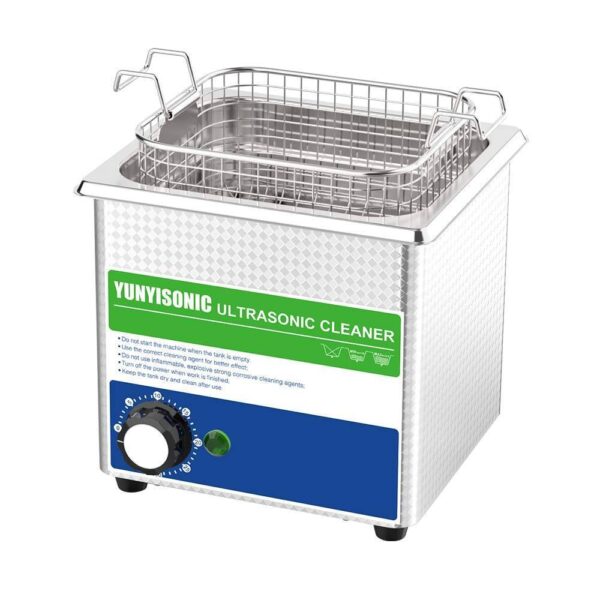
2L Timer Dial Ultrasonic Cleaner for Jewelry Rings Watches Coins Dentures | Household Ultrasonic Cleaning Machine
In stock
| Volumetric Weight | 2.65 kg |
|---|---|
| Package Dimensions | 25.5 × 24.2 × 21.5 cm |
| Model | YA020B, YA020GB |
| Application Field | Brass, Coins, Contact Lenses, Dental, Denture, Earrings, Eyeglasses, Jewelry, Optical Lenses, Print Head, Rings, Toys, Watches |
| Brand | Yunyisonic |
| Origin | Shenzhen City, China |
| Capacity | 2L |
| Frequency | 40kHz |
| Power | 35W, 60W |
| Tank Material | SUS304 Stainless Steel |
| Voltage | AC 110V 60Hz;AC 220V 50Hz |
| Plug Type | AU Plug, EU Plug, Other Plugs, UK Plug, US Plug |
| Certificates | CE, FCC, ROHS |
| Warranty | 1 Year |
| Customization | Logo/Pattern, Private Lable, White Label |
| Function | Clean Thoroughly, Timer Knob Control, Timing |
| Manufacturer | Yunyisonic Shenzhen Co., Ltd. |
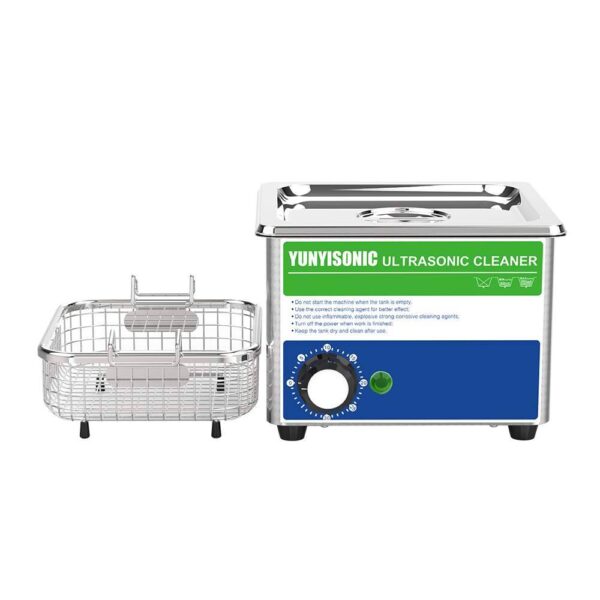
1.3L Mechanical Timer Ultrasonic Cleaner for Watches, Dental Clinics, Clock Repair, Optical Shops
In stock
| Volumetric Weight | 2.1 kg |
|---|---|
| Package Dimensions | 25.5 × 24.2 × 18 cm |
| Model | YA013B, YA013GB |
| Application Field | Brass, Coins, Dental, Denture, Earrings, Eyeglasses, Jewelry, Optical Lenses, Rings, Toys, Watches |
| Brand | Yunyisonic |
| Origin | Shenzhen City, China |
| Capacity | 1.3L |
| Frequency | 40kHz |
| Power | 35W, 60W |
| Tank Material | SUS304 Stainless Steel |
| Voltage | AC 110V 60Hz;AC 220V 50Hz |
| Plug Type | AU Plug, EU Plug, Other Plugs, UK Plug, US Plug |
| Certificates | CE, FCC, ROHS |
| Warranty | 1 Year |
| Customization | Logo/Pattern, Private Lable, White Label |
| Function | Clean Thoroughly, Timer Knob Control, Timing |
| Manufacturer | Yunyisonic Shenzhen Co., Ltd. |
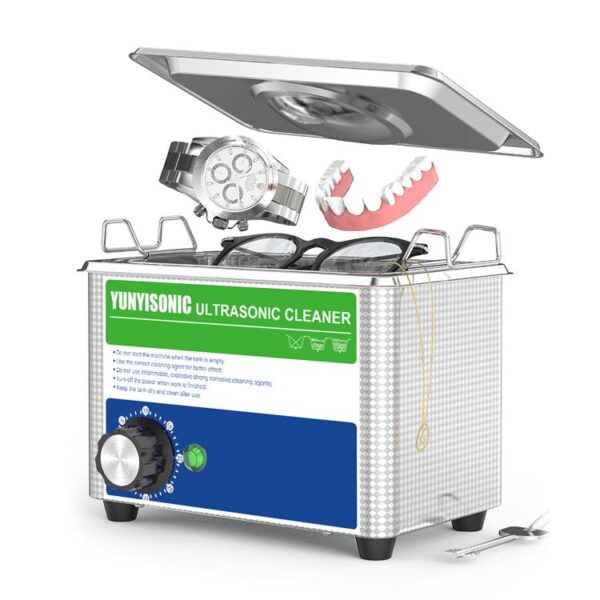
Eco 1L Ultrasonic Cleaner with Timer Knob for Glasses, Frames, Optical Lenses, and Watches | Removes Oil and Fingerprints
In stock
| Volumetric Weight | 1.70 kg |
|---|---|
| Package Dimensions | 23.5 × 17 × 18 cm |
| Model | YA010B, YA010GB |
| Application Field | Brass, Car Parts, Coins, Contact Lenses, Dental, Denture, Earrings, Eyeglasses, Jewelry, Optical Lenses, Toys, Watches |
| Brand | Yunyisonic |
| Origin | Shenzhen City, China |
| Capacity | 1L |
| Frequency | 40kHz |
| Power | 35W, 60W |
| Tank Material | SUS304 Stainless Steel |
| Voltage | AC 110V 60Hz;AC 220V 50Hz |
| Plug Type | AU Plug, EU Plug, Other Plugs, UK Plug, US Plug |
| Certificates | CE, FCC, ROHS |
| Warranty | 1 Year |
| Customization | Logo/Pattern, Private Lable, White Label |
| Function | Clean Thoroughly, Timer Knob Control, Timing |
| Manufacturer | Yunyisonic Shenzhen Co., Ltd. |
2L Mini Ultrasonic Cleaner with Semi-Wave Degas | Eco-Friendly Cleaning Machine for Coins, Glasses & Small Metal Parts
In stock
| Volumetric Weight | 3.3 kg |
|---|---|
| Package Dimensions | 25.5 × 24.2 × 27 cm |
| Model | YW0102, YW0202 |
| Application Field | Brass, Coins, Contact Lenses, Dental, Denture, Earrings, Eyeglasses, Jewelry, Optical Lenses, Rings, Watches |
| Brand | Yunyisonic |
| Origin | Shenzhen City, China |
| Capacity | 2L |
| Frequency | 40kHz |
| Power | 30/60W, 60/120W |
| Timer | 1-30mins |
| Heater | RT~80°C |
| Tank Material | SUS304 Stainless Steel |
| Voltage | AC 110V 60Hz;AC 220V 50Hz |
| Plug Type | AU Plug, EU Plug, Other Plugs, UK Plug, US Plug |
| Certificates | CE, FCC, ROHS |
| Warranty | 1 Year |
| Customization | Logo/Pattern, Private Lable, White Label |
| Function | Clean Thoroughly, Degassing, Digital Control, Heating, Semiwave, Timing |
| Manufacturer | Yunyisonic Shenzhen Co., Ltd. |
Are Ultrasonic Cleaners Worth It for Retainers, Aligners, and Dental Appliances
For many people, the question of whether ultrasonic cleaners are worth it begins with their dental appliances. Retainers, aligners, and night guards spend hours each day inside the mouth, exposed to saliva, food particles, bacteria, and minerals. Over time, a soft film builds up on the surface of these appliances, creating cloudiness, odor, and an unpleasant texture that brushing alone rarely resolves. Ultrasonic cleaners have become increasingly popular for this purpose, but whether they are worth the investment depends on the type of dental appliance and the user’s expectations.
Clear aligners made from thin thermoplastic materials develop a film that brushing struggles to remove. This film tends to collect inside the small contours molded to fit the teeth, especially near the gumline or around bite ramps. When the aligner becomes cloudy, it appears older, less transparent, and less hygienic, even if the tray is still structurally sound. Ultrasonic cleaning can lift this film effectively because cavitation bubbles reach curved surfaces and narrow grooves that toothbrush bristles cannot access. A short cycle can restore clarity and freshness, especially for people who struggle with cloudiness near the end of an aligner’s wear cycle.
Retainers, particularly Hawley retainers with metal wires and acrylic bases, benefit even more from ultrasonic cleaning. The wire components attract debris at solder joints and inside loops, and acrylic surfaces can trap bacteria in subtle surface textures. Ultrasonic cleaning removes residue from these hard-to-reach areas, improving the retainer’s appearance and hygiene. Because Hawley retainers contain no heat-sensitive plastic, they are more tolerant of mild ultrasonic cleaning than thin aligners.
Thicker plastic retainers made from Essix material also respond well. These retainers accumulate plaque the same way clear aligners do, but the plastic is slightly more durable and less heat-sensitive than the SmartTrack material used for Invisalign. Ultrasonic cleaning refreshes Essix retainers effectively, provided the device operates at a safe temperature and uses a mild cleaning solution.
Night guards and bite splints often become coated with a stubborn film that brushing cannot remove easily. Saliva proteins dry onto the interior surface over time, developing a texture that feels less clean even after brushing. Ultrasonic cleaning helps preserve the guard’s clarity and reduces odor significantly. This is one of the strongest arguments for owning an ultrasonic cleaner if you wear a night guard nightly.
However, ultrasonic cleaners are not always ideal for very soft or highly flexible dental appliances. Some night guards are made from materials that soften with heat or react poorly to prolonged vibration. If the ultrasonic cleaner warms the water—even slightly—the guard may lose its precise fit. For these items, cold-water ultrasonic cycles or manual brushing may be safer options.
Ultrasonic cleaners also interact differently with appliances that contain deep grooves or attachment impressions. While cavitation removes residue effectively, strong vibration from high-powered units may cause micro-wear on softer plastics. This does not necessarily damage the appliance but can create a subtle texture that attracts plaque more quickly. Using a gentle ultrasonic device designed for dental appliances reduces this risk.
Another factor to consider is hygiene. Dental appliances harbor bacteria more rapidly than jewelry or tools because they remain in a warm, moist environment for hours at a time. Brushing alone rarely eliminates bacteria from textured surfaces or small crevices. Ultrasonic cleaning, especially when paired with a dentist-approved cleaning solution, helps remove bacteria and biofilm more effectively. For people who prioritize oral hygiene or have experienced issues with odor or buildup, this improved cleanliness can make an ultrasonic cleaner feel genuinely worthwhile.
The cost-value ratio becomes even more apparent over time. Dental appliances require daily cleaning, and manual methods often leave users frustrated with recurring odor or rapid buildup. When used regularly and correctly, ultrasonic cleaners reduce the need for frequent replacement of retainers and night guards, making the machine a long-term investment rather than a single-purpose device.
However, it is important to recognize that ultrasonic cleaning does not replace professional dental cleanings or adjustments. It does not repair cracks, remove deep staining, or reshape appliances that have warped. Its job is strictly to remove debris, biofilm, and light residue — which it does exceptionally well under the right conditions.
For dental appliance users who deal with cloudy aligners, persistent odor, or daily buildup, ultrasonic cleaners can absolutely be worth it. Their value becomes most apparent when the appliance must remain clean for both appearance and hygiene. But for individuals with only occasional retainer use or those who wear delicate appliances that react poorly to heat, the investment is less essential.

Portable 48kHz UV Ultrasonic Cleaner for Dental Appliances | 360° Deep Cleaning for Dentures Jewelry Travel Use
In stock
| Volumetric Weight | 0.5 kg |
|---|---|
| Package Dimensions | 12 × 12 × 18 cm |
| Model | YC01BM, YC01BU, YC01M, YC01U |
| Application Field | Coins, Contact Lenses, Dental, Denture, Earrings, Eyeglasses, Jewelry, Resin Prints, Toys, Watches |
| Brand | Yunyisonic |
| Origin | Shenzhen City, China |
| Capacity | 180ml |
| Frequency | 48kHz |
| Power | 24W |
| Tank Material | Food Grade ABS Plastic, SUS304 Stainless Steel |
| Voltage | 12V |
| Certificates | CE |
| Warranty | 1 Year |
| Customization | Logo/Pattern, Private Lable, White Label |
| Function | Clean Thoroughly |
| Manufacturer | Yunyisonic Shenzhen Co., Ltd. |
10L Precision Dental Ultrasonic Cleaner 360W with Degassing and Digital Control for Quality Cleaning
In stock
| Volumetric Weight | 12.5 kg |
|---|---|
| Package Dimensions | 43.5 × 36 × 35 cm |
| Model | YS0410, YS0610 |
| Application Field | Additive Manufacturing, Aerospace, Autoparts, Biopharmaceutical, Coins, Contact Lenses, Dental, Denture, Hospital, Laboratory, Watches |
| Brand | Yunyisonic |
| Origin | Shenzhen City, China |
| Capacity | 10L |
| Frequency | 40kHz |
| Power | 240W, 360W |
| Timer | 1-30mins |
| Heater | RT~80°C |
| Tank Material | SUS304 Stainless Steel |
| Voltage | AC 110V 60Hz;AC 220V 50Hz |
| Plug Type | AU Plug, EU Plug, Other Plugs, UK Plug, US Plug |
| Certificates | CE, FCC, ROHS |
| Warranty | 1 Year |
| Customization | Logo/Pattern, Private Lable, White Label |
| Function | Clean Thoroughly, Degassing, Digital Control, Heating, Timing |
| Manufacturer | Yunyisonic Shenzhen Co., Ltd. |
180W 4.5L/6.5L Ultrasonic Cleaning Machine | Medical and Home Use Surgical Cleaner for Efficient Cleaning
In stock
| Volumetric Weight | N/A |
|---|---|
| Package Dimensions | N/A |
| Model | YD0304, YD0306 |
| Application Field | Additive Manufacturing, Aerospace, Autoparts, Dental, Electronics, Industrial Use, Laboratory, Marine |
| Brand | Yunyisonic |
| Origin | Shenzhen City, China |
| Capacity | 4.5L, 6.5L |
| Frequency | 40kHz |
| Power | 180W |
| Timer | 1-30mins |
| Heater | RT~80°C |
| Tank Material | SUS304 Stainless Steel |
| Voltage | AC 110V 60Hz;AC 220V 50Hz |
| Plug Type | AU Plug, EU Plug, Other Plugs, UK Plug, US Plug |
| Certificates | CE, FCC, ROHS |
| Warranty | 1 Year |
| Customization | Logo/Pattern, Private Lable, White Label |
| Function | Clean Thoroughly, Heating, Timer Knob Control |
| Manufacturer | Yunyisonic Shenzhen Co., Ltd. |
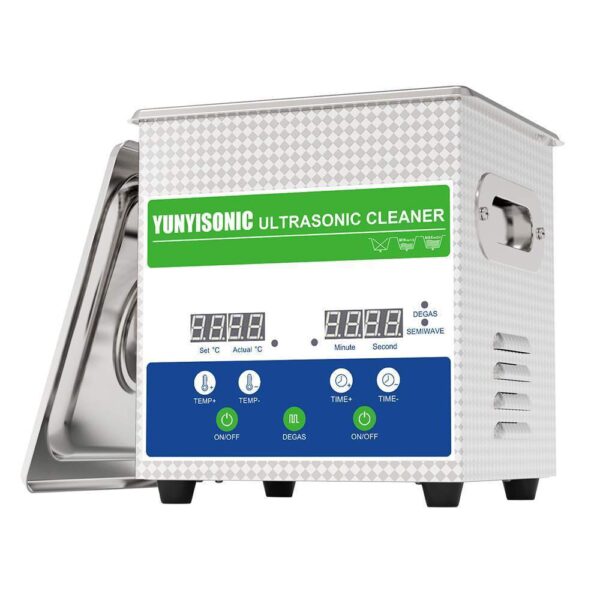
1.3L Portable Ultrasonic Parts Washer with Degas for Jewelry and Dental Cleaning
In stock
| Volumetric Weight | 2.90 kg |
|---|---|
| Package Dimensions | 25.5 × 24.2 × 23.5 cm |
| Model | YW0101, YW0201 |
| Application Field | Coins, Contact Lenses, Dental, Denture, Earrings, Electronics, Eyeglasses, Jewelry, Toys, Watches |
| Brand | Yunyisonic |
| Origin | Shenzhen City, China |
| Capacity | 1.3L |
| Frequency | 40kHz |
| Power | 30/60W, 60/120W |
| Timer | 1-30mins |
| Heater | RT~80°C |
| Tank Material | SUS304 Stainless Steel |
| Voltage | AC 110V 60Hz;AC 220V 50Hz |
| Plug Type | AU Plug, EU Plug, Other Plugs, UK Plug, US Plug |
| Certificates | CE, FCC, ROHS |
| Warranty | 1 Year |
| Customization | Logo/Pattern, Private Lable, White Label |
| Function | Clean Thoroughly, Degassing, Digital Control, Heating, Semiwave, Timing |
| Manufacturer | Yunyisonic Shenzhen Co., Ltd. |
Are Ultrasonic Cleaners Worth It for Eyeglasses and Watches
Eyeglasses and watches are everyday items that collect oils, dust, sweat, and residue in areas that are difficult to reach. For many people, these items see more wear than jewelry or dental appliances, which makes keeping them clean an ongoing challenge. Ultrasonic cleaners seem like an appealing solution because of their ability to penetrate tight spaces, but whether they are worth it depends on the specific design and sensitivity of the item being cleaned.
For eyeglasses, ultrasonic cleaning can be incredibly effective. Glasses accumulate residue in places that cloths and cleaning sprays cannot reach: under the nose pads, inside hinge joints, and along the small grooves where the lenses sit in the frame. Even with careful wiping, oils from the skin and hair gradually build up in these small spaces, creating discomfort, looseness, or slight odors. Ultrasonic cleaners excel in these scenarios because cavitation bubbles dislodge residue deep within these hidden areas. After a single cleaning cycle, glasses often feel lighter and more comfortable because the friction caused by dirt and oils around the hinges significantly decreases.
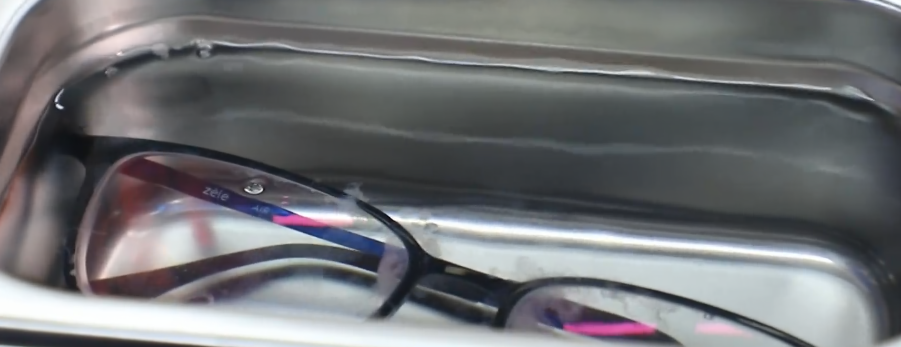
The ultrasonic cleaner is cleaning the glasses
Metal frames respond especially well to ultrasonic cleaning. Stainless steel, titanium, and alloy frames regain their sheen once accumulated films of oils and dust are removed. If the glasses have adjustable nose pads, the cleaning process helps restore them to a more hygienic condition, removing the residue that collects underneath the pad’s metal base.
However, lenses require more caution. Many modern lenses come with coatings that enhance clarity, block ultraviolet rays, reduce glare, or resist scratches. These coatings vary in thickness and strength, and while some tolerate ultrasonic cleaning, others can degrade. A low-quality coating or one applied during a budget lens manufacturing process may flake or haze under ultrasonic vibration or heat. This risk is why many eyewear specialists recommend ultrasonic cleaning only for the frame unless the lenses are confirmed safe for the process. Frames can be submerged while keeping the lenses above the waterline when needed.
The value of ultrasonic cleaning increases significantly for people who work in dusty or oily environments. Chefs, mechanics, construction workers, and lab technicians often find that residue collects rapidly around the frame. Manual wiping reduces surface smudging, but only ultrasonic cleaning can restore the hidden components that influence comfort and durability. In these cases, ultrasonic cleaners can extend the life of the frames and maintain comfort during daily wear.
Watches present a more complex situation. A fully assembled watch, especially one with a movement that is not rated for deep water pressure, should not be submerged in an ultrasonic cleaner. Water infiltration, even in tiny amounts, can cause irreversible damage to the mechanism. Watch cases, seals, and gaskets are designed to withstand everyday splashes or occasional submersion, but the constant vibration and cavitation in an ultrasonic tank may compromise gaskets or push water through areas that were never meant to handle intensive vibration.
However, watch bands are a different story. Metal watch bands contain multiple links, pins, and small spaces where oils, sweat, and skin cells accumulate. These areas are difficult to clean manually, even with small brushes, and over time, the buildup can cause discoloration or stiffness. Ultrasonic cleaners remove this buildup thoroughly and restore flexibility and shine to the band. Stainless steel bands respond especially well, and titanium or high-quality alloy bands also benefit.
For leather or fabric watch straps, ultrasonic cleaning is not appropriate. These materials absorb water, deform under vibration, and may degrade rapidly. Silicone watch straps can be cleaned in an ultrasonic bath, but only if the device operates at a safe temperature. Excess heat can warp silicone or damage embedded textures.
Watch repair professionals often use ultrasonic cleaners for individual movement components after disassembly. In these cases, the watch has already been opened, and each part is cleaned separately using targeted solutions. This form of ultrasonic cleaning is safe and effective because it avoids water exposure to the full movement and allows each piece to be dried quickly before reassembly.
Whether ultrasonic cleaners are worth it for watches depends heavily on what part of the watch is being cleaned and what the owner expects. If the primary concern is keeping metal watch bands fresh, smooth, and comfortable, ultrasonic cleaning provides excellent value. The improvement is noticeable, especially for bands exposed to sweat and daily wear.
However, for those hoping to clean an entire watch without disassembly, ultrasonic cleaners are not suitable unless the watch is specifically rated for such exposure and the manufacturer recommends it. The risks to the internal mechanism outweigh the convenience.
Eyeglasses and watches showcase the strength and limits of ultrasonic cleaning. When used for the right components, ultrasonic cleaning delivers exceptional results. When used without caution, it may pose risks. This distinction applies even more strongly to mechanical tools and parts, where ultrasonic cleaning can be both powerful and transformative if used correctly.
Are Ultrasonic Cleaners Worth It for Tools and Mechanical Parts
Tools and mechanical parts face tougher cleaning challenges than jewelry, eyewear, or retainers. Grease, carbon buildup, old lubricants, metal shavings, and burned-on residues accumulate in places that brushes and solvents struggle to reach. For people who work with machinery, automotive components, or small engineered parts, cleaning is more than cosmetic — it affects performance, precision, and lifespan. Ultrasonic cleaners often deliver dramatic improvements in these tasks, but whether they are worth the investment depends on how frequently these items are used and how heavily they become soiled.
One of the clearest applications for ultrasonic cleaners is in automotive repair, especially for carburetors and fuel injection components. These parts contain complex channels, jets, and passages where residue accumulates over time. Even small obstructions can affect an engine’s performance, causing rough idling, reduced fuel efficiency, or inconsistent combustion. Manual cleaning can only reach the outer surfaces. Solvent soaking helps loosen buildup, but cannot penetrate deep internal chambers fully. Ultrasonic cleaning, by contrast, sends cavitation bubbles through every liquid-filled channel, dislodging carbon, varnish, and old fuel deposits thoroughly. When these components emerge from the ultrasonic bath, they are much closer to their original clean state, often restoring performance significantly.
Small hardware and precision parts also benefit from ultrasonic cleaning. Bolts, nuts, washers, gears, bearings, and connectors can accumulate grime and corrosion that interfere with their fit or function. Cavitation cleans threaded holes and fine ridges that scrubbing simply cannot reach. For mechanics who rebuild engines or work with machinery regularly, the efficiency gained from consistent cleaning can justify the cost of an ultrasonic cleaner quickly.
In workshops where tools are used heavily, ultrasonic cleaning helps maintain hand tools and specialized equipment. Pliers, wrenches, screwdrivers, drill bits, and metal files often accumulate oily residue that makes them difficult to grip or reduces their lifespan. Ultrasonic cleaning strips away these films without the need for harsh chemicals. The process also removes fine debris that builds up in textured or knurled surfaces, restoring the natural grip of the tool. Tools used in woodworking, metalworking, or electronics repairs frequently benefit from ultrasonic cleaning because residue tends to embed in tiny scratches or patterns in the metal.
Another strongly supported use case involves small engine components such as carburetor bowls, spark plugs, timing parts, and valves. These components must be cleaned thoroughly to ensure proper reassembly and functionality. Cavitation helps remove soot and fuel residues that clump inside enclosed or narrow parts. For people who maintain motorcycles, scooters, lawn equipment, or small generators, an ultrasonic cleaner can simplify maintenance and reduce repair time.
Musical instruments also fall within this category. Brass instruments, for example, accumulate oils and deposits inside their tubing. Professional cleaners often use large ultrasonic tanks to remove buildup without damaging delicate internal surfaces or valves. While smaller household units cannot handle full-sized instruments, they perform well on mouthpieces, tuning slides, screws, and valve caps, ensuring smoother performance.
Bicycle maintenance is another area where ultrasonic cleaning shows impressive value. Cassettes, derailleurs, chainrings, and metal drive components accumulate thick layers of lubricant, dirt, and dust. Cleaning them by hand can take a significant amount of time and often requires harsh degreasers. Ultrasonic cleaning breaks down the grease quickly and leaves the components ready for fresh lubrication.
The value for mechanical parts becomes even more apparent when working with precision-engineered equipment, such as drone components, CNC parts, metal prototypes, and small industrial tools. These items require accurate fit and smooth operation, and even a small amount of dirt can affect performance. Ultrasonic cleaning ensures that every surface is consistently cleaned, preserving precision without the risk of abrasion.
Despite these benefits, there are some limitations. Large tools and parts may not fit into standard ultrasonic tanks, requiring a larger or commercial unit. Heavily rusted items may not be restored fully without additional mechanical treatment, because ultrasonic cleaning removes contaminants but does not reverse corrosion. Also, if certain mechanical parts contain delicate seals, bearings with pre-packed grease, or glued components, ultrasonic cleaning might remove necessary lubricants or disrupt adhesives.
For users who regularly maintain mechanical tools, engines, or precision parts, ultrasonic cleaners offer exceptional value. The time saved alone can justify the investment, as the machine handles detailed cleaning quickly and consistently. The improved performance of freshly cleaned parts can also prevent breakdowns and extend the lifespan of tools and machinery.
However, for casual users who rarely work with mechanical components, the investment may be less essential. The true worth of an ultrasonic cleaner in this category depends largely on the frequency of use and the complexity of the items being maintained.
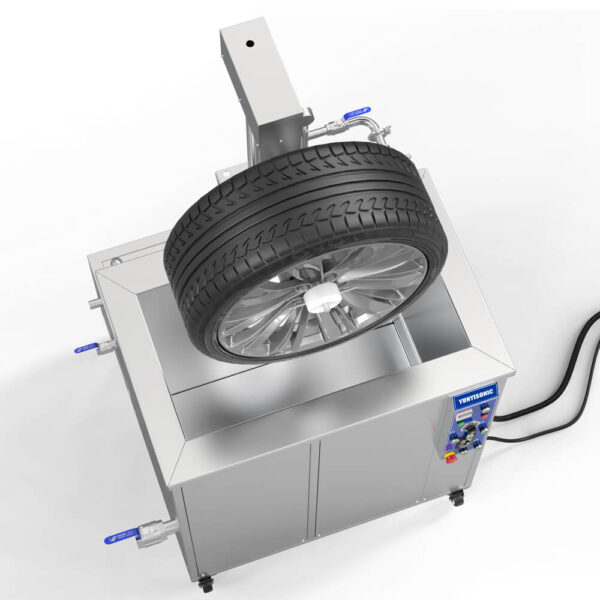
Car Tire Rim Ultrasonic Cleaner with Lift | Professional Heated Wheel Washer with Safety Protection for Automotive Repair & Maintenance
In stock
| Volumetric Weight | 320 kg |
|---|---|
| Package Dimensions | 150 × 122 × 120 cm |
| Model | YM84405SLX-28 |
| Application Field | Autoparts, Car Care Businesses, Car Wash |
| Brand | Yunyisonic |
| Origin | Shenzhen City, China |
| Capacity | 108L, 405L |
| Frequency | 28kHz |
| Timer | 1-99mins |
| Heater | 20°C~95°C |
| Transducer Quantity | 84pcs |
| Power | 0-4200W |
| Heating Power | 6000W |
| Tank Material | SUS304 Stainless Steel, T2.0mm |
| Housing Material | SUS201 T1.0mm |
| Voltage | AC 3phase 220V, AC 3phase 380V |
| Plug Type | AU Plug, EU Plug, Other Plugs, UK Plug, US Plug |
| Safety Features | overcurrent, Overvoltage, thermal |
| Certificates | CE, FCC, ROHS |
| Warranty | 1 Year |
| Customization | Logo/Pattern, Private Lable, White Label |
| Function | Heating |
| Manufacturer | Yunyisonic Shenzhen Co., Ltd. |
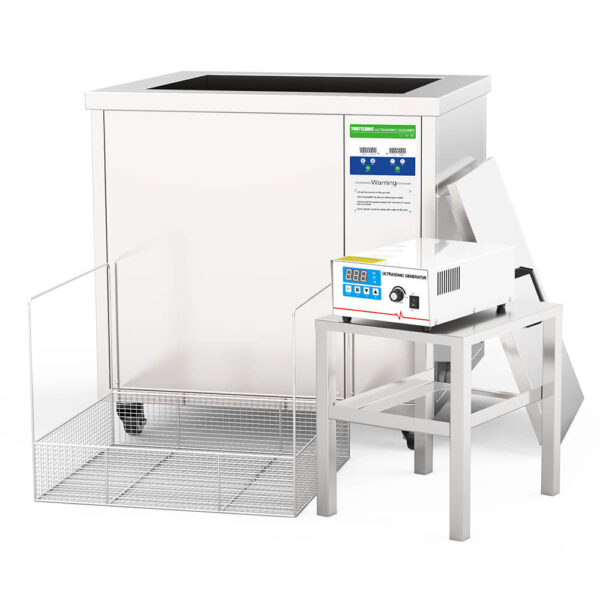
135L Industrial Ultrasonic Cleaner for Automotive Aerospace Metal Parts Cleaning | External Generator Adjustable Power Timer
In stock
| Volumetric Weight | 126 kg |
|---|---|
| Package Dimensions | 980 × 760 × 1000 cm |
| Model | YM36135-28, YM36135-40 |
| Application Field | 3D-Printed Parts, Additive Manufacturing, Aerospace, Aluminum, Autoparts, Aviation, Brass, Car Parts, Earrings, Firearms, Hardware, Industrial Use, Marine, Rings, Semiconductor, Surgical Instrument, Toys |
| Brand | Yunyisonic |
| Origin | Shenzhen City, China |
| Capacity | 135L |
| Frequency | 28kHz, 40kHz |
| Timer | 1-99mins |
| Heater | 20°C~95°C |
| Transducer Quantity | 36pcs |
| Power | 0-1800W |
| Heating Power | 4500W |
| Tank Material | SUS304 Stainless Steel |
| Housing Material | SUS201 T1.0mm |
| Voltage | AC 3phase 380V |
| Plug Type | AU Plug, EU Plug, Other Plugs, UK Plug, US Plug |
| Mobility | Lockable industrial casters |
| Safety Features | overcurrent, Overvoltage, thermal |
| Certificates | CE, FCC, ROHS |
| Warranty | 1 Year |
| Customization | Logo/Pattern, Private Lable, White Label |
| Function | Clean Thoroughly, Digital Control, Heating, Power Adjustable, Timing |
| Manufacturer | Yunyisonic Shenzhen Co., Ltd. |
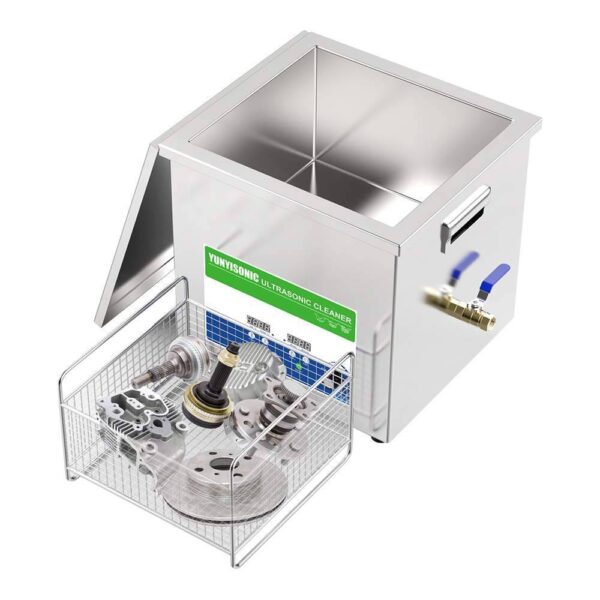
14-130L Industrial Ultrasonic Cleaner with Built-in Generator | Adjustable Power 28/40kHz for Engine Block Carburetor DPF Lab Cleaning
In stock
| Volumetric Weight | N/A |
|---|---|
| Package Dimensions | N/A |
| Model | YN0614, YN0820, YN1030, YN1240, YN1860, YN1868, YN2480, YN3613 |
| Application Field | 3D Manufacturing, 3D-Printed Parts, Additive Manufacturing, Aerospace, Aluminum, Autoparts, Aviation, Biopharmaceutical, Brass, Car Parts, Dental, Engine, Firearms, Hardware, Hospital, Industrial Use, Marine, Semiconductor, Surgical Instrument |
| Brand | Yunyisonic |
| Origin | Shenzhen City, China |
| Capacity | 130L, 14L, 20L, 30L, 38L, 58L, 68L, 78L |
| Frequency | 120kHz, 200kHz, 28kHz, 40kHz |
| Power | 0-1200W, 0-1800W, 0-300W, 0-400W, 0-500W, 0-600W, 0-900W |
| Tank Material | SUS304 Stainless Steel, T2.0mm |
| Housing Material | SUS201 T1.0mm |
| Voltage | AC 110V 60Hz;AC 220V 50Hz |
| Plug Type | AU Plug, EU Plug, Other Plugs, UK Plug, US Plug |
| Certificates | CE, FCC, ROHS |
| Warranty | 1 Year |
| Customization | Logo/Pattern, Private Lable, White Label |
| Function | Clean Thoroughly, Digital Control, Heating, Power Adjustable, Timing |
| Manufacturer | Yunyisonic Shenzhen Co., Ltd. |
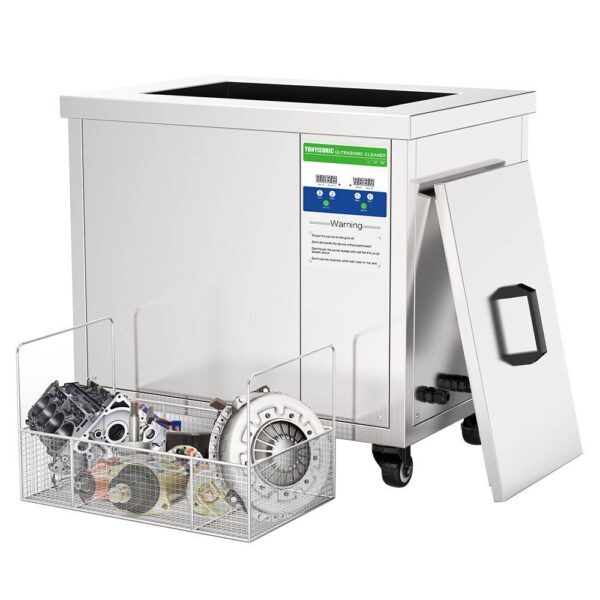
45L Industrial Ultrasonic Cleaner | Digital Power Adjustable for Auto Parts DPF Gears Engine Cleaning
In stock
| Volumetric Weight | N/A |
|---|---|
| Package Dimensions | N/A |
| Model | YM1240, YM1860, YM2480, YM30108, YML2480 |
| Application Field | 3D-Printed Parts, Additive Manufacturing, Aerospace, Aluminum, Autoparts, Aviation, Brass, Car Parts, Earrings, Firearms, Hardware, Industrial Use, Marine, Rings, Semiconductor, Surgical Instrument, Toys |
| Brand | Yunyisonic |
| Origin | Shenzhen City, China |
| Capacity | 108L, 45L, 61L, 88L |
| Frequency | 28kHz, 40kHz |
| Power | 0-1200W, 0-1500W, 0-600W, 0-900W |
| Tank Material | SUS304 Stainless Steel |
| Housing Material | SUS201 T1.0mm |
| Voltage | AC 110V 60Hz;AC 220V 50Hz |
| Plug Type | AU Plug, EU Plug, Other Plugs, UK Plug, US Plug |
| Certificates | CE, FCC, ROHS |
| Warranty | 1 Year |
| Customization | Logo/Pattern, Private Lable, White Label |
| Function | Clean Thoroughly, Digital Control, Heating, Power Adjustable, Timing |
| Manufacturer | Yunyisonic Shenzhen Co., Ltd. |
Ultrasonic Cleaners in Laboratories and Medical Settings
Laboratories and medical environments depend heavily on precision, cleanliness, and consistency. Every tool, instrument, and piece of glassware must be free of contaminants to ensure accurate results, reliable data, and patient safety. It is here — in the fields of science, healthcare, and research — that ultrasonic cleaners demonstrate some of their highest value. Their ability to remove microscopic residues makes them an essential part of preparation and sterilization workflows. Understanding how these environments use ultrasonic cleaners helps illustrate just how powerful and necessary the technology can be in professional settings.
In laboratories, even the smallest amount of residue can alter the outcome of an experiment. Glassware used in chemical or biological research must be thoroughly cleaned before use. Residues from previous reactions, invisible films inside narrow tubing, or particles trapped in the edges of flasks can all interfere with new procedures. Ultrasonic cleaners help eliminate these contaminants by sending cavitation bubbles along every surface, including deep inside pipettes, volumetric flasks, and narrow-necked containers. This consistency is especially valuable for tasks involving analytical chemistry, where accuracy is critical. When a beaker or pipette is cleaned in an ultrasonic bath, researchers can have greater confidence that lingering residues will not influence their measurements or experimental reactions.
Ultrasonic cleaners are also used for degassing solutions in laboratory settings. Degassing removes dissolved gases from liquids, which helps ensure accuracy in chromatography and other precision techniques. When a liquid is placed in an ultrasonic bath, the cavitation bubbles help lift out trapped gases, allowing the liquid to behave more consistently during testing. This dual-purpose capability — cleaning and degassing — increases the value of an ultrasonic cleaner for laboratories that require strict control over their materials.
In medical settings, ultrasonic cleaners play a crucial role in the cleaning stage before sterilization. Surgical tools must be thoroughly cleaned before entering an autoclave or chemical sterilizer, because the sterilization process cannot penetrate debris. Blood, tissue, and biological materials often accumulate in the tiny hinges, joints, and grooves of surgical instruments. Manual cleaning removes some residues, but it cannot guarantee complete removal. Ultrasonic cleaning fills this gap by loosening and lifting biological material from even the hardest-to-reach areas. This ensures that surgical tools enter the sterilization phase in the best possible condition.
Dental offices follow a similar process. Before tools such as scalers, mirrors, and periodontal instruments are sterilized, they are placed into ultrasonic cleaners. The vibration dislodges plaque, saliva, and debris stuck in textured surfaces. Because dental tools come into direct contact with soft tissue and bone, thorough cleaning is essential for infection control. Ultrasonic cleaners allow dental professionals to clean multiple instruments at once, speeding up workflow and ensuring consistent results.
Veterinary clinics, tattoo studios, and cosmetic clinics also rely on ultrasonic cleaners. These environments involve tools that come into close contact with skin, tissue, or fluids, and cleanliness is nonnegotiable. Ultrasonic cleaners simplify the process by handling most of the pre-cleaning work automatically, freeing staff to focus on other tasks while ensuring that tools are thoroughly cleaned before sterilization.
Laboratories that work with electronics or optical components also benefit. Cavitation removes dust and residue from fine mechanical parts, lenses, and circuit boards without causing abrasion. Precision instruments such as microscopes, photonics components, and measuring equipment require flawless surfaces to function correctly. Ultrasonic cleaners ensure these surfaces remain clear and free of microscopic particles that might otherwise distort readings or damage sensitive coatings.
Multi-frequency ultrasonic cleaners are especially valuable in scientific and medical environments. Different frequencies create different bubble sizes and cleaning strengths. High frequencies produce smaller, gentler bubbles ideal for delicate instruments such as micro-pipettes, fine surgical tools, and optical lenses. Lower frequencies create larger bubbles that deliver stronger cleaning force, ideal for stainless steel instruments and metal lab equipment. The ability to switch frequencies allows professionals to match the cleaning intensity to the sensitivity of the object, increasing both efficiency and safety.
In these settings, ultrasonic cleaners are not simply convenient; they are essential. The accuracy of an experiment, the safety of a patient, and the successful function of a precision instrument may depend on the thoroughness of the cleaning process. For laboratories and medical facilities, ultrasonic cleaners are unquestionably worth it.
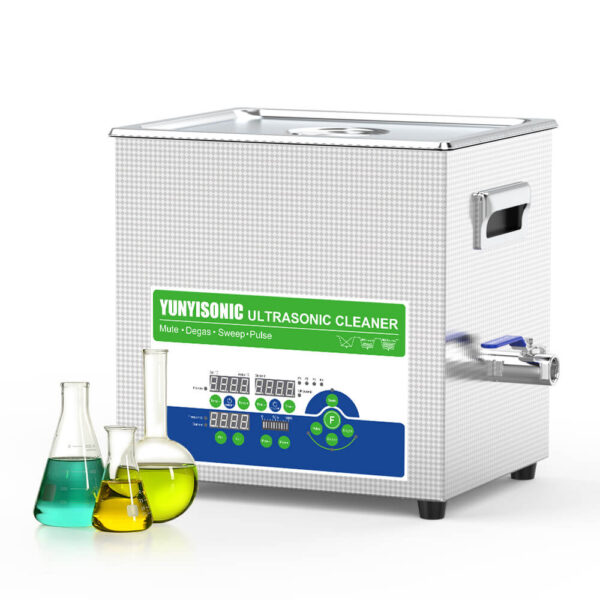
10L Quad-Frequency Ultrasonic Bath, 40/80/120/170kHz, Adjustable Power 0–400W
In stock
| Volumetric Weight | 15 kg |
|---|---|
| Package Dimensions | 43.5 × 36 × 40 cm |
| Brand | Yunyisonic |
| Origin | Shenzhen City, China |
| Capacity | 10L |
| Frequency | 40/80/120/170kHz |
| Power | 0-400W |
| Timer | 1-9999s |
| Heater | RT~80°C |
| Tank Material | SUS304 Stainless Steel |
| Housing Material | SUS304 Stainless Steel |
| Voltage | AC 110V 60Hz;AC 220V 50Hz |
| Plug Type | AU Plug, EU Plug, Other Plugs, UK Plug, US Plug |
| Certificates | CE, FCC, ROHS |
| Warranty | 1 Year |
| Customization | 485 Port, Frequency, PLC System, Tanks Numbers |
| Assisted SystemsYunyisonic Laboratory Multi-Function Ultrasonic Cleaning System for Assisted Extraction Emulsification Homogening Dispersion Separation Mixing Defoaming Dissolution Washing | Cleaning, Defoaming, Dispersion, Extraction, Mixing, Separation, Washing |
| Function | Clean Thoroughly, Degassing, Digital Control, Heating, Noise Reduction, Power Adjustable, Pulse, Sweep, Timing |
| Manufacturer | Yunyisonic Shenzhen Co., Ltd. |
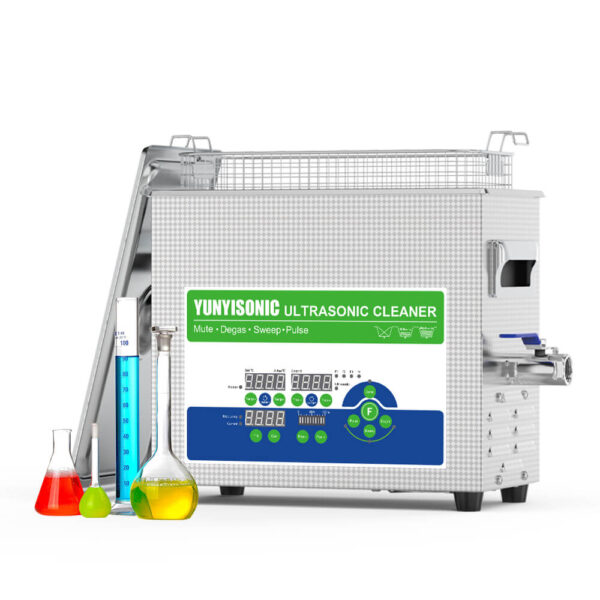
10L Quad-Frequency Ultrasonic Bath, 25/50/80/120kHz, Adjustable Power 0–400W
In stock
| Volumetric Weight | 15 kg |
|---|---|
| Package Dimensions | 43.5 × 36 × 40 cm |
| Brand | Yunyisonic |
| Origin | Shenzhen City, China |
| Capacity | 10L |
| Frequency | 25/50/80/120kHz |
| Power | 0-400W |
| Timer | 1-9999s |
| Heater | RT~80°C |
| Tank Material | SUS304 Stainless Steel |
| Housing Material | SUS304 Stainless Steel |
| Voltage | AC 110V 60Hz;AC 220V 50Hz |
| Plug Type | AU Plug, EU Plug, Other Plugs, UK Plug, US Plug |
| Certificates | CE, FCC, ROHS |
| Warranty | 1 Year |
| Customization | 485 Port, Frequency, PLC System, Tanks Numbers |
| Assisted SystemsYunyisonic Laboratory Multi-Function Ultrasonic Cleaning System for Assisted Extraction Emulsification Homogening Dispersion Separation Mixing Defoaming Dissolution Washing | Cleaning, Defoaming, Dispersion, Extraction, Mixing, Separation |
| Function | Clean Thoroughly, Degassing, Digital Control, Heating, Noise Reduction, Power Adjustable, Pulse, Sweep, Timing |
| Manufacturer | Yunyisonic Shenzhen Co., Ltd. |
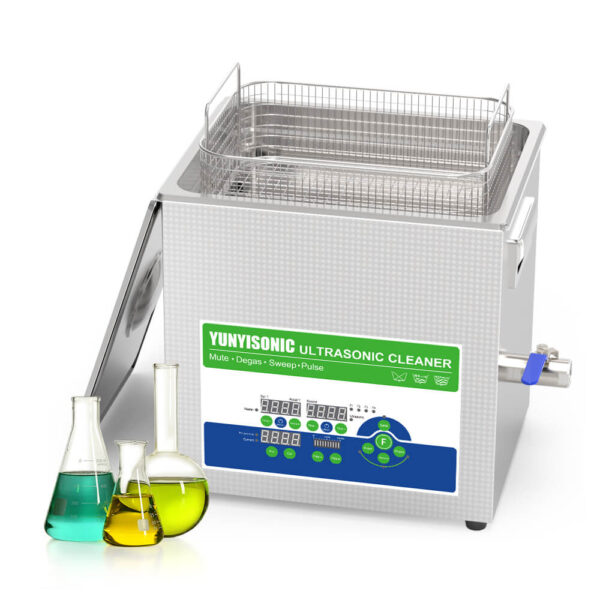
10L Triple-Frequency Ultrasonic Bath, 40/80/120kHz, Adjustable Power 0–400W
In stock
| Volumetric Weight | 14.9 kg |
|---|---|
| Package Dimensions | 43.5 × 36 × 40 cm |
| Brand | Yunyisonic |
| Origin | Shenzhen City, China |
| Capacity | 10L |
| Frequency | 40/80/120kHz |
| Power | 0-400W |
| Timer | 1-9999s |
| Heater | RT~80°C |
| Tank Material | SUS304 Stainless Steel |
| Housing Material | SUS304 Stainless Steel |
| Voltage | AC 110V 60Hz;AC 220V 50Hz |
| Plug Type | AU Plug, EU Plug, Other Plugs, UK Plug, US Plug |
| Certificates | CE, FCC, ROHS |
| Warranty | 1 Year |
| Customization | 485 Port, Frequency, PLC System, Tanks Numbers |
| Assisted SystemsYunyisonic Laboratory Multi-Function Ultrasonic Cleaning System for Assisted Extraction Emulsification Homogening Dispersion Separation Mixing Defoaming Dissolution Washing | Cleaning, Defoaming, Dispersion, Dissolution, Extraction, Mixing, Separation, Washing |
| Function | Clean Thoroughly, Degassing, Digital Control, Heating, Noise Reduction, Power Adjustable, Pulse, Sweep, Timing |
| Manufacturer | Yunyisonic Shenzhen Co., Ltd. |
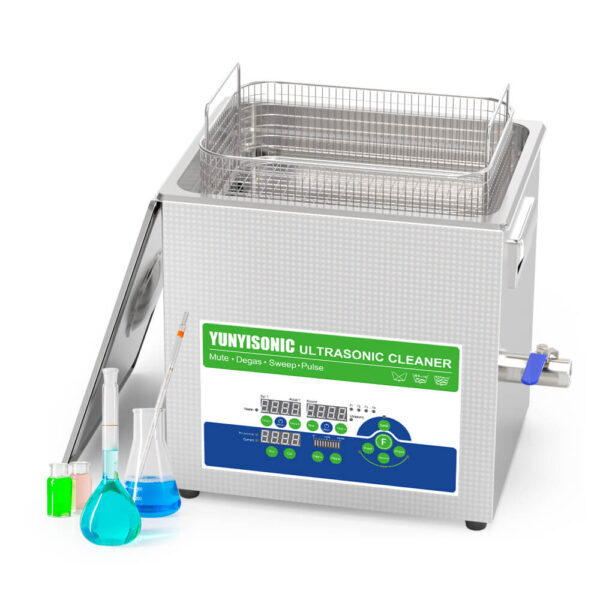
10L Switchable Dual-Frequency Ultrasonic Bath, 80/120kHz, Adjustable Power 0–400W
In stock
| Volumetric Weight | 13.2 kg |
|---|---|
| Package Dimensions | 43.5 × 36 × 40 cm |
| Brand | Yunyisonic |
| Origin | Shenzhen City, China |
| Capacity | 10L |
| Frequency | 80/120kHz |
| Power | 0-400W |
| Timer | 1-9999s |
| Heater | RT~80°C |
| Tank Material | SUS304 Stainless Steel |
| Housing Material | SUS304 Stainless Steel |
| Voltage | AC 110V 60Hz;AC 220V 50Hz |
| Plug Type | AU Plug, EU Plug, Other Plugs, UK Plug, US Plug |
| Certificates | CE, FCC, ROHS |
| Warranty | 1 Year |
| Customization | 485 Port, Frequency, PLC System, Tanks Numbers |
| Assisted SystemsYunyisonic Laboratory Multi-Function Ultrasonic Cleaning System for Assisted Extraction Emulsification Homogening Dispersion Separation Mixing Defoaming Dissolution Washing | Cleaning, Defoaming, Dispersion, Extraction, Mixing, Separation, Washing |
| Function | Clean Thoroughly, Degassing, Digital Control, Heating, Noise Reduction, Power Adjustable, Pulse, Sweep, Timing |
| Manufacturer | Yunyisonic Shenzhen Co., Ltd. |
For everyday users, studying how medical and scientific environments trust ultrasonic cleaning reveals the technology’s reliability and potential.
The Role of Cleaning Solutions in Ultrasonic Cleaning Effectiveness
Many people assume that ultrasonic cleaning works purely through the power of sound waves, but the cleaning solution inside the tank is just as important as the technology itself. While water can support cavitation, it is not always effective at dissolving or removing contaminants on its own. Oils, hardened residues, polishing compounds, adhesives, and biological films often require the assistance of cleaning agents to loosen and lift debris. Understanding how these solutions work — and choosing the right one — significantly influences how well an ultrasonic cleaner performs and whether it becomes a worthwhile investment.
The most important function of a cleaning solution is to reduce surface tension. Cavitation relies on the formation of microscopic bubbles, which form more easily when surface tension is low. Surfactants in ultrasonic cleaning solutions weaken the attraction between water molecules, encouraging bubbles to form and collapse more effectively. This enhances the cleaning action, allowing cavitation to reach deeper areas and dislodge debris that would remain untouched in plain water.
Another function involves breaking down specific types of contaminants. Oils and greases require detergents that can emulsify fats. Polishing compounds and metal residues need agents that dissolve or soften metallic particles. Biofilm on retainers or dental tools must be lifted using solutions designed to break down proteins and prevent bacterial adhesion. Each type of contaminant responds differently to chemical ingredients, which is why choosing a general-purpose solution for all tasks does not always produce the best results.
For jewelry cleaning, mild detergents designed for metals are ideal. These solutions dissolve oils and lotions without damaging the metal or affecting the brilliance of stones like diamonds or cubic zirconia. They also help prevent tarnish from accelerating on silver or gold-plated pieces. Many jewelry cleaning solutions include anti-foaming agents to ensure that bubbles do not interfere with cavitation. Foam may appear harmless, but it disrupts the movement of sound waves and reduces cleaning efficiency.
Dental appliances require solutions that are safe for acrylic, silicone, and thermoplastic materials. Retainer cleaning solutions often contain enzymes that break down plaque and proteins without using harsh chemicals. These enzymes ensure effective cleaning without weakening the structure of Invisalign trays, Essix retainers, or bite guards. Using a harsh cleaner such as sodium hypochlorite (bleach) or strong alcohol can damage these appliances, but a properly formulated ultrasonic solution supports the cleaning process while protecting the material.
Mechanical parts benefit from degreasers and carbon removers. These solutions break down old oil films, fuel residues, and carbon deposits more effectively than plain water. For precision parts, solutions must remain gentle enough not to corrode metals, but strong enough to lift hardened deposits that cavitation alone cannot remove. Some industrial cleaners include corrosion inhibitors to protect metal components during cleaning and drying.
Laboratory glassware requires neutral pH cleaners that leave no residue. Even small traces of detergent can interfere with experiments, so laboratory-grade ultrasonic solutions are formulated to rinse cleanly and evaporate without a trace. These solutions often include surfactants and ingredients that dissolve dried chemical residues, ensuring that every surface is uniformly clean.
Medical instruments require enzymatic cleaners that break down biological material. Blood, tissue, and proteins adhere strongly to metal surfaces and the joints of surgical tools. Enzymatic cleaning solutions digest these organic residues, allowing cavitation to lift them away completely. This step is essential before sterilization, as sterilizing an instrument that is not fully clean can trap harmful material under heat and pressure.
Some cleaning solutions are designed for sensitive materials, such as coated lenses, optics, or delicate electronic components. These solutions avoid harsh chemicals and use gentle surfactants that lift dust without affecting thin coatings. They also help prevent static buildup, which is important for optical and electronic cleaning.
Temperature interacts closely with cleaning solutions. Warmer solutions generally clean more effectively because heat helps dissolve contaminants and supports bubble formation. However, not all materials tolerate heat, so users must balance temperature settings with material safety. Dental plastics, certain gemstones, and sensitive coatings can deform or degrade in warm water. In these cases, cold-water or room-temperature cleaning with a compatible solution ensures safety while still supporting cavitation.
Choosing the right cleaning solution also extends the lifespan of the ultrasonic cleaner itself. Some chemicals can damage the tank, corrode stainless steel surfaces, or create fumes that are harmful in enclosed spaces. Using proper solutions helps maintain the machine and ensures consistent, long-term performance.
Ultimately, the cleaning solution determines whether an ultrasonic cleaner performs at its full potential. Cavitation may lift debris, but chemistry dissolves it and suspends it in the water so it does not redeposit on the item. When the right solution is paired with the right cleaning task, ultrasonic cleaning results improve dramatically.
Cost vs Value: Are Ultrasonic Cleaners Worth the Money
Whether an ultrasonic cleaner is truly “worth it” often comes down to the relationship between its cost and the long-term value it provides. For some people, the machine becomes indispensable within weeks. For others, it might sit unused because their needs do not match the technology’s strengths. Evaluating the cost-value balance requires looking at price, frequency of use, performance benefits, durability, and the potential savings compared to professional cleaning services.
Household ultrasonic cleaners vary widely in price. Smaller units designed for jewelry, retainers, and eyeglasses usually fall within the lower range, making them accessible for most people. Mid-sized cleaners suitable for tools, watches, and mechanical parts cost more but provide additional power and larger tanks. Professional-grade units, often used by laboratories, dental offices, and workshops, are significantly more expensive but come with advanced features such as sweep frequency, degas modes, precision heaters, and industrial-level transducers.
The value of an ultrasonic cleaner increases significantly based on how often it is used. If someone wears jewelry daily or uses dental appliances every night, the cleaner pays for itself in convenience and hygiene. Instead of taking jewelry to a professional jeweler for cleaning, or replacing aligners prematurely due to buildup, they can achieve similar results at home. The machine also reduces the time spent brushing, scrubbing, or soaking items manually. For people who work in professions that regularly use small tools or precision components, the time savings alone justify the purchase.
Another major factor in value is cleaning performance. Ultrasonic cleaners consistently remove debris from areas that manual cleaning cannot reach. The ability to clean thoroughly and uniformly reduces the likelihood of residue-related issues. For example, a carburetor cleaned with an ultrasonic cleaner performs better than one cleaned manually. Jewelry regains its sparkle more easily, and retainers remain fresh without persistent odors. When results consistently exceed what manual cleaning can achieve, the investment begins to feel worthwhile.
Long-term maintenance costs also influence value. Ultrasonic cleaners require minimal maintenance aside from proper cleaning solutions and occasional inspection of the tank. The electrical components and transducers are designed to run for years when used and maintained correctly. This reliability spreads the initial cost over a long period, increasing the machine’s overall value.
Ultrasonic cleaners also save money by reducing the need for professional cleaning services. Jewelers often charge to clean and polish jewelry, and while ultrasonic cleaning does not replace professional polishing, it does reduce the frequency of visits. Similarly, dental appliance cleaning products can be expensive when used daily, and replacing retainers due to smell or buildup can cost significantly more than a home ultrasonic unit. On the mechanical side, cleaning parts professionally or buying replacements because they were not properly maintained can cost far more than purchasing an ultrasonic cleaner.
However, the value calculation changes for people who rarely need deep cleaning. If someone owns only a few pieces of jewelry or wears retainers infrequently, the machine may not see enough use to justify its cost. In such cases, occasional manual cleaning or professional cleanings may be more cost-effective. The value is also limited if the items you want to clean include delicate stones, treated jewelry, or sensitive coatings that cannot safely be placed in an ultrasonic cleaner.
The frequency of required cleaning also plays a role. Dental appliances require daily or weekly cleaning, making ultrasonic cleaners extremely valuable for users who prioritize hygiene. Watches and eyeglasses, on the other hand, may only need ultrasonic cleaning occasionally. Mechanical parts may require deep cleaning only during maintenance cycles. These differences affect how quickly the investment pays off.
Practical convenience is another metric of value. Ultrasonic cleaners reduce the effort needed to achieve a deep clean. Instead of scrubbing or soaking items repeatedly, you set the item in the tank, start the machine, and return when the cycle finishes. For people with busy lives or those who appreciate simple, efficient cleaning processes, this convenience adds considerable value.
In professional environments, ultrasonic cleaners are unquestionably worth the investment. Laboratories, dental offices, repair workshops, and manufacturing facilities rely on them not only for convenience but for safety, accuracy, and workflow efficiency. The machine becomes a necessary part of daily operations, making its value unquestionable.
For household users, the question becomes more personal. Ultrasonic cleaners are worth the money if you own items that benefit from deep cleaning, use them often enough to offset the initial cost, and value the convenience and hygiene they provide. If these conditions are met, the investment is likely to feel justified and rewarding.
With cost and value in mind, the next logical step is choosing the right ultrasonic cleaner. The features, capacity, and specifications of the machine will determine how well it matches your needs and how much value it delivers over time.
How to Choose the Right Ultrasonic Cleaner
Choosing the right ultrasonic cleaner has a major impact on whether the investment will feel worthwhile. Even though ultrasonic cleaners share the same basic technology, the differences in frequency, power, tank size, features, and build quality can dramatically change cleaning performance. A well-chosen unit delivers years of reliable, effective cleaning. The wrong unit might underperform, damage sensitive items, or sit unused because it does not match the user’s actual needs. Understanding the key factors that separate a suitable ultrasonic cleaner from a disappointing one helps ensure the purchase adds genuine value.
The most important decision involves cleaning frequency — the rate at which the transducer generates sound waves. Household ultrasonic cleaners commonly operate at around 40kHz, which is versatile enough for cleaning jewelry, retainers, metal watch bands, eyeglasses, and small tools. This frequency creates bubbles that are small enough to reach fine details but strong enough to dislodge stubborn debris. For most home users, a 40kHz cleaner is ideal because it offers a balance between safety and cleaning power.
If you plan to clean delicate items such as optical components, thin plastics, micro instruments, or circuit boards, a higher frequency such as 60kHz or 80kHz might be better. These higher frequencies produce smaller, gentler bubbles that clean without applying excessive force. Conversely, if your primary focus is heavy-duty cleaning of carburetors, injection nozzles, firearm components, or hardened residues, a lower frequency like 28kHz produces stronger cavitation suitable for industrial cleaning. Understanding the type of items you want to clean defines the frequency range best suited for your needs.
Another essential factor is tank size. The smallest ultrasonic cleaners are suitable for rings, earrings, retainers, and small accessories. However, these compact models may be too small for eyeglasses with wide frames or watches with long bands. A medium-sized tank offers more versatility, allowing users to clean multiple items at once or accommodate slightly larger objects. Large tanks become necessary for tools, automotive parts, and larger laboratory glassware. If an item cannot be fully submerged, it cannot be cleaned effectively. Selecting a tank size that matches the largest item you plan to clean ensures flexibility and prevents frustration later.
Power output also influences cleaning effectiveness. Cavitation intensity depends partially on how much energy the transducers can deliver into the liquid. A weak ultrasonic cleaner may struggle to clean deeper residue or may require multiple cycles, reducing efficiency. However, more power is not always better. Excessive power can damage delicate items or accelerate wear on thin materials. The key is balance: choose a unit with enough wattage to handle your intended tasks without overwhelming sensitive pieces. Good-quality household units offer a consistent power-to-volume ratio designed for general use, while professional units allow more precise control.
Certain features significantly enhance performance. Sweep frequency helps ensure that ultrasonic waves circulate evenly in the tank, preventing “dead zones” where cavitation is weaker. This creates a uniform cleaning effect across the entire tank. Degas mode expels trapped air from the cleaning solution, improving bubble formation and cleaning consistency. Temperature control allows users to warm the solution slightly for items that clean better at higher temperatures, such as metal tools or carburetor parts. Heaters should be used carefully, especially with plastics or temperature-sensitive materials, but they add clear value in many cleaning applications.
Build quality is another major consideration. Tanks and casings made from higher-grade stainless steel last longer and resist erosion from repeated cavitation. Lower-quality metals may degrade over time or develop weak spots where cavitation is most intense. A well-built ultrasonic cleaner should feel sturdy, with tight seams and secure controls. Reliable manufacturers use thicker steel and durable transducers that withstand years of operation without performance loss. A cheap ultrasonic cleaner may work adequately at first but lose cleaning power as transducers weaken or internal components degrade.
The type of cleaning solution you plan to use should also match the machine. Some ultrasonic cleaners handle a wide range of solutions, while others are designed only for water-based agents. If you intend to clean mechanical parts that require stronger degreasers, ensure your ultrasonic cleaner can tolerate those formulations without damaging the tank. For jewelry and dental appliances, mild, water-based solutions are compatible with nearly every unit.
Noise level is another subtle factor to consider. Ultrasonic cleaners produce audible sound during operation, and some models are noticeably louder than others. Although noise does not affect cleaning performance, a quieter unit may be preferable if you plan to use it frequently or keep it on a countertop. High-quality units often include better insulation and steadier vibrations, reducing the sharp buzzing that lower-end models produce.
Finally, consider your actual cleaning habits. If you clean items daily — such as retainers, aligners, or jewelry — a compact, easy-to-use machine encourages consistent use. If you maintain tools or mechanical parts weekly or monthly, a larger and more powerful model makes more sense. The best ultrasonic cleaner aligns with your lifestyle and routines, not just the occasional cleaning task.
Choosing the right ultrasonic cleaner ultimately determines how much value you receive from the purchase. When the machine matches your cleaning needs, performs efficiently, and lasts for years, it becomes far more than a convenience — it becomes a practical, dependable part of maintaining your belongings.
With the criteria for choosing the right model established, it becomes clearer in which situations ultrasonic cleaners offer exceptional value. These real-world scenarios illustrate when an ultrasonic cleaner becomes a tool that people rely on regularly rather than just an occasional accessory.
Real-World Scenarios: When an Ultrasonic Cleaner Is Absolutely Worth It
Ultrasonic cleaners become truly valuable in situations where deep cleaning is essential, frequent, or difficult to achieve manually. While the technology is versatile enough to handle a wide range of tasks, certain real-world scenarios highlight its strengths especially clearly. In these cases, an ultrasonic cleaner transitions from being a convenience to becoming a must-have tool, saving time, improving hygiene, restoring performance, and delivering results that simply cannot be matched by hand cleaning.
One of the strongest use cases involves jewelry enthusiasts, especially people who own diamond rings, intricate vintage pieces, or items with detailed settings. These jewelry owners frequently encounter buildup under stones, between prongs, and around engravings. When the brilliance begins to fade, brushing can only remove surface-level debris. Ultrasonic cleaning revitalizes jewelry in minutes by lifting away the films that block light from reflecting through gemstones. For someone who wants their engagement ring or favorite necklace to stay bright without repeated trips to a jeweler, an ultrasonic cleaner is unquestionably worth it.
People who wear retainers, clear aligners, night guards, or partial dentures also benefit enormously from ultrasonic cleaning. These appliances accumulate thick residue that brushing rarely addresses fully. Odor becomes an issue, and cloudiness forms even with regular cleaning. Ultrasonic cleaners break down the sticky biofilm that forms on dental appliances and restore clarity more effectively than any manual method. For users who prioritize hygiene, wear appliances long-term, or struggle with persistent odor, the machine pays for itself quickly through improved cleanliness and comfort.
Those who work with small metal tools or precision components often find ultrasonic cleaning indispensable. Mechanics who rebuild engines, hobbyists who restore vintage carburetors, and technicians who deal with machine components rely on deep cleaning to maintain performance. Removing carbon deposits, old oil, and fine metal dust by hand is extremely time-consuming and often incomplete. Ultrasonic cleaning cuts through these contaminants efficiently and uniformly, restoring parts to a condition that supports smoother operation and greater reliability. For professionals and serious hobbyists, the performance improvement alone makes the purchase worthwhile.
Watch enthusiasts and repairers discover tremendous value in ultrasonic cleaning, especially when handling stainless steel watch bands or disassembled movements. Links in metal bands accumulate sweat and oils that stiffen the bracelet and dull the finish. A few minutes in an ultrasonic bath restores smoothness and shine without disassembling every link. For watch repair, individual gears, screws, and tiny components must be cleaned meticulously. Ultrasonic cleaning removes old lubricants and dust while maintaining the integrity of precision parts.
Ultrasonic cleaners are also extremely valuable for people who maintain bicycles, drones, 3D printers, or mechanical hobby equipment. These machines often have intricate parts that need periodic cleaning to perform correctly. Dirt that settles inside joints or gears affects smoothness and accuracy. Ultrasonic cleaning dislodges material from areas that are impossible to reach manually, preventing unnecessary wear and ensuring equipment runs efficiently. For people who build or repair their own gear, this cleaning method saves hours of work and prevents costly malfunctions.
In laboratory and medical environments, ultrasonic cleaners provide indispensable value. Scientists rely on perfectly clean glassware to prevent cross-contamination in experiments. Medical professionals use ultrasonic cleaners to loosen biological material before sterilization, protecting patients and ensuring tools are safe for reuse. For these users, ultrasonic cleaning is not optional — it is part of professional protocol. The accuracy and safety requirements in these environments make the technology essential.
Another valuable scenario involves people who work with firearms or sharps. Firearm components accumulate powder residue, carbon deposits, and oils that are extremely difficult to clean manually. Ultrasonic cleaning reaches into firing mechanisms, slides, and chambers without causing abrasion or damaging the finely machined surfaces. For firearm owners who value performance, safety, and reliability, an ultrasonic cleaner significantly improves maintenance efficiency.
Musicians also benefit from ultrasonic cleaners, particularly those who play brass or woodwind instruments. Ultrasonic cleaning loosens oils, spit residue, and mineral deposits inside mouthpieces, valves, and slides. While full instrument bodies may require specialized professional tanks, many removable components become noticeably cleaner and more sanitary after ultrasonic treatment.
For people who buy and resell small items — such as vintage jewelry, watches, coins, or metal collectibles — ultrasonic cleaning helps improve presentation and value. Items that appear neglected or dirty can be restored quickly, often making them more appealing for resale. In this scenario, the cost of an ultrasonic cleaner is easily offset by improved resale quality.
Finally, ultrasonic cleaners offer exceptional value for households where multiple members wear jewelry, dental appliances, or glasses. When multiple items require regular cleaning, the machine shields everyone from unnecessary time spent scrubbing. It becomes a shared resource that boosts hygiene, comfort, and appearance across the household.
These real-world scenarios demonstrate the situations where ultrasonic cleaners perform far beyond expectations. Their ability to clean thoroughly, safely, and efficiently makes them worth the investment for people who frequently maintain items with detailed surfaces or hygiene-sensitive components.
However, the technology is not equally beneficial for everyone. To form a balanced assessment, it’s important to examine the opposite perspective: the scenarios where an ultrasonic cleaner may not be necessary or provide significant additional value.
Real-World Scenarios: When an Ultrasonic Cleaner May Not Be Worth It
Even though ultrasonic cleaners excel in many cleaning tasks, there are situations where their benefits are limited or unnecessary. Understanding these scenarios helps create a more balanced conclusion about whether ultrasonic cleaners are worth the investment. In some cases, the items being cleaned are too delicate for cavitation. In others, the cleaning benefit does not justify the cost because manual methods work equally well. By recognizing these boundaries, users can avoid disappointment and choose the best cleaning method for their particular needs.
One situation where an ultrasonic cleaner may not be necessary is when the items being cleaned are simple and smooth, without intricate details or hidden spaces. Solid gold rings, flat metal pendants, simple silver bands, and plain earrings often become clean enough with regular brushing and mild soap. Because these items do not trap dirt in hard-to-reach crevices, manual cleaning achieves nearly the same results as ultrasonic cleaning. For owners of mostly simple, low-detail jewelry, an ultrasonic cleaner may not provide significant added value.
Ultrasonic cleaners also offer little benefit for items prone to surface damage, such as plated jewelry or costume pieces. Thin gold plating, inexpensive coatings, and adhesive-backed decorations often wear down over time, regardless of cleaning method. Cavitation may accelerate this wear or cause stones to fall out if glue is used. Inexpensive items that are meant for occasional wear or are easily replaced may not justify the investment in ultrasonic cleaning equipment. In these cases, gentle hand cleaning is sufficient.
People who own sensitive gemstones may find ultrasonic cleaners more limiting than helpful. Stones such as emeralds, opals, turquoise, amber, coral, and pearls vary in porosity, fragility, and sensitivity to vibration. Many of these stones receive treatments, such as oiling or dyeing, which can be disrupted by ultrasonic cleaning. Because these items require special care, owners often must rely on professional cleaning or manual methods. If most pieces in a jewelry collection fall into this category, the value of an ultrasonic cleaner diminishes.
Another scenario where ultrasonic cleaners may not be worth it involves light cleaning tasks. If you only need to remove dust from eyeglasses, wipe fingerprints from lenses, or clean items with smooth surfaces, manual cleaning remains easier and faster. Most people already have access to microfiber cloths, mild detergents, or cleaning sprays that handle these minor tasks effectively. An ultrasonic cleaner might offer a deeper clean, but the difference may not be noticeable enough to justify regular use.
Individuals who rarely wear jewelry or dental appliances may find it difficult to justify the cost of a machine that will sit unused for long periods. Ultrasonic cleaners offer their greatest value through frequent use. If a person owns only two pairs of earrings or wears a retainer once a month, the machine may not deliver enough benefits to feel worthwhile. Even occasional deep cleanings can be performed manually or by professionals without the need for specialized equipment.
For mechanical or metal items that require heavy-duty cleaning, an ultrasonic cleaner might not be necessary if the items only accumulate light residue. Tools that are used gently and cleaned regularly with standard methods often do not require deep ultrasonic cleaning. If the user rarely handles greasy or carbon-laden parts, a degreaser and a brush may be enough. In these cases, the cleaner becomes more of a luxury than a necessity.
Some households prefer minimal appliances and tools, valuing simplicity and multi-purpose solutions. If a person does not enjoy maintaining equipment or prefers low-maintenance routines, an ultrasonic cleaner may not fit well into their habits. Although ultrasonic cleaners require little upkeep, they still involve filling the tank, choosing solutions, and running cycles. Users who prefer one-step manual cleaning may not find the process worthwhile.
Space constraints can also reduce value. Ultrasonic cleaners, even small ones, require counter space, a power outlet, and safe storage of cleaning solutions. For those living in small apartments or dorms, an ultrasonic cleaner may feel like clutter rather than an essential tool. In such environments, multi-functional cleaning methods may be more practical than dedicated devices.
Another overlooked scenario involves very soiled or damaged items. Ultrasonic cleaners remove dirt, not scratches, corrosion, dents, faded plating, or deep tarnish. If an item is heavily oxidized, structurally damaged, or significantly worn, ultrasonic cleaning will not restore it to a like-new condition. In these cases, the user might expect results the cleaner cannot deliver, leading to disappointment. Such items require professional polishing, refinishing, or repair rather than cavitation.
Finally, some individuals simply do not enjoy the process. If the user does not appreciate deep cleaning or does not notice the difference in cleanliness between manual and ultrasonic cleaning, the value may not be evident. Ultrasonic cleaners appeal most to people who enjoy maintaining their belongings, appreciate hygiene, or handle items that require precision cleaning.
These scenarios do not diminish the usefulness of ultrasonic cleaners as a whole, but they highlight important limitations that help set realistic expectations. If the majority of your cleaning tasks fall into these situations, an ultrasonic cleaner may not add significant value.
To answer the question fully — whether ultrasonic cleaners are worth it — we must bring together the benefits, limitations, and practical scenarios explored so far and offer a clear conclusion grounded in real-world use.
Final Thoughts: Are Ultrasonic Cleaners Worth It Overall
Ultrasonic cleaners occupy a unique space in the world of cleaning technology. They are simple in operation yet powerful in effect, capable of reaching places that brushes, wipes, and soaks fail to reach. Their value becomes clear when they are used for the items and situations where their strengths matter most: cleaning intricate jewelry, refreshing retainers and aligners, maintaining tools and mechanical parts, and preparing laboratory or medical instruments with a precision that manual cleaning cannot match.
For many people, ultrasonic cleaners deliver exactly what they promise. They offer deep cleaning with little effort, restore clarity and shine to items used every day, and maintain the hygiene of dental appliances that require constant attention. They save time, reduce manual labor, and provide a professional level of cleaning at home. The convenience alone can be enough to justify the investment for households where multiple people wear jewelry, glasses, or dental appliances.
Yet ultrasonic cleaners are not universal solutions. Their effectiveness depends on the nature of the items being cleaned and the expectations brought to the process. They do not polish metal, repair scratches, remove deep tarnish, or restore damaged surfaces. They cannot safely clean every gemstone or delicate material. And for people who seldom need deep cleaning, the machine might not see enough use to feel worthwhile. In these cases, traditional methods or periodic professional cleanings may be more practical.
Ultimately, whether an ultrasonic cleaner is worth it depends on alignment: how well the machine matches your cleaning needs, your routine, and the types of items you handle. When the match is good, the ultrasonic cleaner becomes a tool that quietly enhances daily life. Jewelry sparkles more often. Retainers stay clear and fresh. Tools operate more smoothly. Glasses feel more comfortable. Mechanical parts perform more reliably. And items that once looked dull or worn regain a sense of care and attention.
Ultrasonic cleaners are most valuable when they support long-term maintenance and regular use. If you wear dental appliances, own detailed jewelry, handle small tools, or maintain equipment with intricate surfaces, an ultrasonic cleaner can offer ongoing benefits that accumulate over time. For professionals — jewelers, dentists, mechanics, laboratory technicians — the technology is not just worth it but essential.
In the broader sense, ultrasonic cleaners represent a balance of practicality and specialized capability. They are neither miracle devices nor simple gadgets. Instead, they provide focused cleaning performance that manual methods cannot replicate. When used wisely, they preserve belongings, improve hygiene, and save time — all while delivering a level of precision that makes the cleaning process feel almost effortless.
Whether the investment is right for you depends on what you need from a cleaning tool. For many, the answer is yes: ultrasonic cleaners are worth it. For others, their value may lie in occasional use rather than everyday necessity. But in the right hands, and with the right items, they can become one of the most effective and surprisingly satisfying tools in your home or workplace.