





Diamonds have always carried an almost mythical reputation. They are marketed as eternal, indestructible, and immune to damage, a gemstone that can survive anything life throws at it. Because of this reputation, many people assume that cleaning a diamond should be just as effortless as owning one. If diamonds are the hardest natural material on Earth, how could a cleaning device possibly harm them?
This belief has shaped the way people approach diamond care for decades. Rings are tossed into cleaning solutions without much thought. Jewelry is scrubbed aggressively. Ultrasonic cleaners, often advertised as powerful and professional-grade tools, seem like the obvious choice for restoring sparkle. After all, if something can clean engine parts and surgical instruments, surely it can handle a diamond.
At the same time, there is an equally persistent counter-narrative. Stories circulate online about diamonds falling out of rings during ultrasonic cleaning. Some jewelers warn customers never to use ultrasonic cleaners at home. Others say they use them daily with no issues at all. These conflicting messages leave many diamond owners confused, unsure whether ultrasonic cleaning is a smart investment or a costly mistake waiting to happen.
The truth sits somewhere between blind confidence and unnecessary fear. To understand whether ultrasonic cleaning diamonds is a bad idea, it helps to step away from marketing claims and horror stories and look at what actually happens to diamonds in everyday wear.
Why Diamonds Get Dirty Faster Than People Expect
Despite their unmatched hardness, diamonds are magnets for grime. The same optical properties that give diamonds their fire and brilliance also make dirt painfully visible. Even a thin layer of oil can dramatically dull a diamond’s sparkle, turning a bright stone into something that looks lifeless and cloudy.
Skin oils are the main culprit. Every time a ring is worn, microscopic layers of oil transfer from fingers onto the diamond’s surface. Lotions, sunscreen, soap residue, makeup, and cooking grease add to the buildup. Over time, this invisible film settles into the tiny facets and angles that make diamonds so reflective.
Water alone does very little to remove this kind of contamination. Rinsing a ring might wash away loose dust, but oils cling stubbornly to the stone. Gentle wiping helps, but it often fails to reach the tight spaces underneath the diamond or along the setting where grime accumulates most heavily. This is why diamonds can look dull even when they appear clean at first glance.
Because diamonds show dirt so easily, owners tend to clean them more often than other gemstones. Frequent cleaning increases the appeal of quick, powerful methods like ultrasonic cleaners. The promise is simple: drop the jewelry in, press a button, and watch years of grime disappear in minutes. Understanding why ultrasonic cleaners are so effective requires a closer look at how they work.
How Ultrasonic Cleaners Actually Work
Ultrasonic cleaners do not rely on brushes, scrubbing, or harsh physical contact. Instead, they use high-frequency sound waves transmitted through liquid, usually water mixed with a specialized cleaning solution. These sound waves create a phenomenon known as cavitation.
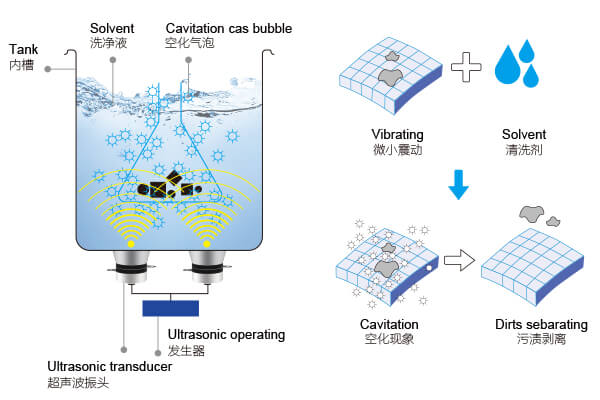
The Principle Behind Ultrasonic Cleaning
Cavitation occurs when microscopic bubbles form in the liquid and then collapse almost instantly. Each collapse releases a tiny burst of energy. On its own, a single bubble does nothing of consequence. But millions of these micro-collapses happen every second, creating a powerful cleaning effect that reaches places no brush ever could.
This is why ultrasonic cleaners excel at cleaning complex shapes. Tiny crevices, narrow gaps, and hidden surfaces are exposed to these micro-bursts of energy, which dislodge dirt, oil, and debris without requiring direct contact. For diamond jewelry, this means the underside of the stone, the seat where the diamond rests, and the interior angles of prongs can all be cleaned simultaneously.
It is important to understand that ultrasonic cleaners do not shake objects violently in the way many people imagine. The motion is microscopic, invisible to the eye, and evenly distributed through the liquid. However, while this process is gentle on surfaces, it still introduces continuous vibration and mechanical stress. Whether that stress becomes a problem depends less on the diamond itself and far more on what surrounds it.
This distinction sets the stage for one of the most misunderstood aspects of diamond care: the difference between cleaning a diamond and cleaning diamond jewelry.
Why Ultrasonic Cleaners Are Popular for Jewelry Cleaning
Ultrasonic cleaners did not become common in jewelry care by accident. Long before they appeared in homes, they were standard tools in professional jewelry workshops. Jewelers rely on them because they solve a problem that manual cleaning never fully addressed: reaching the places fingers and cloths cannot.
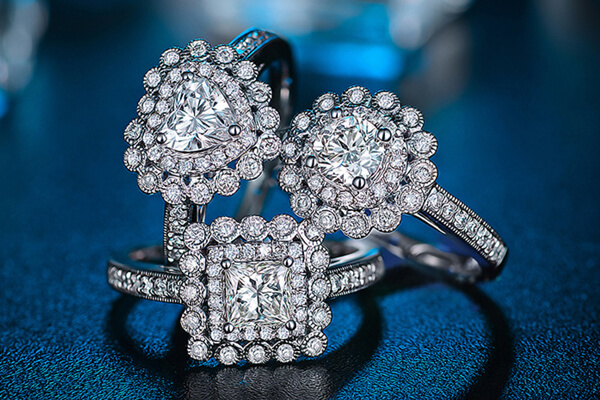
Diamond rings, in particular, are designed with light performance in mind. The pavilion of the diamond, the part that sits below the girdle, plays a major role in how light reflects back to the eye. Unfortunately, this is also the area most likely to trap oil and debris. Over time, buildup beneath the stone blocks light return, leaving even high-quality diamonds looking dull.
Ultrasonic cleaners restore brilliance quickly and consistently. In a matter of minutes, accumulated residue lifts away from prongs, galleries, and hidden recesses. The transformation can be dramatic, which is why many people associate ultrasonic cleaning with professional-grade results.
diamond ring
This visible effectiveness is also why ultrasonic cleaners feel so convincing. When users see clouds of dirt drifting away from their jewelry, it reinforces the idea that the process is both powerful and necessary. Yet effectiveness alone does not tell the whole story. What works well in one context may carry risks in another, especially when jewelry construction varies widely.
Where the Fear Comes From: Stories of Diamonds Falling Out
Concerns about ultrasonic cleaning did not appear out of nowhere. Many warnings trace back to real incidents where diamonds loosened or fell out during cleaning. These stories spread quickly, often without context, and over time they turned into blanket advice to avoid ultrasonic cleaners altogether.
In most cases, the ultrasonic cleaner did not break the diamond. Instead, it exposed an existing weakness. Jewelry settings wear down gradually. Prongs thin from friction. Metal fatigues from years of daily wear. Tiny movements, invisible to the naked eye, can already be present long before a ring ever enters a cleaning bath.
Ultrasonic vibrations can accelerate what is already happening. If a stone is barely secure, the constant micro-movement in the cleaning liquid may be enough to dislodge it. When that happens, the ultrasonic cleaner becomes the visible culprit, even though the problem existed beforehand.
Fear also grows from misunderstanding how ultrasonic machines work. Many people imagine aggressive shaking or violent motion. In reality, the energy involved is subtle but persistent. That persistence is what makes ultrasonic cleaning so effective, and also why it can reveal hidden structural issues in jewelry.
Understanding this distinction helps separate genuine risk from exaggerated fear. To do that properly, it is essential to draw a clear line between diamonds as materials and diamond jewelry as objects.
Diamonds vs Diamond Jewelry: A Critical Distinction
One of the biggest sources of confusion around ultrasonic cleaning is the failure to distinguish between a diamond and the jewelry that holds it. A loose diamond and a finished diamond ring are not exposed to the same risks.
Diamonds themselves are extraordinarily stable under ultrasonic conditions. They are not porous, they do not absorb liquid, and they do not react chemically with standard cleaning solutions. A loose diamond placed in an ultrasonic cleaner is extremely unlikely to suffer damage under normal operating conditions.
Diamond jewelry, however, is a complex assembly. It includes metal prongs, bezels, solder joints, and sometimes multiple stones set closely together. Each component responds differently to vibration. Metals flex. Settings age. Repairs introduce weak points. What appears solid on the surface may have micro-fractures or loosened seats beneath.
When people ask whether ultrasonic cleaning is bad for diamonds, they are often unknowingly asking the wrong question. The real issue is not the diamond’s resilience, but the integrity of the setting holding it in place. This distinction explains why jewelers can confidently ultrasonic clean some pieces while refusing others.
To understand why diamonds themselves are rarely the problem, it helps to look beyond hardness and explore the deeper mechanics of diamond durability.
The Science of Diamond Durability Beyond Hardness
Diamonds are famous for being the hardest natural substance known, but hardness alone does not tell the full story. Hardness measures resistance to scratching, not resistance to breaking. This difference matters when discussing ultrasonic cleaning.
Diamonds are extremely hard but not indestructible. They have natural cleavage planes, which are directions along which the crystal structure can split under sufficient force. In everyday wear, this rarely becomes an issue. However, sharp impacts at specific angles can cause chips or fractures, even in diamonds.
Ultrasonic cleaners do not generate impact forces comparable to dropping a ring on a hard surface. The energy involved is distributed evenly through liquid rather than concentrated at a point. From a scientific standpoint, this makes direct damage to diamonds from ultrasonic cleaning highly unlikely.
Where concern does arise is with diamonds that already contain internal features such as feathers or inclusions that reach the surface. These characteristics do not make a diamond unsafe to wear, but they can influence how the stone responds to stress. In rare cases, pre-existing fractures may worsen under repeated vibration, especially if combined with heat or aggressive chemicals.
Still, for the vast majority of diamonds, ultrasonic cleaning does not pose a meaningful threat to the stone itself. This brings the conversation back to where the real risk lies: not in the diamond, but in how and where it is set.
Can Ultrasonic Vibrations Damage Diamonds Themselves
Once the conversation moves past myths, a common concern remains: can ultrasonic vibrations actually damage a diamond at the molecular or structural level? The short answer, supported by both physics and industry practice, is that ultrasonic cleaners do not harm diamonds under normal conditions.
The frequencies used in ultrasonic cleaners are designed to interact with liquids, not solids. Cavitation occurs in the cleaning solution, not inside the diamond. The collapsing bubbles release energy into the surrounding liquid, lifting contaminants from surfaces rather than transmitting destructive force into crystalline structures.
Diamonds are routinely exposed to far more severe conditions during cutting and polishing than they will ever experience in an ultrasonic bath. High-speed mechanical friction, pressure, and localized heat are part of how diamonds are shaped. Compared to that, ultrasonic cleaning is gentle.
That said, diamonds are not all identical. Stones with significant inclusions that reach the surface, especially feathers or internal fractures, already have structural vulnerabilities. While ultrasonic cleaning is still unlikely to cause sudden damage, repeated exposure combined with heat or chemical additives may contribute to gradual stress in rare cases.
This nuance explains why professionals do not rely on blanket rules. Instead of asking whether ultrasonic cleaning damages diamonds, they ask whether a specific diamond, in a specific setting, under specific conditions, should be cleaned that way.
The Real Risk: Settings, Not Stones
If diamonds themselves are rarely harmed, why do problems happen at all? The answer almost always lies in the setting. Ultrasonic cleaners are extremely effective at removing material, including material you might not want removed.
Over time, dust, skin cells, and residue pack tightly around prongs and beneath stones. While unsightly, this buildup can sometimes act as an unintentional stabilizer. When ultrasonic cleaning strips it away, underlying looseness becomes immediately apparent.
Metal fatigue plays a major role. Prongs wear down gradually as rings rub against surfaces throughout daily life. Even high-quality settings are not immune to this process. A prong that looks secure may already be thin enough that vibration causes it to flex slightly.
Ultrasonic cleaners apply uniform vibration across the entire piece of jewelry. That vibration does not target one prong or one area, but it does stress every connection simultaneously. When a stone falls out during ultrasonic cleaning, it is usually because it was already close to failing.
This is why jewelers often say ultrasonic cleaners do not cause damage so much as reveal it. What appears to be sudden failure is often the final stage of a long, invisible process.
Older Jewelry vs New Jewelry in Ultrasonic Cleaners
The age of a piece of jewelry matters more than many people realize. Newly made diamond jewelry, with tight settings and intact metal, generally tolerates ultrasonic cleaning very well. Older pieces, however, tell a different story.
Vintage and antique jewelry often features thinner prongs, softer metals, and hand-fabricated settings. These designs were not created with ultrasonic cleaning in mind. Decades of wear may have weakened solder joints or altered the fit of stones.
Repairs further complicate matters. Each resizing, prong retipping, or stone replacement introduces new solder points and potential weak areas. Ultrasonic vibration does not discriminate between original construction and later modifications.
This does not mean older jewelry can never be ultrasonically cleaned. It means inspection matters. Without checking the security of stones and the condition of metal, ultrasonic cleaning becomes a gamble rather than a calculated decision.
Treated, Fracture Filled, and Lab Grown Diamonds
Not all diamonds on the market today behave the same way under ultrasonic cleaning. Treatments and manufacturing methods introduce variables that deserve attention.
Fracture filled diamonds are the most sensitive. These stones contain internal fractures that have been filled with glass-like substances to improve appearance. Ultrasonic cleaning can damage or discolor these fillings, especially when combined with heat. For this type of diamond, ultrasonic cleaning is widely considered a bad idea.
Lab grown diamonds, on the other hand, generally respond much like natural diamonds. Their crystal structure is the same, and they do not contain filling materials. Ultrasonic cleaning does not inherently pose a greater risk to them.
Other treatments, such as laser drilling or clarity enhancement, can influence how a diamond reacts to stress. Owners who are unsure whether their diamond has been treated should assume caution, particularly when using home ultrasonic cleaners without professional oversight.
This diversity in diamond types reinforces the importance of informed cleaning choices rather than one-size-fits-all advice.
When Ultrasonic Cleaning Is Generally Safe for Diamonds
Despite all the caveats, ultrasonic cleaning is not inherently dangerous for diamond jewelry. In fact, it remains one of the most effective and widely used methods for restoring brilliance when conditions are right.
Jewelry with secure settings, minimal wear, and untreated diamonds typically handles ultrasonic cleaning without issue. Pieces that are cleaned regularly rather than infrequently are less likely to have severe buildup masking underlying problems.
Professional jewelers use ultrasonic cleaners daily because they combine inspection with cleaning. Stones are checked before and after. Time, temperature, and solution strength are controlled. These factors dramatically reduce risk.
At home, safety depends on awareness. Understanding what ultrasonic cleaning does, what it does not do, and what signs suggest caution allows diamond owners to make informed decisions instead of relying on fear or blind confidence.
Situations Where Ultrasonic Cleaning Is a Bad Idea
While ultrasonic cleaning is often safe for diamonds, there are situations where it genuinely becomes a poor choice. The most common red flag is uncertainty. When the condition of a ring or the history of a diamond is unknown, ultrasonic cleaning introduces unnecessary risk.
Jewelry that already shows signs of looseness should never go into an ultrasonic cleaner. A diamond that moves slightly when touched, prongs that appear uneven, or settings that catch on fabric all signal structural wear. In these cases, ultrasonic vibration does not improve cleanliness so much as accelerate failure.
Mixed gemstone jewelry also deserves caution. Diamonds may tolerate ultrasonic cleaning well, but other stones set alongside them may not. Emeralds, opals, pearls, and many treated stones can suffer damage, and their presence changes the risk profile of the entire piece.
Sentimental value plays a role too. Heirlooms and irreplaceable jewelry often warrant a more conservative approach, even if the technical risk seems low. When emotional loss outweighs cosmetic improvement, gentler cleaning methods make more sense.
Recognizing these situations reframes ultrasonic cleaning as a tool rather than a default solution. Knowing when not to use it is just as important as knowing when it works well.
Professional Jewelers and Ultrasonic Cleaners
The way professionals use ultrasonic cleaners differs significantly from how most consumers do. Jewelers rarely place jewelry into a machine without first examining it closely. Stones are checked for movement. Prongs are assessed for wear. Settings are evaluated for symmetry and stability.
This inspection is not optional. It is the reason ultrasonic cleaning has a strong safety record in professional environments. When a jeweler declines to ultrasonic clean a piece, it is usually because they see a structural concern, not because ultrasonic cleaning is inherently unsafe.
Professionals also control variables that home users often overlook. Cleaning time is limited. Solutions are chosen carefully. Temperature is monitored. Jewelry is often secured in baskets to prevent contact with hard surfaces inside the tank.
These practices highlight an important truth. Ultrasonic cleaners are not reckless devices. They are precise tools that require judgment. Used thoughtfully, they enhance jewelry care rather than compromise it.
Home Ultrasonic Cleaners vs Professional Machines
Not all ultrasonic cleaners are created equal. Professional units are designed for consistency, stability, and long-term use. They operate at controlled frequencies and power levels, producing predictable cavitation patterns.
Home ultrasonic cleaners vary widely in quality. Some are gentle and well-calibrated, while others deliver uneven vibration or excessive heat. Lower-cost units may lack proper temperature control or frequency stability, increasing the chance of unintended stress on jewelry.
This does not mean home ultrasonic cleaners are automatically unsafe. Many people use them successfully for years. The difference lies in awareness. Professional jewelers understand the limitations of their equipment. Home users often assume all ultrasonic cleaners behave the same way.
Understanding the specific capabilities of a home unit helps set realistic expectations and encourages cautious use, especially with valuable diamond jewelry.
The following ultrasonic cleaning machines are particularly suitable for jewelry cleaning.
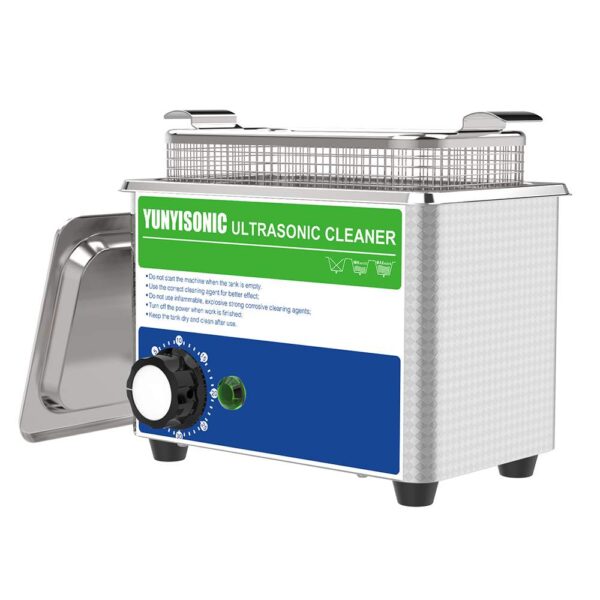
Mini Ultrasonic Cleaner for Jewelry, Dental, and Eyeglass Care | Cleans Dentures, Braces, Retainers, Teeth,Toothbrush Heads
In stock
| Volumetric Weight | 1.70 kg |
|---|---|
| Package Dimensions | 23.5 × 17 × 18 cm |
| Model |
YA008B ,YA008GB |
| Application Field | , , , , , , , , , , , |
| Brand |
Yunyisonic |
| Origin |
Shenzhen City, China |
| Capacity | |
| Frequency | |
| Power | , |
| Tank Material |
SUS304 Stainless Steel |
| Voltage |
AC 110V 60Hz;AC 220V 50Hz |
| Plug Type |
EU Plug ,US Plug ,AU Plug ,Other Plugs ,UK Plug |
| Certificates |
CE ,FCC ,ROHS |
| Warranty |
1 Year |
| Customization |
Logo/Pattern ,Private Lable ,White Label |
| Function | , , |
| Manufacturer |
Yunyisonic Shenzhen Co., Ltd. |
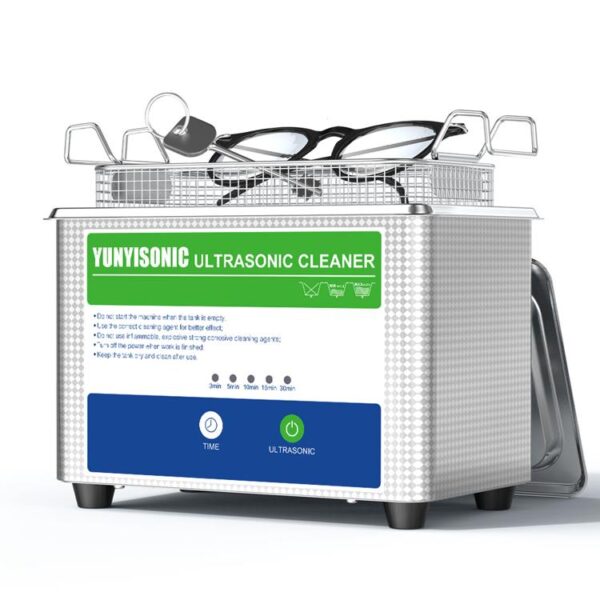
Compact 1L Digital Timer Ultrasonic Jewelry Cleaner For Rings, Necklaces, Watches, Bracelets, Gemstones, and Earrings
In stock
| Volumetric Weight | 1.70 kg |
|---|---|
| Package Dimensions | 23.5 × 17 × 18 cm |
| Model |
YA010 ,YA010C ,YA010G |
| Application Field | , , , , , , , , , |
| Brand |
Yunyisonic |
| Origin |
Shenzhen City, China |
| Capacity | |
| Frequency | |
| Power | , |
| Timer |
1-30mins |
| Tank Material |
SUS304 Stainless Steel |
| Voltage |
AC 110V 60Hz;AC 220V 50Hz |
| Plug Type |
EU Plug ,US Plug ,AU Plug ,Other Plugs ,UK Plug |
| Certificates |
CE ,FCC ,ROHS |
| Warranty |
1 Year |
| Customization |
Logo/Pattern ,Private Lable ,White Label |
| Function | , , , |
| Manufacturer |
Yunyisonic Shenzhen Co., Ltd. |
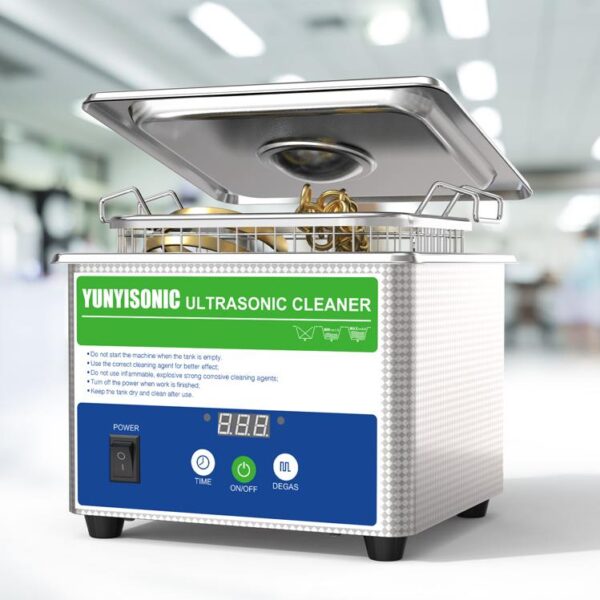
1.3L Digital Ultrasonic Cleaner with Degas Function for Spectacles, Eyeglass Lenses, Jewelry, and Small Nozzles
In stock
| Volumetric Weight | 2.10 kg |
|---|---|
| Package Dimensions | 25.5 × 24.2 × 18 cm |
| Model |
YA013 ,YA013C ,YA013G |
| Application Field | , , , , , , , , , , , |
| Brand |
Yunyisonic |
| Origin |
Shenzhen City, China |
| Capacity | |
| Frequency | |
| Power | , |
| Timer |
1-30mins |
| Tank Material |
SUS304 Stainless Steel |
| Voltage |
AC 110V 60Hz;AC 220V 50Hz |
| Plug Type |
EU Plug ,US Plug ,AU Plug ,Other Plugs ,UK Plug |
| Certificates |
CE ,FCC ,ROHS |
| Warranty |
1 Year |
| Customization |
Logo/Pattern ,Private Lable ,White Label |
| Function | , , , |
| Manufacturer |
Yunyisonic Shenzhen Co., Ltd. |

Portable 48kHz UV Ultrasonic Cleaner for Dental Appliances | 360° Deep Cleaning for Dentures Jewelry Travel Use
In stock
| Volumetric Weight | 0.5 kg |
|---|---|
| Package Dimensions | 12 × 12 × 18 cm |
| Model |
YC01BM ,YC01BU ,YC01M ,YC01U |
| Application Field | , , , , , , , , , |
| Brand |
Yunyisonic |
| Origin |
Shenzhen City, China |
| Capacity | |
| Frequency | |
| Power | |
| Tank Material |
Food Grade ABS Plastic ,SUS304 Stainless Steel |
| Voltage |
12V |
| Certificates |
CE |
| Warranty |
1 Year |
| Customization |
Logo/Pattern ,Private Lable ,White Label |
| Function | |
| Manufacturer |
Yunyisonic Shenzhen Co., Ltd. |
Temperature, Cleaning Solutions, and Their Hidden Role
Ultrasonic cleaning is not just about sound waves. Temperature and chemistry play supporting roles that can influence outcomes significantly.
Warm water improves cavitation efficiency, but excessive heat can stress metals and exacerbate weaknesses in settings. Some cleaning solutions contain detergents or solvents that interact with residues effectively, while others may affect treated stones or soft metals.
For diamonds, temperature extremes are generally more concerning than sound itself. Rapid temperature changes, especially when combined with vibration, introduce thermal stress. This is why professionals avoid boiling solutions or aggressive chemicals during ultrasonic cleaning.
Moderation matters. A balanced combination of mild solution, controlled warmth, and limited exposure time delivers the best results with the least risk.
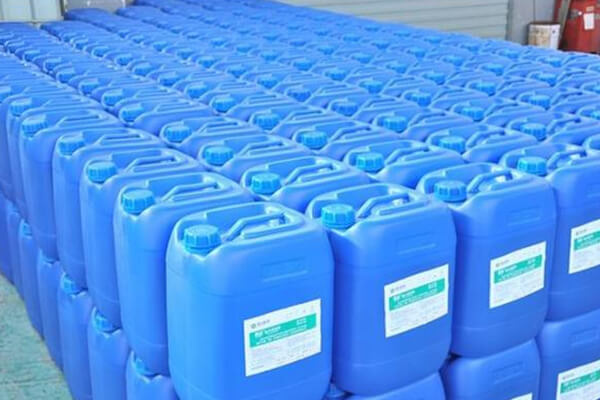
Cleaning agent
How Long Is Too Long: Cleaning Time Considerations
One of the most common mistakes in ultrasonic cleaning is assuming longer cleaning equals better cleaning. In reality, most contaminants release quickly once cavitation begins.
Extended cleaning sessions increase vibration exposure without adding meaningful benefits. Over time, this unnecessary stress accumulates in metal components, not in the diamond itself, but in the structure that holds it.
Professional jewelers often clean diamond jewelry for only a few minutes. This short duration is enough to remove oils and debris while minimizing mechanical fatigue. At home, it is tempting to leave jewelry in the cleaner while attending to other tasks, but restraint pays off.
Effective ultrasonic cleaning is about efficiency, not endurance.
Visual Inspection Before Cleaning Diamonds
Before ultrasonic cleaning, a simple visual inspection can prevent costly mistakes. Even without professional tools, certain warning signs are visible to attentive owners.
Prongs that appear thin or uneven deserve attention. Stones that sit crookedly or catch light irregularly may already be loose. Jewelry that rattles faintly when shaken should never be placed in an ultrasonic cleaner.
This habit of observation shifts cleaning from an automatic routine to a conscious decision. It empowers diamond owners to act with confidence rather than fear.
The Safest Way to Use an Ultrasonic Cleaner on Diamonds
Using an ultrasonic cleaner safely with diamond jewelry is less about strict rules and more about mindset. Caution, awareness, and moderation make the difference. When a piece of jewelry is known to be structurally sound and free of vulnerable treatments, ultrasonic cleaning can be approached as a maintenance tool rather than a deep intervention.
Gentle conditions matter. Mild cleaning solutions, moderate water temperature, and short cleaning cycles reduce stress on metal components. Jewelry should be placed so it does not touch hard surfaces or other pieces during cleaning, preventing accidental contact damage.
Most importantly, ultrasonic cleaning should not replace regular inspection. Even jewelry that has been safely cleaned many times can develop wear over time. Treating ultrasonic cleaning as an occasional enhancement rather than a constant habit preserves both brilliance and longevity.
Alternative Cleaning Methods for Diamond Jewelry
Ultrasonic cleaning is not the only way to care for diamonds, and in some situations, it may not be the best option. Gentle manual cleaning remains surprisingly effective when done consistently. Warm water, mild soap, and a soft brush can remove surface oils without stressing settings.
Steam cleaning offers another alternative, particularly in professional settings. Steam removes oils quickly and does not introduce prolonged vibration, though it still requires caution with treated stones and delicate settings.
Professional maintenance fills the gap between home care and ultrasonic cleaning. Periodic inspections, tightening prongs, and professional cleaning restore sparkle while minimizing risk. For many diamond owners, this balanced approach delivers peace of mind alongside visible results.
Ultrasonic Cleaning Myths vs Reality
Much of the fear surrounding ultrasonic cleaners comes from misunderstanding rather than evidence. The idea that ultrasonic cleaning shatters diamonds is not supported by how the technology works or how it is used in professional environments.
At the same time, the belief that ultrasonic cleaners are universally safe ignores real risks associated with settings, wear, and treatments. Reality exists between extremes. Ultrasonic cleaning is neither a miracle solution nor a reckless gamble.
Understanding this balance allows diamond owners to move beyond myths and make decisions grounded in knowledge rather than hearsay.
Why Diamonds Still Benefit from Ultrasonic Cleaning When Used Correctly
When conditions are right, ultrasonic cleaning offers benefits that are difficult to match. The ability to remove oils from beneath the stone restores brilliance that manual methods often miss. Diamonds regain their light performance, appearing brighter and more lively almost instantly.
This effectiveness explains why ultrasonic cleaners remain a staple in jewelry stores worldwide. Used correctly, they enhance the visual beauty of diamonds without compromising their integrity.
The key is selectivity. Not every piece needs ultrasonic cleaning, but for suitable jewelry, it remains one of the most efficient tools available.
Emotional Value vs Cleaning Risk: A Personal Decision
Beyond technical considerations, jewelry carries emotional weight. Engagement rings, heirlooms, and gifts tied to personal milestones deserve special consideration. Even low risks may feel unacceptable when a piece is irreplaceable.
In these cases, choosing a gentler cleaning method is not about fear, but respect. Preserving emotional value often matters more than achieving maximum sparkle at any given moment.
Recognizing this emotional dimension reframes ultrasonic cleaning as a choice rather than an obligation.
So, Is It Really a Bad Idea to Clean Diamonds with an Ultrasonic Cleaner
The answer depends on what is being cleaned, how it is cleaned, and why. Ultrasonic cleaners are not inherently bad for diamonds. In fact, diamonds themselves tolerate ultrasonic cleaning extremely well.
Problems arise when settings are compromised, treatments are overlooked, or cleaning is done without inspection. When ultrasonic cleaning is treated as a shortcut rather than a considered process, risk increases.
Seen clearly, ultrasonic cleaning is neither friend nor enemy. It is a tool that rewards understanding and punishes assumptions.
Making an Informed Choice About Diamond Cleaning
Diamond care is ultimately about informed decisions. Knowing how diamonds behave, how jewelry wears, and how ultrasonic cleaners function allows owners to choose wisely rather than react emotionally.
For some pieces, ultrasonic cleaning restores brilliance safely and efficiently. For others, gentle alternatives make more sense. The best approach is not universal, but thoughtful.
When knowledge replaces myth, diamond cleaning becomes less about fear and more about confidence.