





🔊 Yunyisonic YL Series – Frequency Range: 17–200 kHz | Modes: Single, Dual, Triple, or Quad (Switchable)
Yunyisonic YL Series Ultrasonic Bath customizable frequency configurations to meet diverse experimental and industrial needs. Each frequency band serves specific applications based on cavitation intensity and precision requirements:
🔽 Click here to explore frequency-specific applications
Low Frequency (17–28kHz) — High Power Cavitation
- 17kHz / 20kHz / 25kHz / 28kHz
- Strong cavitation force ideal for:
- Heavy oil and rust removal
- Emulsion extraction, large-particle dispersion
- Wastewater and algae treatment
- Hard-to-degrade organic breakdown
Mid Frequency (33–40kHz) — Balanced Cleaning
- 33kHz / 40kHz
- Suitable for:
- Routine laboratory cleaning
- Powder suspension, catalytic reactions
- Standard glassware and general-purpose use
High Frequency (68–120kHz) — Precision & Penetration
- 68kHz / 80kHz / 120kHz
- Ideal for:
- Micro/nano blind hole cleaning
- Fine-particle dispersion
- Sensitive components and optical parts
- Intracellular extraction and material synthesis
Ultra-High Frequency (132–200kHz) — Ultra-Fine Processing
- 132kHz / 200kHz
- Used for:
- Semiconductor wafers, microstructures
- Nanoscale particle removal
- Advanced materials research
Frequency Configurations Available
- Single: 17kHz, 20kHz, 25kHz, 28kHz, 33kHz, 40kHz, 53kHz, 68kHz, 80kHz, 120kHz, 132kHz, 200kHz
- Dual: e.g., 28/40kHz, 40/68kHz, 40/80kHz, 40/120kHz, 80/120kHZ
- Triple: e.g., 40/80/100kHz, 40/80/120kHz, 28/42/53kHz, 28/40/120kHz, 33/90/135kHz
- Quad: e.g., 25/50/80/120kHz, 40/80/100/160kHz, 40/80/120/170kHz
All units come equipped with low-noise operation, sweep & pulse mode, degassing, and adjustable power control.
Terminology Clarification
Below is a quick explanation of key ultrasonic terms commonly seen in specifications:
| Category | Term | Explanation |
|---|---|---|
| Frequency | 28/40kHz | Machine can switch between 28kHz and 40kHz. |
| 40/80/120kHz | Machine can switch among 40kHz, 80kHz, and 120kHz. | |
| Power | 0–100W | Adjustable power from 0W to 100W. |
| 30/60W | Power can switch between 30W and 60W. | |
| 1800W + 1800W | Two separate tanks, each powered at 1800W. | |
| Function | Sweep Mode | Automatically sweeps ±1kHz around the main frequency (e.g., 119–121kHz for a 120kHz unit) to accommodate tiny differences between transducers. This helps every transducer operate at its best, even if its natural frequency slightly varies. |
| Degas Mode | While continuous ultrasound naturally removes gas from liquids, its degassing efficiency decreases over time. Degas mode uses pulse intervals (e.g., 5 seconds on, 5 seconds off) to better maintain the degassing effect, removing dissolved air and chlorine—especially useful for lab reagent preparation. |
|
| Pulse Mode | Cycles power from 100% to 0% repeatedly, like a pressure washer blasting in short bursts. This improves cleaning efficiency, especially for tough or baked-on residues. | |
| Low-Noise Design | The YL Series uses full-bridge self-excited circuit boards matched with high-precision transducers, plus internal acoustic insulation. This dual-layer noise control keeps operation quieter — 68kHz+ units typically run below 80dB, compared to 110–120dB in standard commercial models. |
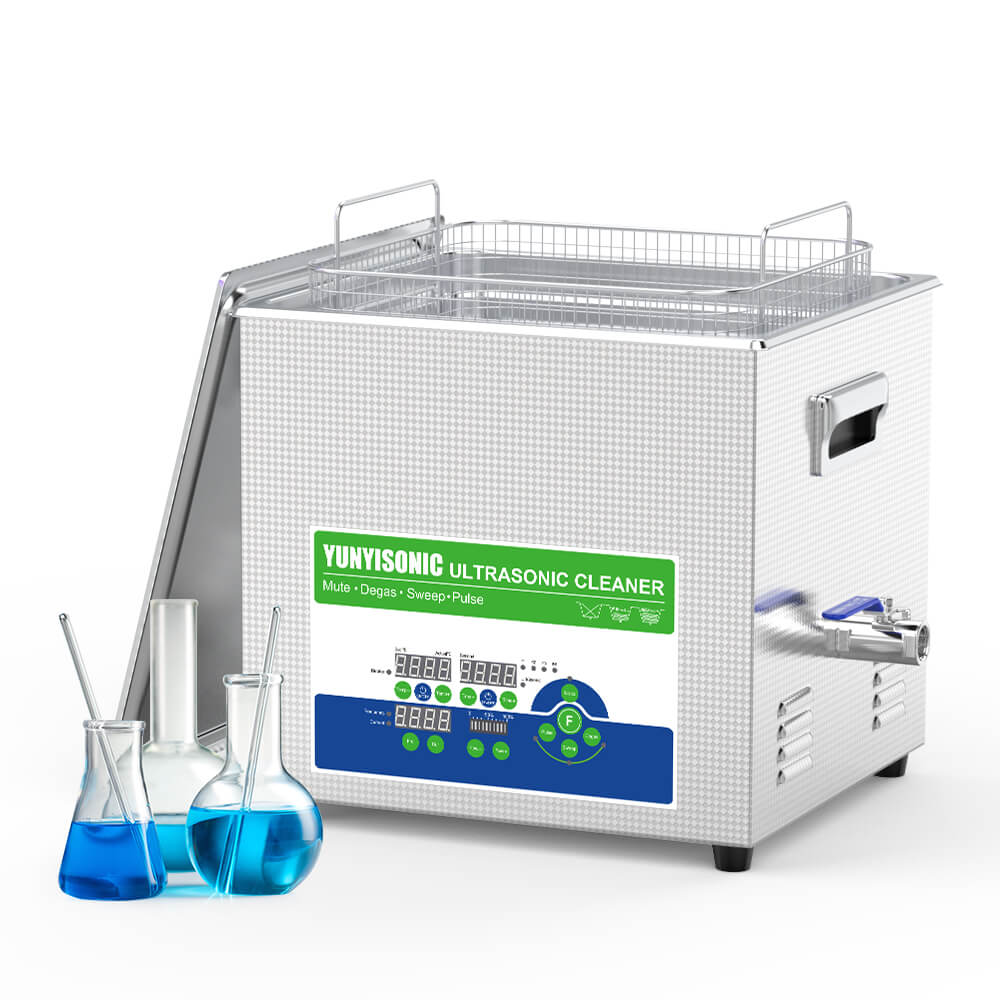
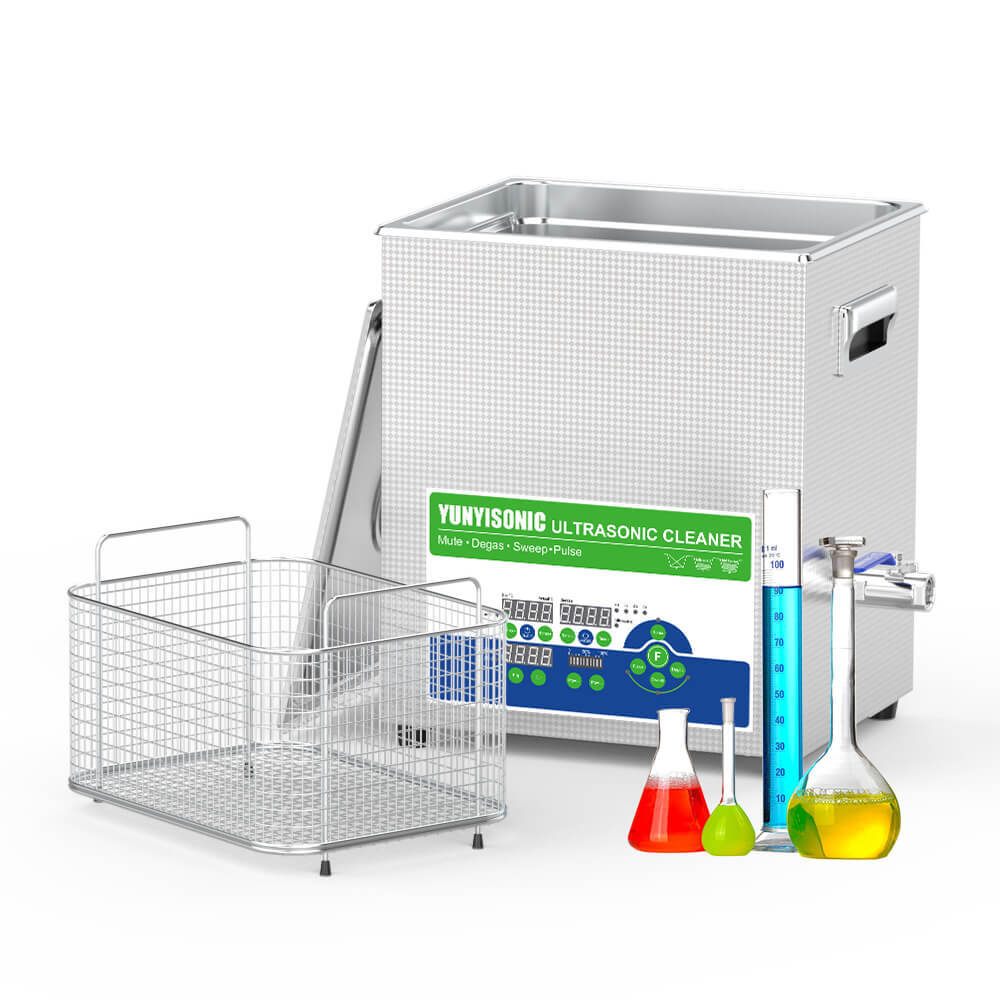
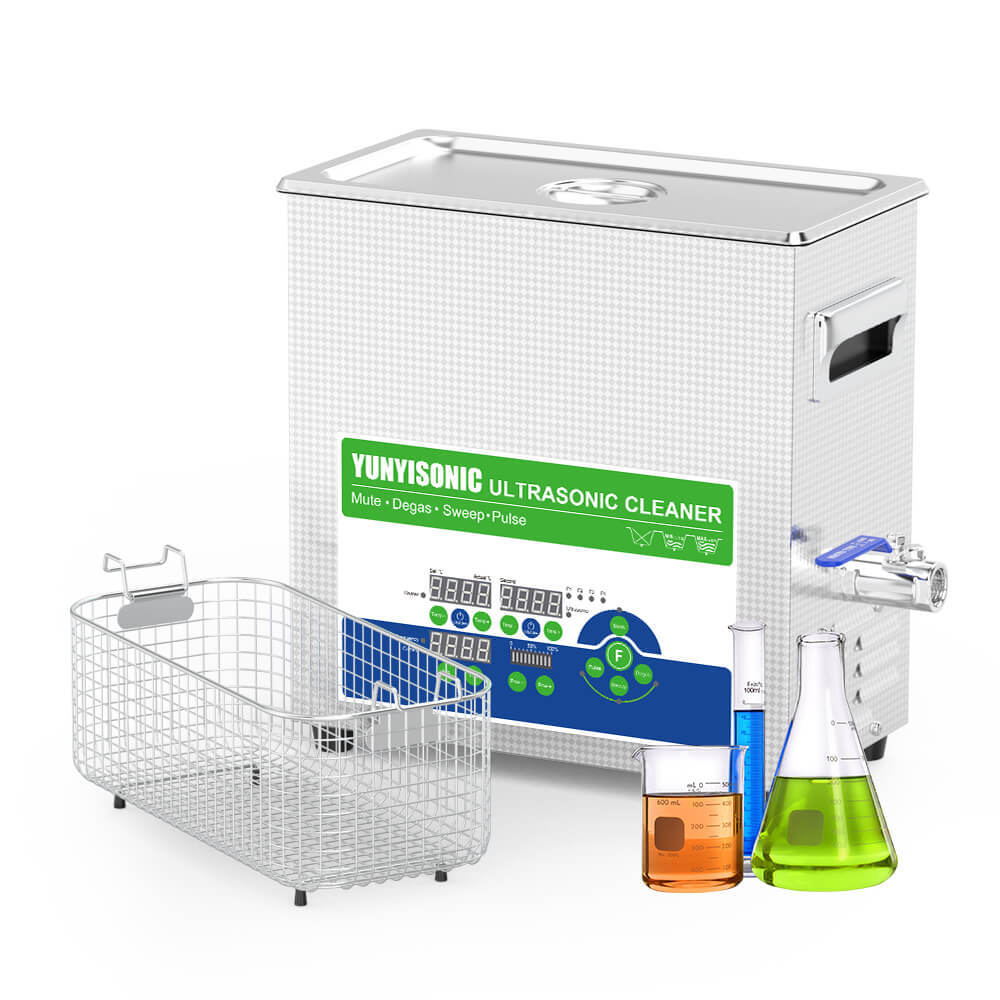
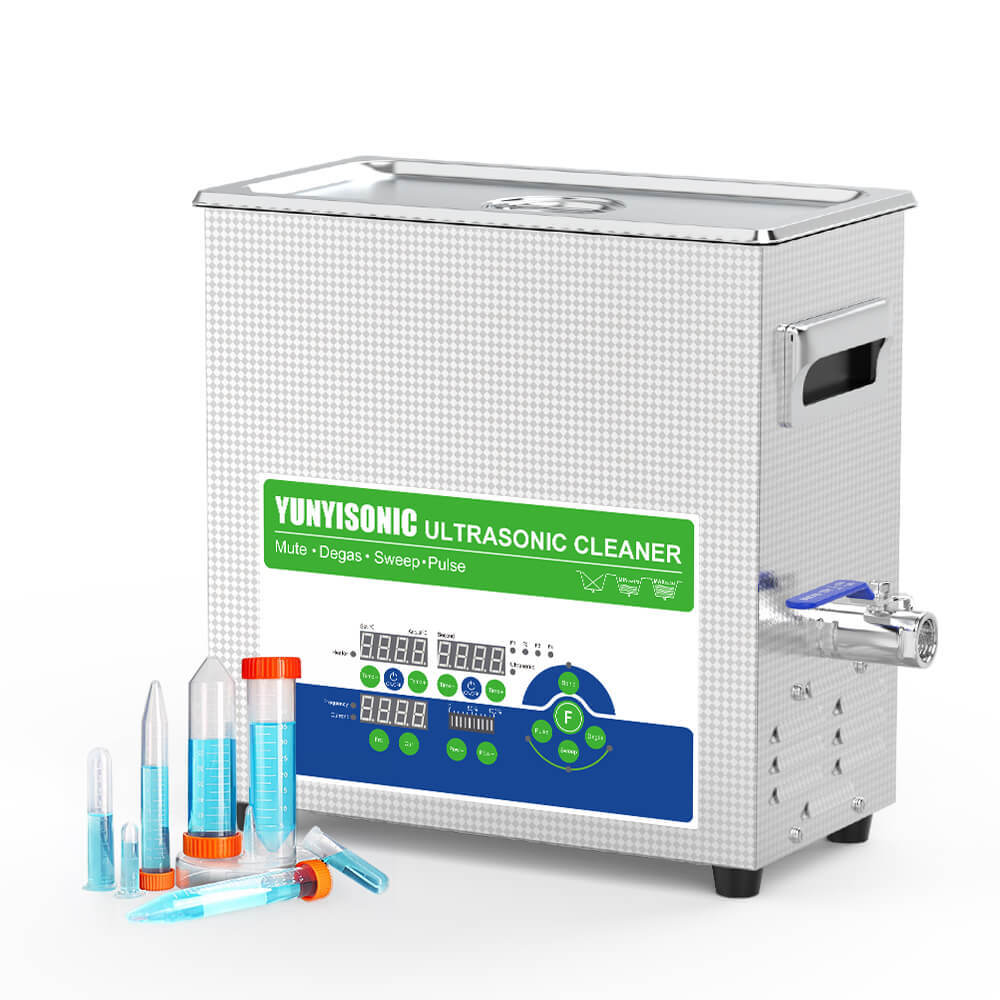
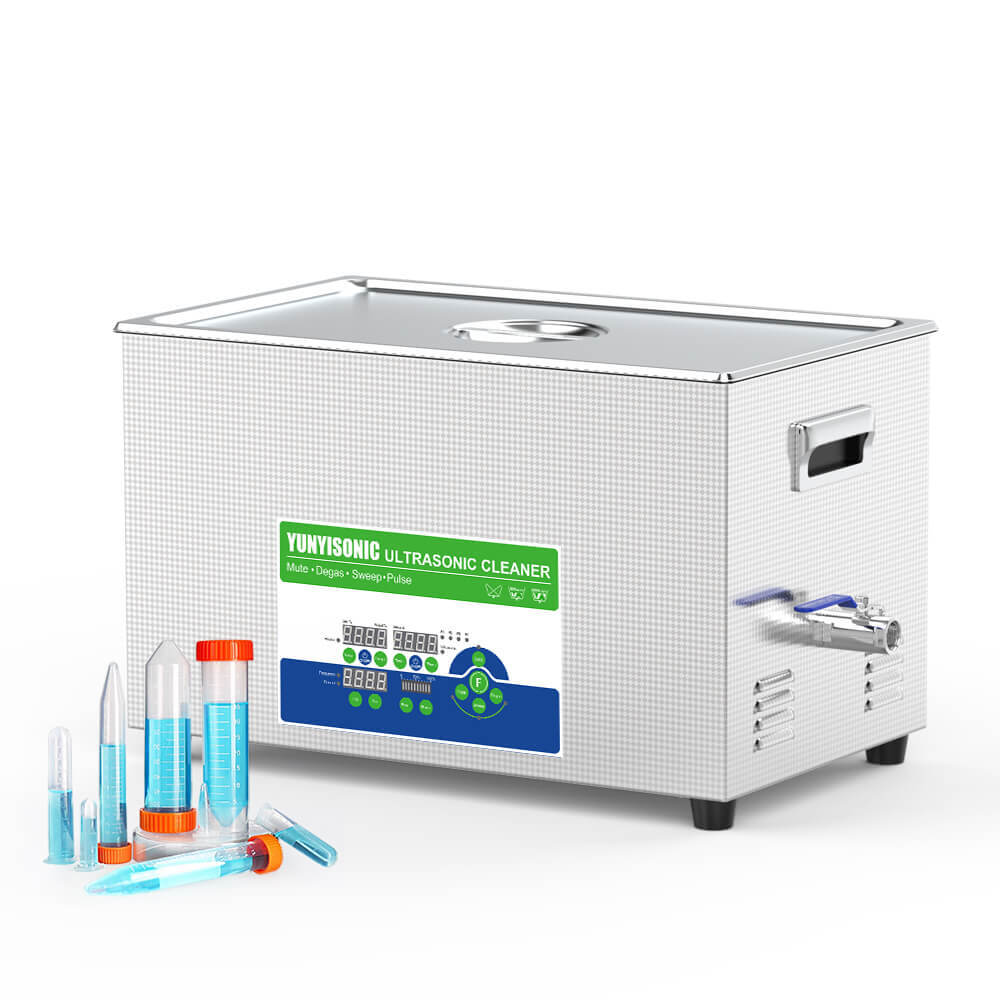
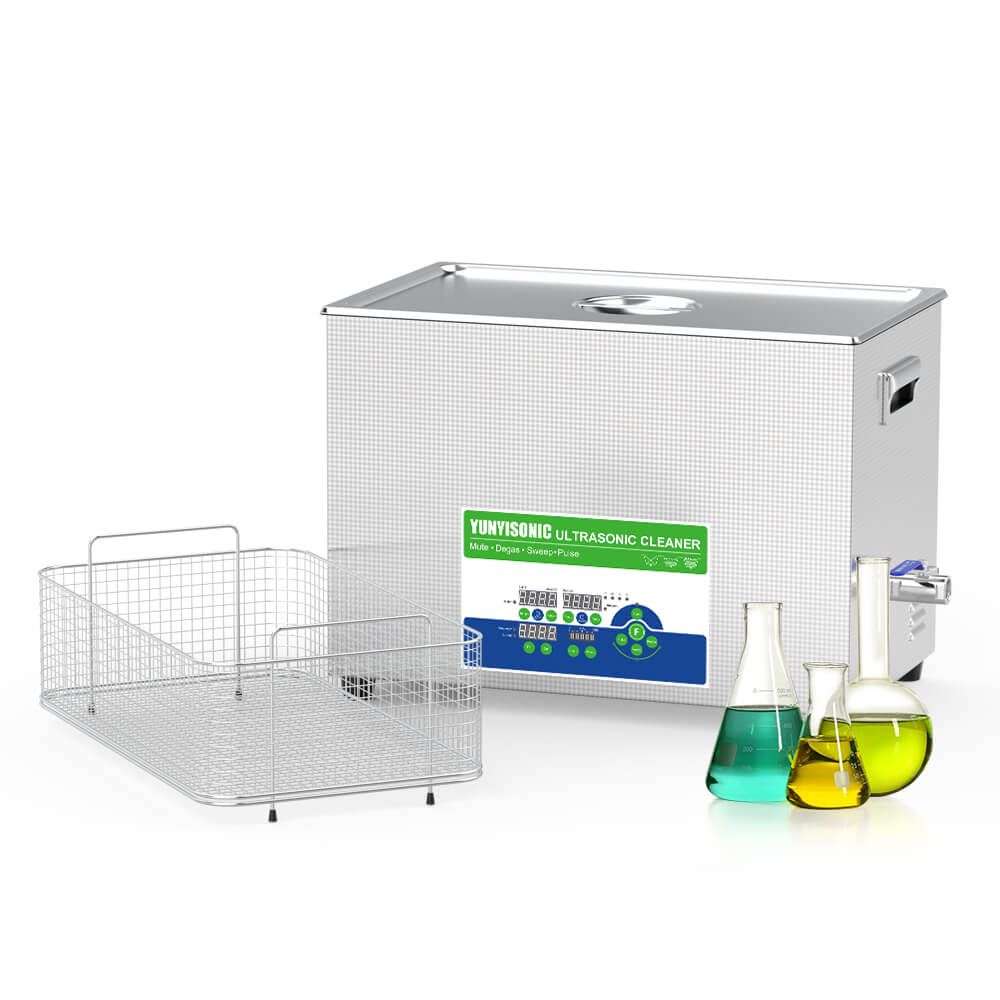
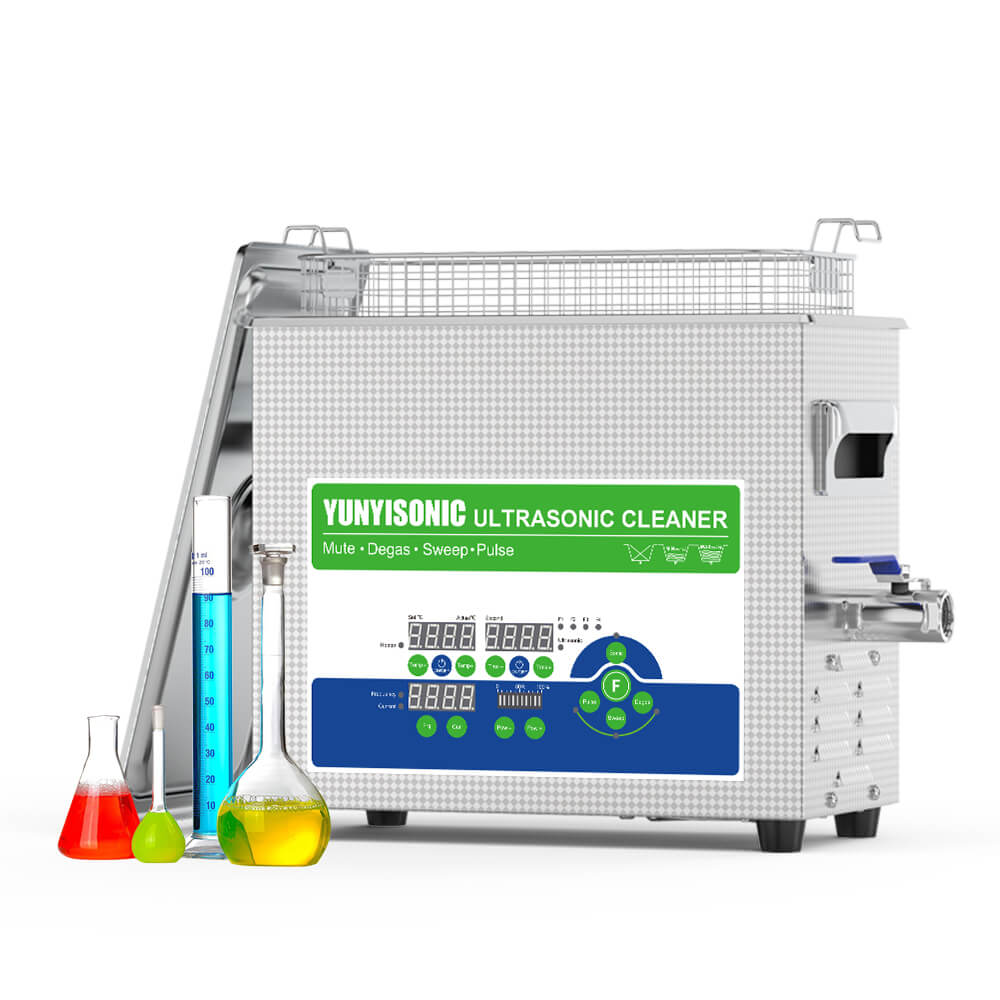
Laboratory Ultrasonic Bath
10L Quad-Frequency Ultrasonic Bath, 25/50/80/120kHz, Adjustable Power 0–400W
In stock
| Volumetric Weight | 15 kg |
|---|---|
| Package Dimensions | 43.5 × 36 × 40 cm |
| Brand | Yunyisonic |
| Origin | Shenzhen City, China |
| Capacity | 10L |
| Frequency | 25/50/80/120kHz |
| Power | 0-400W |
| Timer | 1-9999s |
| Heater | RT~80°C |
| Tank Material | SUS304 Stainless Steel |
| Housing Material | SUS304 Stainless Steel |
| Voltage | AC 110V 60Hz;AC 220V 50Hz |
| Plug Type | AU Plug, EU Plug, Other Plugs, UK Plug, US Plug |
| Certificates | CE, FCC, ROHS |
| Warranty | 1 Year |
| Customization | 485 Port, Frequency, PLC System, Tanks Numbers |
| Assisted SystemsYunyisonic Laboratory Multi-Function Ultrasonic Cleaning System for Assisted Extraction Emulsification Homogening Dispersion Separation Mixing Defoaming Dissolution Washing | Cleaning, Defoaming, Dispersion, Extraction, Mixing, Separation |
| Function | Clean Thoroughly, Degassing, Digital Control, Heating, Noise Reduction, Power Adjustable, Pulse, Sweep, Timing |
| Manufacturer | Yunyisonic Shenzhen Co., Ltd. |
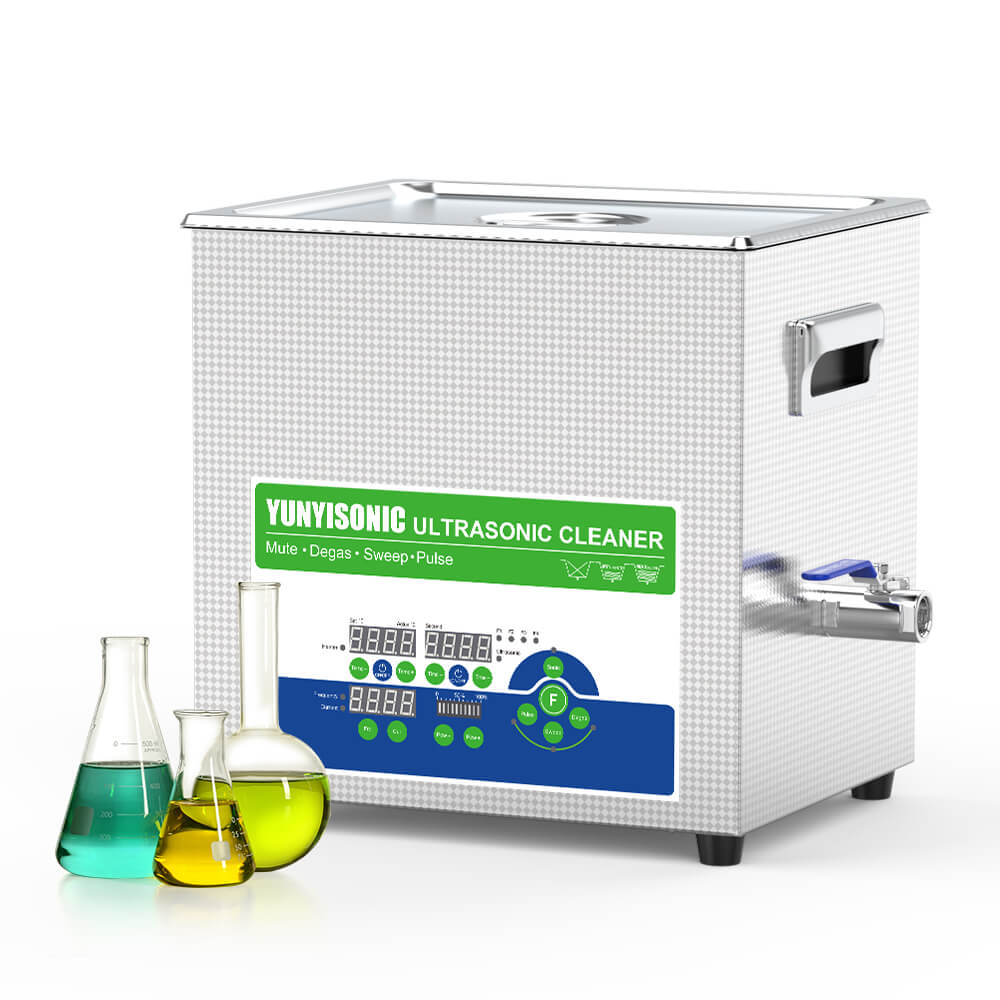
10L Quad-Frequency Ultrasonic Bath, 40/80/120/170kHz, Adjustable Power 0–400W
In stock
| Volumetric Weight | 15 kg |
|---|---|
| Package Dimensions | 43.5 × 36 × 40 cm |
| Brand | Yunyisonic |
| Origin | Shenzhen City, China |
| Capacity | 10L |
| Frequency | 40/80/120/170kHz |
| Power | 0-400W |
| Timer | 1-9999s |
| Heater | RT~80°C |
| Tank Material | SUS304 Stainless Steel |
| Housing Material | SUS304 Stainless Steel |
| Voltage | AC 110V 60Hz;AC 220V 50Hz |
| Plug Type | AU Plug, EU Plug, Other Plugs, UK Plug, US Plug |
| Certificates | CE, FCC, ROHS |
| Warranty | 1 Year |
| Customization | 485 Port, Frequency, PLC System, Tanks Numbers |
| Assisted SystemsYunyisonic Laboratory Multi-Function Ultrasonic Cleaning System for Assisted Extraction Emulsification Homogening Dispersion Separation Mixing Defoaming Dissolution Washing | Cleaning, Defoaming, Dispersion, Extraction, Mixing, Separation, Washing |
| Function | Clean Thoroughly, Degassing, Digital Control, Heating, Noise Reduction, Power Adjustable, Pulse, Sweep, Timing |
| Manufacturer | Yunyisonic Shenzhen Co., Ltd. |
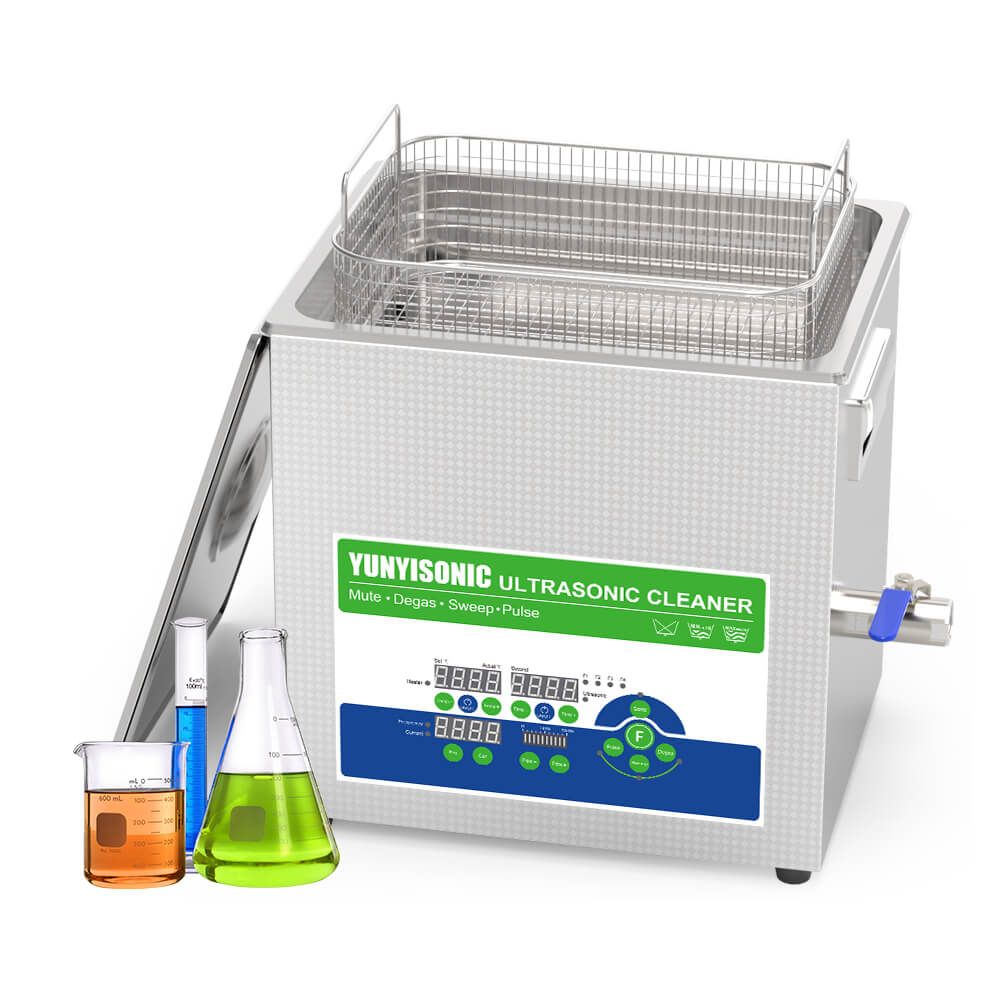
10L Single-Frequency Ultrasonic Bath, 120kHz, Adjustable Power 0–400W
In stock
| Volumetric Weight | 12.5 kg |
|---|---|
| Package Dimensions | 43.5 × 36 × 40 cm |
| Brand | Yunyisonic |
| Origin | Shenzhen City, China |
| Capacity | 10L |
| Frequency | 120kHz |
| Power | 0-400W |
| Timer | 1-9999s |
| Heater | RT~80°C |
| Tank Material | SUS304 Stainless Steel |
| Housing Material | SUS304 Stainless Steel |
| Voltage | AC 110V 60Hz;AC 220V 50Hz |
| Plug Type | AU Plug, EU Plug, Other Plugs, UK Plug, US Plug |
| Certificates | CE, FCC, ROHS |
| Warranty | 1 Year |
| Customization | 485 Port, Frequency, PLC System, Tanks Numbers |
| Assisted SystemsYunyisonic Laboratory Multi-Function Ultrasonic Cleaning System for Assisted Extraction Emulsification Homogening Dispersion Separation Mixing Defoaming Dissolution Washing | Cleaning, Defoaming, Dispersion, Dissolution, Extraction, Mixing, Separation, Washing |
| Function | Degassing, Digital Control, Noise Reduction, Power Adjustable, Pulse, Sweep |
| Manufacturer | Yunyisonic Shenzhen Co., Ltd. |
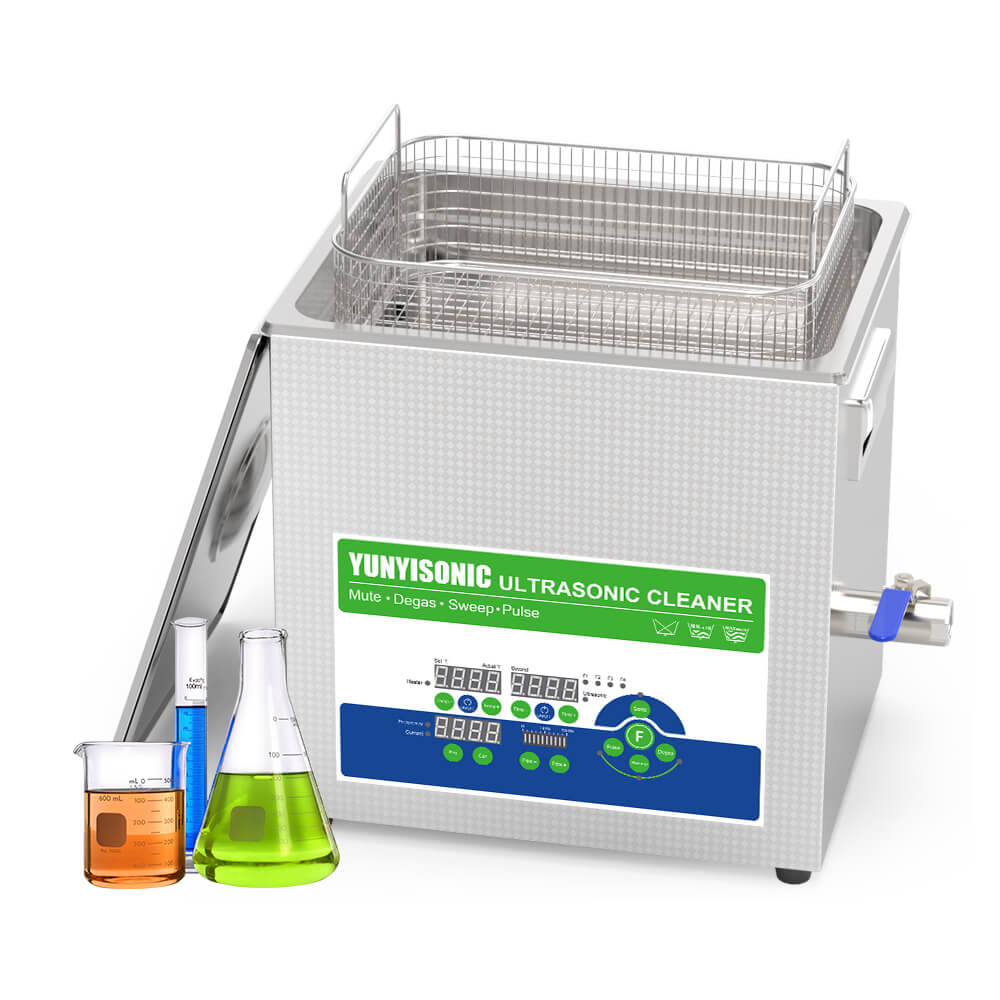
10L Single-Frequency Ultrasonic Bath, 200kHz, Adjustable Power 0–400W
In stock
| Volumetric Weight | 12.5 kg |
|---|---|
| Package Dimensions | 43.5 × 36 × 40 cm |
| Brand | Yunyisonic |
| Origin | Shenzhen City, China |
| Capacity | 10L |
| Frequency | 200kHz |
| Power | 0-400W |
| Timer | 1-9999s |
| Heater | RT~80°C |
| Tank Material | SUS304 Stainless Steel |
| Housing Material | SUS304 Stainless Steel |
| Voltage | AC 110V 60Hz;AC 220V 50Hz |
| Plug Type | AU Plug, EU Plug, Other Plugs, UK Plug, US Plug |
| Certificates | CE, FCC, ROHS |
| Warranty | 1 Year |
| Customization | 485 Port, Frequency, PLC System, Tanks Numbers |
| Assisted SystemsYunyisonic Laboratory Multi-Function Ultrasonic Cleaning System for Assisted Extraction Emulsification Homogening Dispersion Separation Mixing Defoaming Dissolution Washing | Cleaning, Defoaming, Dispersion, Dissolution, Extraction, Mixing, Separation, Washing |
| Function | Clean Thoroughly, Degassing, Digital Control, Heating, Noise Reduction, Power Adjustable, Pulse, Sweep, Timing |
| Manufacturer | Yunyisonic Shenzhen Co., Ltd. |
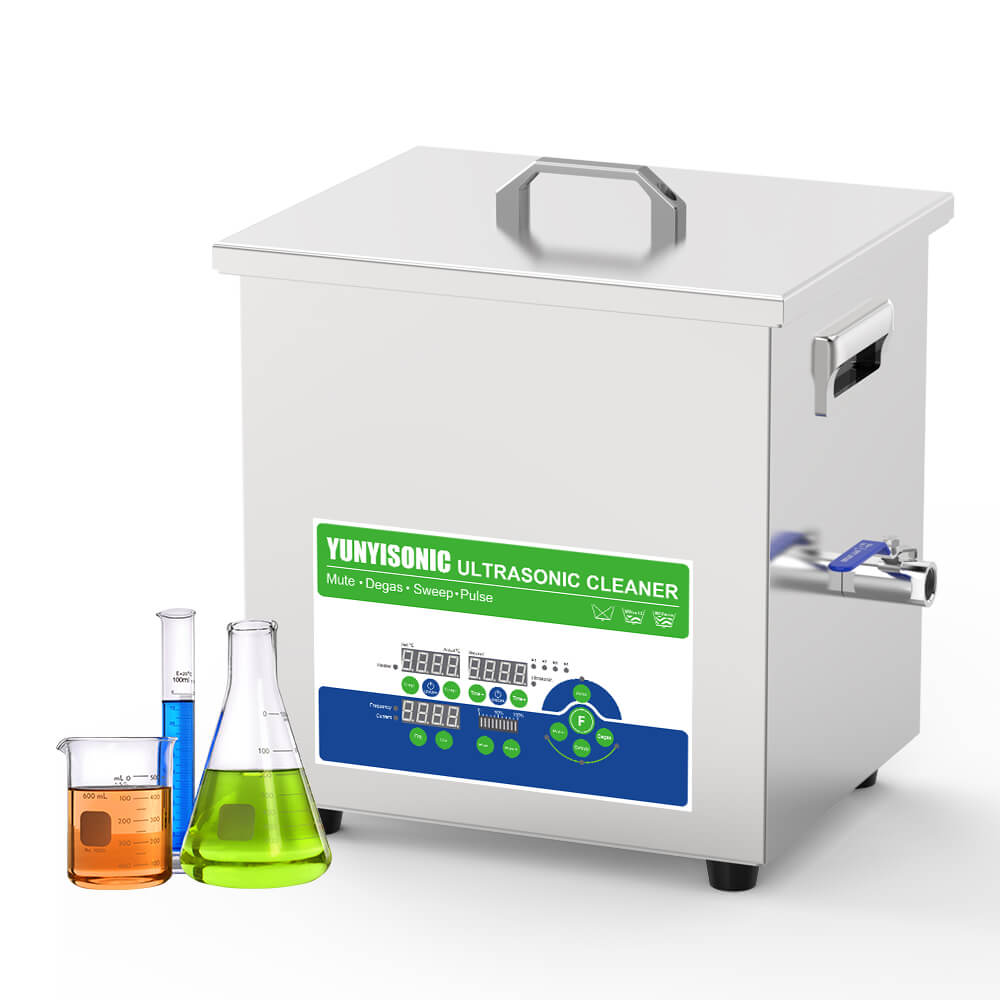
10L Single-Frequency Ultrasonic Bath, 20KHz, Adjustable Power 0–600W
In stock
| Volumetric Weight | 34.85 kg |
|---|---|
| Package Dimensions | 50 × 38 × 45 cm |
| Brand | Yunyisonic |
| Origin | Shenzhen City, China |
| Capacity | 10L |
| Frequency | 20kHz |
| Power | 0-600W |
| Timer | 1-9999s |
| Heater | RT~80°C |
| Tank Material | SUS304 Stainless Steel |
| Housing Material | SUS304 Stainless Steel |
| Voltage | AC 110V 60Hz;AC 220V 50Hz |
| Plug Type | AU Plug, EU Plug, Other Plugs, UK Plug, US Plug |
| Certificates | CE, FCC, ROHS |
| Warranty | 1 Year |
| Customization | 485 Port, Frequency, PLC System, Tanks Numbers |
| Assisted SystemsYunyisonic Laboratory Multi-Function Ultrasonic Cleaning System for Assisted Extraction Emulsification Homogening Dispersion Separation Mixing Defoaming Dissolution Washing | Cleaning, Defoaming, Dispersion, Dissolution, Emulsification, Extraction, Homogenization, Mixing, Separation, Washing |
| Function | Degassing, Digital Control, Noise Reduction, Power Adjustable, Pulse, Sweep |
| Manufacturer | Yunyisonic Shenzhen Co., Ltd. |
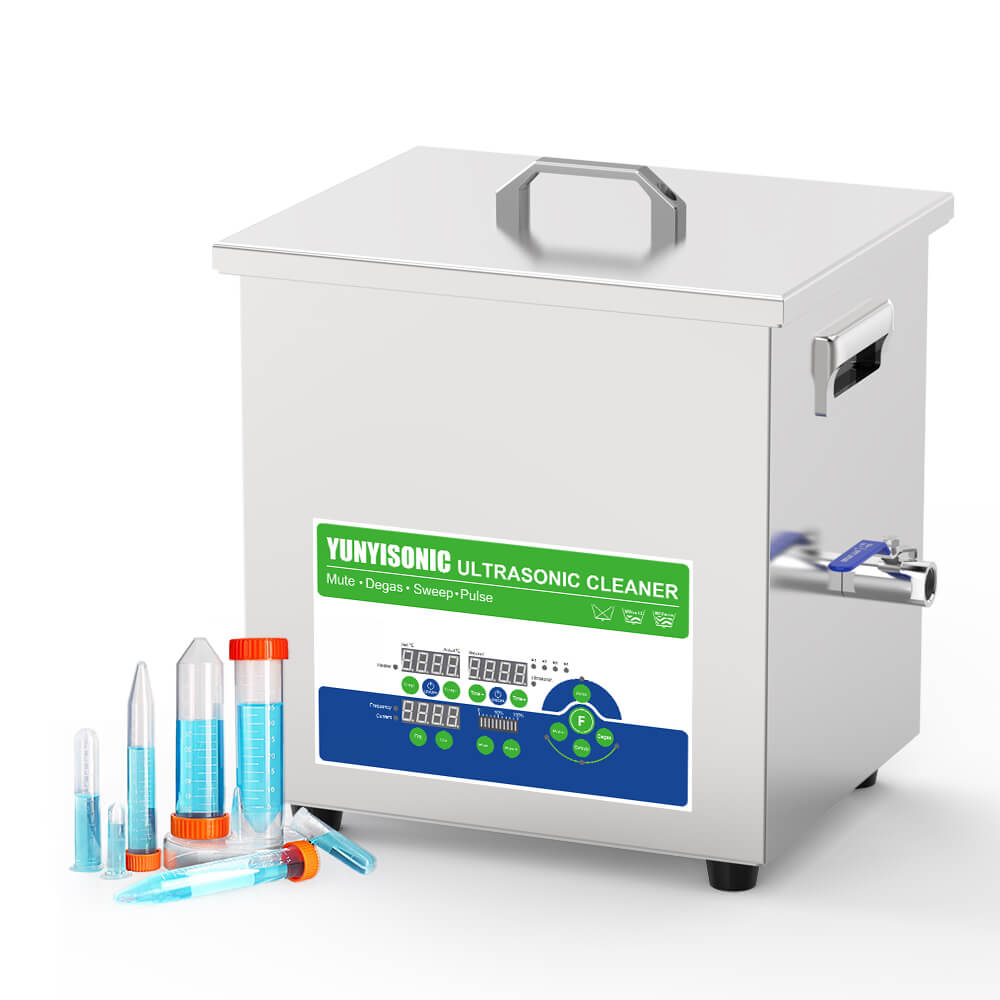
10L Single-Frequency Ultrasonic Bath, 25KHz, Adjustable Power 0–400W
In stock
| Volumetric Weight | 33 kg |
|---|---|
| Package Dimensions | 50 × 38 × 45 cm |
| Brand | Yunyisonic |
| Origin | Shenzhen City, China |
| Capacity | 10L |
| Frequency | 25kHz |
| Power | 0-400W |
| Timer | 1-9999s |
| Heater | RT~80°C |
| Tank Material | SUS304 Stainless Steel |
| Housing Material | SUS304 Stainless Steel |
| Voltage | AC 110V 60Hz;AC 220V 50Hz |
| Plug Type | AU Plug, EU Plug, Other Plugs, UK Plug, US Plug |
| Certificates | CE, FCC, ROHS |
| Warranty | 1 Year |
| Customization | 485 Port, Frequency, PLC System, Tanks Numbers |
| Assisted SystemsYunyisonic Laboratory Multi-Function Ultrasonic Cleaning System for Assisted Extraction Emulsification Homogening Dispersion Separation Mixing Defoaming Dissolution Washing | Cleaning, Defoaming, Dispersion, Dissolution, Emulsification, Extraction, Homogenization, Mixing, Separation, Washing |
| Function | Degassing, Digital Control, Noise Reduction, Power Adjustable, Pulse, Sweep |
| Manufacturer | Yunyisonic Shenzhen Co., Ltd. |
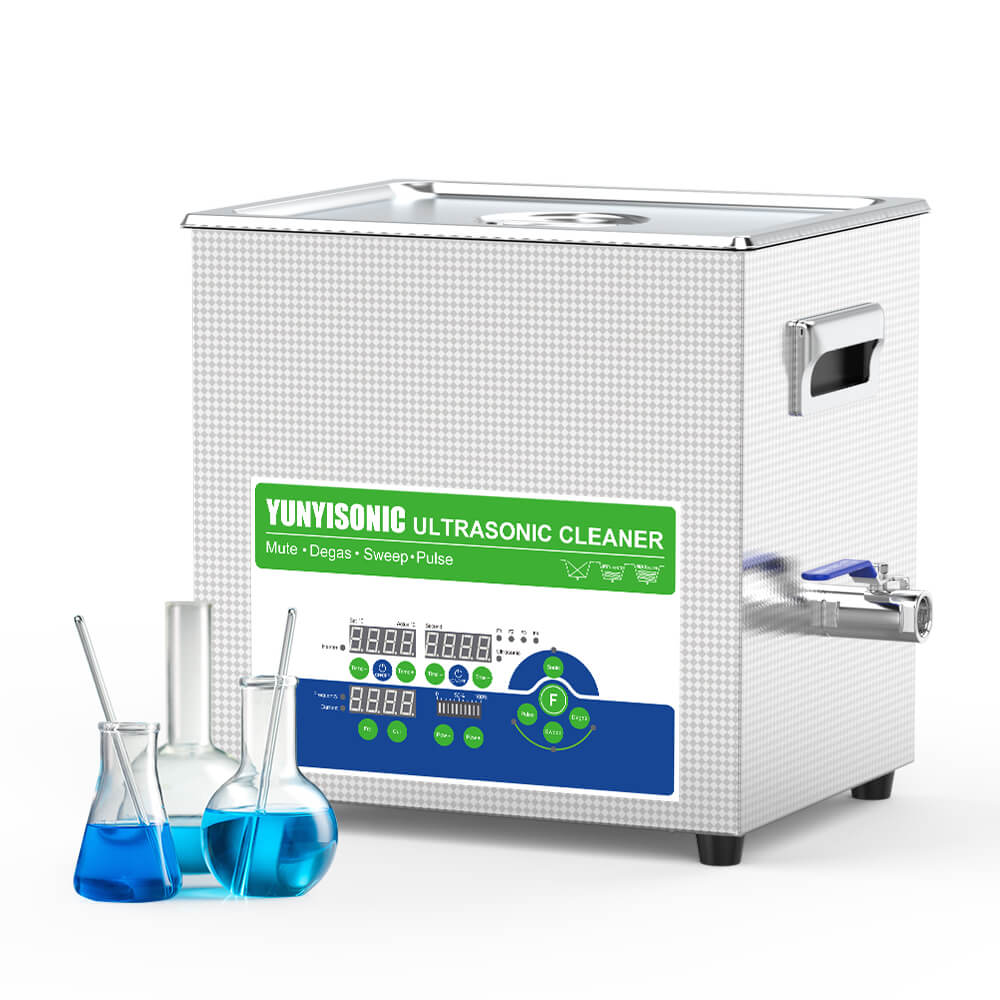
10L Single-Frequency Ultrasonic Bath, 28KHz, Adjustable Power 0–300W
In stock
| Volumetric Weight | 12.65 kg |
|---|---|
| Package Dimensions | 43.5 × 36 × 40 cm |
| Brand | Yunyisonic |
| Origin | Shenzhen City, China |
| Capacity | 10L |
| Frequency | 28kHz |
| Power | 0-300W |
| Timer | 1-9999s |
| Heater | RT~80°C |
| Tank Material | SUS304 Stainless Steel |
| Housing Material | SUS304 Stainless Steel |
| Voltage | AC 110V 60Hz;AC 220V 50Hz |
| Plug Type | AU Plug, EU Plug, Other Plugs, UK Plug, US Plug |
| Certificates | CE, FCC, ROHS |
| Warranty | 1 Year |
| Customization | 485 Port, Frequency, PLC System, Tanks Numbers |
| Assisted SystemsYunyisonic Laboratory Multi-Function Ultrasonic Cleaning System for Assisted Extraction Emulsification Homogening Dispersion Separation Mixing Defoaming Dissolution Washing | Cleaning, Defoaming, Dispersion, Dissolution, Extraction, Mixing, Separation, Washing |
| Function | Degassing, Digital Control, Noise Reduction, Power Adjustable, Pulse, Sweep |
| Manufacturer | Yunyisonic Shenzhen Co., Ltd. |
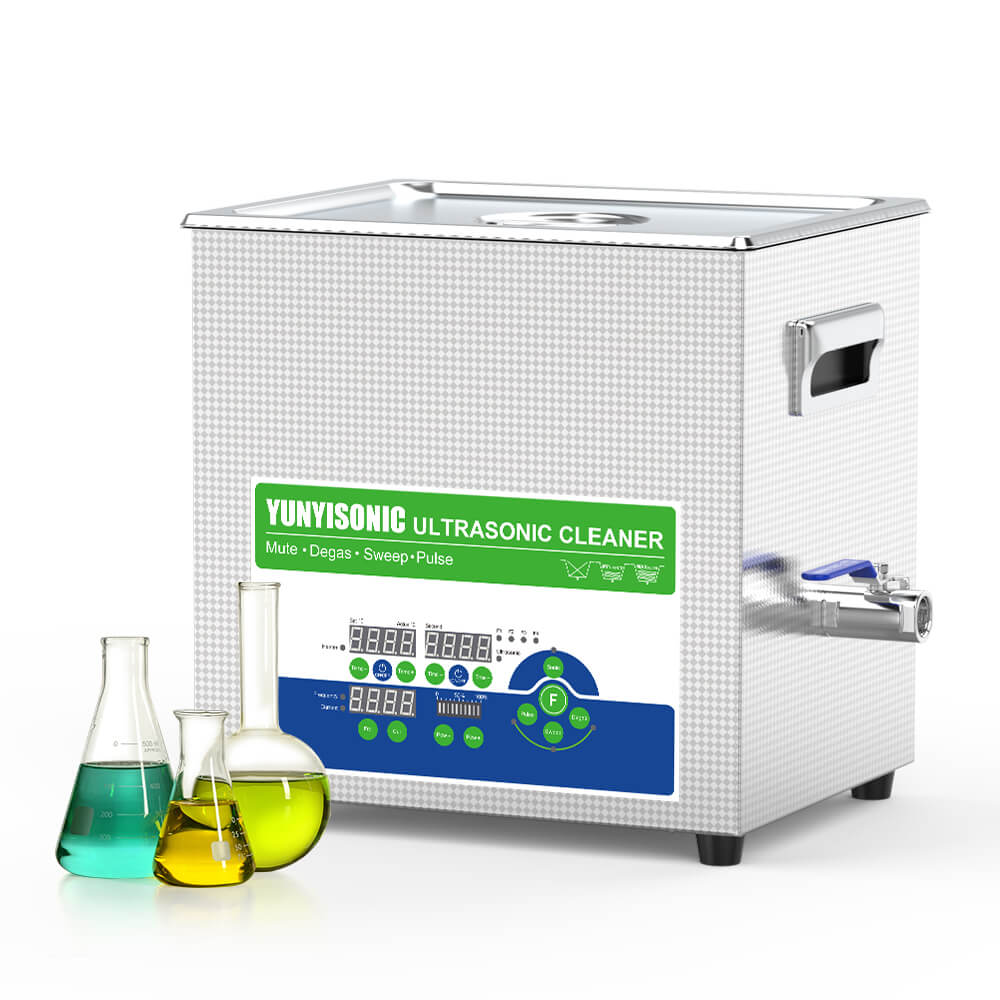
10L Single-Frequency Ultrasonic Bath, 33KHz, Adjustable Power 0–300W
In stock
| Volumetric Weight | 12.5 kg |
|---|---|
| Package Dimensions | 43.5 × 36 × 40 cm |
| Brand | Yunyisonic |
| Origin | Shenzhen City, China |
| Capacity | 10L |
| Frequency | 33kHz |
| Power | 0-300W |
| Timer | 1-9999s |
| Heater | RT~80°C |
| Tank Material | SUS304 Stainless Steel |
| Housing Material | SUS304 Stainless Steel |
| Voltage | AC 110V 60Hz;AC 220V 50Hz |
| Plug Type | AU Plug, EU Plug, Other Plugs, UK Plug, US Plug |
| Certificates | CE, FCC, ROHS |
| Warranty | 1 Year |
| Customization | 485 Port, Frequency, PLC System, Tanks Numbers |
| Assisted SystemsYunyisonic Laboratory Multi-Function Ultrasonic Cleaning System for Assisted Extraction Emulsification Homogening Dispersion Separation Mixing Defoaming Dissolution Washing | Cleaning, Defoaming, Dispersion, Dissolution, Extraction, Mixing, Separation, Washing |
| Function | Degassing, Digital Control, Noise Reduction, Power Adjustable, Pulse, Sweep |
| Manufacturer | Yunyisonic Shenzhen Co., Ltd. |
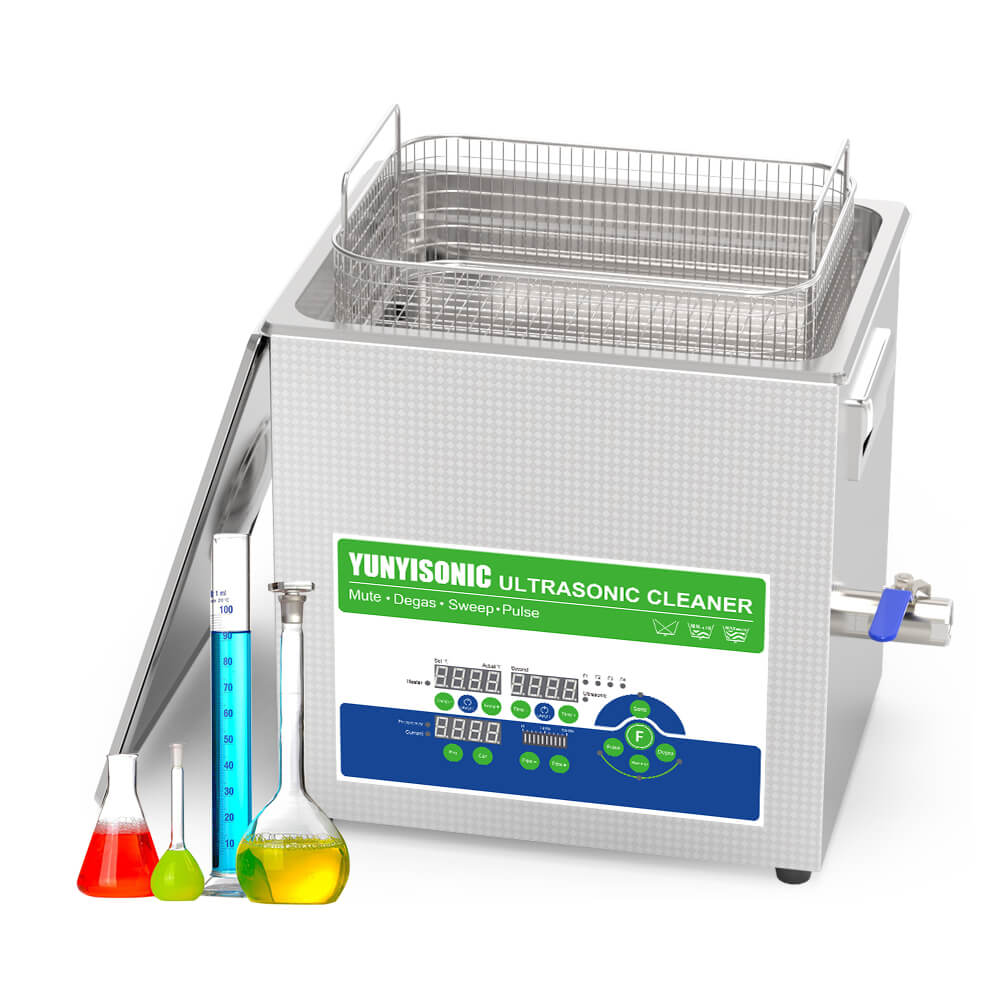
10L Single-Frequency Ultrasonic Bath, 40KHz, Adjustable Power 0–200W
In stock
| Volumetric Weight | 12.85 kg |
|---|---|
| Package Dimensions | 43.5 × 36 × 40 cm |
| Brand | Yunyisonic |
| Origin | Shenzhen City, China |
| Capacity | 10L |
| Frequency | 40kHz |
| Power | 0-200W |
| Timer | 1-9999s |
| Heater | RT~80°C |
| Tank Material | SUS304 Stainless Steel |
| Housing Material | SUS304 Stainless Steel |
| Voltage | AC 110V 60Hz;AC 220V 50Hz |
| Plug Type | AU Plug, EU Plug, Other Plugs, UK Plug, US Plug |
| Certificates | CE, FCC, ROHS |
| Warranty | 1 Year |
| Customization | 485 Port, Frequency, PLC System, Tanks Numbers |
| Assisted SystemsYunyisonic Laboratory Multi-Function Ultrasonic Cleaning System for Assisted Extraction Emulsification Homogening Dispersion Separation Mixing Defoaming Dissolution Washing | Cleaning, Defoaming, Dispersion, Dissolution, Extraction, Mixing, Separation, Washing |
| Function | Degassing, Digital Control, Noise Reduction, Power Adjustable, Pulse, Sweep |
| Manufacturer | Yunyisonic Shenzhen Co., Ltd. |
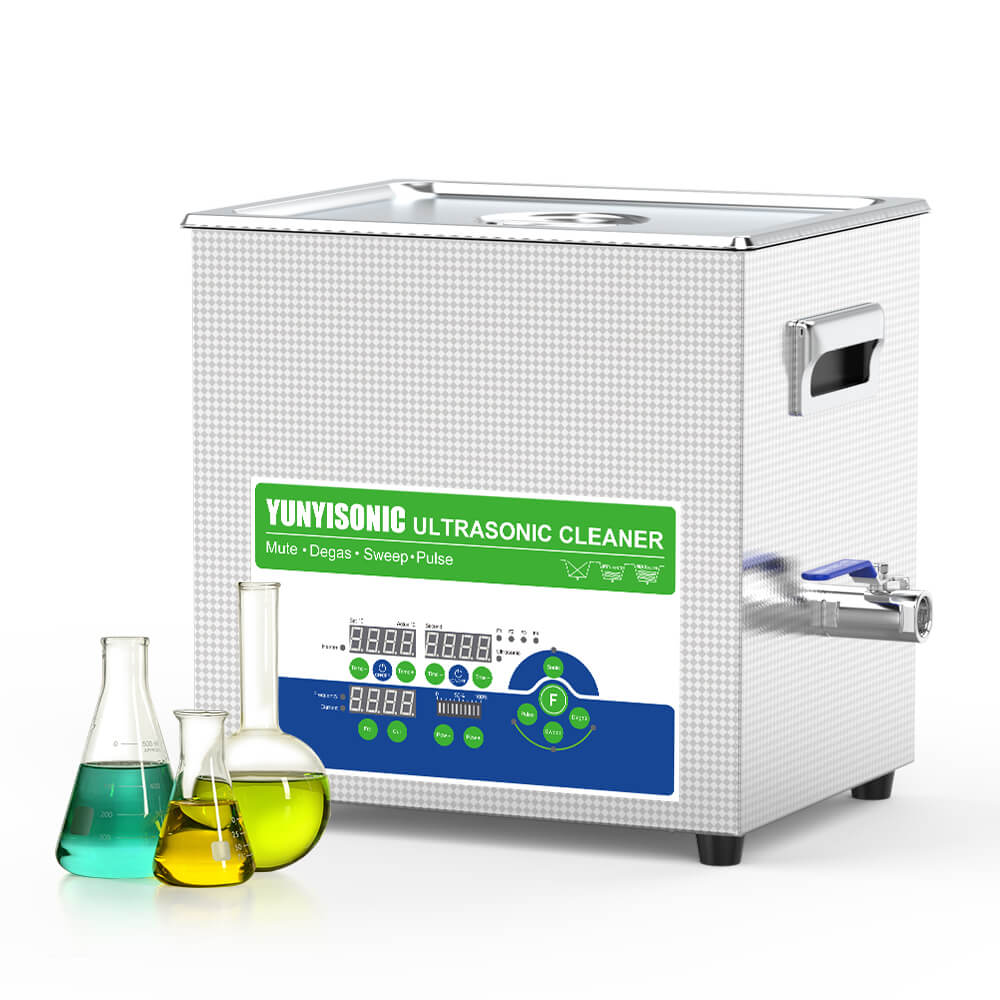
10L Single-Frequency Ultrasonic Bath, 40KHz, Adjustable Power 0–400W
In stock
| Volumetric Weight | 12.5 kg |
|---|---|
| Package Dimensions | 43.5 × 36 × 40 cm |
| Brand | Yunyisonic |
| Origin | Shenzhen City, China |
| Capacity | 10L |
| Frequency | 40kHz |
| Power | 0-400W |
| Timer | 1-9999s |
| Heater | RT~80°C |
| Tank Material | SUS304 Stainless Steel |
| Housing Material | SUS304 Stainless Steel |
| Voltage | AC 110V 60Hz;AC 220V 50Hz |
| Plug Type | AU Plug, EU Plug, Other Plugs, UK Plug, US Plug |
| Certificates | CE, FCC, ROHS |
| Warranty | 1 Year |
| Customization | 485 Port, Frequency, PLC System, Tanks Numbers |
| Assisted SystemsYunyisonic Laboratory Multi-Function Ultrasonic Cleaning System for Assisted Extraction Emulsification Homogening Dispersion Separation Mixing Defoaming Dissolution Washing | Cleaning, Defoaming, Dispersion, Dissolution, Extraction, Mixing, Separation, Washing |
| Function | Degassing, Digital Control, Noise Reduction, Power Adjustable, Pulse, Sweep |
| Manufacturer | Yunyisonic Shenzhen Co., Ltd. |
10L Single-Frequency Ultrasonic Bath, 53KHz, Adjustable Power 0–280W
In stock
| Volumetric Weight | 12.5 kg |
|---|---|
| Package Dimensions | 43.5 × 36 × 40 cm |
| Brand | Yunyisonic |
| Origin | Shenzhen City, China |
| Capacity | 10L |
| Frequency | 53kHz |
| Power | 0-280W |
| Timer | 1-9999s |
| Heater | RT~80°C |
| Tank Material | SUS304 Stainless Steel |
| Housing Material | SUS304 Stainless Steel |
| Voltage | AC 110V 60Hz;AC 220V 50Hz |
| Plug Type | AU Plug, EU Plug, Other Plugs, UK Plug, US Plug |
| Certificates | CE, FCC, ROHS |
| Warranty | 1 Year |
| Customization | 485 Port, Frequency, PLC System, Tanks Numbers |
| Assisted SystemsYunyisonic Laboratory Multi-Function Ultrasonic Cleaning System for Assisted Extraction Emulsification Homogening Dispersion Separation Mixing Defoaming Dissolution Washing | Cleaning, Defoaming, Dispersion, Dissolution, Extraction, Mixing, Separation, Washing |
| Function | Degassing, Digital Control, Noise Reduction, Power Adjustable, Pulse, Sweep |
| Manufacturer | Yunyisonic Shenzhen Co., Ltd. |
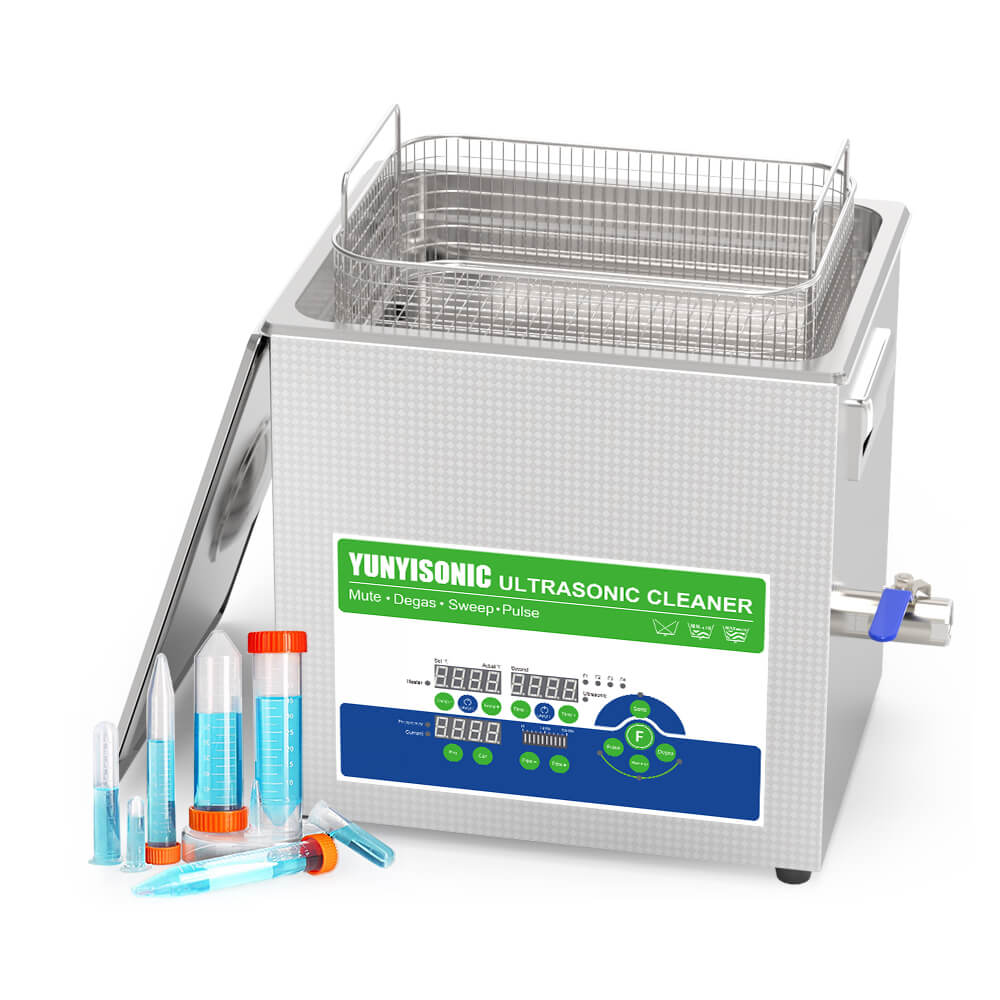
10L Single-Frequency Ultrasonic Bath, 68kHz, Adjustable Power 0–400W
In stock
| Volumetric Weight | 12.5 kg |
|---|---|
| Package Dimensions | 43.5 × 36 × 40 cm |
| Brand | Yunyisonic |
| Origin | Shenzhen City, China |
| Capacity | 10L |
| Frequency | 68kHz |
| Power | 0-400W |
| Timer | 1-9999s |
| Heater | RT~80°C |
| Tank Material | SUS304 Stainless Steel |
| Housing Material | SUS304 Stainless Steel |
| Voltage | AC 110V 60Hz;AC 220V 50Hz |
| Plug Type | AU Plug, EU Plug, Other Plugs, UK Plug, US Plug |
| Certificates | CE, FCC, ROHS |
| Warranty | 1 Year |
| Customization | 485 Port, Frequency, PLC System, Tanks Numbers |
| Assisted SystemsYunyisonic Laboratory Multi-Function Ultrasonic Cleaning System for Assisted Extraction Emulsification Homogening Dispersion Separation Mixing Defoaming Dissolution Washing | Cleaning, Defoaming, Dispersion, Dissolution, Extraction, Mixing, Separation, Washing |
| Function | Degassing, Digital Control, Noise Reduction, Power Adjustable, Pulse, Sweep |
| Manufacturer | Yunyisonic Shenzhen Co., Ltd. |