





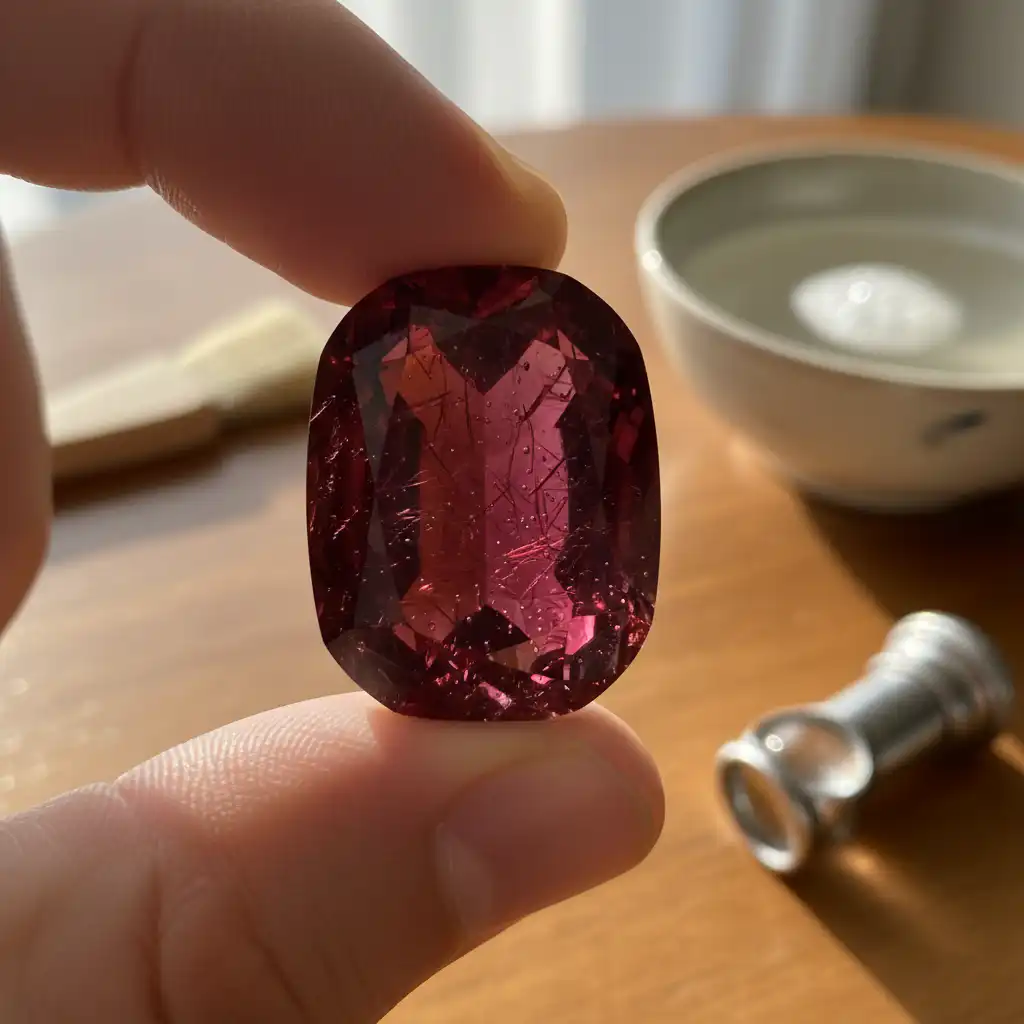

Garnet jewelry is stunning. Whether it is a deep red almandine ring, a vivid orange spessartine bracelet, or a rare green tsavorite pendant, keeping that gemstone clean is part of keeping it beautiful. Many people reach for their ultrasonic cleaner because it is fast and convenient. But before you drop that garnet piece into the tank, there is something important you need to understand.
The short answer is: it depends on the type of garnet and its condition. For some garnets, ultrasonic cleaning carries real risk. For others, it may be acceptable under specific circumstances. Getting this wrong can mean permanent damage to a piece you love. This guide breaks it all down clearly so you can make the right call for your specific stone.
Garne
What Makes Ultrasonic Cleaners So Powerful and Risky for Some Gems
Ultrasonic cleaners work by sending high-frequency sound waves, typically between 20 and 200 kHz, through a liquid solution. These waves create millions of tiny bubbles that rapidly expand and then violently collapse against surfaces. This process is called cavitation, and it is what makes ultrasonic cleaners so effective at blasting away grease, dirt, and oil from jewelry.
The problem is that cavitation is not selective. It does not just target dirt. It also creates micro-vibrations that travel through the entire object sitting in the tank. For a solid, stable gemstone with no internal flaws, that vibration may be harmless. For stones with existing cracks, inclusions, or surface treatments, those same micro-vibrations can make things significantly worse.
Over time, or sometimes in a single cleaning session, this can lead to:
- Fractures spreading along existing cracks or planes of weakness inside the stone
- Surface coatings or fracture fillings being loosened or completely removed
- Setting damage if the metal prongs or bezels holding the stone are worn or compromised
Understanding how the technology works is the first step in making an informed decision about whether to use it on your garnet piece.
Can You Put Garnet in an Ultrasonic Cleaner? The Direct Answer
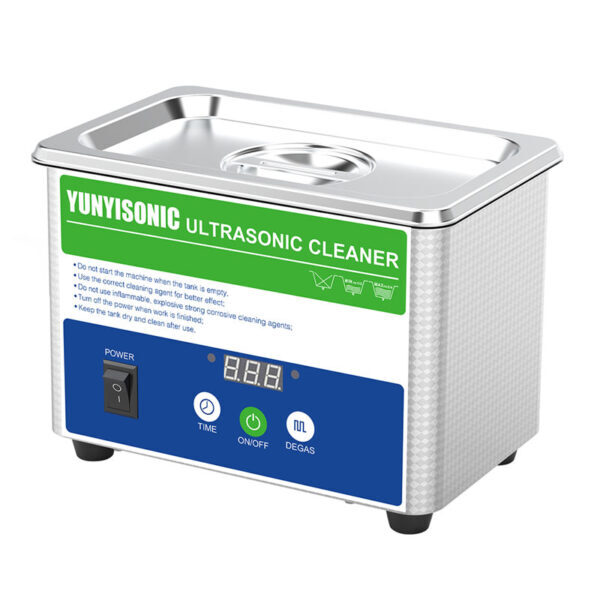
800ml Portable Ultrasonic Cleaner Yunyisonic
The General Rule for Most Garnets
Most jewelry experts and gemologists advise caution when it comes to garnets and ultrasonic cleaners. The Gemological Institute of America (GIA) generally recommends avoiding ultrasonic and steam cleaning for garnet. This is not because garnet is an unusually fragile mineral, but because specific characteristics vary widely from one garnet variety to another, and the risks are not always obvious.
Garnet ranks between 6.5 and 7.5 on the Mohs hardness scale, which is reasonably durable for everyday wear. However, hardness alone does not determine whether a stone is safe in an ultrasonic cleaner. The real concern is the presence of inclusions, fractures, and surface treatments, all of which are common in many garnet varieties and all of which interact badly with ultrasonic vibration.
Why Certain Garnets Face Higher Risk
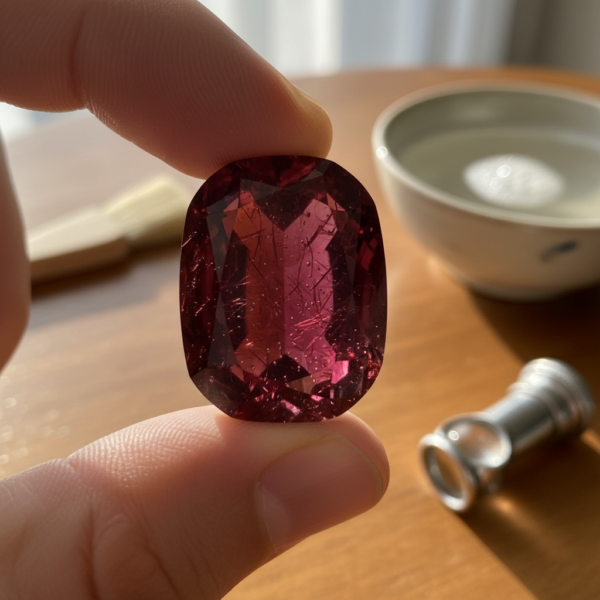
Some garnets are heavily included by nature. This means they have internal features such as needle-like crystals, mineral particles, or fingerprint-like fracture patterns inside the stone. When ultrasonic vibrations reach these inclusions, they act as stress concentration points. The mechanical energy focuses around those weak spots and can cause the stone to chip, crack, or even fracture entirely from the inside out.
This is not just a theoretical concern. Jewelers with decades of experience often report seeing garnet stones that developed surface breaks or visible fractures after improper cleaning. The damage is typically irreversible. Once a fracture spreads, there is no bringing the stone back to its original condition. That is exactly why prevention matters so much more than correction.
Understanding Garnet Hardness, Composition, and Internal Fractures
Garnet is not a single mineral but a large group of related silicate minerals. The most common varieties include almandine, pyrope, spessartine, grossular, uvarovite, and andradite. Each has a slightly different chemical composition and a different set of physical properties.
What they share is that garnets frequently contain inclusions. Some types, like hessonite garnet, are so characteristically included that the internal swirling patterns are considered a signature of the variety. Demantoid garnet, one of the most prized garnets in the world, often contains chrysotile fiber inclusions called horsetails. These inclusions are actually considered desirable among collectors, but they also make the stone more mechanically vulnerable to ultrasonic stress.
Beyond inclusions, many garnets contain fractures. Fractures are different from inclusions in that they represent actual planes of weakness or breaks within the crystal lattice. Even a fracture invisible to the naked eye can be widened by intense vibration. A cracked stone that survives weeks of careful wear can be irreparably damaged in minutes inside an ultrasonic cleaner.
Key factors that raise the risk level:
- Visible surface chips, cracks, or scratches on the stone
- A cloudy or hazy appearance inside the gem, suggesting heavy inclusions
- Any prior repairs, re-settings, or known impact events
- Extended exposure to heat, harsh chemicals, or direct sunlight over time
Garnet Varieties and Their Ultrasonic Compatibility
Almandine and Pyrope Garnets
These are the most familiar types of garnet and the ones most people picture when they think of a deep red gemstone. Almandine and pyrope garnets are relatively dense and often contain moderate inclusions. Ultrasonic cleaning is generally not recommended, though stones that are clean to the eye, free of visible fractures, and set securely in undamaged metal carry a lower risk than heavily included stones. Even so, the cautious approach is always the right one when you have any doubt about the stone’s condition.
Tsavorite and Demantoid Garnets
Tsavorite is a bright green variety of grossular garnet prized for its vivid color and high clarity. While it tends to be cleaner than some other garnets, it can still carry fractures, and it is often a high-value purchase. Using an ultrasonic cleaner on a tsavorite stone introduces unnecessary risk for a gem worth protecting.
Demantoid garnet demands extra caution. It is one of the most valuable garnets available, sometimes exceeding the price of comparable rubies or sapphires. Its famous horsetail inclusions and relatively lower hardness of around 6.5 on the Mohs scale make it especially sensitive to mechanical stress. Demantoid garnet should never go into an ultrasonic cleaner. The combination of high value and structural vulnerability makes manual cleaning the only sensible option.
Hessonite, Spessartine, and Rhodolite Garnets
Hessonite is the warm orange-brown variety of grossular garnet, recognizable for its characteristic internal “heat-wave” appearance. Those swirling inclusions are part of its identity, and they are also exactly what makes ultrasonic cleaning so dangerous for this stone. Spessartine garnet, known for its vivid orange to orange-red tones, also tends to carry inclusions and fractures that respond poorly to vibration.
Rhodolite, the rose-red to purple-red variety formed from a pyrope-almandine blend, is generally cleaner in appearance than hessonite and is considered one of the more stable garnets. Even so, the safe recommendation remains the same across all varieties: manual cleaning is the better choice.
How Treatments and Fillings Change the Risk
One of garnet’s genuine strengths as a gemstone is that most natural garnets are sold untreated. Unlike rubies, emeralds, and sapphires, which are almost universally heat-treated or filled, garnets rarely need enhancement to display their natural color and clarity. This is a genuine selling point.
However, some lower-quality garnets are fracture-filled with glass or resin to improve their visible clarity and make them more saleable. If your garnet has been fracture-filled and you put it into an ultrasonic cleaner, the results can be seriously damaging. The vibrations can cause the filling material to loosen, develop micro-cracks, or detach from the fracture walls altogether. The cleaning solution itself may also chemically interact with certain resins. A stone that appeared clean and bright before cleaning can emerge cloudy, visibly fractured, or structurally weakened.
If you are not certain whether your garnet has received any treatment, ask the original seller for documentation or consult a certified gemologist before using any ultrasonic device. A brief professional assessment is far cheaper than replacing a damaged stone.
Safe Ways to Clean Garnet Jewelry at Home
The encouraging reality is that garnet is not difficult to clean by hand. You do not need expensive equipment or specialized products for routine maintenance.
The warm soapy water method remains the most trusted and consistently recommended approach among jewelers and gemologists alike. Here is how to do it properly:
- Fill a small bowl with warm water and add a few drops of mild, fragrance-free dish soap.
- Soak the piece for five to ten minutes to loosen oils, lotions, and surface dirt.
- Gently scrub with a soft-bristled toothbrush, focusing on the underside of the stone and the area between the gem and the setting, where buildup hides.
- Rinse thoroughly under lukewarm running water, making sure no soap residue remains.
- Pat dry with a clean, lint-free cloth and allow the piece to air dry completely before storing it.
Avoid hot water entirely. Sudden temperature changes can stress the stone internally, especially in already-fractured specimens. Similarly, avoid harsh household cleaners like bleach, ammonia-based products, or acetone, as these can damage the metal setting and potentially affect the surface of the stone.
Things to avoid when cleaning garnet at home:
- Abrasive scrubbing pads or rough cloths that can scratch the surface
- Toothpaste, which contains mild abrasives and is not appropriate for gemstone cleaning
- Steam cleaners or boiling water, which introduce thermal shock
- Ultrasonic cleaners for any garnet that shows inclusions, fractures, or signs of treatment
When to Seek Professional Cleaning
If your garnet jewelry has accumulated heavy buildup that gentle home cleaning cannot remove, a professional jeweler is the right solution. An experienced jeweler can evaluate the condition of the stone directly, inspect the setting for wear, and choose the appropriate cleaning method based on what they observe. Many will use a simple hand-cleaning approach for included stones and reserve more powerful methods for stones they have assessed as safe.
Professional visits also serve a second purpose. Prongs and bezels that hold a garnet in place wear down gradually, sometimes without being noticeable until a stone shifts or falls free. Bringing your garnet piece in for a professional inspection once a year is a smart habit for any piece you value and wear regularly.
Long-Term Care Tips for Garnet Jewelry
Protecting your garnet from damage in the first place reduces how often it needs cleaning and minimizes the risk of accumulated wear that could compromise the stone.
Practical habits that protect garnet over time:
- Remove garnet jewelry before swimming, bathing, or using household cleaning products, as repeated chemical exposure degrades both the stone surface and the metal setting.
- Store pieces separately in a fabric-lined jewelry box or individual pouches to prevent other stones or metals from scratching the garnet.
- Avoid wearing garnet during high-impact activities such as sports, gardening, or manual labor, where sharp strikes can chip or fracture the stone.
- Clean your piece regularly using the gentle warm soapy water method. Frequent light cleaning prevents the kind of heavy buildup that would otherwise require more aggressive treatment.
- Inspect settings periodically at home and professionally, checking that prongs are not bent, worn, or loosening. A stone that is not held securely is far more vulnerable to damage from any cleaning method.
Garnet is a beautiful and relatively durable gemstone. But like every natural mineral, it carries specific vulnerabilities that deserve respect. The vibrations produced by an ultrasonic cleaner may seem like a minor mechanical force, but for a stone with existing inclusions or fractures, they can accomplish in minutes what years of careful wear never could. A soft brush, mild soap, and warm water have protected jewelry for generations. They are still the safest, most effective choice for keeping your garnet looking its best for years to come.