






Rolex watches are more than just luxury timepieces. They are precision-engineered instruments, status symbols, and in many cases, heirlooms passed down through generations. Maintaining their appearance and function is crucial, but not all cleaning methods are created equal. Among those commonly discussed is ultrasonic cleaning, a method praised for its ability to deep clean metal parts and intricate surfaces. But the question remains: can you safely put a Rolex in an ultrasonic cleaner?
This is not just about technique. It’s about protecting a significant investment. Understanding how ultrasonic cleaning works, which parts of a Rolex are compatible with this method, and what experts recommend is essential before deciding whether to trust your timepiece to this technology.
Why Rolex Watches Require Careful Cleaning
Every Rolex, whether it’s a Submariner, a Datejust, or a Daytona, is built with exquisite precision. Inside the case are hundreds of tiny components, gears, jewels, and springs that work in perfect harmony. Externally, the case, bracelet, bezel, and crystal are carefully crafted to be both beautiful and functional.
However, like all items worn regularly, dirt, sweat, body oils, and environmental grime accumulate in crevices, especially in bracelets and around the crown and lugs. This not only dulls the appearance but can also lead to minor corrosion or wear if left unchecked over time.
Yet, cleaning such a refined instrument requires care. Not every soap or cleaning method is appropriate. Applying too much force or using the wrong chemicals can damage seals, fade finishes, or even compromise the waterproof gaskets. That’s why many Rolex owners turn to ultrasonic cleaners as a possible solution.
Understanding Ultrasonic Cleaning for Watches
Ultrasonic cleaning involves using high-frequency sound waves to generate microscopic bubbles in a liquid solution. As these bubbles collapse, they release tiny bursts of energy that dislodge dirt, oils, and grime, even from the smallest crevices.
It’s a method widely used in jewelry, dental tools, laboratory equipment, and precision industrial parts. For watch cleaning, it has become a staple in many professional servicing centers for cleaning bracelets, screws, and case parts after disassembly.
The biggest appeal is its ability to clean without direct contact. There’s no need to brush or scrub, which means no abrasion to polished or brushed surfaces. But just because it’s effective on metal doesn’t mean every part of a watch is safe to clean this way.
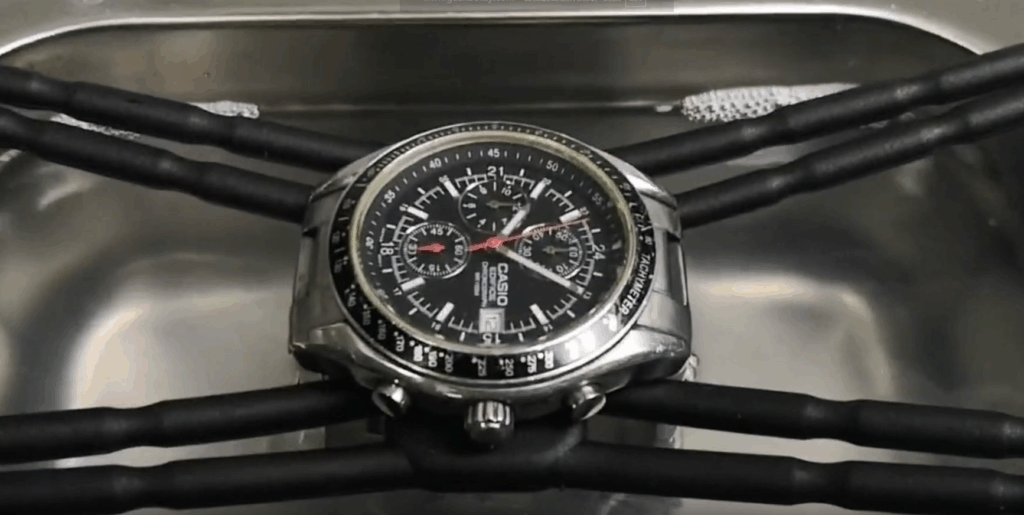
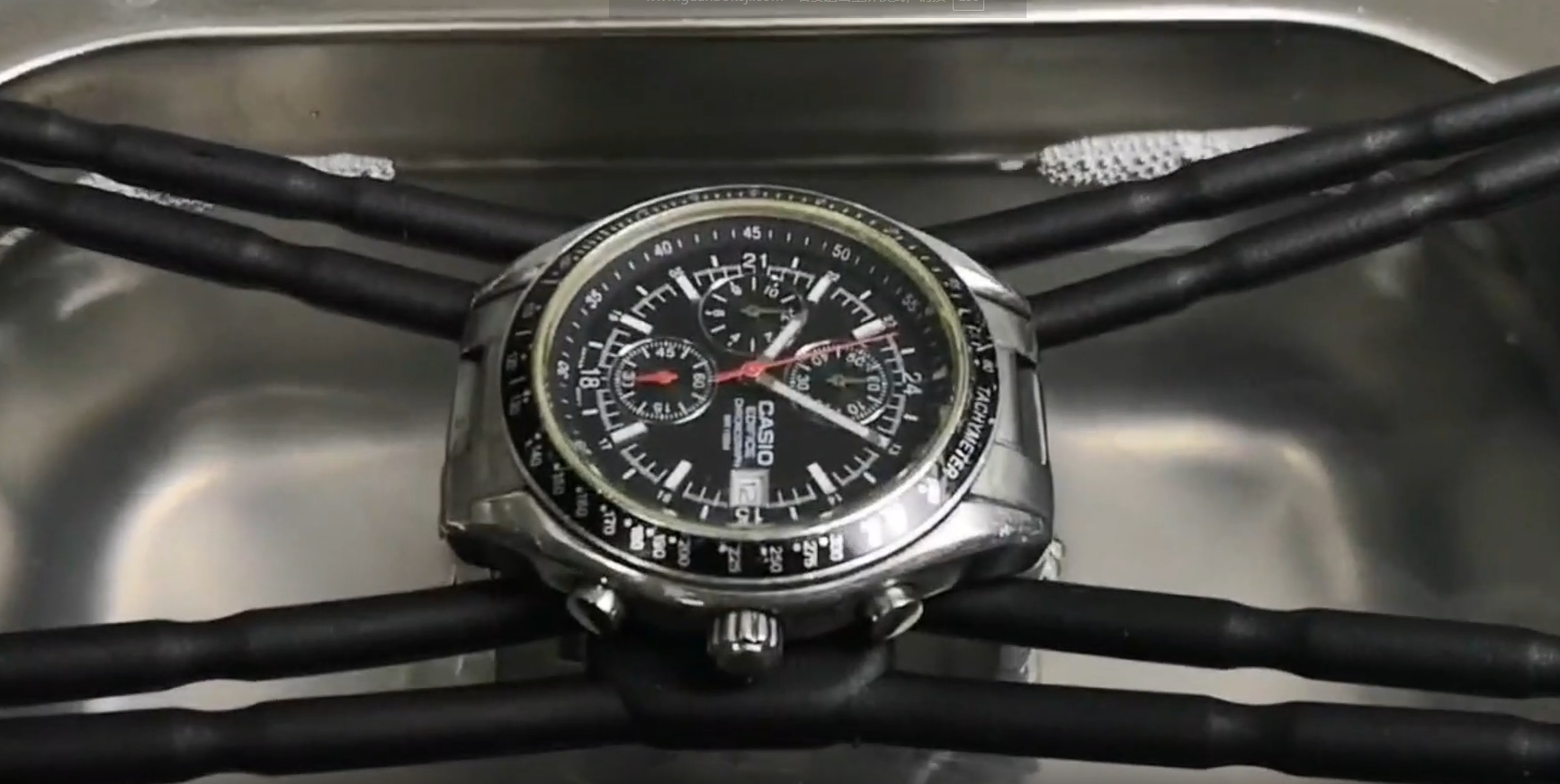
An ordinary watch with an unknown brand is being cleaned in an ultrasonic cleaning machine
Knowing how ultrasonic energy affects the materials and seals of a Rolex is key to making the right choice.
Can You Put a Rolex in an Ultrasonic Cleaner?
The answer depends on what part of the Rolex you’re talking about.
Rolex officially advises caution when it comes to using ultrasonic cleaners. While the stainless steel bracelet is typically safe to clean using this method, the watch head, which is the case containing the movement, should not be submerged in an ultrasonic bath, especially without a full inspection and seal check.
Many people confuse the terms “water-resistant” and “waterproof.” Most modern Rolex watches offer water resistance up to 100 meters or more. However, this rating assumes the seals are intact, the crown is properly screwed in, and the watch has been pressure-tested recently.
Over time, gaskets can degrade. A micro-crack in the case or a loose crown can allow ultrasonic waves to drive moisture inside, potentially reaching the delicate movement. Once inside, even a tiny amount of fluid can cause corrosion or destroy lubricants.
So, while the bracelet can go into an ultrasonic cleaner, the watch head should stay out unless fully disassembled by a professional.
Which Rolex Components Are Safe for Ultrasonic Cleaning
Ultrasonic cleaning is best used on detached metal bracelets, particularly those made from Oystersteel (904L stainless steel), Rolesor (steel and gold combinations), or platinum. These materials are robust and resistant to chemical and physical stresses.
What should not go into the ultrasonic cleaner is the watch head, especially with the movement intact. Even if your watch is relatively new or rated for deep water use, ultrasonic vibrations can potentially loosen internal parts or cause resonance issues inside the case.
Vintage Rolex watches pose even more risk. Older seals may be brittle, and gaskets may no longer provide sufficient protection. Furthermore, some vintage finishes or materials, such as early aluminum bezels or tritium dials, may be more susceptible to damage.
Gold components and diamond settings on Rolex watches can be cleaned ultrasonically if they are part of the bracelet, but even then, you should verify that stones are not loose before cleaning.
Risks of Cleaning a Rolex Improperly
Submerging the full watch in an ultrasonic cleaner without proper precautions introduces multiple risks:
- Moisture ingress: Even a hairline gasket flaw can let fluid or vapor into the case. Ultrasonic cavitation creates pressure fluctuations that push liquid into tight spaces.
- Movement damage: The shock of ultrasonic waves can affect internal mechanisms, especially if the movement is already sensitive from age or shock.
- Lubricant breakdown: Rolex movements rely on fine oils and greases. Ultrasonic energy can loosen or displace them, leading to friction and wear.
- Crown and crystal pressure: If the crown is not fully secured, or if the crystal has experienced micro-stress, ultrasonic action can cause these parts to shift or detach.
The net result can be costly. A full service from Rolex to repair water damage or replace affected components could exceed the cost of the watch’s original cleaning goals.
What Professional Watchmakers Recommend
Professional watchmakers and authorized Rolex service providers follow very specific protocols when cleaning watches. In most cases, they disassemble the watch completely before using an ultrasonic cleaner. This includes removing the bracelet, separating the caseback, crown, and crystal, and extracting the movement. Each component is then cleaned in a solution that matches the material’s properties and condition.
Ultrasonic cleaning is primarily used on bracelets, clasps, and metal case parts once they have been separated from moisture-sensitive components. The movement itself is never placed in an ultrasonic cleaner unless it has been fully disassembled and all lubricants are removed.
Experts also inspect gaskets and seals before and after cleaning. They ensure that each part is dried completely and reassembled in a cleanroom environment, followed by pressure testing to confirm water resistance.
This level of care is difficult to replicate at home, which is why most professionals recommend that ultrasonic cleaning be limited to bracelets only unless the user has technical experience and the right tools.
Safe Ways to Use Ultrasonic Cleaners on Rolex Bracelets
While ultrasonic cleaning can effectively restore the shine and cleanliness of a Rolex bracelet, it is not generally recommended for individuals to attempt this process at home. Even though the bracelet is separate from the watch’s sensitive internal movement, improper use of an ultrasonic cleaner, even for a metal band, can lead to unintended damage or cosmetic wear if handled incorrectly.
The safest and most responsible approach is to leave ultrasonic cleaning to trained professionals. Authorized Rolex service centers and certified watchmakers use specialized equipment, solutions, and handling techniques that ensure no harm comes to your bracelet’s finish, structure, or clasp mechanisms. They also inspect for loose links, microfractures, or weakened pins, which are issues that a home user might easily miss before cleaning.
For those who still choose to proceed at home despite the risks, extreme care is necessary:
- Never clean the bracelet while it is still attached to the watch head.
- Use only mild, non-ammonia-based solutions formulated for precious metals.
- Avoid excessive heat, high power settings, or long cleaning cycles.
- Ensure the bracelet does not touch the bottom of the tank by using a proper suspension tray.
- Rinse and dry thoroughly using non-abrasive materials and low air pressure.
That said, home cleaning is still inherently riskier and may void warranties or reduce resale value if the bracelet is scratched, discolored, or structurally compromised. Given the value of a Rolex and the precision of its construction, the most reliable way to preserve its integrity is to entrust cleaning to a professional watch technician.
Alternatives to Ultrasonic Cleaning for Whole Rolex Watches
For those who do not have access to proper tools or are understandably cautious about risking damage to a Rolex, professional cleaning remains the safest option. A Rolex is a finely tuned instrument, and even minor handling errors during cleaning can lead to costly consequences.
Whole watches, especially those with the movement still inside the case, should never be placed in an ultrasonic cleaner. They also should not be subjected to water immersion unless they have been properly pressure tested. Attempting to clean the entire watch at home, even manually, carries risks, particularly if the crown is not fully secured or if the gaskets have aged.
If light surface cleaning is needed between professional services, extremely gentle methods may be used with caution:
- A soft-bristled toothbrush and mild soap may help remove superficial dirt from the exterior. However, avoid brushing near the crown, pushers, or caseback joints, where moisture could seep in.
- Use a microfiber cloth to gently wipe down the case and bracelet after wearing. This helps remove sweat, fingerprints, and dust without scratching polished surfaces.
- Watch-specific cleaning wipes, pre-moistened with safe solutions, can be used sparingly for quick touch-ups during travel or daily wear.
That said, these are cosmetic, surface-level solutions, and they cannot replace the deep, safe cleaning procedures available from professionals. Authorized Rolex Service Centers use equipment such as precision steam cleaners and ultrasonic tanks in controlled environments. More importantly, they follow these cleaning procedures with pressure testing and gasket inspection, which ensures your watch remains water-resistant and uncompromised.
Given the value and mechanical sophistication of a Rolex, any cleaning beyond light polishing should be entrusted to qualified professionals. This protects both the appearance and performance of the timepiece and helps preserve its warranty and long-term value.
Common Myths and Misunderstandings
Several myths persist around ultrasonic cleaning and Rolex care, often leading to confusion or expensive mistakes.
Myth 1: “My Rolex is waterproof, so I can submerge it in anything.”
Water resistance does not mean waterproof in all scenarios. Even a dive-rated Rolex can lose its resistance over time or due to a faulty crown. Ultrasonic vibrations increase the likelihood of moisture being forced into micro-gaps.
Myth 2: “All Rolex models can handle ultrasonic vibration.”
Different models have different tolerances. Vintage watches, dress watches, and those with precious stones are more delicate than modern sports models. Internal construction varies widely.
Myth 3: “If it works for jewelry, it works for watches.”
Jewelry lacks moving parts and is typically more robust against vibration. Watches contain balance wheels, mainsprings, and hairsprings that can be disrupted by ultrasonic forces.
Myth 4: “I can use any cleaner or soap in the tank.”
Harsh chemicals may react with certain metals, especially gold or two-tone pieces. Always use solutions designed for ultrasonic cleaning and compatible with your Rolex material.
Debunking these myths helps ensure that owners treat their Rolexes with the respect and caution they deserve.
Should You Clean a Rolex at Home or Leave It to Experts
There’s no one-size-fits-all answer. The choice depends on the model, condition, and value of the watch, as well as your experience and equipment.
You should consider home cleaning if:
- You only plan to clean the bracelet.
- You have a modern Rolex with solid stainless steel links.
- You’re confident removing and reinstalling the bracelet safely.
You should consider professional servicing if:
- Your watch is vintage, highly valuable, or rare.
- The watch has never been pressure tested or recently serviced.
- You suspect dirt inside the lugs, case, or under the bezel.
- You are unsure about seal integrity.
Professional cleaning is more costly but ensures your watch is serviced without risk, often accompanied by case polishing, gasket replacement, and waterproof testing.