

Smudged lenses can turn a clear morning into a frustrating blur. You reach for your shirt tail again, only to spread the oils around even more. After weeks of this cycle, you start searching for better solutions. Those small vibrating tanks you see advertised online look promising. They claim to remove every speck of grime without any scrubbing. But can you put glasses in ultrasonic cleaner devices without destroying them?
The answer depends entirely on what your glasses are made from. Modern eyewear combines delicate materials and chemical treatments that react differently to intense cleaning methods. Some frames emerge sparkling and perfect. Others develop permanent damage within seconds. Understanding the difference before you press that start button could save you hundreds of dollars in replacement costs.
Glasses
How Ultrasonic Cleaning Technology Works
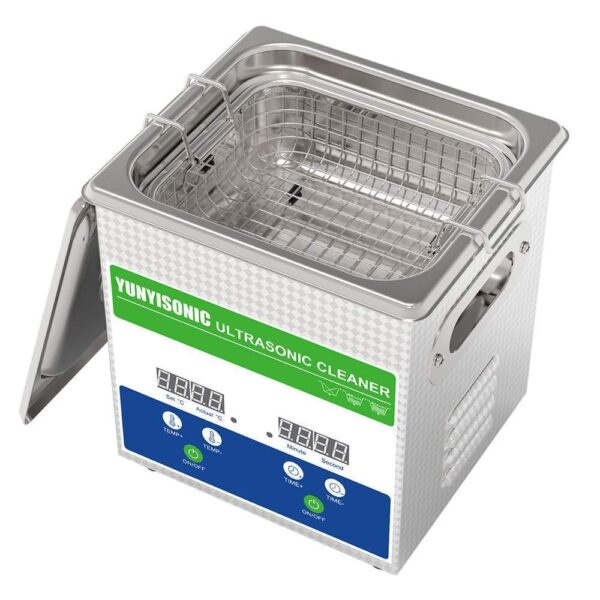
Ultrasonic cleaners operate on a principle that sounds almost magical. These compact machines generate sound waves at frequencies far beyond human hearing. When these waves pass through water, they create millions of microscopic bubbles. Scientists call this phenomenon cavitation, and it happens thousands of times per second.
Each tiny bubble exists for only a fraction of a moment. When it collapses, it releases concentrated energy at a single point. This creates an effect similar to having millions of impossibly small scrubbing brushes working simultaneously. The energy penetrates into crevices and corners that human fingers could never reach. It dislodges stubborn particles without requiring any physical contact or abrasive rubbing.

The Principle Behind Ultrasonic Cleaning
The Science Behind Cavitation
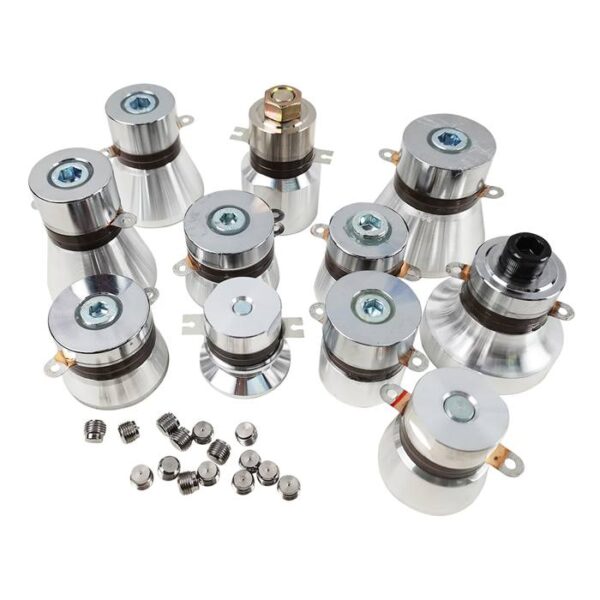
The cavitation process follows predictable physics. High-frequency transducers mounted to the bottom of the cleaning tank vibrate at speeds between 20,000 and 40,000 cycles per second. These vibrations travel through the liquid and create areas of alternating high and low pressure. In the low-pressure zones, the liquid literally tears apart for a microsecond, forming vacuum bubbles.
When the pressure wave reverses, these bubbles implode violently. The collapse generates temperatures exceeding 5,000 degrees Celsius at the exact point of implosion. The heat dissipates almost instantly, but the shockwave remains powerful enough to break apart dirt molecules. This explains why ultrasonic cleaners can remove baked-on carbon from engine parts or centuries of tarnish from antique silver.
Why Jewelers Trust This Method
Professional jewelers have relied on ultrasonic technology since the 1950s. A diamond ring contains dozens of tiny spaces where soap residue and skin oils accumulate. Traditional brushing cannot reach between tightly set prongs or under a stone’s pavilion. The cavitation bubbles flow into these microscopic gaps and blast everything clean without loosening the metal settings.
Jewelry tolerates this aggressive cleaning because precious metals and gemstones are extremely hard materials. A diamond rates 10 on the Mohs hardness scale. Gold and platinum are dense, stable metals. They simply do not react to the physical stress of collapsing bubbles. This durability gives jewelers confidence to use ultrasonic cleaning dozens of times per day.
Your eyeglasses, however, contain far more fragile components than a simple gold band.
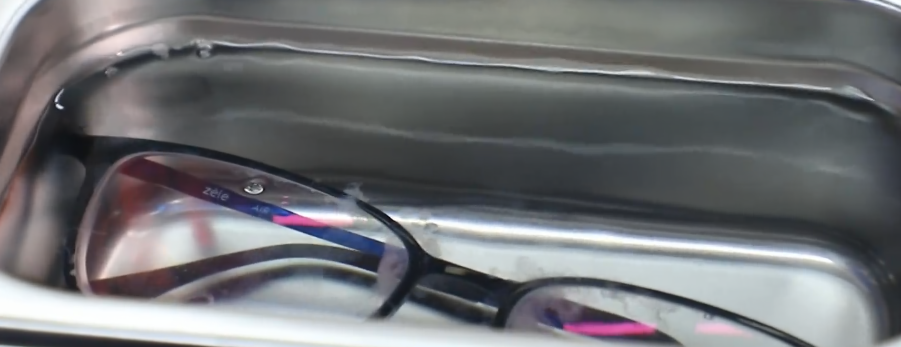
Eyeglasses being cleaned in an ultrasonic cleaning machine
Is Your Eyewear Compatible with Ultrasonic Cleaning?
Not all glasses respond the same way to ultrasonic treatment. The outcome depends on three critical factors: your lens material, any applied coatings, and your frame construction. Getting even one of these factors wrong leads to immediate, irreversible damage. I have personally examined hundreds of ruined pairs brought in by well-meaning owners who assumed all glasses could handle this cleaning method.
The optical industry has evolved dramatically over the past two decades. Lenses that would have been considered cutting-edge in 2005 are now baseline standard. Almost every pair sold today includes multiple chemical layers bonded to the surface. These coatings provide real benefits like reduced glare and better scratch resistance. Unfortunately, they also create vulnerabilities that ultrasonic cleaning can exploit.
Glasses That Handle Ultrasonic Cleaning Well
Certain eyewear configurations survive ultrasonic cleaning without any problems. If your glasses check all the boxes in this category, you can use these machines with confidence. Start by examining your lenses under bright light. Completely uncoated glass lenses, the kind your grandfather might have worn, are nearly indestructible. These thick, heavy lenses contain no chemical layers to peel or crack.
Full-rim metal frames made from titanium or stainless steel also perform excellently. These materials resist corrosion and maintain their structural integrity through thousands of cleaning cycles. The key detail is “full-rim” construction. If metal arms connect to the lenses with exposed edges, you face different risks that we will cover shortly.
Basic plastic frames without decorative elements can usually tolerate brief cleaning sessions. Look for solid-color injection-molded frames with no painted accents or glued embellishments. These simple designs have no weak points for the cavitation bubbles to attack. The plastic itself might be softer than metal, but uniform construction prevents stress concentration.
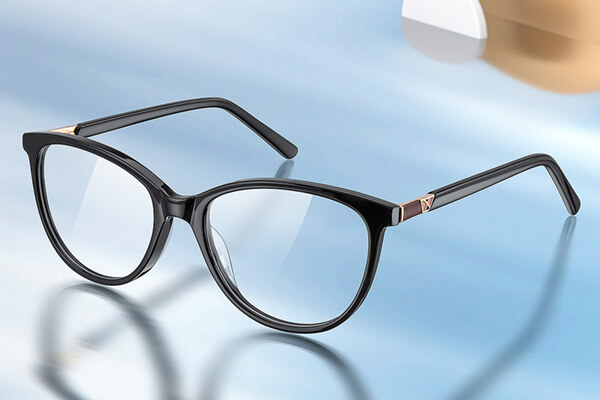
Glasses
Eyewear You Should Never Put in These Machines
Modern prescription eyewear falls overwhelmingly into the “do not clean ultrasonically” category. Industry surveys indicate that roughly 85% of glasses sold in North America now include anti-reflective coatings. These coatings consist of multiple microscopically thin layers of metallic compounds. They work by causing destructive interference between light waves, which eliminates reflections and glare.
The problem emerges at the molecular level. Anti-reflective coatings bond to the lens surface through a process called vapor deposition. This creates a strong but not permanent attachment. The violent energy released by collapsing cavitation bubbles can break these molecular bonds. Once the coating starts lifting, it continues to peel in irregular patches. Your vision becomes clouded by strange halos and distortions that no amount of wiping can fix.
Blue light filtering coatings face identical risks. Photochromic lenses, the kind that darken automatically in sunlight, contain light-sensitive molecules distributed throughout the plastic. Ultrasonic vibrations can disrupt the chemical structure of these molecules, causing uneven darkening or complete failure of the transition effect.
Rimless and semi-rimless frames present mechanical dangers rather than chemical ones. These designs drill tiny holes directly through the lens edges. The frame attaches with microscopic screws that thread into the lens material. Ultrasonic vibrations travel directly into these mounting points and can crack the plastic around the drilled holes. Even if you see no immediate damage, you have weakened the structure. The frame might simply fall apart weeks later during normal wear.
Progressive lenses and high-index lenses deserve special caution. Progressive lenses contain complex optical zones ground into precise curves. Any stress or temperature change risks warping these carefully calculated surfaces. High-index plastic is softer than regular lens material by design. This softness makes it more vulnerable to scratching during the ultrasonic cleaning process, especially if any particles remain floating in the water.
The Real Risks to Your Lenses and Frames
Understanding what can go wrong helps you make informed decisions about your specific eyewear. The damage patterns I have observed fall into several distinct categories. Some problems appear immediately after cleaning. Others develop gradually over multiple uses. All of them share one unfortunate characteristic: they cannot be repaired or reversed once they start.
How Coatings React to Ultrasonic Waves
Lens coatings fail in predictable ways when exposed to cavitation. The earliest sign appears as tiny spots of haze near the lens edges. This happens because coating layers are naturally thinnest at the periphery. The reduced thickness provides less resistance to the mechanical stress of bubble implosion.
As exposure continues, the damaged area expands inward. You might notice a cloudy ring forming about five millimeters from the edge. This ring represents the frontier where intact coating meets delaminated coating. Looking at your glasses from an angle, you can often see the coating lifting like old paint peeling from a wall.
Temperature variations accelerate this process. If the ultrasonic bath warms up during extended use, thermal expansion causes the lens plastic to swell slightly. The coating cannot stretch to match this expansion. The resulting tension makes the molecular bonds even more vulnerable to cavitation stress. Within minutes, you can transform perfect lenses into unwearable junk.
Scratch-resistant coatings behave slightly differently. These hard coatings are tougher than anti-reflective layers, but they are also more brittle. Instead of peeling, they develop a network of microscopic cracks called crazing. Under magnification, crazed coating looks like a dried lakebed with thousands of tiny fissures. These cracks scatter light in random directions, creating a permanent foggy appearance that makes reading or driving dangerous.
Frame Materials That Don’t Survive the Process
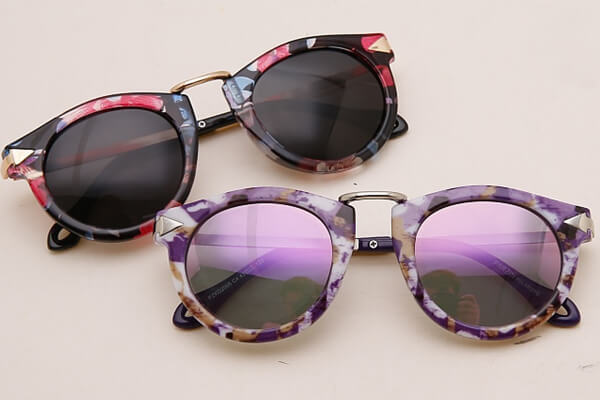
Frame damage often surprises people because the problems are not always immediately obvious. Acetate frames, which make up a huge percentage of fashionable eyewear, absorb water during ultrasonic cleaning. The material swells microscopically as water molecules penetrate between the cellulose chains. When the frame dries, it shrinks again, but never quite returns to its original dimensions.
After just three or four cleaning sessions, you might notice your frames feel loose. The temples no longer grip your head properly. The nose pads sit at odd angles. This dimensional instability happens because different parts of the frame absorb water at different rates. Thick sections near the hinges swell more than thin sections in the temples. The uneven stress distorts the overall shape permanently.
Painted or lacquered frame details vanish completely in ultrasonic baths. The cavitation bubbles strip decorative finishes right down to bare plastic or metal. That elegant tortoiseshell pattern or metallic accent disappears, leaving ugly discolored patches. Even supposedly permanent color treatments can fail because the intense vibrations break down the chemical bonds between the pigment and the base material.
Natural materials like wood, horn, or bone should never encounter ultrasonic cleaning under any circumstances. These organic materials contain microscopic channels that once carried nutrients in the living plant or animal. Water rushes into these channels during cleaning and cannot escape quickly. The trapped moisture causes swelling, cracking, and permanent warping. A beautiful wooden frame can split along the grain within a single cleaning cycle.
Proper Technique for Ultrasonic Eyeglass Cleaning
If you have verified that your specific glasses are compatible with ultrasonic cleaning, technique becomes critical. The difference between safe cleaning and expensive damage often comes down to small details in how you prepare and operate the machine. Professional optical labs follow strict protocols when they use this technology. You should adopt the same careful approach at home.
Setting Up Your Machine Correctly
Water quality matters more than most people realize. Tap water works fine in most locations, but extremely hard water can leave mineral deposits on your frames. If you live in an area with high calcium content, consider using distilled water instead. The water temperature should be cool to lukewarm, never hot. Hot water causes plastics to soften and expand, making them vulnerable to stress damage.
The cleaning solution you add makes a significant difference. Many ultrasonic cleaner manufacturers sell proprietary solutions that claim superior results. In my experience, these are usually unnecessary and potentially harsh. A single drop of plain dish soap provides all the cleaning enhancement you need. The soap acts as a surfactant, reducing water’s surface tension so the cavitation bubbles can work more effectively.
Never fill the tank above the maximum fill line marked on the side. Overfilling causes the water to splash out during operation, creating a mess on your counter. More importantly, it changes the acoustic properties inside the tank. The ultrasonic waves lose efficiency when the water level rises too high. You end up with weaker cleaning action and potentially longer exposure times.
Position your glasses carefully in the provided basket. The lenses should face upward with the frame resting securely in the mesh. Make absolutely certain no part of your glasses touches the metal tank bottom. Direct contact with the vibrating tank wall concentrates all the ultrasonic energy at a single point, almost guaranteeing scratch damage. The plastic or wire basket suspends your glasses safely in the optimal cleaning zone.
Timing and Temperature Guidelines
Duration is where most people make critical mistakes. They assume longer cleaning produces better results. This is completely wrong for eyeglasses. A 30 to 60 second cycle removes virtually all surface contamination without stressing the materials. I have never found a situation where routine eyeglass cleaning required more than 90 seconds of ultrasonic exposure.
Some machines offer multiple power settings. If yours has this feature, start with the lowest power level. Glasses do not need the industrial-strength cleaning required for automotive parts or surgical instruments. Lower power reduces the intensity of cavitation, which protects delicate coatings while still providing excellent cleaning results.
Check the water temperature before starting each cycle. The motor that drives the ultrasonic transducers generates heat during operation. If you run multiple cleaning cycles back to back, the water temperature can creep upward. Stick your finger in the bath between sessions. If it feels noticeably warm, dump it out and start fresh with cool water.
Post-Cleaning Care Steps
How you handle your glasses immediately after cleaning affects the final results. Remove them from the basket as soon as the cycle ends. Leaving them sitting in the water allows dirt particles to resettle on the surfaces you just cleaned. Rinse thoroughly under running tap water to wash away any soap residue and dislodged grime particles.
Shake the frames gently to remove excess water droplets. Do not flick them violently or snap them through the air. This aggressive motion can fling water into the hinge mechanisms and cause corrosion over time. A few gentle shakes are sufficient to clear the major water accumulation.
Dry your glasses immediately with a clean microfiber cloth. The cloth must be clean because even tiny dust particles will scratch wet lenses. Fold the cloth into a pad and gently press it against each lens, allowing the fabric to absorb the water. Avoid circular rubbing motions, which can grind particles into the surface. Pat dry in straight strokes from the center outward.
Pay special attention to the nose pads and hinge areas. These spots trap water that can cause corrosion if left to evaporate naturally. Use a corner of the microfiber cloth to blot these tight spaces completely dry. Once everything is dry, inspect your lenses under bright light to confirm they are perfectly clean and undamaged.
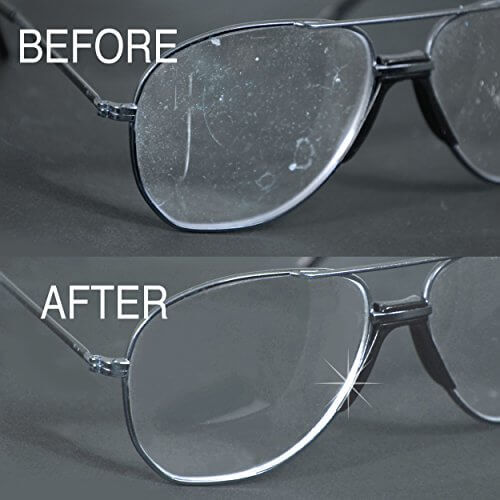
Eyeglasses cleaning effect comparison
Better Alternatives for Daily Eyewear Maintenance
You might decide the risks outweigh the benefits of ultrasonic cleaning. This is actually the smart choice for most modern prescription eyewear. Traditional cleaning methods remain the safest and most effective approach. They cost essentially nothing and work perfectly on every type of lens and frame combination.
The Classic Soap and Water Method
This simple technique has been recommended by opticians for generations because it simply works. Start by rinsing your glasses under lukewarm running water for several seconds. This preliminary rinse floats away loose dust particles and pollen grains. If you skip this step and go straight to rubbing, you risk dragging these abrasive particles across your lenses and creating permanent scratches.
Apply a tiny drop of lotion-free dish soap to your fingertip. The “lotion-free” specification is important because moisturizing soaps leave streaky residue on glass and plastic. Dawn Original and similar basic formulas work perfectly. Rub the soap gently across both sides of each lens using your fingertips. Work the lather into the nose pads, temple tips, and the groove where the lens sits in the frame.
These areas accumulate body oils, dead skin cells, cosmetics, and environmental pollutants. The combination creates a sticky film that ordinary water cannot remove. The mild surfactants in dish soap break down these organic residues without attacking lens coatings or frame finishes. This makes it vastly safer than harsh cleaners containing alcohol or ammonia.
Rinse everything thoroughly under running water again. Make sure no soap remains anywhere on the frame. Trapped soap will dry into visible streaks and spots. Shake off the excess water and dry with a dedicated microfiber cloth. Use a clean cloth, not the same one you have been carrying in your pocket for three months. Dirty cloths contain abrasive particles that defeat the entire purpose of careful cleaning.
Commercial Cleaning Products That Actually Work
Spray lens cleaners sold in optical shops are convenient for cleaning away from home. These products are specifically formulated to be safe for anti-reflective and other specialty coatings. Look for bottles that explicitly state they are safe for AR coatings. Avoid generic glass cleaners, which often contain ammonia that can damage lens treatments.
To use spray cleaners effectively, first blow off any loose dust particles. Hold the bottle about six inches from the lens and apply two quick sprays to each side. Wipe gently with a clean microfiber cloth using straight strokes. Some people make the mistake of spraying directly onto the cloth instead of the lens. This wastes product and does not distribute the cleaner evenly across the entire surface.
Pre-moistened lens wipes offer ultimate convenience for travel and quick touch-ups. Quality wipes from reputable optical brands are individually wrapped and pre-treated with safe cleaning solution. They work well for emergency cleaning but should not replace proper washing for daily maintenance. The trade-off for convenience is cost, as these wipes are significantly more expensive per use than soap and water.
Microfiber cloths eventually lose their effectiveness as they accumulate oils and particles. Wash your cloths regularly in warm water with a small amount of detergent. Never use fabric softener, which coats the fibers and eliminates their cleaning ability. Air dry or tumble dry on low heat. A properly maintained microfiber cloth should last for several months of daily use.
Protecting Your Vision Investment Long Term
Proper cleaning is just one component of eyewear care. How you store and handle your glasses every day has equally important effects on their lifespan. Most frame damage and lens deterioration results from preventable accidents and poor daily habits. A few simple behavior changes can extend the life of your eyewear by years.
Daily Habits That Extend Frame Life
Always use both hands when putting on or removing your glasses. Pulling them off with one hand from the temple arm places unequal stress on the frame. The hinges twist sideways with each single-handed removal. After months of this asymmetric stress, the frame becomes crooked and loose. The arms spread apart and no longer grip your head properly.
Never set your glasses down with the lenses facing down. This incredibly common mistake scratches lenses faster than any other behavior. Even surfaces that look perfectly smooth contain microscopic roughness. When you place your lenses face-down on a desk, counter, or nightstand, these tiny particles grind into the coatings with each tiny vibration or air current.
Heat represents one of the most destructive enemies of modern eyewear. Never leave your glasses on a car dashboard or in a closed vehicle on sunny days. Interior temperatures can reach 70 degrees Celsius or higher in direct sunlight. This heat causes plastic lenses to expand faster than their chemical coatings. The differential expansion creates stress cracks and crazing that permanently cloud your vision.
Chlorinated pool water and salt water both attack frame materials and lens coatings. If you swim regularly with your glasses on, rinse them with fresh water immediately after leaving the pool or ocean. The chemicals and salts continue working even after the water evaporates, eating away at protective finishes and corroding metal components.
When to Seek Professional Cleaning Services
Most optical shops offer free cleaning and adjustment services to their customers. Take advantage of these visits every three to six months. Professional opticians have tools and skills that go far beyond simple cleaning. They can tighten every screw to the precise torque specification, realign bent frames using calibrated tools, and replace worn nose pads.
The ultrasonic cleaners in optical shops differ from consumer models. Professional units often have multiple frequency settings and precisely controlled temperature management. More importantly, trained technicians know exactly which glasses can safely undergo ultrasonic treatment. They examine your specific eyewear before making the decision to use the machine.
If your glasses develop stubborn deposits that resist home cleaning, professional help becomes necessary. White crusty buildup on nose pads, green corrosion on metal hinges, or sticky residue from cosmetics all require stronger interventions. Opticians have access to specialized solutions and tools designed to handle these problems without damaging your eyewear.
Maintaining your glasses properly protects more than just your investment in the frames. Your vision depends on clean, undamaged lenses. Scratched or clouded optics strain your eyes and can contribute to headaches and fatigue. Whether you choose to use an ultrasonic cleaner or stick with traditional methods, consistency matters most. A quick daily cleaning prevents the buildup of grime that eventually requires aggressive removal techniques. Treat your glasses with the same care you would give any precision optical instrument, because that is exactly what they are.
Ultrasonic Cleaner for Eyeglasses
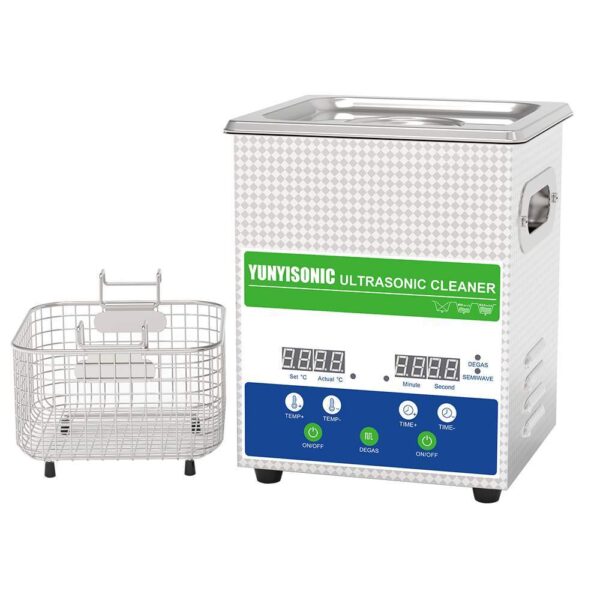
2L Mini Ultrasonic Cleaner with Semi-Wave Degas | Eco-Friendly Cleaning Machine for Coins, Glasses & Small Metal Parts
In stock
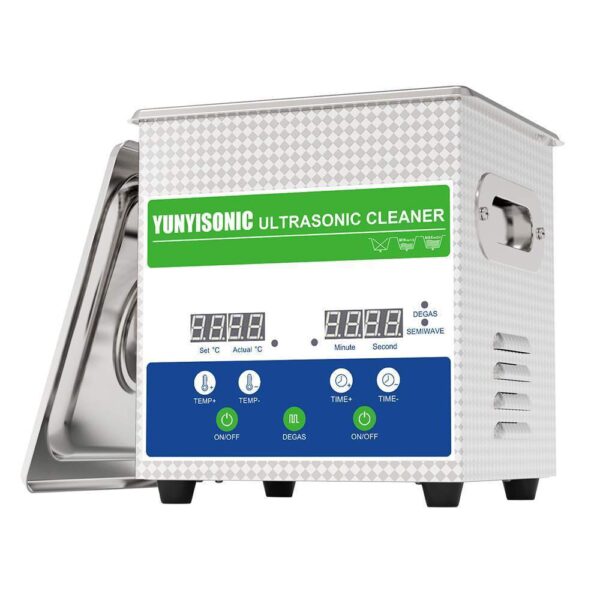
1.3L Portable Ultrasonic Parts Washer with Degas for Jewelry and Dental Cleaning
In stock
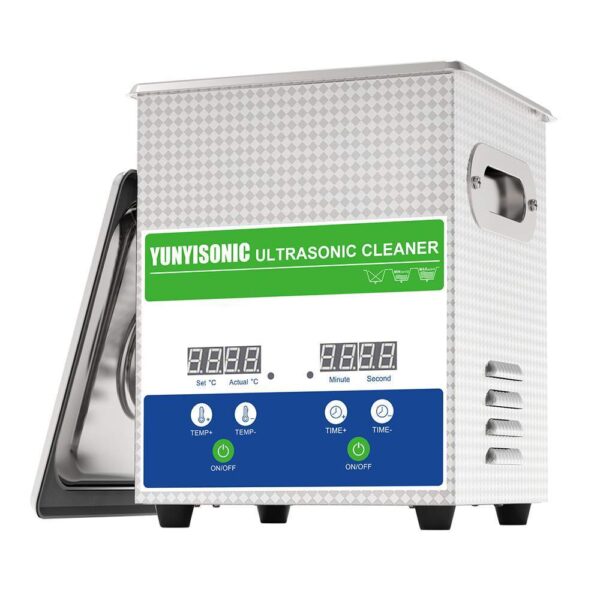
2L Digital Ultrasonic Cleaner Degassing Cleaning Watch, Retainer, Denture, and Glasses
In stock
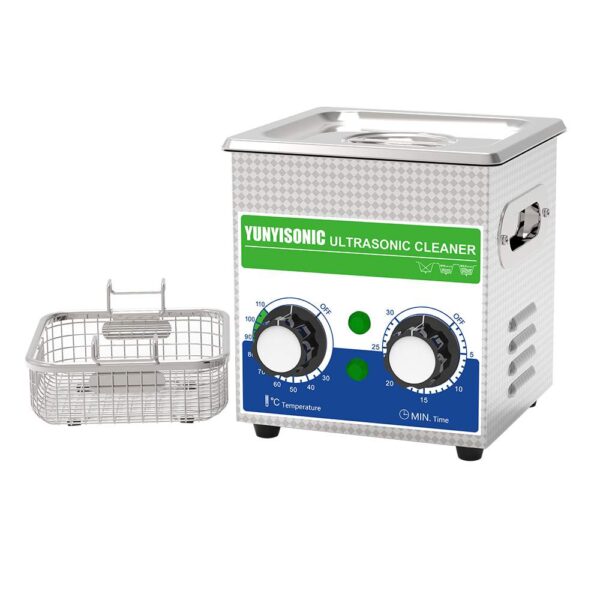
1.3L Ultrasonic Cleaner with Mechanical Timer & Heater | Knob Control for Auto Parts and Precision Cleaning
In stock